The Israeli opposition ahead of the Knesset elections
The prospects of a change of government in Israel following the 27 October elections are dwindling. The majority of the anti-Netanyahu bloc rejects the possibility of forming a future government that includes Arab parties, a prerequisite for securing a stable majority in the Knesset. Combined with the polls showing a stabilisation of support for the parties forming the current far-right coalition, this produces an electoral stalemate and makes another political crisis increasingly likely. Israel’s foreign policy, and above all its approach to the Palestinians, will not change to any great extent, even if the opposition does well.
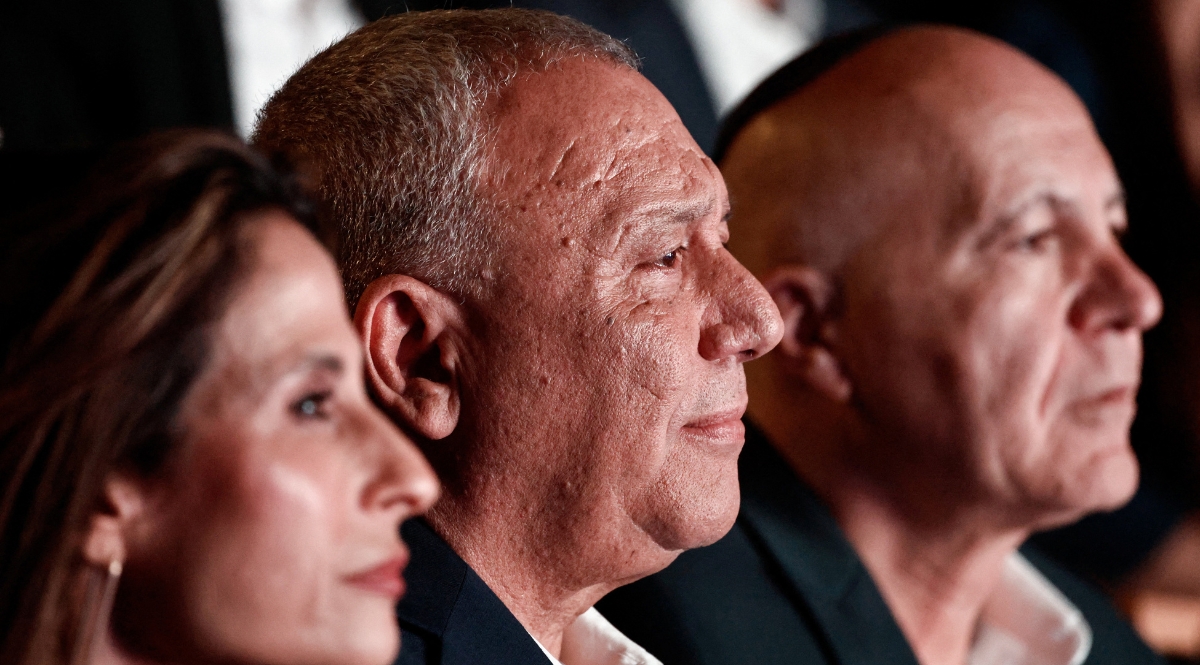 Amir Cohen / Reuters / Forum
The Israeli opposition
As in previous Israeli election campaigns, the leading opposition party seeking to oust Prime Minister Benjamin Netanyahu from power is a new political force. The leader of the Yashar (Hebrew for ‘Straight’) party, formed in September last year, is Gadi Eisenkot, former Chief of the General Staff of the Israeli Defence Forces, who began his political career in 2022alongside the then opposition leader Benjamin Gantz. Between October 2023 and June 2024, he was a member of the national unity government formed following the Hamas attack on 7 October and sat on the war cabinet overseeing military operations. Polls suggest that Yashar will become the largest party in the new Knesset, securing an average of 23 seats (out of 120). The second-strongest opposition party is the BeYachad (Hebrew for ‘Together’) electoral list, formed by the former prime ministers from 2021–2022, Naftali Bennett and Yair Lapid, which is predicted to win around 13 seats. The right-wing Our Home Israel, led by Avigdor Lieberman, enjoys stable support, ensuring it will secure 8 seats.
Following the defeat of the left-wing groups in the 2022 elections, when one of the parties failed to clear the electoral threshold, they consolidated under the leadership of Yair Golan to form the Democrats alliance, which polls suggest will win around 9 seats. In similar circumstances, an agreement was reached between the Arab parties: the communist Hadash and the nationalist Balad and Ta’al, which have revived the Joint List, with the potential to win around 9 seats. Outside this alliance is the conservative Ra’am party, whose support made it possible to oust Benjamin Netanyahu from power in 2021. Polls suggest that two other newly formed right-wing populist groups—the Reservists’ Party and Amcha Yisrael (Hebrew for ‘The People of Israel’)—may also cross the electoral threshold and each win four seats. The poll figures give the opposition a parliamentary majority, but the main obstacle to forming a coalition remains the traditional divisions between the political camps.
Areas of contention and internal issues
The primary obstacle to an agreement is the refusal by most Jewish (self-described as Zionist) parties to form a coalition with Arab parties. This also applies to Eisenkot’s party and the other new right-wing parties. This stance deprives the opposition of key seats which would, in the most likely scenarios, secure a parliamentary majority. Furthermore, right-wing and centre-right leaders reject the option proposed by some Arab parties—namely, receiving their support for a minority government, thereby protecting it from a vote of no confidence. The opposition’s chances are further undermined by the stance of new political groups, foremost among them Amcha Yisrael (The People of Israel), whose leader, Ofir Winter, has indicated that he favours Netanyahu’s coalition.
The election campaign is centred on two key issues relating to the crisis facing the country following 7 October 2023: the Prime Minister’s political responsibility, and the issue of military service exemptions for the ultra-Orthodox community, brought into sharp relief by the permanent state of war. Opposition leaders seek to highlight Netanyahu’s responsibility for the overall Israeli policy towards the Gaza Strip in recent years, as well as his disregard for warnings about Hamas’s plans from the intelligence services and external partners. They are calling for the establishment of a state commission to investigate the circumstances of the 7 October disaster, a move which has so far been blocked by the government. Meanwhile, the introduction of conscription or compulsory alternative service for ultra-Orthodox citizens (and for the Arab population) is the most popular electoral demand amongst the public and the one that most unites the Jewish opposition parties. A recurring theme is the pledge to strengthen the state’s institutional framework, depoliticise the security services and reverse the illiberal reforms implemented in recent years by the Netanyahu government. The Arab opposition also emphasises the need to curb the ongoing wave of crime and related killings that has been present for years within this community.
Security and international affairs
Traditionally, the issue of the conflict with the Palestinians, particularly potential political solutions, is either overlooked or treated cautiously by opposition politicians. This stems partly from the reactive nature of their messaging, designed to counter allegations from the Netanyahu camp regarding alleged support for Palestinian independence, and partly from public sentiment amongst the Jewish population—who are unequivocally opposed to any peace negotiations with the Palestinians. Most evident are the criticism and promises to curb the wave of violence and terrorist acts carried out by radical settlers, the scale of which has been steadily increasing in recent months, with only a limited response from the authorities.
On the broader issue of foreign policy, the Zionist opposition parties do not offer a direction that is radically different from that currently pursued by the coalition. The dominant message is an emphasis on the inability of Israel, under Netanyahu’s leadership, to translate military successes into lasting political solutions, which in the long term ultimately weakens Israel’s strategic position. Some leaders are calling for a tougher stance towards Turkey and Qatar, regarded as the main regional powers supporting Hamas. Although the opposition criticises the government for the relative international isolation that Israel is currently experiencing, it refrains from addressing its causes more explicitly—the pacification of the Gaza Strip, settlement activity in the West Bank, and aggressive policies in the region. It also rejects external criticism and opposes attempts to hold Israel and its citizens to account through the international judicial system.
Perspectives
Without the support of the Arab parties, the Israeli opposition is unlikely to secure a parliamentary majority. Meanwhile, prioritising the issue of conscription for the ultra-Orthodox community precludes an agreement with the religious parties. As in previous years, the possibility of forming a government of national unity is also being discussed in the pre-election discourse. In such a scenario, as was the case in 2020, Netanyahu would seek to retain the post of Prime Minister and the widest possible scope of decision-making authority within the coalition agreement.
A scenario remains possible in which—despite earlier declarations by the leaders—the Ra’am party joins the government and the broad coalition of 2021–2022 is revived, with Eisenkot as prime minister. However, the lack of internal cohesion within such a bloc would pose a problem. Experience from the Bennett–Lapid government period suggests that ideological differences between left-wing and right-wing groups effectively destabilised the government’s work. It is also highly likely that there will be a repeat of the attacks and political pressure from Netanyahu’s camp directed at new members of parliament, which contributed to the collapse of the united opposition cabinet in 2022. Conversely, the failure to form a new government and the calling of another general election will allow Netanyahu to strengthen his political position, continue the anti-liberal policies of the previous coalition, and undermine the chances of resolving the regional conflicts that Israel has escalated.
The main challenge for a potential opposition government will be the Palestinian issue—including how to respond to the Trump plan (which has been accepted by the majority of the opposition) and the next stages of the ceasefire in the Gaza Strip coordinated by the Peace Council. Politicians from the main opposition parties have declared their intention to continue fighting Hamas and to maintain the presence of Israeli troops within the Strip. At the same time, the opposition government—given its internal composition—may be more susceptible to diplomatic pressure from external partners than the current far-right coalition. It is also likely that the current opposition will take tangible action to counter Jewish extremism in the West Bank and curtail support for the settlements, though without bringing their expansion to a complete halt.
The electoral context has partly held back decisions by European states to toughen their stance towards Israel (e.g. in the form of sanctions) over its anti-Palestinian policies. A change in government could lead to improved dialogue between the EU and Israel. However, any softening of the EU’s stance should follow concrete actions by the new authorities to curb regional destabilisation, violations of international law and the rights of Palestinians, and the fulfilment of Israel’s commitments under the plan for the Gaza Strip, including the commencement of reconstruction efforts.