The political scene in Israel a year before the Knesset elections
The parliamentary elections scheduled for October 2026 will be the first chance for Israeli political forces to renew their social mandate since the Gaza Strip war began. Polls show that Benjamin Netanyahu's coalition may lose its majority. This could prompt the government to use foreign policy more for electoral purposes. The opposition’s chances depend on how well it consolidates and how effective the new parties' messages are. External influences on the campaign, especially from the US, will likely intensify.
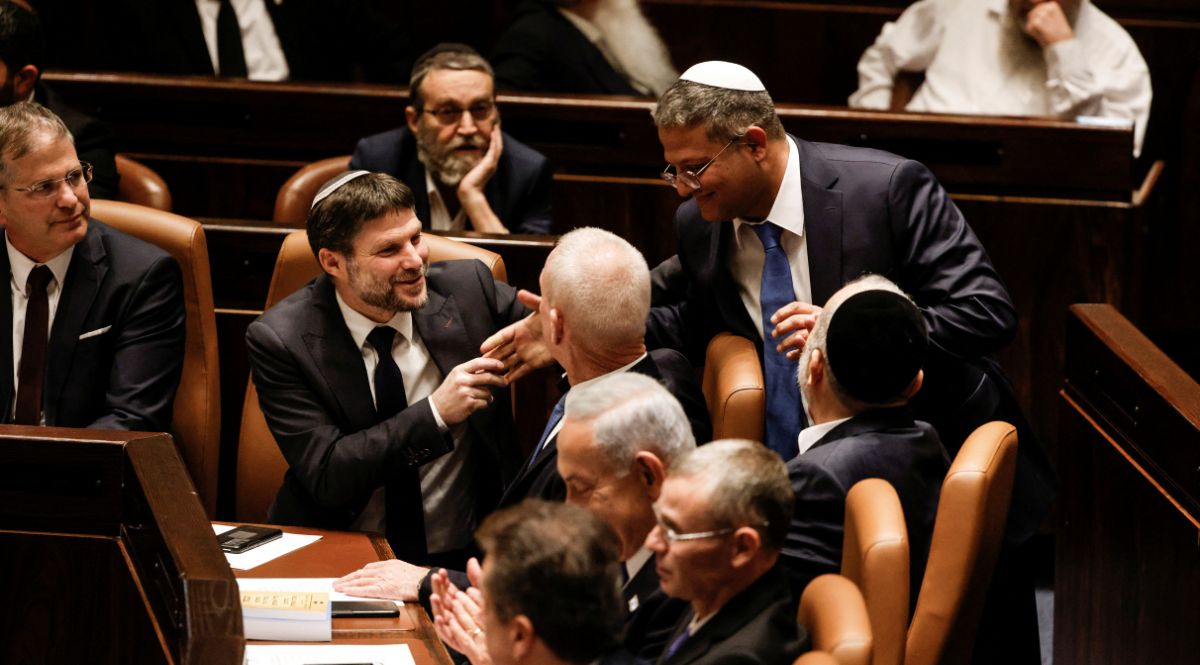 AMIR COHEN / Reuters / Forum
Electoral law states that the next elections to the 120-seat Knesset must be held by October 27, 2026, at the latest. However, they may be held sooner. This could happen if the budget is not passed by the end of March 2026 or if there is a no-confidence vote against the government, which lost its parliamentary majority in July this year. It is also formally possible for the current term to be extended if, for example, large-scale hostilities resume.
Impact of the war and polls
The immediate effect of the Hamas attack on October 7, 2023, was a sharp decline in support for the Netanyahu-led coalition government. Over the next two years, there was a rebound in the polls. This was mainly due to Israel's successes against Hezbollah and Iran, the ceasefire announcement in the Gaza Strip in October this year, and Hamas' release of living hostages and virtually all bodies. A year before the elections, the ruling party, Likud, remains the leader in the polls. Religious parties are expected to maintain their current level of support and retain their share of the vote. Among radical groups, Religious Zionism is balancing near the electoral threshold (3.25%), while Jewish Power has taken over as the strongest far-right party. Polls predict that the current coalition would win a total of about 51 seats.
From the opposition's perspective, new parties will play a key role in these elections. Naftali Bennett, the former Prime Minister from 2021 to 2022, announced his return to politics and his participation in the upcoming elections. In April this year, he registered his party, which currently ranks second in the polls behind Likud. A new centrist party was formed by Gadi Eisenkot, former head of the army and member of the war cabinet after October 7. Their support largely comes from other centre-right parties, such as Yesh Atid, or one of the largest parties to date, Blue and White, which currently does not meet the electoral threshold. The right-wing Israel Our Home, as well as the consolidated left-wing Democrats list, have gained a stronger position, among other things, due to their consistent stance on the need to draft the ultra-Orthodox population. Arab parties remain fragmented, with some not expected to reach parliament according to polls.
Current election forecasts indicate a slight advantage for the opposition parties, especially in the event of greater consolidation. However, taking power would require the de facto unification of all opposition political forces, as was the case in 2021-2022. This would mean the return of an internally inconsistent coalition, with a minimal advantage in the Knesset, especially since, under the current circumstances, opposition leaders have ruled out cooperation with Arab parties (in 2021-2022, the Ra'am party provided the majority). Netanyahu's chances of forming a parliamentary majority are hindered by his inability to secure a coalition with parties outside the current government. However, further fragmentation of the political scene and the dispersion of votes among parties that will not exceed the electoral threshold could work in his favour, strengthening Likud's result. An electoral stalemate is also likely, in which neither bloc obtains a majority, leading to a further extension of the voting cycle, as was the case from 2019 to 2021, with Netanyahu as head of the transitional government.
Campaign topics
The key topic remains the crisis facing the country in connection with the war in the Gaza Strip. The opposition strongly emphasises the need to hold the prime minister and the government accountable for their misguided policy towards Hamas before its attack, the failure of the defence on October 7, and the opportunistic prolongation of the conflict. Criticism of the strategy of waging war in the Gaza Strip and its impact on the Palestinian civilian population appears to a lesser extent. The issue of conscription of the ultra-Orthodox population, strengthened by the war, will also be important. Currently, the coalition is working on a compromise formula that is acceptable to some religious parties but inadequate for the army's reported needs. In addition, the government has adopted or plans to reform institutions, such as Orthodox rabbinical courts, increasing their funding and powers. The opposition's opposition to these measures may help mobilise the electorate. At the same time, it will block the possibility of including religious parties in post-election coalition talks.
The government's strongest message continues to be security and the legitimacy of its current strategy, which is based on the use of force and maintaining regional dominance. This also means the continuation of repressive policies targeted towards Palestinians in the Gaza Strip and the West Bank. The government claims that the opposition taking power would create a Palestinian state, although almost all opposition forces, except for the left and Arab parties, have rejected or remained silent on this issue.
Regarding the 2023 Hamas attack, the government will continue its strategy of shifting political responsibility for the state crisis and redirecting blame to the military and security services. It plans to establish a special commission to investigate the circumstances of October 7, which will be composed primarily of politicians. The commission will be created as an alternative to other supervisory bodies. This tactic is part of the Netanyahu government's struggle with other state institutions, especially the judiciary and law enforcement agencies. The government's anti-liberal reforms are helped by the public's war fatigue, which has reduced protest activity. The ongoing economic recovery also works in the government's favour.
Translation into international policy
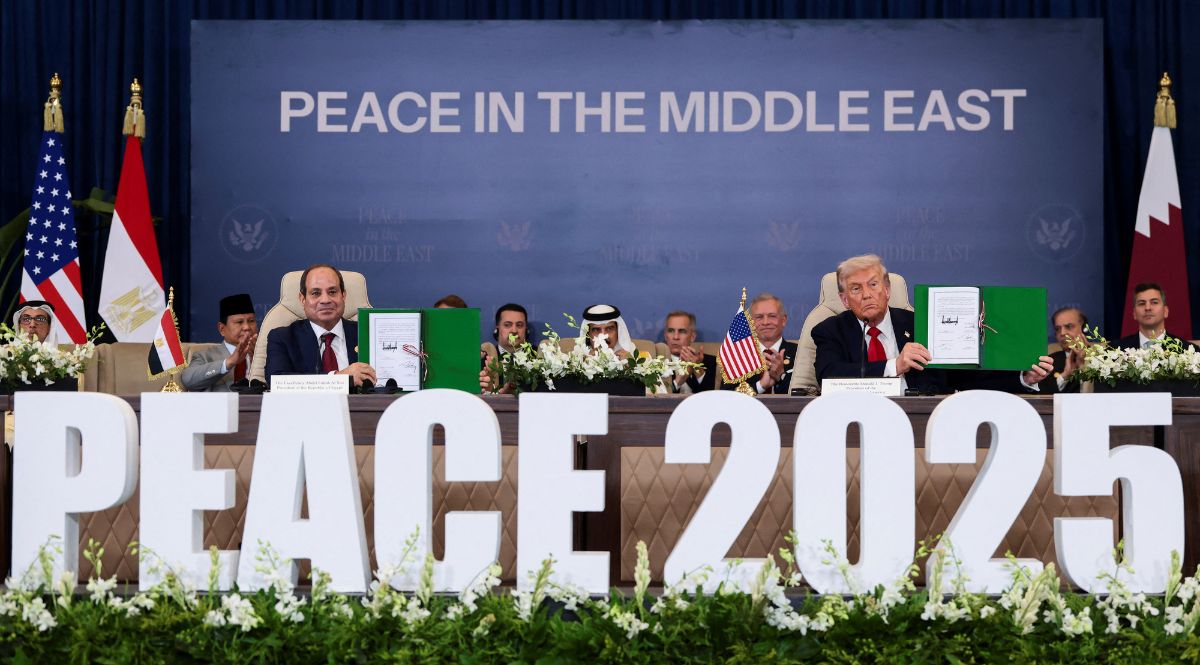
Netanyahu will use the electoral context in two ways in his foreign policy. First, it means maintaining a confrontational policy on existing fronts. However, due to public fatigue, he will avoid returning to full-scale war. This involves continuing military action against Hamas and Hezbollah, under the terms of agreed truces, and taking a harder line in talks with Syria and Lebanon, which are demanding Israel's withdrawal from their territories. In the Gaza Strip, this approach may negatively affect the chances of further implementing Donald Trump's peace plan. Second, the prime minister will use electoral arguments to counter international pressure on issues that are unpopular with the electorate or coalition partners.
In these circumstances, the influence of the US, which is interested in greater stability in the region, is increased. This means maintaining pressure to limit Israel's escalatory actions in exchange, for example, for the US administration initiating further normalisation agreements with Muslim countries, or direct support during the election period. During the campaign, Netanyahu and the government will attempt to counter Israel's partial diplomatic isolation by, among other measures, visiting friendly countries such as India and Argentina. At the same time, the prime minister's ability to be more active is limited by his outstanding ICC arrest warrant. The opposition traditionally has fewer opportunities to use foreign issues in its message, but it may seek, for example, clearer support from the Trump administration.
Prospects
The upcoming Knesset elections will have a significant impact on Israel's domestic policy and international standing. A victory for Netanyahu will cement his political camp and further consolidate the illiberal nature of his rule. If the opposition wins power, it may allow for a more thorough investigation into the October 7 attack and its aftermath in the Gaza Strip. It could also lead to adjustments in current foreign policy.
Until the vote, the government's policy will be even more tied to the prime minister's electoral interests than it has been so far. Further polarisation of Israeli society is expected. This increases its sensitivity to external interference and disinformation.
Among external partners, the United States will continue to have the most significant influence during the campaign. The EU should focus on maintaining diplomatic and institutional pressure on the Israeli government. It should also respond quickly to any destabilising or anti-democratic measures taken for short-term electoral gain.

.png)
.png)