
Israeli Government Continues Push for Illiberal Reforms
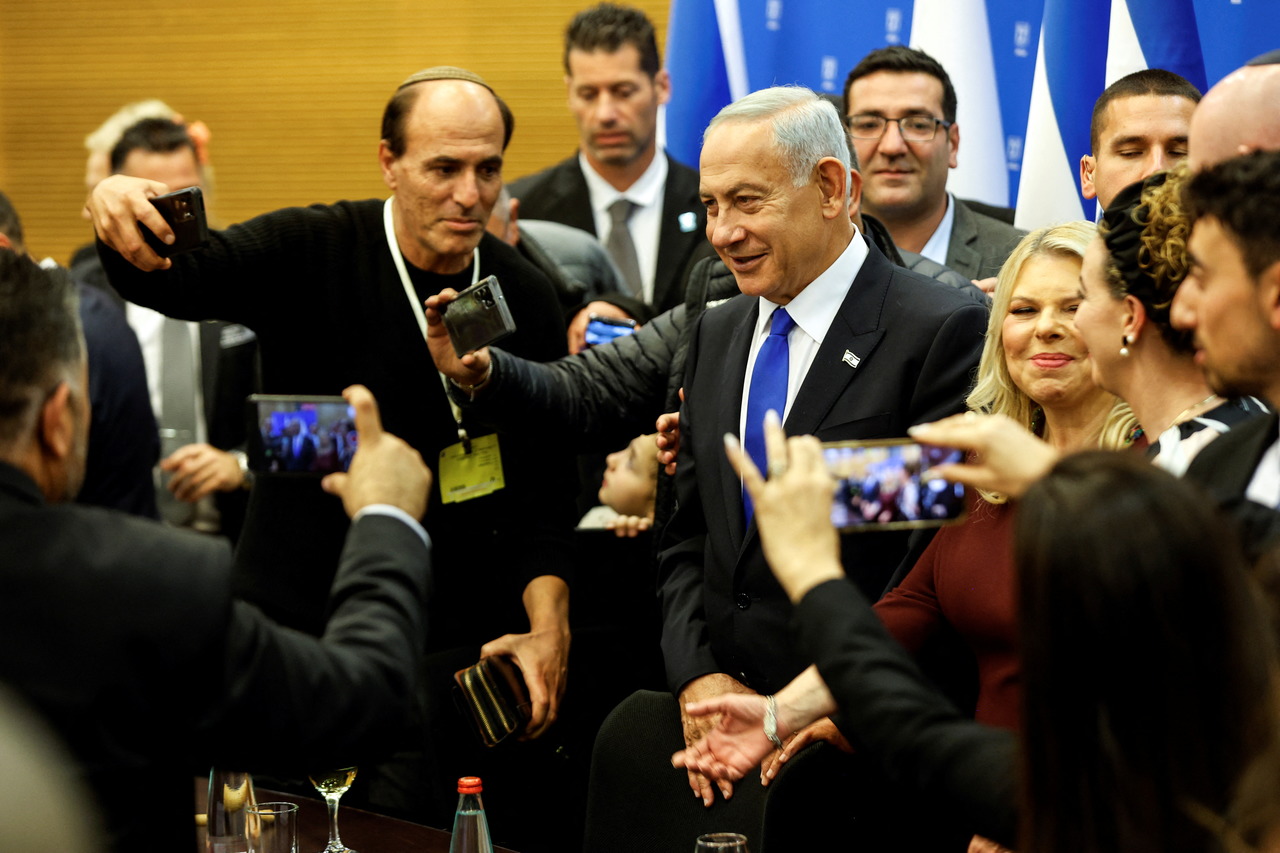
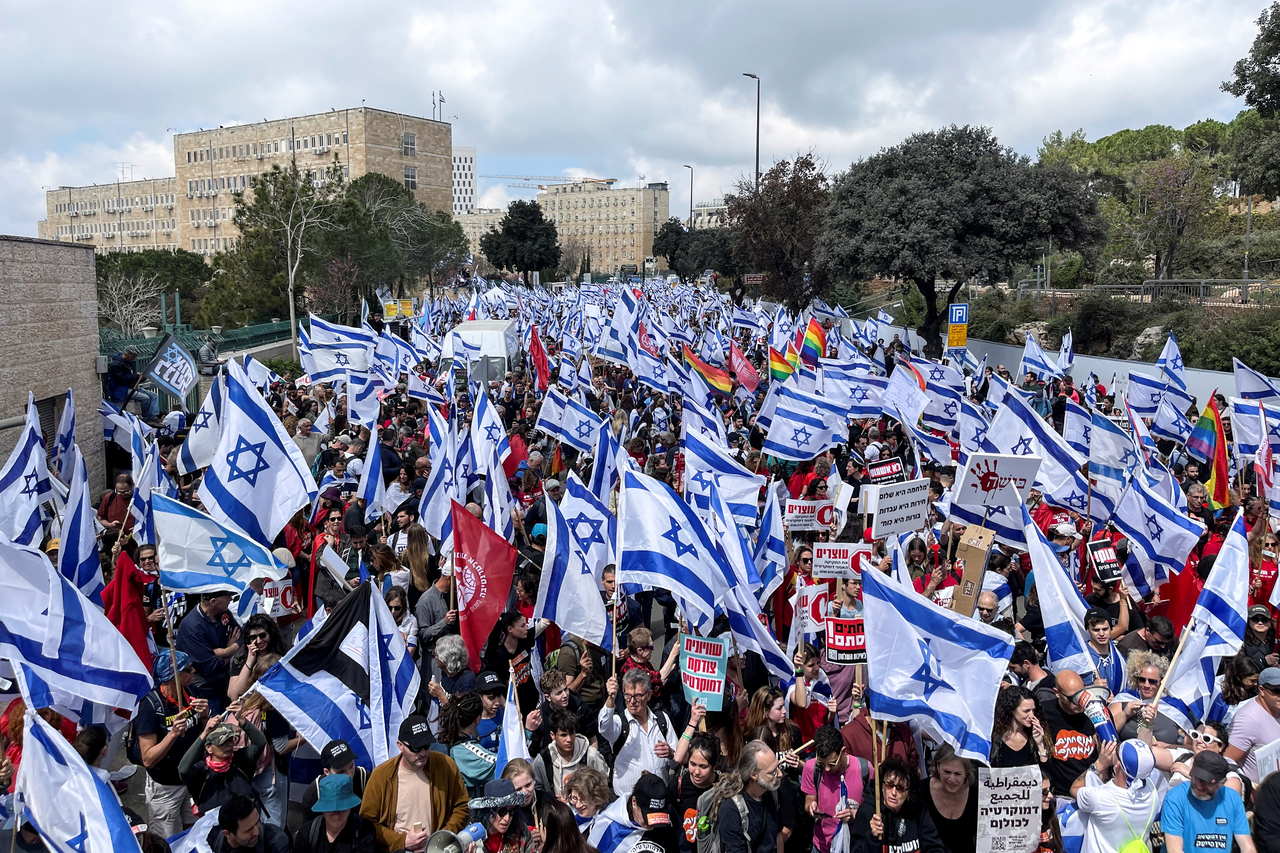
The ongoing war in the Gaza Strip reinforces the Benjamin Netanyahu government’s illiberal nature, evident in its legislative changes. Among other things, it is targeting the non-governmental sector and media freedom, which, when combined with the growing conflict between the government and other state institutions, deepens the political and social splits. The anti-democratic changes should prompt tougher diplomatic action from the EU towards the Israeli government.
.png) credit: Ronen Zvulun / Reuters / Forum
credit: Ronen Zvulun / Reuters / Forum
The Israeli government’s proposals for legislative changes largely continue earlier political processes initiated during Netanyahu’s previous terms. They are based on increasing the government’s prerogatives and influence over state institutions and weakening the broader system of checks. They also represent in many cases the implementation of the electoral agenda of the prime minister’s co-coalitionists, primarily those from far-right parties. Draft legal amendments are at various stages in the Knesset, either in parliamentary committees or after first reading. The formal justification for some of them is the war in the Gaza Strip and its regional impact. The procedure of drafts during the Knesset’s summer session (until the end of July this year) was halted after religious parties left the coalition in protest against the conscription of the ultra-Orthodox population. Despite the coalition crisis, some legislation may continue in the next session, as they remain aligned with the interests of ultra-Orthodox politicians, while others have the support of the centre-right opposition (e.g., on national security).
On his illiberal course, Netanyahu is taking advantage of the favourable international context, above all, the change of power in the U.S. with Donald Trump’s second administration, which, unlike the Joe Biden’s administration, does not raise domestic issues in the bilateral dialogue. Trump himself has given Netanyahu official support in the corruption case against him (analogous to Trump’s own legal situation) and has called for a halt to the trial or for a pardon for the prime minister.
Proposed Reforms
Following the Hamas attack of 7 October 2023, the Israeli authorities amended provisions of the counter-terrorism law to increase the powers of the security services and police. The new proposals in parliament expand the definitions of criminal acts, primarily cases involving expressions of support for terrorist acts or perpetrators. Similar changes are also proposed in other laws, allowing, for example, easier expulsion from universities or the blocking of candidates at the local government level for such expression. Given the past practice of actions on the part of the Israeli police and institutional apparatus, the new laws may significantly affect freedom of expression (e.g., on social media), primarily towards Israeli citizens of Palestinian origin. This is also evident at the parliamentary level where there have been attempts to disqualify Arab members of the Knesset due to their criticism of Israeli actions in the Palestinian territories.
In response to the International Criminal Court (ICC) undertaking investigations into crimes committed by Israel in the Gaza Strip, a bill was tabled in the Knesset prohibiting citizens from cooperating with the body without authorisation from the authorities. A broad interpretation of the legislation would also allow prosecution for the publication of material used in investigations, such as information based on soldiers’ reports or whistleblowers. Another measure under consideration against NGOs is a proposal to impose an 80% tax on donations from foreign entities (organisations that, at the same time, do not benefit from grants from the budget) and to prevent externally funded organisations from appearing in Israeli courts. This would most affect groups associated with the protection of human rights, the monitoring of civil liberties in Israel itself, and the activities of the authorities in the Palestinian territories. At the same time, by giving the finance minister broad discretion, the proposal would shield the more right wing-friendly part of the non-governmental sector from taxation. In addition, the authorities, through bureaucratic methods, have consistently hindered the activities of humanitarian organisations by, among other things, blocking the issuing of visas to their staff. In April this year, a law came into force banning UNRWA activity in Israel.
On media freedom, the government’s plans to resume efforts to privatise the public broadcaster KAN, accused by the right of being overly critical of the government, carries risks. At the same time, solutions favouring private stations sympathetic to the government are being considered, including through changes in advertising regulations. A ban on Al-Jazeera in Israel, renewed periodically with the approval of the Supreme Court, has been in place since May last year (the Palestinian Authority also adopted a similar ban). The court also upheld a decision blocking access to the Gaza Strip for journalists not affiliated with the authorities. At the same time, the coalition is considering the introduction of immunity for those who provide the authorities with security information though not authorised and/or bypassing official procedures. This would legalise violations in the prime minister’s office after 7 October 2023.
Competences and Institutional Disputes
The state of war has not interrupted the systemic crisis resulting from the Netanyahu government’s pending reforms that increase the participation of political bodies in filling judicial or other posts that check the government and limiting the scope of their powers. In March this year, the coalition changed the appointment of the judicial selection committee (it will take effect after the next parliamentary elections), giving the government the right to veto nominations. Minister of Justice Yariv Levin blocked the current commission’s work, which held up judicial appointments, causing a crisis in staffing the judiciary. The minister’s position was influenced by a dispute at the beginning of the year over the selection of the chair of the Supreme Court. The rejection of Lewin’s more conservative candidate led to a boycott of the election of a new chairman. The growing conflict also includes a dispute over the resignation of Shin Bet head Ronen Bar, dismissed by the prime minister in March. The Supreme Court declared the decision unlawful and pointed out that there was a conflict of interest in connection with investigations by Shin Bet against the prime minister and his entourage. Bar resigned in June, and the Supreme Court eventually accepted the compromise formula worked out by the authorities to select his successor.
The government-institutional conflict involving Attorney General Gala Baharav-Miara is closely linked to these processes. As the government’s official legal advisor, her participation in decision-making has been successively curtailed, and the authorities have ignored her resolutions (e.g., opposition to Bar’s resignation). In March, the government failed to remove Baharav-Miara from office on charges of sabotaging the authorities’ work. As a result, the previous procedures in June were changed, and the resignation process was re-initiated. At the same time, the coalition tabled a motion in the Knesset that envisages dividing the AG’s office and reducing its powers. Institutional change is being pushed strongly by members of far-right parties, who see the Supreme Court’s and the AG’s actions as limiting their agency. The authorities are also exploiting the weakness of the Israeli constitutional system, in which much of the Supreme Court’s powers are based on case law rather than statutory norms.
Conclusions and Outlook
The government’s plans to adopt illiberal legal and institutional changes combine long-term systemic goals of the right-wing camp with ad hoc measures linked to the Gaza war. The coalition crisis is temporarily slowing down the legislative process, but the adoption of these measures will have a chilling effect on the activities of NGOs, among others. Work on most of the planned legislation may continue in the autumn session of the Knesset and serve to temporarily mobilise the electorate and consolidate the ruling party in the event of early elections.
The actions of the current Israeli authorities replicate patterns from other countries (e.g., Hungary, Georgia) and aim to weaken control mechanisms and communities critical of the government. The political narrative adopted by the ruling camp, including Prime Minister Netanyahu is that they are fighting a “deep state”, replicating a theme familiar in the U.S. and Türkiye. The initial lack of progress on the reforms increases the chances of success of the ongoing diplomatic pressure from EU countries, although they cannot count on support from the United States or Arab states on this issue. The adoption of some of the amendments will strengthen the case for the suspension of the EU-Israel Association Agreement, currently under internal review due to allegations of violations of humanitarian law in the Gaza Strip, in particular Israel’s failure to respect human rights and democratic values.

(1).png)
(2).png)
.png)