Netanyahu Government Faces Tougher Domestic and International Situation
The stability of Prime Minister Netanyahu’s cabinet is weakening. The lack of compromise on the conscription of the ultra-Orthodox population resulted in the religious parties leaving the coalition in July and the government losing its parliamentary majority. Israel’s international position has been strained by the ongoing pacification of the Gaza Strip and aggressive actions in the region, including towards Syria. Tensions within the coalition may lead to early elections in the first half of 2026.
 Ronen Zvulun / Reuters / Forum
Domestic Situation
The government crisis is the result of a decades-long dispute in Israel over military service for the ultra-Orthodox population. During his previous terms in office, Netanyahu consistently promoted solutions to suspend it, in line with the demands of the co-governing religious parties, but this was against the majority of public opinion. In June 2024, the Supreme Court ruled that the existing regulations were unconstitutional and ordered the authorities to implement conscription, which was ignored by potential ultra-Orthodox recruits. The broader context of the decision was the start of the ongoing war in the Gaza Strip in October 2023 and military actions taken by Israel in the region, which has placed an extraordinary burden on the reserve system on which the Israeli military relies. This has increased the pressure on the authorities from the public and the army command to fill the personnel shortages, especially among the right-wing electorate, which influences attitudes within the coalition and the prime minister’s calculations. Attempts to reach a compromise failed. In response, the religious parties left the government, but announced that they would not support proposals to shorten its term. The coalition has 60 seats out of 120 in the Knesset, which began a three-month recess at the end of July.
Internal protests are accompanying the political friction. Polling finds that 74% of Israelis are demanding an end to the war in the Gaza Strip, seeing a ceasefire as the only way to free the remaining hostages held by Hamas. The anti-liberal reforms and fight against the judiciary conducted by the government are also met with opposition. Despite the deepening social unrest and the prime minister’s general unpopularity, the opposition cannot seize the political initiative. According to most polls, building an alternative coalition to Netanyahu’s government would require, once again, an agreement between virtually all anti-government parties, which would be very difficult given the current level of polarisation and tensions between them.
The Situation in the Gaza Strip
The latest Israeli military offensive in the Gaza Strip, which has been ongoing since March this year, has not led to a breakthrough in military terms. Although Hamas’s structures, especially at the command level, have been severely disrupted, the organisation is still able to operate as an urban guerrilla force and maintain partial control over the enclave’s population. Israel has established a permanent military presence in most of the Strip and has begun to support armed groups competing with Hamas (e.g., those with criminal backgrounds), but their ability to gain support among Palestinians and expand their influence is limited. Ongoing negotiations on a ceasefire and prisoner exchange are at an impasse. The Israeli authorities have signalled that their operational objectives (primarily the surrender of Hamas) cannot be achieved without extending the offensive to unoccupied areas. Their statements on the future of the Strip remain deliberately ambiguous but include plans to create a “humanitarian city” to which one third of the Palestinian population would be resettled, and announcements of support for “voluntary departures” of Palestinians (without the possibility of return) or annexing part of the Strip. At the same time, Israeli military operations in the West Bank and the expansion of Jewish settlements are continuing. This involves displacement, and the authorities are not responding to violence by Jewish extremists.
The main effect of Israeli actions in the Gaza Strip is the deepening of the humanitarian catastrophe, including famine, affecting the Palestinian population. The tactics adopted by Israel involve further displacement of the population and destruction of infrastructure, for example, by expanding the so-called buffer zones. The main threat to civilians is related to the new food distribution system implemented in June and controlled by the U.S.-Israeli Gaza Humanitarian Foundation (GHF), which Israel justified by the need to prevent Hamas from seizing the supplies. Due to the small number of food distribution points (which also require access to water and fuel for preparation), the new system forces mass movements of people, which, combined with chaotic distribution methods, puts recipients at risk. There are regular killings and injuries of civilians as a result of actions by the Israeli army (using live ammunition for crowd control) and the activities of Hamas and criminal groups. Other channels for distributing humanitarian aid have remained limited due to Israel blocking these supplies at the border. These factors are exacerbating the state of hunger among the civilian population, especially since the packages distributed by the GHF are not tailored to the needs of malnourished people. Following international criticism, including allegations of deliberately causing starvation and accusations of genocide, Israel eased some restrictions at the end of July, including allowing more deliveries and aid drops.
Regional and International Aspects
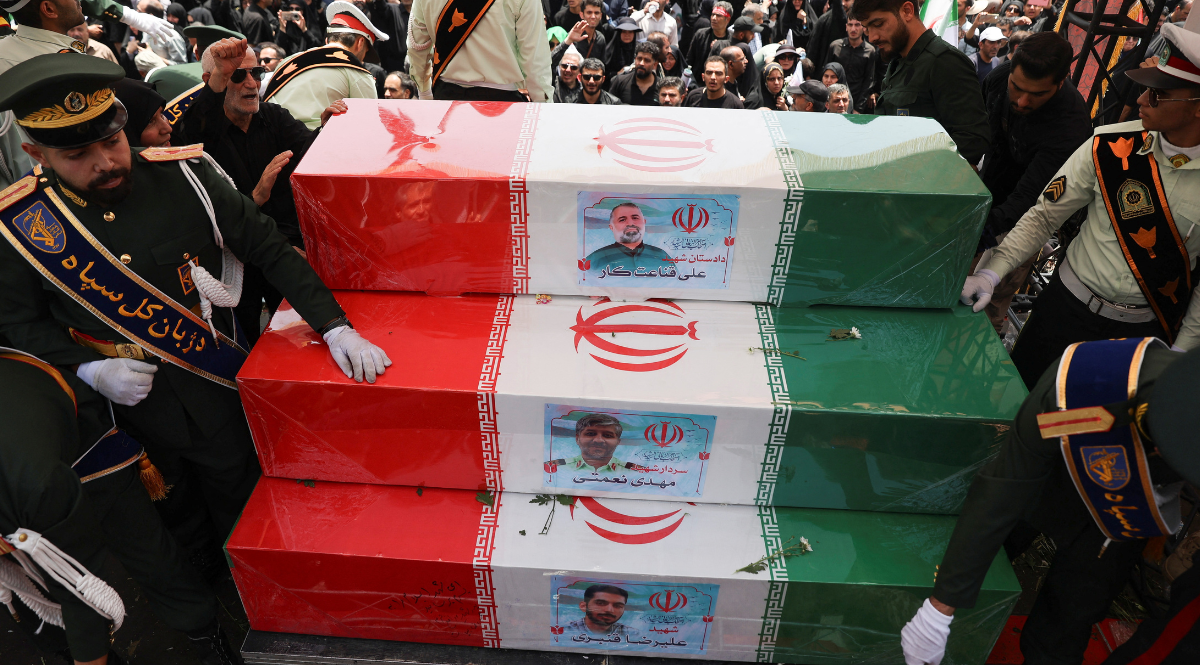
In other parts of the Middle East, Israel also has engaged in the use of force. The military operation against Iran seriously weakened Israel’s main regional rival, but the actual extent of the damage to the Iranian nuclear programme remains difficult to assess. Hezbollah targets throughout Lebanon are regularly attacked, which is met with a limited response from the organisation. Contrary to the ceasefire agreement, Israel also maintains control over several towns in southern Lebanon, which, combined with its military activity, undermines the credibility of the Lebanese authorities and allows Hezbollah to rebuild its support among the population. Israel also continues its aggressive actions against the new authorities in Syria. An example of this was the armed intervention during the fighting between the Druze and Bedouin populations in the As-Suwayda region, aimed at putting pressure on the government of Ahmed al-Sharaa and, among other things, forcing the demilitarisation of southern Syria.
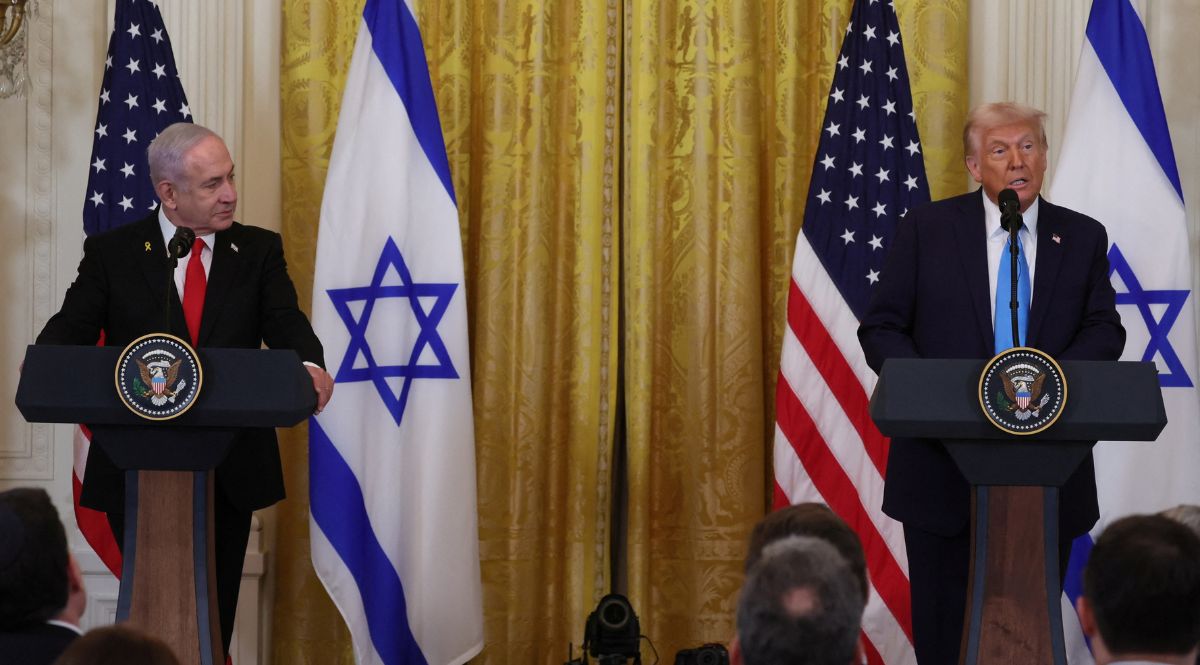
However, it is Israel’s policy towards the Palestinians that is causing growing opposition among its international partners, although they are not taking decisive action. On the U.S. side, the effectiveness of the pressure on Israel is most evident in the suspension of its activities in Syria and the maintenance of the ceasefire with Iran. The U.S. has not decided to take a stricter stance on the situation in the Gaza Strip, but there is a noticeable rift between Netanyahu and President Donald Trump. This was evident, among other things, during the prime minister’s visit to Washington in early July and in Trump’s comments on the famine in the Gaza Strip.
The debate on the use of available legal and treaty instruments within the EU has intensified. An internal review of the Association Agreement with Israel found that the country violated the agreement’s provisions on respect for human rights and humanitarian law. However, following Israel’s assurances that it would increase aid, the EU Council decided not to suspend, for example, the agreement on trade preferences, which would have not required unanimity. The European Commission, on the other hand, proposed suspending the participation of Israeli entities involved in military technologies in the Horizon programme. European countries are more active at the bilateral level, for example, imposing entry bans on Israeli ministers (Slovenia, the Netherlands), plans to embargo goods from West Bank settlements (Ireland), or declarations recognising Palestinian statehood (France, the United Kingdom).
Conclusions and Outlook
The chances of the government collapsing when the Knesset resumes its sessions in October are high. In the current political situation, the most likely scenario is a repeat of the crisis of 2019-2022 in which there were successive election cycles, during which Netanyahu remained in power as prime minister of a caretaker government. Short-term political calculations regarding the internal situation will influence his strategy towards the Gaza Strip and other parts of the region.
Growing international pressure is the most critical tool that could persuade Israel to soften its position towards a ceasefire in the Gaza Strip, but it also depends on the extent of concessions on the part of Hamas. A key element for Israel’s partners will be—apart from an immediate increase in humanitarian aid—guaranteeing the durability of the truce, especially since Israel may seek to maintain the option of returning to military action. European countries should expand bilateral sanctions further if the Israeli authorities continue their current actions in the Strip. It is also necessary to indicate what stricter measures will be taken if Israel attempts to implement plans to depopulate or annex the Gaza Strip. Diplomatic pressure from the EU, together with the U.S. and Arab countries, is also necessary to limit other destabilising actions by Israel in the region, including in Syria and Lebanon.


.png)