Management through chaos - the second phase of the truce in the Gaza Strip
The US and its allies have begun implementing the next stage of their plan for the Gaza Strip. The process remains fraught with numerous risks—stemming from Israel’s policy, the strengthening of Hamas, and the opaque nature of the plan and the roles of its various participants. As a result, there is a growing risk that the US and other partners will focus on stabilising the situation in the Gaza Strip in the short term, without supporting political solutions to the conflict.
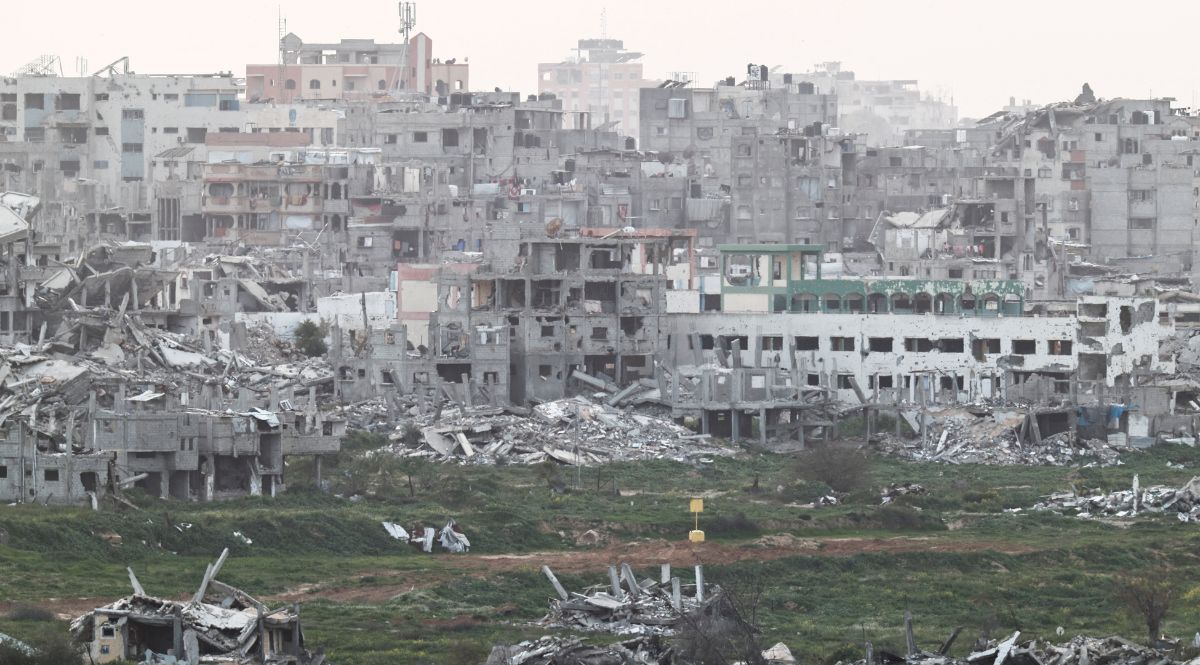 Amir Cohen / Reuters / Forum
The current situation in the Gaza Strip
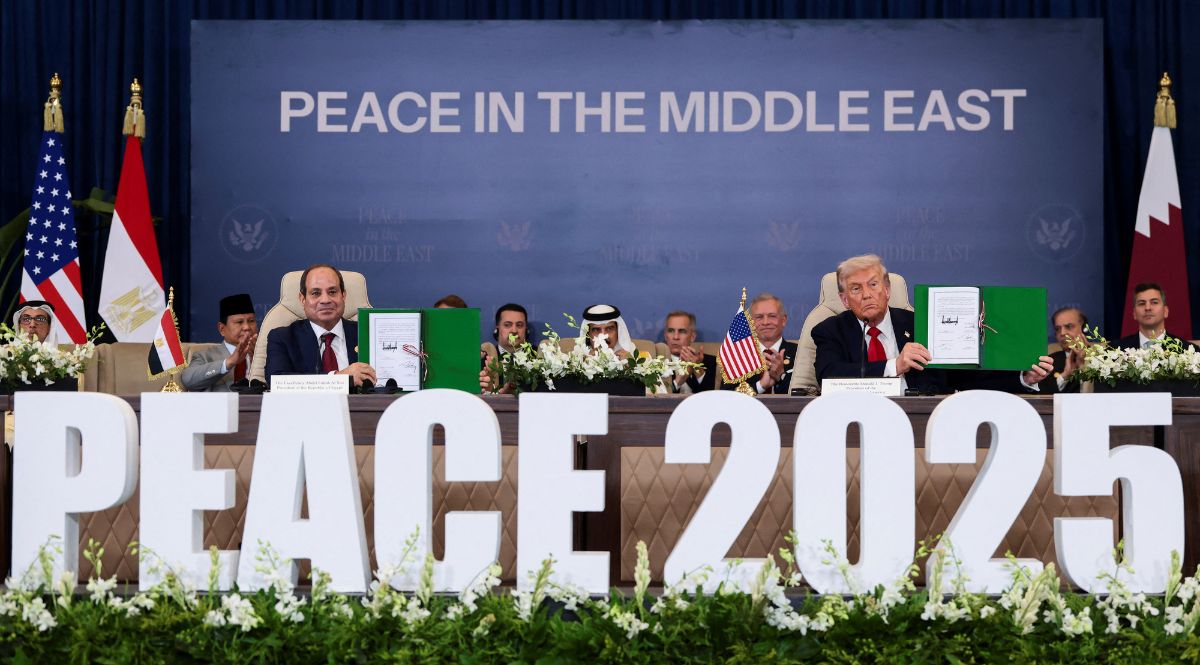
The agreement, based on Donald Trump’s 20-point peace plan, ended the open phase of the war between Israel and Hamas. However, it did not bring a complete end to the fighting, mainly due to the continuation of Israeli attacks throughout the Gaza Strip, which have since killed approximately 500 people (military and civilian casualties). Israel controls about 55% of the Strip, while the remaining area, home to about 1.9 million people, remains under Hamas control. After the truce was announced, the group quickly consolidated its power in its territory and rebuilt part of its forces. It is also effectively combating ephemeral armed groups that were formed with Israeli support and positioned themselves as an alternative to its rule. From Israel’s perspective, the key success of the first phase of the truce was the return of all those kidnapped alive in the attack on October 7, 2023, and the release of the bodies of the hostages.
The official number of Palestinians killed during the war (recognised by the Israeli army according to media sources, thus confirming earlier Palestinian data) is 71,000. However, this figure remains underestimated due to ongoing efforts to locate missing persons. Since the beginning of the war, approximately 100,000 Palestinians have left the Gaza Strip. Since February this year, the border crossing with Egypt in Rafah has been opened on both sides, operated by Palestinian Authority (PA) officials and the EUBAM Rafah mission. The border process remains strictly controlled by Israel, as do the operations of some aid organisations. The ceasefire and reduction in fighting have enabled increased volumes of material aid and imports, however, their inflow remains insufficient to effectively alleviate the humanitarian crisis. According to UN data, approximately 1.3 million residents have lost their homes, and approximately 80% of all buildings in the Strip have been destroyed or damaged. Difficult winter weather conditions are further exacerbating the sanitary crisis.
The institutional dimension of the truce
The US plan presented in September was approved by the UN Security Council in November last year, providing an international legal basis for the actions of the institutions it covered. Contrary to earlier announcements, the Peace Council (and its subordinate Management Board), established in January this year, turned out to be a broader organisation, centrally controlled by President Trump. The Israeli-Palestinian conflict is to be handled by the subordinate Executive Council for the Gaza Strip, which includes, among others, the closest associates of the US president, Jared Kushner and Steve Witkoff, high-ranking Middle Eastern politicians, and business representatives (see Appendix 1). The person responsible for coordinating the Executive Council’s work is Nikolay Mladenov, the High Representative for the Gaza Strip and UN coordinator for the Middle East peace process in 2015-2020, who is also a member of the Peace Council’s Board of Directors. The executive body is the National Committee for the Administration of the Gaza Strip (NCAG) – a nominally technocratic team of Palestinian politicians and activists led by Ali Shaath (former PA Minister of Transport), whose task is to take over the actual management of the territory and its population. The international Civil-Military Coordination Centre (CMCC), overseeing compliance with the ceasefire and humanitarian aid deliveries, as well as the International Stabilization Force (ISF), remain part of the system. The US has also presented a post-war reconstruction plan, but this plan, as put forward by Jared Kushner during the Davos summit, envisages a profound restructuring of the Strip’s entire urban fabric, even greater restrictions on Palestinian agency, and remains highly unrealistic in the current circumstances. The financial aspects of the entire plan also remain unclear.
Threats and challenges to a lasting ceasefire
The second phase of the truce is to be based on three key elements: new institutions taking over the administration of the Gaza Strip, the disarmament of Hamas, and the withdrawal of the Israeli army. The main limitation remains the unclear status of individual institutions and the scope of their responsibilities. The ability of the NCAG to function remains strictly dependent, on the one hand, on the support of supervisory bodies (in which no Palestinian representative is present) and, on the other, on the current decisions of Hamas and Israel. While Hamas has initially issued a decision on the possible transfer of powers, Israel is blocking the entry of NCAG members into the Strip.
The key issue, however, remains the disarmament of Hamas. The organisation firmly rejects the option of complete disarmament, which would include surrendering rockets (though few remain at this stage of the conflict) and explosives, as well as all small arms. Such an option would mean de facto abandoning the group’s fundamental ideological goal of armed struggle against Israel. A compromise solution that would be politically acceptable to Hamas could be, for example, the storage of some weapons in the Gaza Strip under external supervision. Full demilitarisation (including the destruction of the entire tunnel network) has been demanded by Israel, and supported by the United States, which is trying to link disarmament with guarantees of amnesty and secure residence for Hamas members in third countries—proposals included in Trump’s plan and also contested by Israel. There is also no body responsible for the disarmament process itself. The ISF was supposed to be such a body, but none of the signatory states of the Peace Council—except Indonesia—have declared their contingents. Without the deployment of the ISF, responsibility for seizing weapons would fall to the PA-subordinate police forces, trained in recent years by Egypt, and would generate the risk of intra-Palestinian clashes. An additional factor is the attitude of other terrorist groups present in the Gaza Strip, such as Palestinian Islamic Jihad, which also reject disarmament.
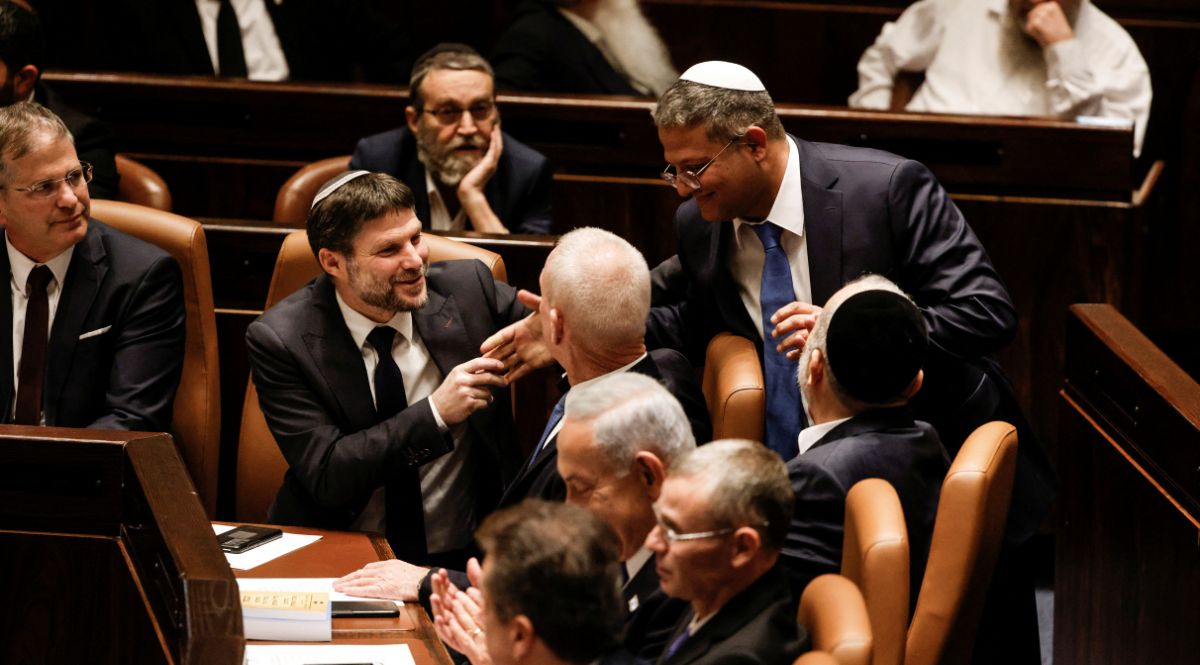
Israel, like Hamas, contests Trump’s plan and is seeking to maintain its control over areas of the Strip for as long as possible. It has made any reduction of its presence conditional on the demilitarisation of Hamas, while guaranteeing itself full freedom to use military force throughout the Strip and to maintain a permanent buffer zone on the Gaza side of the border. At the diplomatic level, Benjamin Netanyahu’s government is particularly opposed to Türkiye and Qatar participating in the implementation of the plan, especially to their potential presence within the ISF. Israel is also trying to block a broader return of PA structures to the Gaza Strip. The Israeli authorities have also repeatedly declared that if Hamas does not disarm, they are prepared to use force to achieve this. Such actions would mean a complete breakdown of the truce and a return to war. However, two main factors limit the likelihood of such a development. The first is opposition from the US, which, for political reasons, is interested in maintaining the truce signed by President Trump. The second is the electoral context in Israel itself, where a resumption of fighting could negatively affect support for the government. At the same time, it is precisely the ongoing election campaign and internal conditions that have a fundamental impact on the decisions of the ruling camp, which wants to avoid political risk vis-à-vis the electorate. This increases tensions with the US administration and forces de facto constant American diplomatic pressure (visits by key decision-makers) on Israel, visible, among other things, in the issue of opening the border crossing in Rafah.
Conclusions and prospects
The situation in the Gaza Strip is still transitional. While the chances of a return to full-scale war are low, Israel will continue its actions to destabilise the Strip, and Hamas will continue the process of rebuilding its forces. Netanyahu’s government, partly due to the electoral context, will contest parts of the plan that are politically inconvenient for it, hindering negotiations and diplomatic efforts. The success of the next phase’s implementation depends largely on reaching a compromise on Hamas’s disarmament and political future. If this process fails, it will provide Israel with a pretext for more intensive attacks and may influence the US’s strategic calculations. This means that low-intensity conflict will continue in the coming months, with no chance of urgent and necessary support for the Palestinian population or of developing long-term political solutions.
The refusal of most EU countries to participate in the Peace Council, along with other tensions in relations with the US, is limiting political engagement. Cooperation with the Arab countries involved, consistent use of existing institutions (EUBAM), and expansion of activities in areas necessary to improve the situation of the population and support reconstruction (e.g., demining) remain key.