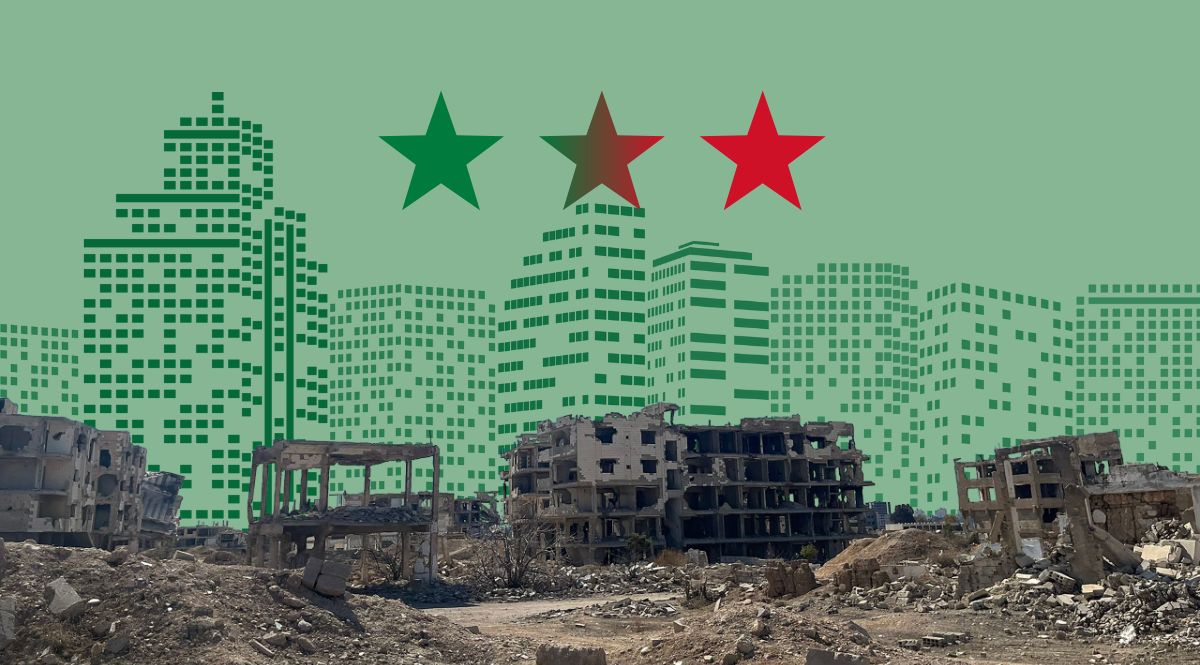
Lebanon Reforms Amidst an Era of Change in the Middle East
The ceasefire between Hezbollah and Israel signed at the end of November last year was the impetus for groundbreaking changes in Lebanon. After two years of negotiations, Lebanese parliamentarians finally agreed on the appointment of a new president, Joseph Aoun, whose candidacy was supported by the United States, France, Saudi Arabia, and Qatar. However, the continued presence of Israeli troops in Lebanon and the continuation of their attacks in the region threaten further stabilisation and undermine the Lebanese government’s efforts to disarm Hezbollah. The latter uses the attacks to break its political isolation, emphasising that it was the only one capable of forcing Israel to withdraw from Lebanese territories in 2000 and 2006.
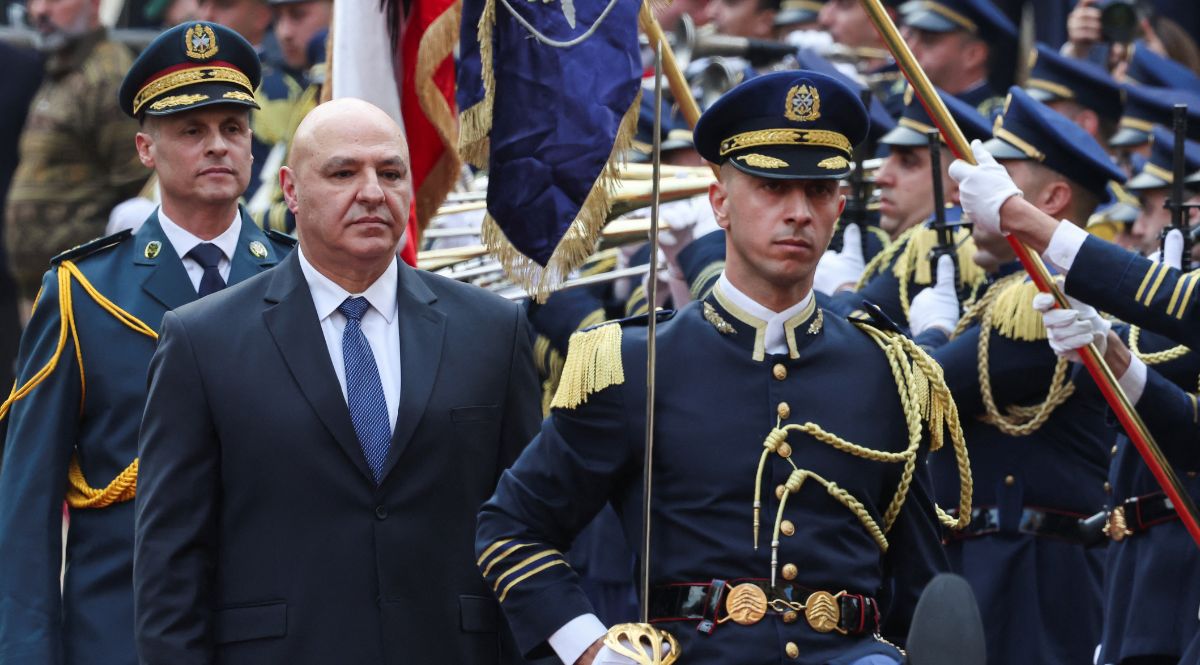 Mohamed Azakir / Reuters / Forum
The structural changes in the Middle East triggered by the war in the Gaza Strip, such as the weakening of Hezbollah and the fall of Bashar al-Assad in Syria, were among the impulses breaking the political deadlock in Lebanon. Despite the formation of a new government, the entanglement of internal and regional rivalries in the country, as well as the country’s financial collapse caused by systemic corruption, threaten further stabilisation. The solution requires not only political reform but also in limiting the actions of Lebanon’s neighbours, primarily Israel, which undermine its sovereignty. Withdrawal of Israeli troops from southern Lebanon, where their presence is one of the main threats to the consolidation of Lebanese statehood, would facilitate this. France, which is the only EU country directly involved in the negotiations between Lebanon and Israel, remains the most important western voice defending Lebanese sovereignty.
Southern Lebanon and Syria in Hezbollah’s Relations with Israel
A key element in building Hezbollah’s strength and internal legitimacy was its armed resistance to Israel. This was a consequence of the IDF’s occupation of southern Lebanon from 1982 to 2000, when it withdrew from Lebanon, partly under pressure from Hezbollah’s guerrilla activities. Another success in this regard was the 2006 war, when Hezbollah’s tactics led to significant damage and casualties in the Israeli army (although in fact the Lebanese side suffered greater losses). Hezbollah’s victory rhetoric allowed it to increase its popularity, even beyond its traditional group of supporters. This enabled the organisation to strengthen its role in Lebanese politics, which had previously been dominated by Christian and Sunni parties. However, Lebanon’s religious diversity and the Lebanese people’s attachment to the autonomy of religious communities required Hezbollah to reject the ideology of the Iranian revolution and reduce its dependence on Iran.
Political success, a high level of armament (missile arsenal and at least 70,000 fighters), funds obtained from Iran and criminal activities, and positioning itself in opposition to the corrupt authorities who ignored the Shiites, allowed Hezbollah to dominate Lebanese politics for almost two decades. It has used this position to hinder the activities of UNIFIL, the UN peacekeeping mission established in 1978 to monitor the ceasefire between Lebanon and Israel. One of its tasks was to ensure that only the Lebanese state had access to weapons in the border areas. The failure in this regard, also resulting from UNIFIL’s limited prerogatives, was the reason for Israel’s criticism, although it itself repeatedly violated the terms of the ceasefire by carrying out airstrikes on southern Lebanon, building structures in disputed territories, and using the country’s airspace without its consent. The latter was primarily related to Hezbollah’s involvement in the civil war in Syria on the side of the Assad regime. This allowed the organisation to increase its control over smuggling routes and strengthen its position in the Iranian so-called axis of resistance. It also improved cooperation between organisations supporting Iran from Iraq, Syria, and Lebanon, which Israel attempted to limit by carrying out airstrikes on Hezbollah positions in Syria in agreement with Russia, which supported Assad.
Lebanon before the Start of the War in the Gaza Strip
For decades, Lebanon’s political system has made it vulnerable to the influence of global and regional actors. In recent years, this has been particularly related to the conflict between Israel/U.S. and Iran and Saudi Arabia’s attempts to consolidate influence in the Middle East. These countries use the political structures in Lebanon representing a given religious group (18 of them), especially Shiites, Sunnis, and Christians, in their activities. Since the Lebanese civil war (1975-1990), Israel has cooperated with Christian militias, but after the war ended, most of them disarmed and, like other groups in Lebanon, began to view Israel as a hostile state. Iran has co-financed Shiite militias and political parties, such as Amal and Hezbollah, with the latter in particular pursuing its interests in Lebanon by undermining state institutions, including the army, and engaging in foreign conflicts (e.g. in Syria) against the will of the government and society. Saudi Arabia has strengthened its influence by supporting Sunni and Christian parties, especially the Future Movement founded by Rafik Hariri, who was one of Lebanon’s most prominent politicians, serving as prime minister, and who was assassinated in 2005, most likely by Syria and Hezbollah.
The three main religious groups dominate the Lebanese political structure. The political system in the country, known as consociational democracy, allocates a specific number of seats in parliament to each religious group and assigns government functions to their representatives (the president of Lebanon is always a Maronite Christian, the prime minister a Sunni, and the speaker of parliament a Shia; positions in the army and even—although unofficially—ministerial portfolios are defined in a similar way). This is to ensure that each religious group can block legislation that is unfavourable from its perspective. Although since the end of the civil war, this system has helped avoid large-scale internal conflicts, it is also complicit in systemic corruption and state ineptitude and hinders the entry into politics of movements not affiliated with the so-called traditional parties, which operate along religious lines. It became the target of mass protests in Lebanon in 2019 after the collapse of the state’s financial system, when about 20% of the population took to the streets. The resignations of successive governments, including after the explosion at the port of Beirut in 2020, contributed to the political impasse. The interim government formed in 2021 had limited powers, which made it impossible to implement the reforms necessary to release international financial aid. Elections were held in 2022, but it was still not possible to form a government. Inflation in Lebanon was then close to 240% and about 2 million of the nearly 6 million population lost access to their savings in banks. Access to state-provided electricity has fallen sharply, amounting to about four hours a day in Beirut. To this day, the population relies on generators owned by private individuals, often corrupting political forces controlling a given city or district. Access to resources has also been hampered by the sudden increase in Lebanon’s resident population caused by the arrival of about 1.5 million Syrian refugees between 2011 and 2015.
The War in the Gaza Strip and the Future of Lebanon
Stability on the Southern Border
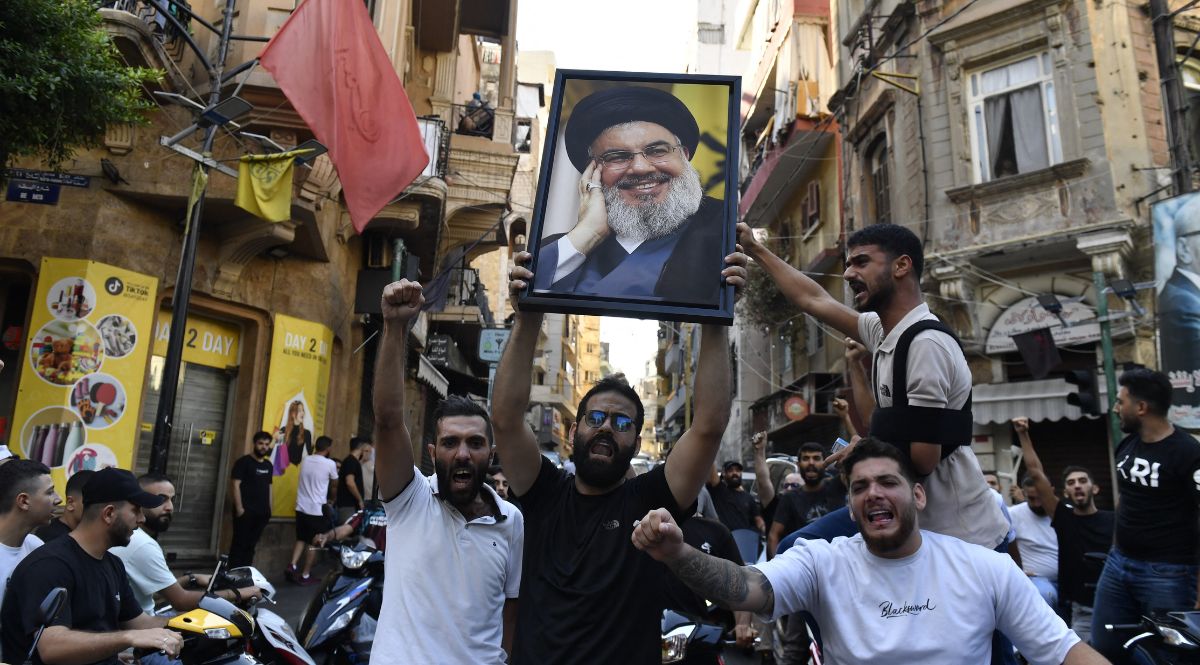
Already in October 2023, Hezbollah—against the will of the Lebanese interim government and its coalition partners—joined in the action against Israel in the context of the war in the Gaza Strip. Although the organisation’s actions forced the evacuation of between 60,000 and 100,000 residents of northern Israel (while Israeli airstrikes forced nearly 100,000 Lebanese to flee), they were calibrated to minimise the risk of a full-scale war. Hezbollah wanted to consolidate its influence on the Palestinian-Israeli conflict, while avoiding accusations of acting against the interests of the Lebanese people due to cross-party opposition to Lebanon’s involvement in the conflict between Israel and the Palestinians. However, thanks to a tactical advantage gained after an operation targeting Hezbollah members through their communications devices and the killing of the organisation’s command staff, including its leader Hassan Nasrallah, Israel launched a ground invasion of Lebanon at the end of September last year. From October 2023 to the end of November 2024, about 3,800 people were killed in Lebanon as a result of the hostilities, including civilians (journalists, doctors, rescue workers, UN employees, and 240 children).
In November, thanks to the support of the U.S. and France, a ceasefire was negotiated between Hezbollah and Israel, which gave the latter the opportunity to continue its attacks when necessary. The losses suffered by the organisation not only forced it to agree to withdraw from the border territories but also led to its political isolation. Even Hezbollah’s coalition parties pressed it to agree to the terms of the ceasefire. The Lebanese authorities have committed to disarming Hezbollah. The deadline imposed by Israel of by the end of this year is most likely beyond the reach of the Lebanese authorities due to the weakness of the state and external circumstances. Israel itself is not fulfilling its commitments under the agreement and its troops remain present in six locations near the border. It also has attacked Lebanese soldiers seeking to implement the ceasefire, which in several cases resulted in deaths. Israel also refuses to participate in talks on the final course of the border. From the perspective of many Lebanese, especially those in the south, these are arguments against disarming Hezbollah. Fear of IDF actions is heightened by the planned withdrawal of UNIFIL from Lebanon at the end of 2026, which was seen as an important obstacle to a potential resumption of Israel’s occupation of Lebanon and attacks on its population. As one of the guarantors of the ceasefire, France has proposed deploying its troops on the border in place of UNIFIL and is pushing for the protection of Lebanon’s sovereignty, emphasising the risk of destabilisation associated with IDF actions. However, Israel rejected France’s proposals, and the U.S. is attempting to marginalise its role, for example, by not informing it about meetings with the Lebanese government concerning the situation on the border.
The Fall of the Syrian regime
The weakening of Hezbollah following Israel’s actions contributed to the fall of the Assad regime in Syria in December last year. At that time, some of the soldiers of the former regime’s army crossed into Lebanon and hid in Hezbollah-dominated areas near the border. Syrian military equipment was also observed in Lebanon, probably taken over by Hezbollah. In this context, attempts to regulate the Syrian-Lebanese border and normalise relations between their governments, supported by France and Saudi Arabia, are a positive sign. This is facilitated by financial support for the Lebanese army provided by France, Qatar, and Saudi Arabia, among others, as well as the strengthening of the deployment of Lebanese troops along the border, there it has prevented several attempts to smuggle weapons and drugs over the border and seized a production laboratory for captagon, a popular narcotic.
The Lebanese hope that regime change in Syria will allow for a new beginning in mutual relations and the revision of some bilateral agreements. Most of these were signed at a time when Syria’s influence dominated Lebanese politics (until around 2005), thanks in part to political assassinations and relations with Hezbollah and the Amal party. Another priority for Lebanon is the return of Syrian refugees, whose presence in recent years has been met with opposition and hostility from citizens. Counting on foreign support in these areas, President Aoun held an online conversation during his visit to Paris with the new Syrian leader Ahmad al-Sharaa in the presence of French President Emmanuel Macron.
(Re)building the State
The weakening of the Iranian “Axis of Resistance” and the gradual destruction of its smuggling routes are limiting Hezbollah’s ability to rebuild. However, the Israeli army remaining in Lebanon and its brutal campaign in the Gaza Strip are conducive to the recruitment of fighters and breaking the organisation’s political isolation. This hampers the capabilities of the Lebanese army, tasked with disarming the organisation. In August this year, Prime Minister Nawaf Salam appealed to the international community for financial support for the army, emphasising the need to establish its monopoly on weapons. This would be facilitated by the limited successes achieved so far in this area, such as the gradual surrender of weapons by armed organisations in Palestinian refugee camps, which until now were beyond control of the Lebanese security forces.
Hezbollah’s political weakening made it possible to end the more than two-year presidential crisis in December 2024. Previously, it had been impossible to reach an agreement on the election of the president, as in Lebanon candidates are nominated by political party leaders and then must be approved by a two-thirds majority in parliament. Ultimately, Aoun, a former army commander whose candidacy had previously been blocked by Hezbollah and its allies, was supported by the U.S., France, Saudi Arabia, and Qatar. Within six months of the appointment of the president and the formation of a new government in Lebanon, the authorities launched processes that are key to the stabilisation and reconstruction of the country. A new banking law was enacted, the deployment of the army along the borders with Syria and Israel was increased, and funds for reconstruction began to be collected (about $11 billion is needed).
The challenge for the state is to rebuild the trust of a society exhausted by the systemic corruption dominating public services by private actors linked to religious communities and the loss of financial resources caused by the weak banking system. It will be particularly difficult to strengthen the role of the state in the south, where most services, including the financing of schools, hospitals, and the reconstruction of war-damaged property, are controlled by Hezbollah. The new government has already begun talks with financial organisations such as the International Monetary Fund (IMF) about potential support for Lebanon to help change this. However, the incompetence of the previous authorities was also influenced by staff shortages and extremely low salaries and poor public sector funding. Since 2019, the salaries of security service employees have fallen from around $800 to $100 per month, and soldiers often work “second jobs” in the service sector. Without taking these circumstances into account, IMF aid, which is usually conditional on neoliberal reforms aimed at reducing the public sector, may further exacerbate these phenomena.
Conclusions and Recommendations
Regional changes have limited Hezbollah’s influence on the situation in Lebanon. Its isolation was crucial in creating a window of opportunity for rebuilding the state and establishing a government committed to political and economic reforms. However, their success depends on the stability of the compromise between the political parties, each of which is capable of blocking the actions of state institutions. This is not helped by Israel’s actions, which weaken the legitimacy of the Lebanese army and reinforce the belief that Hezbollah needs to keep its weapons in order to deter Israel. This is further exacerbated by Hezbollah’s continued activity on the border with Syria. In this context, both political and material support for the Lebanese army and the new authorities in Syria will be crucial. Given the uncertain political intent of the U.S. in this regard, it would be beneficial for the EU and its Member States to take on a greater role in these activities. Countries that remain involved in UNIFIL and have experience in cooperating with the Lebanese army, such as Poland, could play a particularly important role and provide material support to Lebanese soldiers.
In this context, it will also be important for the EU and its Member States to provide diplomatic support to France, whose status in the Lebanese-Israeli dispute enables European countries to monitor and more effectively influence the situation in their southern neighbourhood. Therefore, from their perspective, it would be beneficial to deploy French troops on the border with Israel and, consequently, to exert joint pressure on that country to accept the French initiative. France will probably also try to extend the deadline for the withdrawal of UNIFIL troops from Lebanon, which should be supported by the countries whose troops are participating in the mission, including Poland. The presence of international armed forces could also serve to improve the situation on the Lebanese-Syrian border. However, this will not be possible without gestures of goodwill on the part of Israel, which therefore means that pressure on that country will be necessary to improve the situation in the EU’s southern neighbourhood. Therefore, Israel’s actions in Lebanon should also be among the considerations by the EU in terms of the possibility of imposing sanctions on Israel. It would also be worth looking at EU cooperation with Lebanon’s Arab partners, such as Saudi Arabia or Qatar, in stabilising the situation on the country’s southern border, such as training for Lebanese border guards and soldiers.

.png)