No breakthrough at the European-African summit in Luanda
On 24-25 November, the seventh European Union-African Union summit was held in Luanda, the capital of Angola. It was dominated by issues related to security, competition with China via the EU's Global Gateway programme, and access to critical minerals. The meeting also served to demonstrate a mutual commitment to multilateralism.
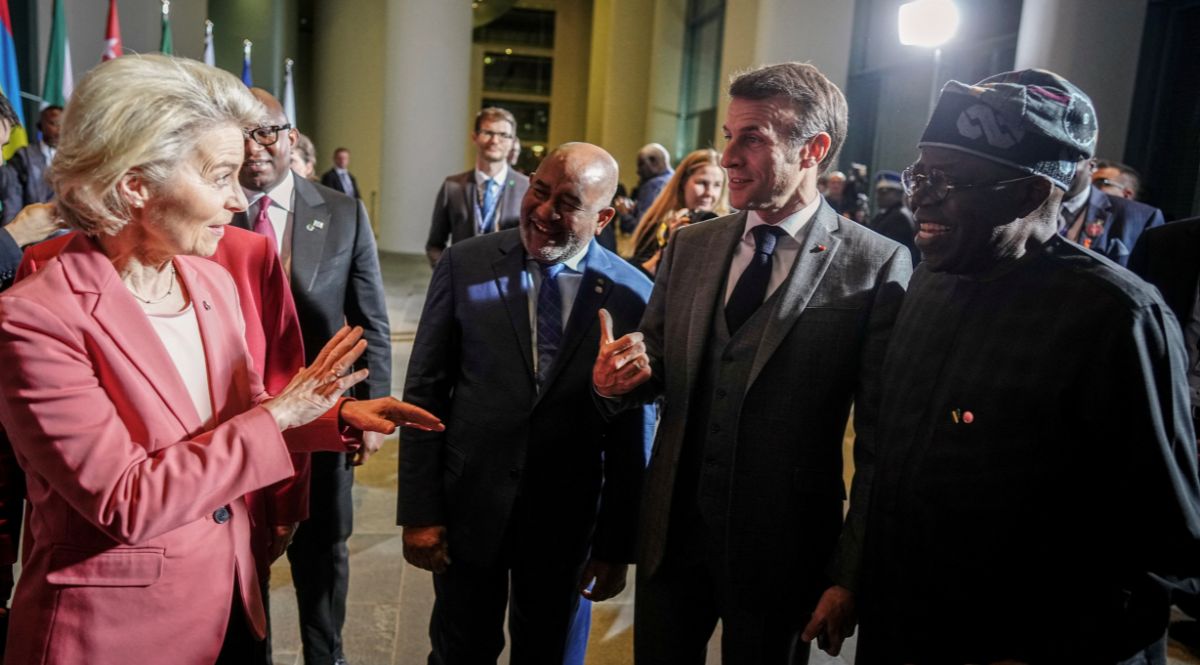
Meetings between leaders of European Union (EU) countries and institutions and their African counterparts have been held since 2000, in their current format every three years, alternating between African and European capitals. They serve to review and update the European-African partnership, set the direction for cooperation in the context of current global challenges, and announce joint projects for the coming years. This year’s summit was held under the slogan “Promoting peace and prosperity through effective multilateralism”, identifying the most important topics for discussion, which were subsequently included in the final declaration.
Context and conclusions
It was no coincidence that the summit was held in Angola, through which runs the export route for raw materials from the DRC and Zambia, the so-called Lobito Corridor. This is the largest European-American investment in Africa, aimed at facilitating EU access to key mineral resources. It is being carried out as part of the EU’s flagship initiative, the Global Gateway Africa – Europe Investment Package, worth approximately €150 billion. The summit was therefore an opportunity to highlight the progress of projects implemented under this portfolio, mainly in the areas of green and digital transformation (e.g. the development of photovoltaics and green hydrogen), infrastructure (e.g. submarine cable connections between the EU and North, East and West Africa, but also, for example, the expansion of the port of Ziguinchor in Senegal), public transport (e.g. a new bus system in Nairobi, Kenya) and healthcare (support for vaccine availability and local production). To strengthen the pro-growth dimension of investments, the European Bank for Reconstruction and Development recently expanded its activities to the first sub-Saharan African countries (Nigeria, Benin, Côte d'Ivoire), with plans for Kenya, Ghana and Senegal. Along the same line, the EU declared an increase in support for the implementation of the African Continental Free Trade Area (AfCFTA).
With the growing number and scope of conflicts on the African continent and the exhaustion of the UN peacekeeping and stabilisation mission formula, security issues have come to the fore. European Council President António Costa emphasised that the EU remains Africa’s most important partner in this area (e.g. through the European Peace Facility), which it also sees as an investment in its own security. In this context, it was confirmed, among other things, that cooperation in the areas of maritime security, combating terrorism and threats in the information space would be strengthened. Condemning the massacres in Al-Fashir, Sudan, by the so-called Rapid Support Forces (RSF) and supporting efforts for peace in the Democratic Republic of Congo (DRC), the participants pointed to African institutions – the African Union and the Intergovernmental Authority on Development (IGAD) – as the appropriate bodies to lead efforts to end wars or conduct mediation.
Multilateralism and competition
The summit was an opportunity to emphasise the commitment to joint, consensual action on the global stage. This is to be achieved through the implementation of the Pact for the Future (created mainly on the initiative of African countries), support for the expansion of the UN Security Council, and the strengthening of cooperation in the areas of taxation, climate and commitment to trade rules.
At the same time, however, Africa is an area where the EU is in competition with other players. Global Gateway is a project that was created as an attempt to build an alternative to China’s Belt and Road Initiative. Chancellor Friedrich Merz made no secret of this, emphasising that the EU “does not want to leave the continent to others”. In addition to the subject matter of the projects themselves, the EU’s offer is also intended to be more transparent than China’s approach, one that does not attract corruption or replicate poor governance standards. However, the Chinese side is also making an effort to discourage countries from cooperating with the EU. During the recent G20 meeting in Johannesburg, it presented a new initiative for the modernisation of Africa, where it emphasised a departure from those elements that the EU had previously criticised in the Chinese approach (its role as the unilateral designer and implementer of projects).
In turn, the announcement of intensified cooperation to combat hybrid threats, disinformation and increase cybersecurity is a response to Russian activities in the infosphere of African countries, whose influence the EU is trying to limit. This was reflected, for example, in the establishment in 2023 of a strategic communications team for Africa within the European External Action Service.
European leaders, on the other hand, have not commented on the policies of the United Arab Emirates (UAE), which has grown in recent years into a leading investor in Africa (USD 110 billion for projects in 2019-2023), often in the same areas as the EU, such as green energy. The UAE is seeking, among other things, to take control of seaports and logistics hubs on the continent, and enjoys considerable financial flexibility, which African governments are increasingly taking advantage of (and becoming dependent on) in an era which has seen the collapse of the humanitarian and development cooperation system. This has influenced, for example, this year's election of the director of the African Development Bank (AfDB), where a candidate linked to the Gulf financial world, rather than Western institutions, gained the upper hand.
Assessment
At a time of crisis in multilateral cooperation and the growing importance of transactional diplomacy, emphasising the importance of multilateralism was significant both for Europe, threatened by uncertainty about alliances and security, and for Africa, which benefits, for example, from its participation in the UN system. The summit’s agenda largely corresponded to the context of changes in the international order, seeking ways to defend its beneficial elements. Therefore, strengthening AfCFTA serves to refresh the idea of free trade, which is in crisis due to, among other things, the US tariff policy.
The EU still hasn’t fully adapted to the reality in which it is only one of many external partners in Africa. African countries, as emphasised by the co-host of the summit, Angolan President João Lourenço, see it as beneficial to expand their range of partnerships rather than choosing one over the others. Therefore, they will generally be wary of the EU’s intention to intensify relations as a means of competing with China (although, for example, the DRC and Angola believe that China’s influence is too great and needs to be balanced). The African Union, recently admitted to the G20, and individual African countries are advocates of multilateralism as an approach that enables weaker actors to gain influence on global issues. Nevertheless, “summit diplomacy” is increasingly criticised in Africa. Currently, meetings in a similar format, bringing together African leaders and a single partner, are organised by China, Japan, India, Russia, Turkey and France, among others. From the point of view of African countries, the multitude of such initiatives, whose organisers informally compete for the number of participating heads of state or the value of announced projects, does not strengthen Africa's agency and does not allow for discussions that take into account the specific characteristics of individual countries. In the case of the Luanda summit, the ceremonial aspect dominated, while breakthrough decisions were lacking.
The emphasis in the final declaration on the need to achieve lasting and just peace in Ukraine, Palestine, Somalia, South Sudan, the DRC and the Sahel region was an attempt to show that the EU does not apply double standards. However, a problematic and, in many respects, inconsistent approach to relations with Africa was evident. While the talks emphasised the importance of labour mobility, they took place in the context of the EU’s efforts to reach agreements with African countries on the expulsion of undesirable migrants, accompanied by a re-evaluation of the existing human rights-based approach. On the other hand, the emphasis on development in the declaration is difficult to reconcile with the approach to raw materials presented in the Lobito Corridor initiative. In this initiative, the European Union is primarily seeking to gain control over valuable resources, while the real benefits for the African countries involved in the project, such as the intensification of internal trade, remain illusory for the time being.