UN Missions in Africa Set to Change After the Withdrawal of MINUSMA from Mali
Mali’s military authorities requested the removal of the UN mission in Mali (MINUSMA). It will be completed by the end of 2023. At the same time, the withdrawal of the MONUSCO mission from the Democratic Republic of Congo may begin—the country’s authorities have accused it of being ineffective in fighting the rebels. The end of two important UN military missions threatens destabilisation in the areas where they operate. The tendency in African countries to expand the pool of security partners will also force a redefinition of the methods of implementing peacekeeping missions on the continent.
 Andy Spyra / Laif / Forum
The United Nations, following failures of its missions in Somalia and Rwanda in the early 1990s, both suffering from limited strength and a mandate, adopted a new model of response to civil wars in Africa. It was the introduction of large, multi-task military missions with a broad civilian component, combining many functions. They included support for institution-building, humanitarian aid, civil protection, peacekeeping, and training tasks. This approach has brought results, for example, in Côte d'Ivoire and Liberia, which, with the help of the UN, emerged from a state of political chaos.
Currently, the four largest UN military missions in the world are conducted in Africa: MINUSCA in the Central African Republic (CAR, about 17,000 military and police personnel in July this year), UNMISS in South Sudan (15,000), MONUSCO in the Democratic Republic of the Congo (DRC, 14,000) and MINUSMA in Mali (13,000). They constitute about 80% of all UN missions in the world.
Mali
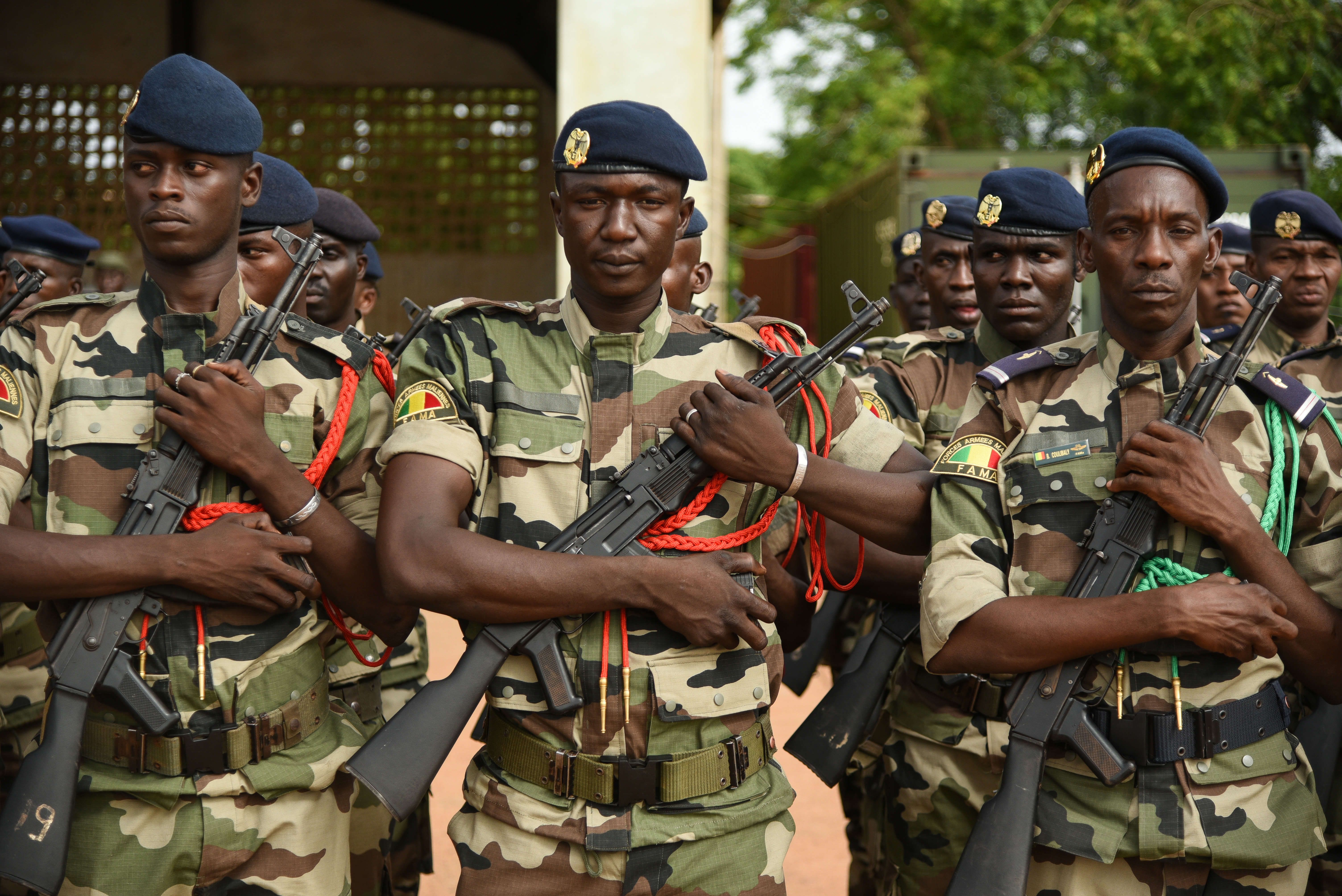
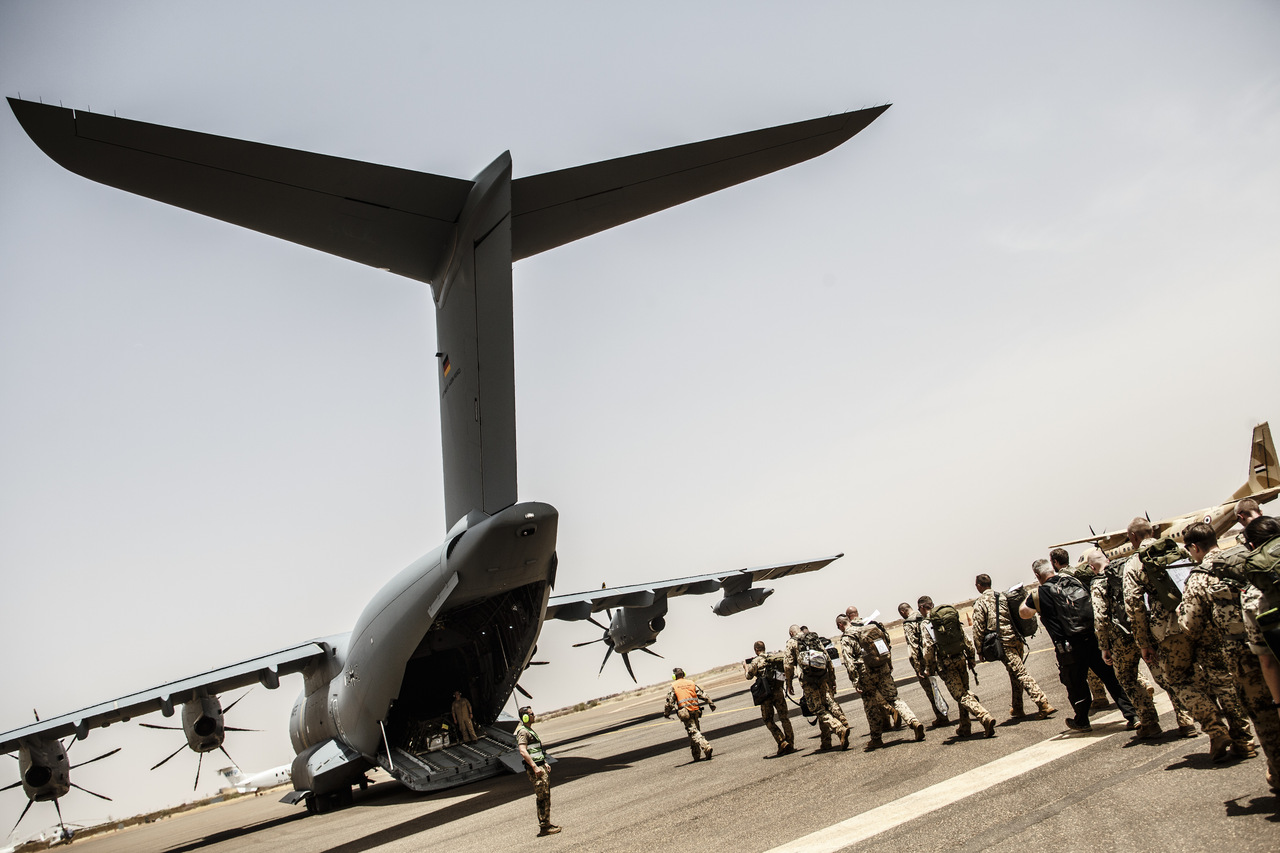
The MINUSMA peace support operation was established in 2013 following the French and West African intervention against jihadist groups. Among others, contingents from Chad, China, and Senegal participated. Its task was to support the political transformation in Mali and protect the civilian population. After the peace agreement in Algiers was concluded in 2015 between the central authorities and Tuareg and Arab separatists from the north of the country, it was to facilitate its implementation, ensuring a fair division of wealth and wider participation in the administration for the northerners. In practice, in areas from which central forces withdrew in 2012 under pressure from separatists (and later jihadists), MINUSMA provided a substitute for administration and public services. It was the most expensive (budget of $1.2 billion) and the most dangerous UN mission in which more than 300 of its soldiers died. Patrols in the areas most at risk of attacks were conducted mainly by the Chadian contingent. The presence of the UN was not able to prevent the revival and expansion from around 2018 of extremist groups gaining some support in local communities. Currently, jihadists operate within the Al-Qaeda-linked coalition Jama'at Nusrat al-Islam wal-Muslimin (JNIM) and the so-called Sahel Province of the Islamic State. The military coup in Mali in 2020 and the invitation of the Russian Wagner Group in 2021, as well as the escalating political dispute with France, increased nationalist sentiments in Mali. The country’s inhabitants increasingly blamed the international community for security problems. After the expulsion of the French ambassador at the beginning this year, the Malian authorities, with encouragement from Russia, began to obstruct MINUSMA. In such conditions, the UK, Germany, Sweden, Côte d'Ivoire, and Benin began to withdraw their contingents (or announced they would do so). On 16 June, the Mali authorities demanded the immediate termination of the mission, which was approved by the relevant UN Security Council resolution on 30 June. The withdrawal of peacekeepers is taking place in an extremely unfavourable environment. The Wagnerians—allies of the Malian authorities in the field—are unable to cope with the emerging security void. The ceasefire provided for in the Algiers Agreement has collapsed. From August this year there have been clashes between Tuareg forces and the Malian army supported by Wagnerites, especially over control of the bases MINUSMA withdraws from. Additionally, the ISIS-linked jihadists have strengthened in the Menaka region where for the first time since 2012, they began to create state-like structures, and JNIM has been blocking the city of Timbuktu since September.
DRC
UN forces have been operating here continuously since 1999/2000 when the MONUC mission was established (in 2010 renamed MONUSCO), initially to supervise the Lusaka Agreement ending the so-called second Congo war. Over time, its tasks concentrated in the eastern part of the country, in the natural-resource-rich provinces of North Kivu, South Kivu, and Ituri, where over 100 local armed groups operate. Currently, the most dangerous of them are the Rwandan-backed M23 movement, representing the Tutsi population, and the Madina at Tauheed Wau Mujahedeen (MTM) movement, linked to the Islamic State, originating from the Ugandan Allied Democratic Forces (ADF). The task of the UN forces (mainly composed of Asian contingents) in this area is to protect the population against threats from all armed groups and to support the DRC authorities in their efforts to promote peace and security. MONUSCO’s greatest success was defeating the first M23 rebellion in 2013, thanks to the participation of an intervention brigade authorised to pre-emptively attack the enemy, composed of soldiers from Tanzania, South Africa, and Malawi. Since then, however, MONUSCO’s presence has been accompanied by growing frustration with the growing influence of armed groups. After a wave of MTM/ADF attacks on civilians, violent protests against MONUSCO’s inaction broke out in 2019, and again in July 2022 after the mission’s spokesman, Mathias Gillmann, said that the UN mission was unable to counter the well-equipped guerrillas of the revived M23. DRC authorities ordered the spokesman to leave the country. Due to the growing hostility of the inhabitants, the mission was unable to perform its duties and practically stopped patrolling. Simultaneously, the Congolese authorities were increasingly willing to use the support of other forces: in 2021, they authorised the Ugandan intervention against MTM/ADF; in 2022, they invited the mission of the East African Community under Kenyan leadership (forces from Kenya, Burundi, Uganda, South Sudan, ultimately 12,000); and starting from the late 2022, about 1,000 Romanian mercenaries from Asociata RALF arrived. Finally, on 21 September, in his speech at the UN General Assembly, DRC President Felix Tshisekedi announced he would seek the mission’s withdrawal between December 2023 and December 2024. This declaration had an electoral context, as Tshisekedi is running for re-election in December’s elections.
Prospects for Changes in the Approach to Missions
The UN’s involvement in Africa is accompanied by systemic weaknesses. Peacekeepers operating in the field are dominated by poorly trained troops from African (mostly from Rwanda, Ghana, Senegal) and Asian countries (Bangladesh, Nepal, India). Contributing states use their involvement politically, and in some cases also financially. This does not necessarily translate into the professional operation of the mission—for example, the participating countries prefer if the mission does not have a clear time horizon. The extensive, autonomous structures lead to “states within a state” and conditions conducive to abuse, including in relations with the local population.
The withdrawal of forces from Mali and the announcement of the end of the operation in the DRC coincide with a discussion at the UN on the future of the response to crises. Therefore, the experiences from both countries will be important for the organisation to develop a new formula of engagement in Africa. It is shaped by the current political context in which the authorities of subsequent African countries are willing to forego foreign aid in the name of “restoring sovereignty”. In the case of Mali, this decision was facilitated by the perception of the UN as favouring the consolidation of the actual partition of the country. In the DRC, the mission’s inability to build trust with the local community turned out to be crucial. However, it did not translate into any significant changes in its planning at the level of the UN Peacekeeping Department. The context of the war in Ukraine is also important. The inability of Western countries to reach an agreement with Russia at the UN Security Council results in the unlikelihood of establishing new, large missions in Africa where Russia seeks to extend its influence. More likely is the creation of smaller, limited interventions with the leading role of African states, such as the Kenyan police mission in Haiti, approved by the UN Security Council on 3 October, despite a risk of ineffectiveness.
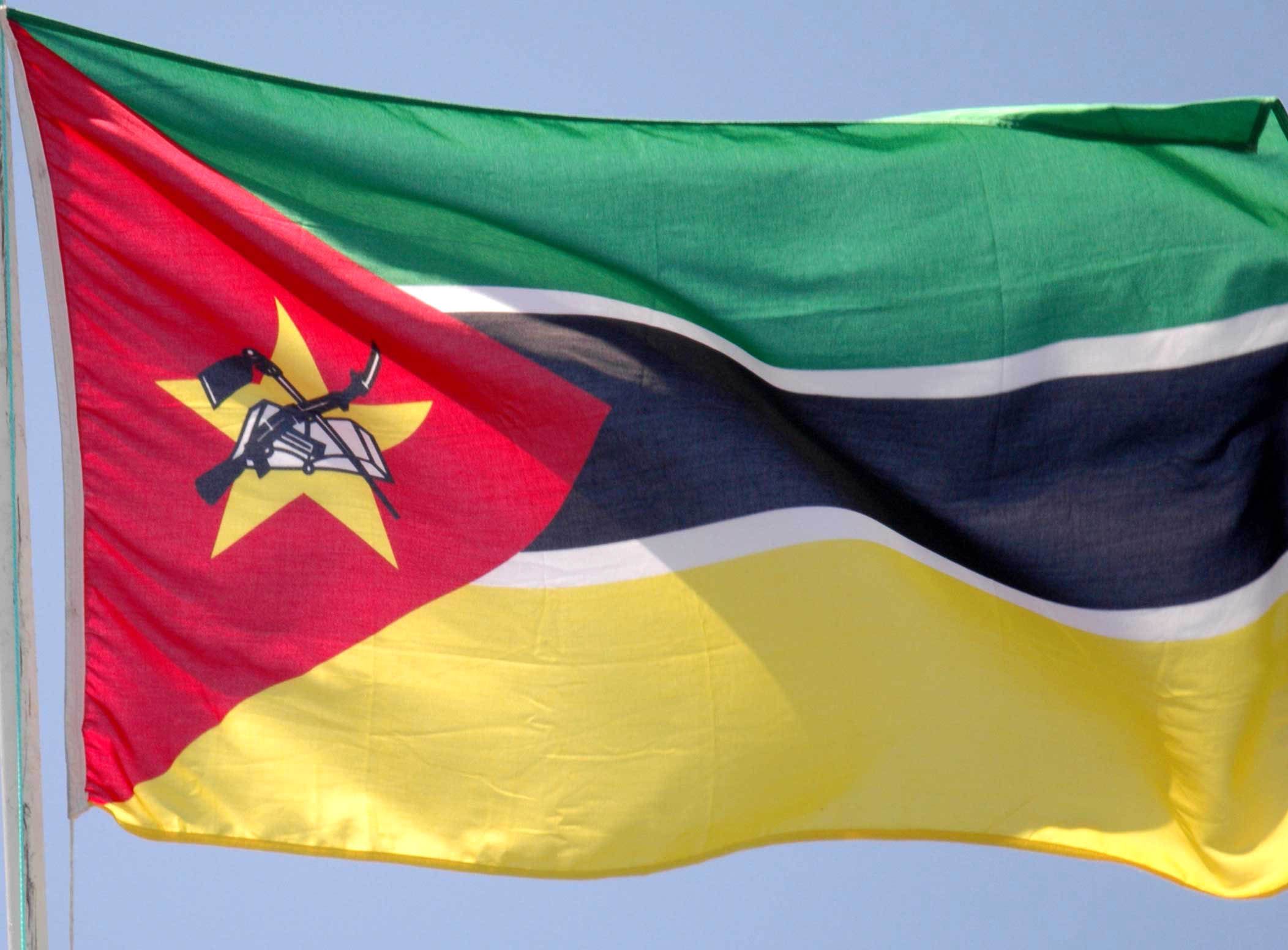
UN military missions are losing their dominance as the partner of first choice in crisis-ridden African countries. The end of MINUSMA and (likely) MONUSCO provide significant impetus for the development of African intervention forces, such as the Rwandan one in Mozambique. It may also prompt the African Union and its regional organisations to accelerate work on establishing a permanent rapid-reaction force. It is in the interest of Poland, which is focused on security closer to its territory, for African states to have more involvement in ensuring stability in their region with their own forces.