The G20 Summit in South Africa - a Crisis for the Format and Ambitions Without Specifics
The meeting of the group's leaders in Johannesburg on November 22–23, the first held in Africa, was overshadowed by the US boycott of it. In the summit declaration, the other members of the group pointed, among other things, to the willingness to continue actions that meet the needs of developing countries, but they did not make any specific decisions, which shows a serious weakening of the G20.
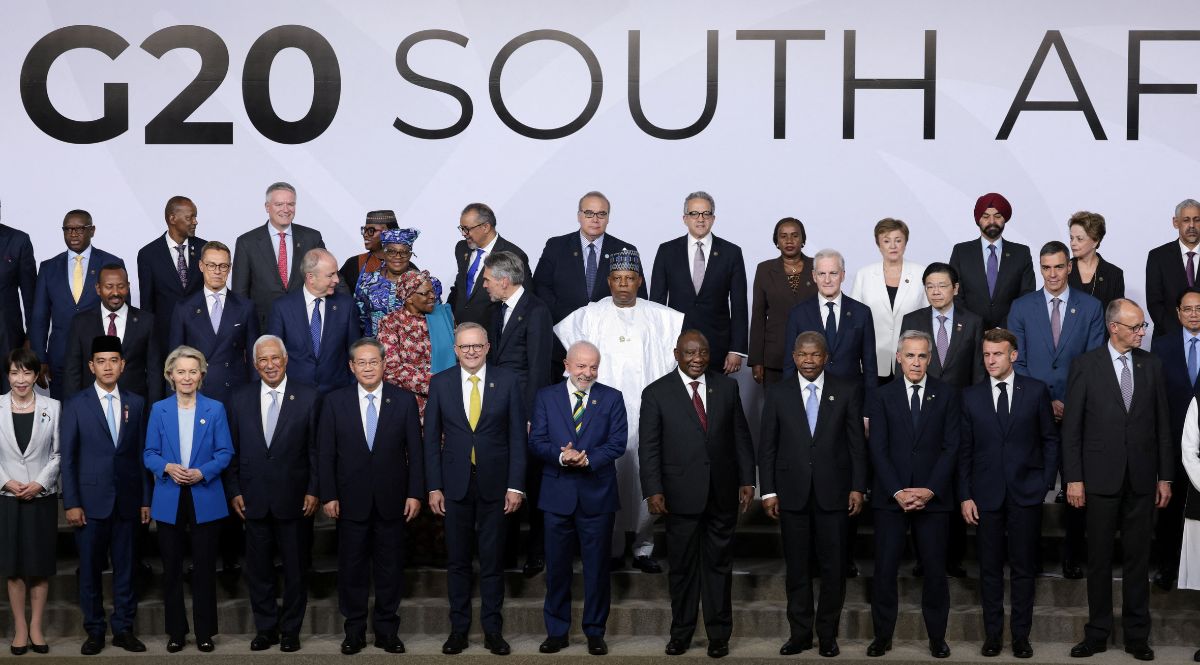 Yves Herman / Reuters / Forum
Who was missing from the summit, and under what circumstances did it take place?
During the preparations for the summit, it became clear that neither US President Donald Trump nor Chinese President Xi Jinping, the leaders of the world's two largest economies, would be attending, which lowered expectations for the outcome of the meeting. China was represented by Premier Li Qiang, while the United States was not represented at any level. This was due to accusations by the Trump administration that the South African government was persecuting their white minority, for which there is no credible evidence. The US also rejected the agenda of the Johannesburg meeting, citing ideological differences, including opposition to addressing issues related to DEI (diversity, equity, and inclusion) and climate change. Russian President Vladimir Putin also did not attend the summit, presumably fearing execution of the arrest warrant issued by the ICC (South Africa is a party to the Rome Statute establishing the court). Also absent were Argentine President Javier Milei, a political ally of Trump, as well as the leaders of Mexico and Nigeria (for internal reasons). The summit took place amid talks on the war in Ukraine, which is still under attack by Russia, as well as the COP30 summit in Brazil.
What are the main decisions of the summit, and to what extent do they represent all members of the group?
The outgoing South African presidency of the G20 was the fourth in a row – after Indonesia, India, and Brazil – held by a country from the so-called Global South, raising issues important to this group of states. The leaders present in Johannesburg adopted a joint declaration at the beginning of the summit, rather than at the end as usual, in response to US protests that it should not be issued. They expressed, among other things, their commitment to mitigating the effects of climate change, supporting energy transition, reducing economic inequalities, and limiting the debt of the poorest countries. They also supported a framework for cooperation on critical raw materials, including greater benefits for developing countries. The leaders expressed their willingness to work towards “just, comprehensive and lasting peace,” including in Ukraine, the “Occupied Palestinian Territory” as well as in Sudan and the Democratic Republic of Congo, in order to draw public attention to conflicts in Africa. However, the leaders did not specify what concrete actions they would take to achieve these goals, which indicates differences between G20 members. The adopted arrangements are not representative of the entire group, including the US, which, for example, limits its involvement in climate issues, as evidenced by its withdrawal from the 2015 Paris Agreement. Furthermore, the commitment to multilateralism and the principles of the UN Charter (the leaders recalled that this year marks the 80th anniversary of its adoption), including respect for the sovereignty of other states, emphasised in the declaration, contradicts the actions of some G20 members, primarily Russia attacking Ukraine.
What is the international significance of the meeting?
The outcomes of the summit will not contribute significantly to solving global problems, such as ending any of the numerous conflicts. The meeting demonstrated the impact of international tensions on the crisis in multilateral cooperation. However, the absence of the US may give other G20 countries an impetus to strengthen cooperation, which could potentially damage the international position of the United States. US pressure on the summit host, South Africa, points to the possibility of the Trump administration continuing its assertive foreign policy and interfering in the internal affairs of other countries using diplomatic and economic tools (South Africa is subject to the US’s ‘reciprocal’ tariffs of 30%). China may take advantage of the US's limited interest in multilateral cooperation forums to increase its influence in the Global South, among others. In this context, other G20 members, including the EU and its partners, need to be more active in supporting multilateralism and seeking solutions to global problems.
What does the summit say about the state of the G20?
The absence of the US and the lack of significant agreements among the other members are further arguments for the decline in recent years of the G20's effective importance in solving international problems. However, it may still be seen as an important forum for discussion between the world's largest economies (on the sidelines of the summit in South Africa, there were many bilateral and multilateral meetings of leaders, including those of France, Germany, and the UK, devoted to the US proposal to end the war in Ukraine). However, in the coming months, much will depend on the attitude of the US, which will take over the annual presidency of the group on December 1. At the summit in South Africa, the lack of the customary handover of the presidency, due to the absence of high-ranking US representatives, was symbolic of the approach, where it may take place later, but at a lower level. In the context of the US's sceptical approach to multilateral action, it is possible that during its presidency, activity within the G20 will decrease, including meetings at the ministerial and expert levels. However, given the non-binding nature of the group's agreements, it is possible that the US will use it to negotiate issues in its interest, such as trade. There will probably be less emphasis on issues important to developing countries in recent years, such as their debts and climate change. The next G20 summit is to be held next year at Trump's golf resort in Florida. The US administration has announced that Poland will be one of the guests at the meeting (this year, South Africa invited 12 countries from outside the G20 to Johannesburg).

(1).png)
.png)