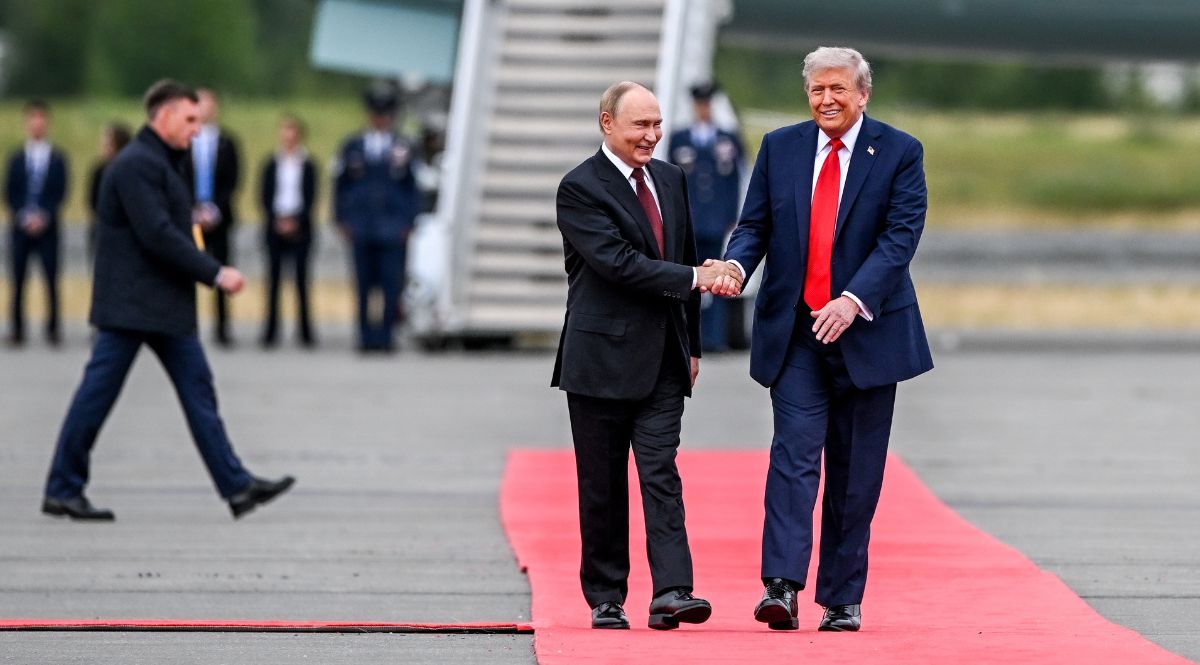
Zelensky Fares Better in Return Visit to the White House
On 18 August, Ukrainian President Volodymyr Zelensky, accompanied by several European leaders, met with U.S. President Donald Trump at the White House. The conversation took place in a much better atmosphere than the previous one, which ended in a row between the two leaders. According to official reports, the second meeting focused primarily on possible post-war security guarantees for Ukraine. European leaders also tried to convince Trump that any peace talks between Russia and Ukraine should be preceded by a ceasefire. Russia has expressed no interest in bilateral negotiations with Ukraine at the highest level and has threatened escalation if NATO military forces are sent to its territory.
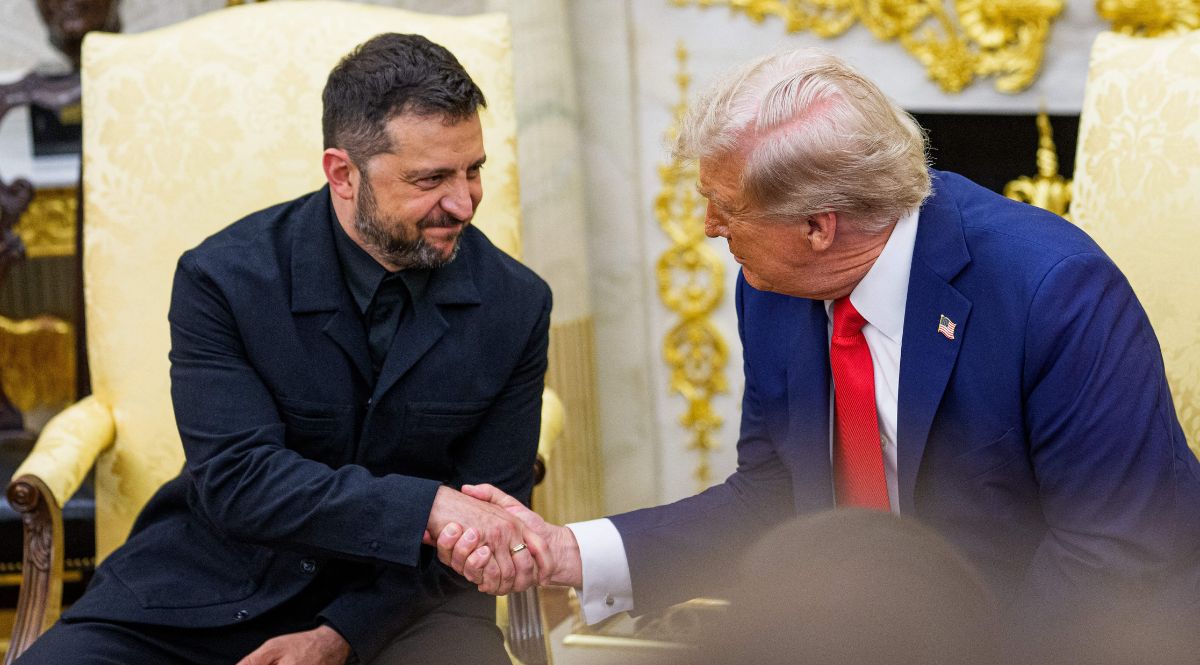 Pool/ABACA / Abaca Press / Forum
Why did European leaders fly to Washington with President Zelensky?
European leaders fear that Trump’s involvement in attempts to stop Russian aggression in Ukraine could turn into an effort to force Ukraine to make far-reaching concessions to Russia. This could influence Russia’s calculations regarding the benefits of escalating its demands, including on the issue of the European security architecture, in accordance with the December 2021 ultimatum, and thus increase the threat to NATO. Until now, thanks to acceptance of the proposal for an immediate ceasefire, Zelensky and Ukraine’s European partners have been able to point out that it is Russia that is uninterested in stopping military operations and is the obstacle to peace. However, after meeting with Putin in Alaska, Trump gave up on trying to pressure Russia into a ceasefire, probably thinking that this would make it easier to get Putin and Zelensky to meet face to face. This shows that Trump is primarily interested in quick negotiations and spectacular success, rather than in the lasting effects of negotiations. Trump’s abandonment of the pursuit of a ceasefire shifts the pressure onto Ukraine to reach an agreement with Russia in which it agrees to difficult territorial concessions, accompanied by as yet undefined security guarantees, offered primarily by European countries.
What security guarantees for Ukraine could the United States support?
Representatives of the U.S. administration emphasise that a condition of the peace agreement is that Ukraine remain outside NATO, but that the U.S. may provide other security guarantees “similar to Article 5 of the Washington Treaty”. The claims that the U.S. could support guarantees for Ukraine represent a significant change in the American position. However, it is doubtful that these guarantees would actually involve a commitment to military engagement on Ukraine’s side in the event of a renewed Russian attack. It is more likely that this refers to strengthening Ukraine’s defence potential so that it has real capacity to defend itself, which Russia opposes anyway, demanding the demilitarisation of the country. European countries, gathered in a “coalition of the willing” (primarily the United Kingdom and France), have also been proposing for several months to send a military a mission to Ukraine (e.g., to train Ukrainian troops), but have made it conditional on political and practical support from the U.S. (e.g., in the form of reconnaissance and logistics). The presence of Western troops in Ukraine would be a clear signal that the country has not been left to Russia’s sphere of influence and would increase the likelihood of international military assistance in the event of aggression. Another element of the guarantee could be the protection of Ukrainian airspace by the Alliance countries. However, it is unclear whether the Trump administration would be willing to support such solutions.
What did Ukraine gain?
After the meeting between Trump and Putin in Alaska, the Ukrainian authorities feared that the U.S. administration would try to force them to make unilateral territorial concessions to Russia in order to quickly end the war. The main purpose of Zelensky’s visit to the White House was to reject any pressure while at the same time presenting a flexible enough position so as not to provoke another dispute with Trump that could result in the suspension of U.S. intelligence support for Ukraine or the possibility of purchasing American weapons, among others. Zelensky apparently managed to persuade Trump that territorial issues should be the subject of direct Ukrainian-Russian talks at the highest level and, in addition, must be contingent on Ukraine obtaining security guarantees. However, he failed to convince the American president of the need to suspend hostilities as soon as possible and to start peace talks only after the ceasefire had been signed, which also postpones the prospect of the U.S. imposing additional sanctions on Russia. For this reason, Ukraine will be forced to continue negotiations with Russia from a weaker position, amid ongoing fighting and the local superiority of Russian forces on several key sections of the front.
What next?
According to official announcements, the “coalition of the willing”, including European countries supported by the Trump administration, is to formalise a proposal for so-called security guarantees for Ukraine within the next two weeks. The presentation of these guarantees is expected to pave the way for direct talks between Zelensky and Putin. However, the Russian side has stated that it is only interested in continuing Ukrainian-Russian talks at the working level. It has also firmly rejected the possibility of the stationing of any Western troops on Ukrainian territory, threatening to escalate the conflict if that were to happen. Despite this, Trump will probably push harder for a meeting between Zelensky and Putin, most likely in a trilateral format with him. However, even if he manages to bring about such a summit, a peace agreement is unlikely due to the maximalist demands made by the Russian side regarding Ukrainian concessions, both territorial and in terms of limiting Ukraine’s sovereignty. This could lead to a change in the U.S. approach to the negotiations and increased pressure on Russia. However, there is a risk that Trump will abandon attempts to negotiate peace and shift the responsibility for failure onto European countries, which have less capacity than the U.S. to exert pressure on Russia and support Ukraine’s security.



.png)
.png)