The LDP Achieves a Historic Victory in Japan's General Election
In Japan’s snap general election held on 8 February, the ruling Liberal Democratic Party (LDP) achieved a historic victory, winning a two-thirds majority in the lower house of the Diet. The strengthened social mandate will enable Prime Minister Takaichi Sanae’s government to implement proposals strengthening Japan’s defence capabilities, as well as paving the way for constitutional amendments.
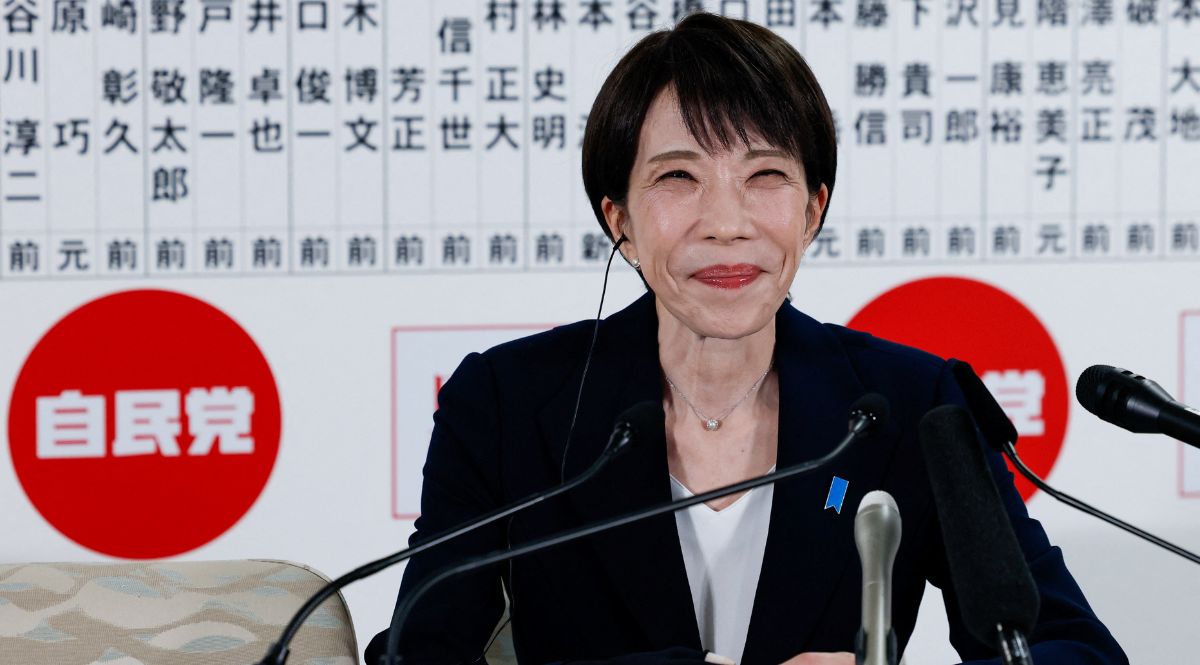 Kim Kyung-Hoon / Reuters / Forum
Why were elections held?
In October last year, Takaichi became the leader of the LDP and the Prime Minister of Japan. She formed a new coalition with the right-wing Japan Innovation Party (Nippon Ishin no Kai), ending 26 years of collaboration with the Buddhist Komeito party. With the government one seat short of a simple majority in the 465-member House of Representatives (LDP: 198; Ishin: 34), opposition votes were required to push through legislative initiatives. The main motivation behind the Prime Minister’s decision on 23 January to dissolve the lower house of the Diet was the LDP’s desire to regain the majority it lost in the 2024 election. The Japanese Prime Minister wanted to translate her own high popularity rating (60–70%) into results for her party. She also wanted to strengthen her party’s position in relation to other right-wing parties, which in recent months had gained ground at the LDP’s expense (notably in the July 2025 election for the House of Councillors, the upper house of the Diet, which the LDP lost).
What were the results, and what determined the LDP’s victory?
The LDP won 316 seats, securing a two-thirds (310) absolute majority, a feat never before achieved in Japan’s post-war history. Together with Ishin’s 36 seats, the coalition now holds three-quarters of the house’s seats. The election was a resounding defeat for the Centrist Reform Alliance, formed in recent months by the Constitutional Democratic Party of Japan (formerly the largest opposition party in the house) and Komeito. Although it achieved the best result among the opposition parties with 49 seats, it also lost 123 seats. Voter turnout was 56.26%, with a record 27 million Japanese people taking advantage of early voting.
The LDP primarily benefited from the Prime Minister’s high popularity. Takaichi convinced conservative voters who had been disappointed with the LDP in recent years, as well as a significant proportion of the younger population, to vote for the party, thanks in part to an effective social media campaign, and she diverted voters’ attention away from ongoing corruption scandals. The LDP also skilfully exploited the increased pressure on Japan from China since November last year, in response to Takaichi’s statements in support of Taiwan. In the face of Chinese pressure, the majority of citizens rallied around the ruling party.
What do the election results mean for Japanese domestic politics?
The LDP’s historic victory will enable it to implement its political programme without restriction. Its two-thirds majority allows the LDP to control all parliamentary committees and override the House of Councillors’ veto. The LDP holds 101 seats in the 248-member house, while the coalition Ishin holds 19. In the short term, the government will focus on preparing the budget. This will include increased spending on seventeen strategic sectors, including artificial intelligence, semiconductors, critical raw materials, the defence industry and cybersecurity, in order to strengthen the country’s economic security. It will also include suspension of the consumption tax on food, in order to reduce the cost of living.
In the longer term, the majority obtained will enable the government to begin the process of amending the constitution, particularly with regard to Article 9 and the status of the Self-Defence Forces. This requires a two-thirds majority in each house and approval by the public in a nationwide referendum. The ruling coalition intends to present a draft of the amendments by the end of March. However, due to the lack of a majority in the House of Councillors, the government will need to seek support for the changes from opposition parties. For example, the Democratic Party for the People (DPFP) already supports constitutional amendments.
What effect will the LDP’s victory have on Japan’s foreign and security policy?
The strengthening of the ruling coalition will lead to a more proactive approach to changes in Japan’s security policy. The Prime Minister has vaguely announced further increases in defence spending, which is expected to reach 2% of GDP this year, as well as a relaxation of arms export restrictions. She also intends to update the National Security Strategy and National Defence Strategy by the end of the year. Furthermore, she has announced plans to expand intelligence and counterintelligence capabilities.
In terms of foreign policy, the Takaichi government is expected to continue as before. It will develop cooperation with the Trump administration in the hope of maintaining US alliance commitments and negotiating favourable conditions for Japanese business investment in the US. Takaichi’s visit to the US on 19 March will provide an opportunity to discuss these issues. To avoid relying solely on the US and credibly counterbalancing China’s influence in the Indo-Pacific, Japan will develop partnerships with regional countries such as South Korea, the Philippines and Australia. While Takaichi expresses her desire for ‘constructive and stable relations’ with China, the prospect of improvement hinges on a shift in China’s confrontational stance. The Prime Minister’s emphasis on the need to increase Japan’s security role will prompt the country to strengthen its cooperation with NATO. Japan will also continue to support Ukraine in its fight against Russian aggression, as demonstrated by an additional $6 billion worth of humanitarian and technical aid for 2026.


.png)