
States Joining Queue for Niger's Uranium Deposits
A number of foreign companies, including Russia’s Rosatom, are becoming increasingly interested in the uranium deposits and stocks in Niger, which the French company Orano lost access to as a consequence of the 2023 coup. It is not certain, however, whether the military authorities of Niger will be willing to cede control of them to Russia. The requisitions, apart from the populist aspect, are part of a changing approach to resource management, one modelled on Mali, which increased the state’s share of foreign investment and budget revenues, to which Western industry will be forced to adapt.
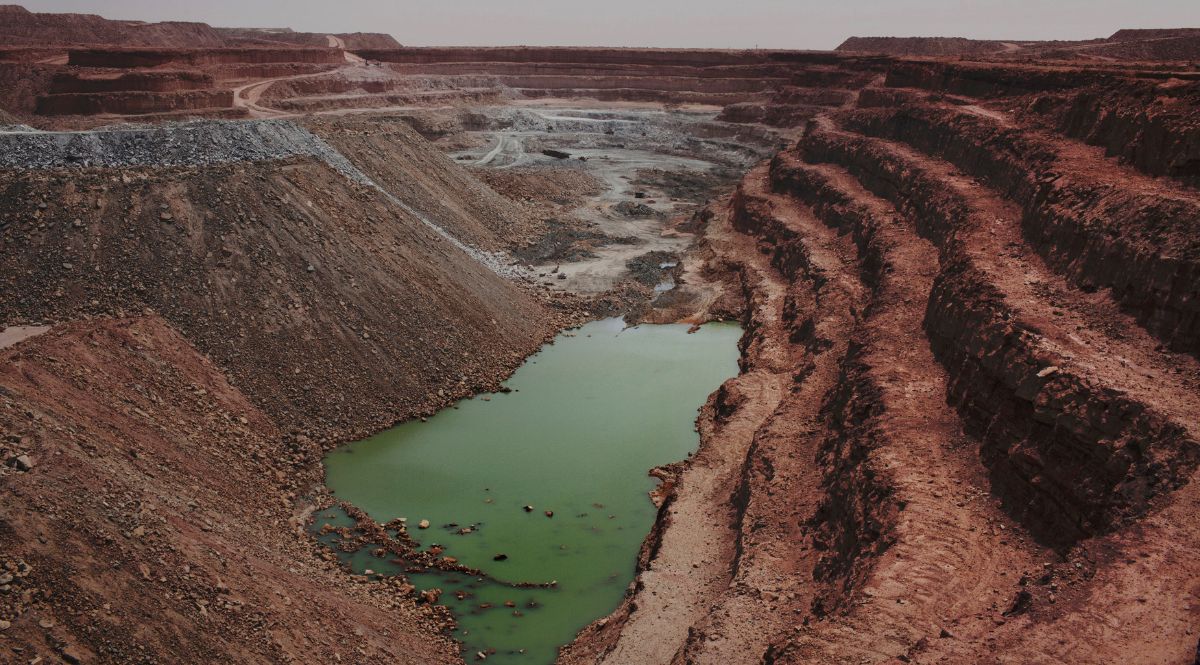 Joe Penney / Reuters / Forum
Niger has traditionally been one of the largest producers of uranium ore in the world. In 2022, the country harvested 2,000 tonnes of ore (more than China, slightly less than Russia), placing it seventh in terms of output and about 4% share of global production. The largest players operating in Niger included France’s Orano (formerly Areva), Canada’s Global Atomic, and China’s National Nuclear Cooperation. The situation in the uranium market changed dramatically in mid-2023 when the military junta of Gen. Abdurrahman Tiani took power.
France and Uranium in Niger
For France, Niger has historically been the leading source of uranium for fuel for nuclear power plants, providing the country with 65% of its energy consumption. However, in recent years Niger has lost this position to Kazakhstan. In 2022, only 15% of the uranium used in civil nuclear power in France (and about 25% in the EU) came from Niger. However, it is possible that Niger has retained greater importance for the French military programme, which, according to a French Senate report, as recently as 2013 relied entirely on sources from Niger. Current figures in this regard have not been disclosed.
France’s Orano, on the eve of the coup, had the Somaïr mines (a consortium of Orano and Niger’s state mining company Sopamim) in Arlit, the only active ones in Niger, as well as the now-defunct underground Cominak mine (Compagnie Minière d’Akouta), and concessions to exploit the Imouraren deposits. The latter was expected to have 200,000 tonnes of ore, exploitable for around 30 years. As recently as May 2023 (two months before the coup), Orano signed a new $85 million agreement with then President Mohamed Bazoum on the matter.
The Effects of the Military Coup on Uranium Mining in Niger
The junta adopted the anti-French and sovereigntist policies announcing increased control and profit-sharing of the mining sector, including uranium production. At the same time, the sanctions imposed on Niger by the West African bloc ECOWAS and, in particular, the blockade of the border by Benin have made it impossible to continue exporting raw material (until now, this was done overland through the country to the Beninese port of Cotonou). The blockade has also prevented the import of components necessary for production. As a result, in September 2023, the company stopped processing the ore extracted from the Somaïr mines. In parallel, the authorities stopped renewing Somaïr’s export permits, which were required every three months. Production fell and eventually stopped completely by October 2024. About 1,050 tonnes of intermediate product—the concentrate known as “yellow cake”—produced by Orano up to that point and worth around €300 million, has since been stored in Niger without being exported. The company proposed to the Niger authorities to export it by air, which has not been the practice so far, to France directly or by transit through Namibia where the company is also present. Eventually, in December 2024, the Niger authorities stopped recognising the decisions of the Somaïr board of directors, dominated by Orano representatives, and took de facto control of the company by removing the French from managing its assets. Although Orano initiated arbitration proceedings while declaring its willingness to renew cooperation, the Niger authorities escalated further, including in May 2025 when they searched its offices and made arrests among its local Nigerian staff, and then in June announced they would nationalise Somaïr.
With regard to investment in the future exploitation of the Imouraren deposits, on the other hand, in June 2024, the authorities revoked Orano’s previously granted concessions on the pretext that the work was not progressing. In a similar manner, they also put pressure on Canada’s GoviEx Uranium, which was given until 3 July 2024 to start the announced production at its Madaouela mine. As a result, this company also lost its concession. A larger Canadian company, Global Atomic, has been operating in Niger continuously.
New Players
Just one month after the military coup, talks began between the Niger authorities and Iranian partners about the possibility of buying back 300 tonnes of yellow cake. This raised concerns with the U.S. authorities, who tried to put pressure on Niger to prevent this from happening. It is likely that the deal ultimately failed to materialise.
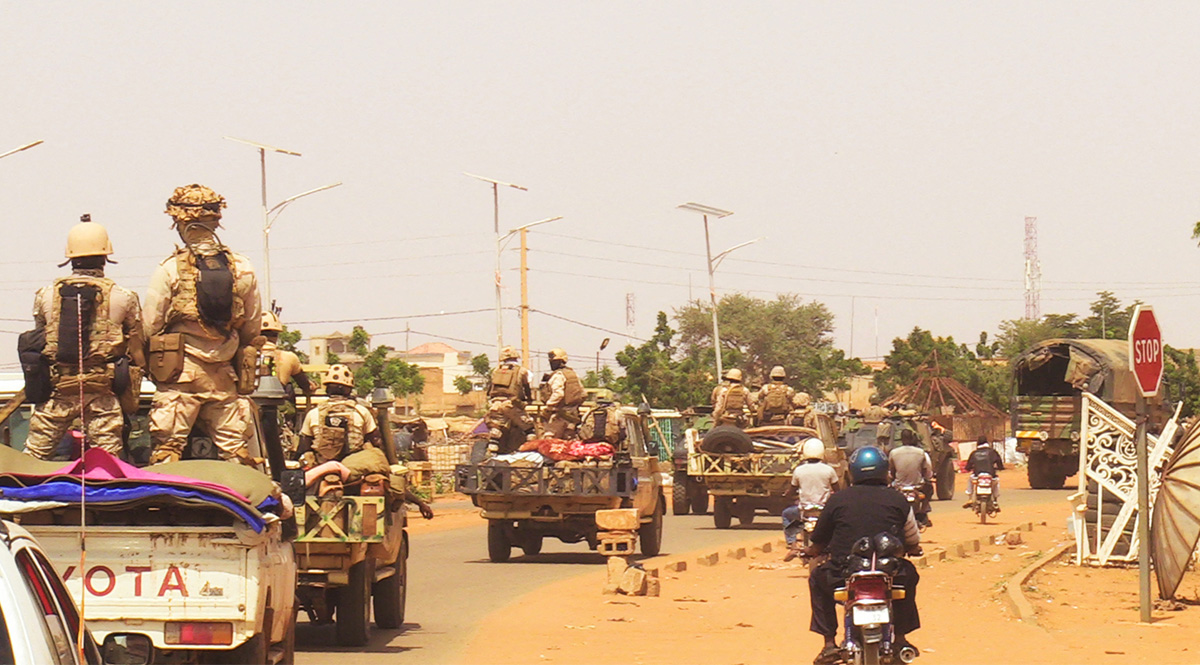
The new political context was conducive to increased cooperation in the nuclear field with Russia, which, in parallel with the weakening of France’s position, was becoming the junta’s leading partner. As early as March 2024, a delegation from Niger attended for the first time the Atomexpo in Sochi, the largest industry event in Russia, co-organised by Rosatom. This led to speculation that the threats against GoviEx Uranium were aimed at handing over the Canadian concession to Rosatom as payment for political support for the Confederation of Sahel States (Mali-Niger-Burkina Faso) project and sending African Corps soldiers to Niger. Although the Russian producer asserts that it is completely independent of external uranium sources, according to available but incomplete data, the value of Russia’s imports of low-enriched uranium has at least doubled between 2021 and 2023. Rosatom is presumably seeking access to resource deposits that have belonged for half a century to Orano in Niger. It is not alone in this. Among others interested in buying them are, for example, the UK’s Curzon Uranium, as well as Chinese and Italian companies.
New Mining Policy
Niger’s authorities, like those of neighbouring Mali (a gold mining state) and Burkina Faso (which has zinc, copper, gold and other minerals), are seeking to increase revenues to budgets from a share of the profit of foreign mining investors and from corporate taxes. Traditionally, foreign companies in this industry have exported ores from African countries (leaving no value-added in processing locally), and the profits they reap have returned to local communities at a lower rate than elsewhere in the world, which has not translated into improved living standards for local people. As a result, African countries have failed to exploit the potential arising from their significant natural wealth and have not been able to build up their own technical manpower and know-how. This pattern calls for a structural change to regain control of the resource extraction process, especially by reducing the state’s dependence on the activities of foreign companies.
In the case of Niger, examples of steps in this direction include the establishment of a school for oil and gas industry personnel last year and the awarding of a concession to the national company Cominair SA to extract copper at Arlit (with plans for 2,700 tonnes per year) and Comirex SA to extract about 300 tonnes of lithium per year at Dannet. In line with analogous processes, the first gold refinery was opened in neighbouring Burkina Faso (a Malian-Burkinabe consortium), and Mali forced foreign gold and lithium mining companies to agree to accept a new mining code that increases the state’s share of foreign investment and budget revenues. This has not, contrary to the alarmist voices of the existing beneficiaries, led to a collapse in production. Similar processes are also underway among ASEAN countries, among others.
Prospects
Although the withdrawal of rights from Western uranium mining companies in Niger is associated with the populist, anti-French rhetoric emanating from the country’s military authorities, it does not automatically imply a desire to hand over deposits or stocks of ore to other foreign partners, such as Russia. Nevertheless, Rosatom is increasing its influence in Niger, and in July the company signed a memorandum of understanding with Niger’s energy ministry on cooperation in the field of civil nuclear energy.
Although French Orano announced it would fight to regain control of its lost resources, it is doubtful whether it will be determined to actively pursue it. The company’s focus today is on mining in Kazakhstan and Canada, and on the African continent it is likely to increase activity in Namibia, its largest and most politically secure producer country.
In the medium term, Niger will still need to partner with foreign mining companies, as it is currently unable to fill the technology and manpower gap left by Orano on its own. Some of the remaining companies will be active and support Niger’s exit from isolation (which the EU is also inclined to do), especially the opening of the border via Benin. At present, the prospects of new actors “taking control” of Niger’s uranium resources are illusory in view of the blockade that prevents exports. Therefore, the expected changes in ownership, regardless of who ultimately gains from them, will not, for the time being, enable the rapid resumption of uranium ore mining in Niger.
A new factor that may play a role in the future is the growing U.S. interest in agreements with African countries in which political-military support is offered in exchange for access to resources, as, for example, in the Democratic Republic of Congo. In neighbouring Mali, the U.S. is testing the possibility of returning to counter-terrorism operations against groups linked to Al-Qaeda and the so-called Islamic State in exchange for access to lithium deposits. It is possible that the Americans will make a similar offer to Niger for uranium deposits.

.png)
.jpg)