
Sino-African Summit Reveals Course Correction
The ninth Forum on China-Africa Cooperation (FOCAC), China’s largest diplomatic event since the COVID-19 pandemic, was held in Beijing on 4-6 September. After a period of reduced Chinese economic activity in Africa, a move to intensify activity was visible. Also evident is a change in the Chinese approach, from which African countries stand to gain. However, the summit brought no solutions to the issue of debt restructuring which many African states anticipated.
.jpg) Tingshu Wang / Reuters / Forum
Tingshu Wang / Reuters / Forum
The Forum on China-Africa Cooperation (FOCAC) is a format that has been in place since 2000 as a space for bilateral agreements on the scope of cooperation between the People’s Republic of China and individual African countries. It is held every three years. It includes ministerial conferences and, since 2006, meetings (summits) of heads of state for the approval and communication of key decisions and directions for cooperation. Since 2018, it has also been linked to the implementation of elements of the Belt and Road Initiative (BRI) in Africa. This year’s FOCAC was attended by 51 African heads of state out of 53 delegations from the continent represented. The only country absent was Eswatini, the last in Africa to maintain diplomatic relations with Taiwan.
Although similar cyclical conferences programming the scope of cooperation on the continent are organised by the EU, France, Japan, Russia, and Turkey, among others, for African leaders FOCAC remains the most important forum of its kind. It is also accompanied by the greatest pomp. The importance of FOCAC for African leaders stems from China’s continued dominance in trade ($280 billion a year) and infrastructural footprint in African countries. The hosts symbolically underlined this by presenting, prior to the opening of the conference, 10 in-service banknotes and coins from African countries depicting structures (bridges, dams, etc.) built by Chinese entities in Africa.
Summit Resolutions
The highlight of the FOCAC was the reaffirmation of China’s position as a leader of cooperation in Africa. Chinese leader Xi Jinping pledged 360 billion yuan (equivalent to $50.7 billion) over the next three years, mainly in terms of loans (210 billion yuan), investments (70 billion yuan) and aid measures (80 billion yuan) including incentives for Chinese companies to do business in Africa. Food and military aid was also announced for a symbolic amount of $280 million.
In the area of infrastructure, some 30 projects have been announced for funding, following a period of slowdown and even abandonment of investments. Among the most significant are the extensions of the Nairobi-Mombasa rail link in Kenya, and the Zambia-Tanzania line. The latter, to which the Chinese side will contribute $1 billion, is intended to facilitate the export to China of critical minerals mined in the Democratic Republic of Congo (DRC) and Zambia that are necessary for technological transformation. The Chinese side also announced about 30 investments in the area of clean energy, including nuclear (Sudan).
While the dominating post-colonial model of economic relations of African countries with the rest of the world was based on the export of raw materials, a greater emphasis on processing than in the past was evident at FOCAC. Nigeria, for example, secured contracts with Chinese entities to build steel foundry, chemical plants, and an industrial park. An evolving approach was also evident in terms of expanding Chinese market access for African agricultural products. It is now the second-largest export destination for African agricultural produce. Among other things, China has agreed to widen its market access for Kenyan products (tea and coffee, among others) and also to grant Zimbabwe the opportunity to sell avocados, one of Africa’s most profitable crops, in China.
Global Context
The FOCAC took place shortly before the session of the UN General Assembly, where discussions on UN reform had been scheduled. African states, like India and Japan, for example, are seeking permanent membership of the UN Security Council. They were recently supported in this by the organisation’s Secretary-General António Guterres, also present at the FOCAC. Although, for China, support for the inclusion of African representation may have served as a counterweight to the ambitions of India and Japan (China’s rivals in Asia) in this regard, no clear commitments were made at the Beijing summit. The final declaration only included expressions of China’s recognition of the “qualifications of Africans” to lead international organisations and institutions (para. 6). and a joint Sino-African call for an “equal and orderly multipolar world” anchored in the UN system (para. 7).
The FOCAC takes place against the backdrop of intensified U.S.-China rivalry in Africa. This manifests itself in a race to present African partners with proposals that would be more attractive from their perspective than that of a competitor. To this end, for example, the U.S.-Africa Nuclear Summit was held on the eve of FOCAC in an attempt by the U.S. to break the dominance of Russia and China in this area in Africa. The U.S. is also negotiating a military and economic aid package with Gabon to dissuade the country from plans to provide China with land for a naval base. At the FOCAC summit, however, there was a lack of explicit reference to these developments. Nor does the intensifying rivalry mean avoiding working cooperation with partners with different political leanings, for example, China’s priority investment in the Simandou iron-ore deposit in Guinea is being developed jointly by Chinese and Western players.
There were also no signs of a change in approach to military cooperation. Although China is dynamically developing the activities of its private military companies in Africa, they mainly serve to protect the physical presence of Chinese entities. The Chinese side does not present ambitions to use them to replace forces from Western countries, for example, the French or the U.S, such as Russia’s Wagner Group/Africa Corps in the Sahel states, or to build a lasting, political relationship with local forces trained in Africa (as Turkey’s SADAT, for example, does).
Risks for African States
One of the most controversial areas of China’s cooperation with African states is the issue of debt. Particularly in the West, there has been criticism of the extensive lending for the Chinese infrastructure projects (in the record year 2016 alone, it was $30 billion; the trend is now upward again), described as a “debt trap”. Although the scale of African countries’ indebtedness to Chinese entities is not large in relation to their total debt (6-12% depending on estimates, while around 35% is owed to private Western lenders), it is indeed those countries that have borrowed the most from China in a bilateral model that are having the most difficulty in repaying it. This includes Angola, Ethiopia, Kenya, and Zambia, among others. In contrast, during the COVID-19 pandemic, some countries spent more on debt servicing to China than on fighting the virus (Mozambique quadrupled). However, the summit did not present any new, comprehensive mechanism to help these countries get out of debt, as they had hoped.
It is risky for African partners to deepen the clientelist relationship with China. Despite the rhetorical emphasis on the partnership dimension (e.g., one of the summit’s leitmotifs was joint pursuit of modernisation), FOCAC remains a format programmed by the Chinese side, where the role of partner states is passive. This translates into the ease with which China can obtain the desired political declarations. During the summit, the majority of African leaders declared their full support for the “One China” principle and Taiwan’s affiliation to the PRC. Relations with any African country that expresses this were elevated to strategic status. China is also trying to transfer its standards of governance—non-transparent and authoritarian—to Africa. In Tanzania, the Chinese Communist Party recently set up a political training school for states governed by former liberation parties from the southern African region. On the other hand, through leading participation in multilateral formats, such as UN peacekeeping missions, most of which take place in Africa, China seeks to influence international forums from within, for example, to avoid criticism of Chinese policies.
Conclusions
Although the funds pledged are less than those announced at pre-pandemic meetings ($60 billion in 2015 and 2018), their disbursement will show an intensification of engagement after a period of stagnation due as much to the global situation as to changes in China’s approach to the economy. Significant is the return to major infrastructure investment in Africa, which China has shied away from in recent years, and the emphasis on clean technology. However, the refresh of the FOCAC format does not translate into better transparency. As in previous years, the details of many investments, especially regarding financing, remain obscure.
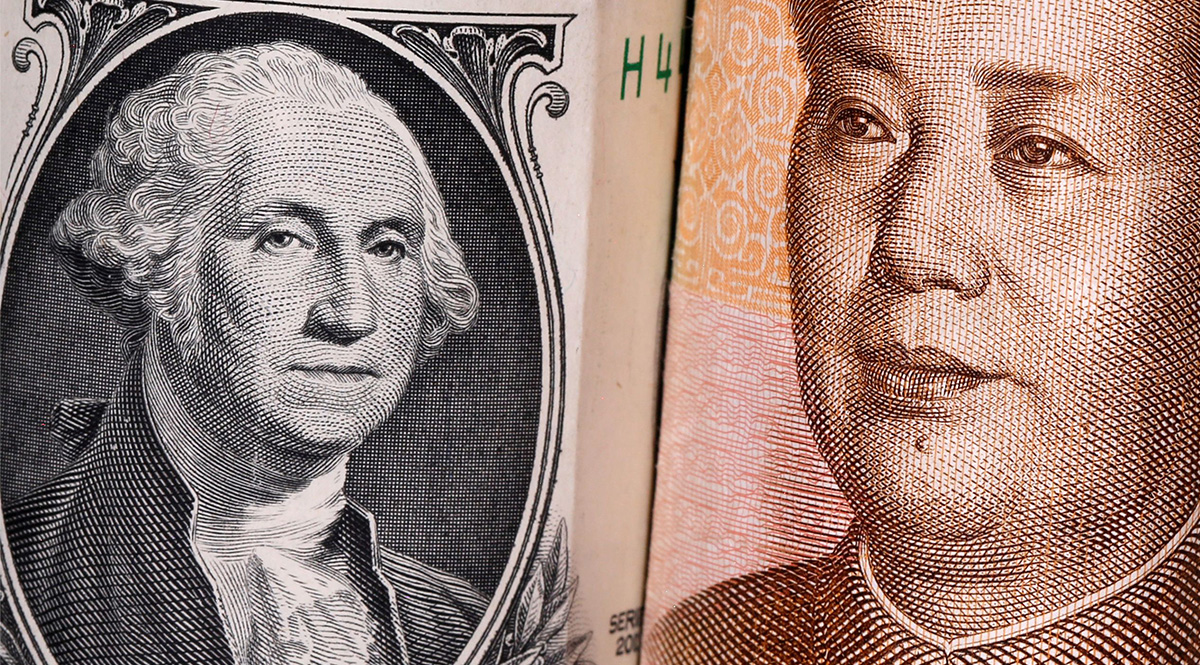
If the loans (not just their pledges) for cooperation in Africa are denominated in Chinese currency, it will confirm a desire to strengthen the yuan’s position as an internationally traded currency. It also symbolically responds to one of the BRICS’ most important demands—the de-dollarisation of the global financial system. Despite expectations, there were no clear declarations at the summit on the future representation of Africa at the UNSC, nor on debt restructuring for countries most severely affected by debt-servicing problems. On the latter two issues, the EU is taking a more favourable stance vis-à-vis its African partners: it is showing more flexibility on debt and, in August this year, it formulated a commitment to support an “increased voice” for Africa in a reformed UNSC. The EU will use these arguments to promote its model of cooperation with Africa as a counter to China’s.



.png)