
France Seeks Greater Role in Political Transitions in the Middle East
France seeks to expand its influence in the Middle East by establishing strategic partnerships with individual states and mediating regional conflicts. After Israel’s war with Hamas erupted in October 2023 and extended to Lebanon, France became the European country most involved in attempting to resolve the crisis. Similarly, after the overthrow of the Bashar Al-Assad regime in Syria, France was the one most engaged in talks with the new authorities. It will try to benefit from this activity both in transatlantic relations and in the development of EU policy towards the Middle East.
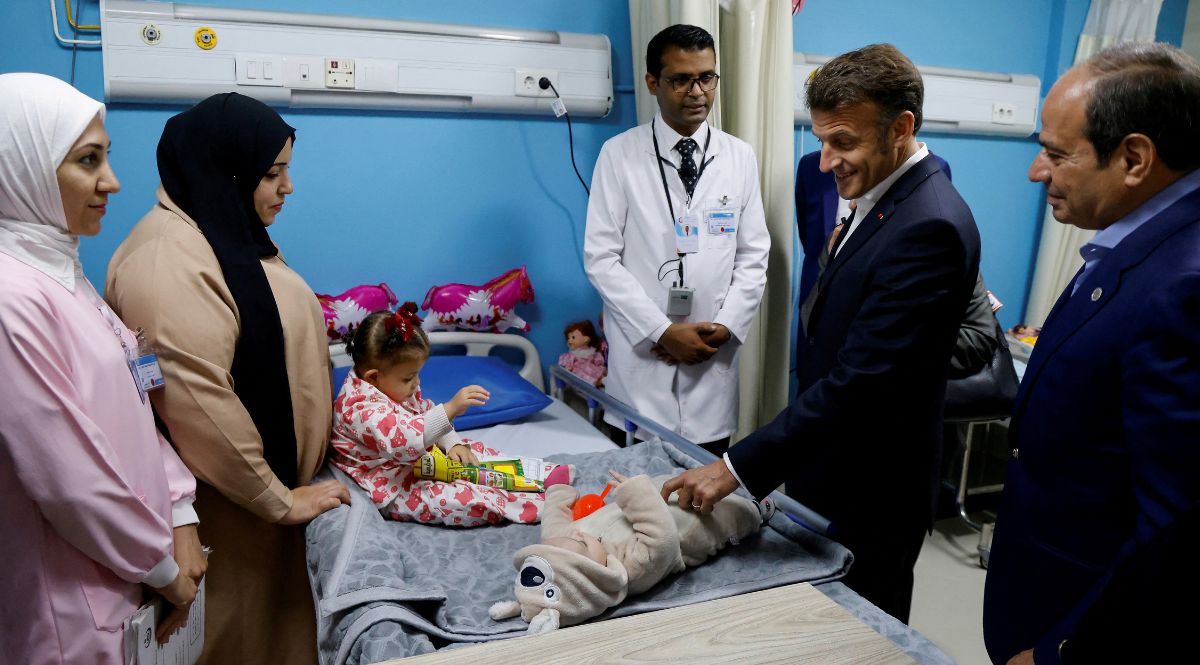 credit: LUDOVIC MARIN / Reuters / Forum
A series of structural political changes in the Middle East followed the Hamas attack on Israel on 7 October 2023. The weakening of Hezbollah as a result of Israeli military actions enabled in Lebanon the election of a president and the formation of a new government. The collapse of the Assad regime in the face of a Syrian rebel offensive began a process of transforming the country and rebuilding political institutions.[1] At the same time, the ongoing war in Gaza and the humanitarian catastrophe there have permanently changed the dynamics of the Israeli–Palestinian conflict.
Its level of involvement in the Middle East distinguishes France from other EU countries and is part of great power politics. President Emmanuel Macron, the prime mover of French policy towards the region, wants to take advantage of the changes in the Middle East to increase France’s influence, and, consequently, enhance economic cooperation and open up investment opportunities for French companies. It also sees in the new political environment a chance to reduce the influence of Russia and Iran in the region and to increase the effectiveness of the fight against terrorism. The French government is pushing for a new opening in relations with Middle Eastern countries, emphasising the stabilising nature of its involvement in the form of support for a two-state solution to the Israeli-Palestinian conflict, strengthening ties with Lebanon and helping the new Syrian government. France’s activity is also influenced by the context of its domestic politics and the presence of a large Arab and Jewish community.
France’s Policy in Recent Years
Israel and Palestine
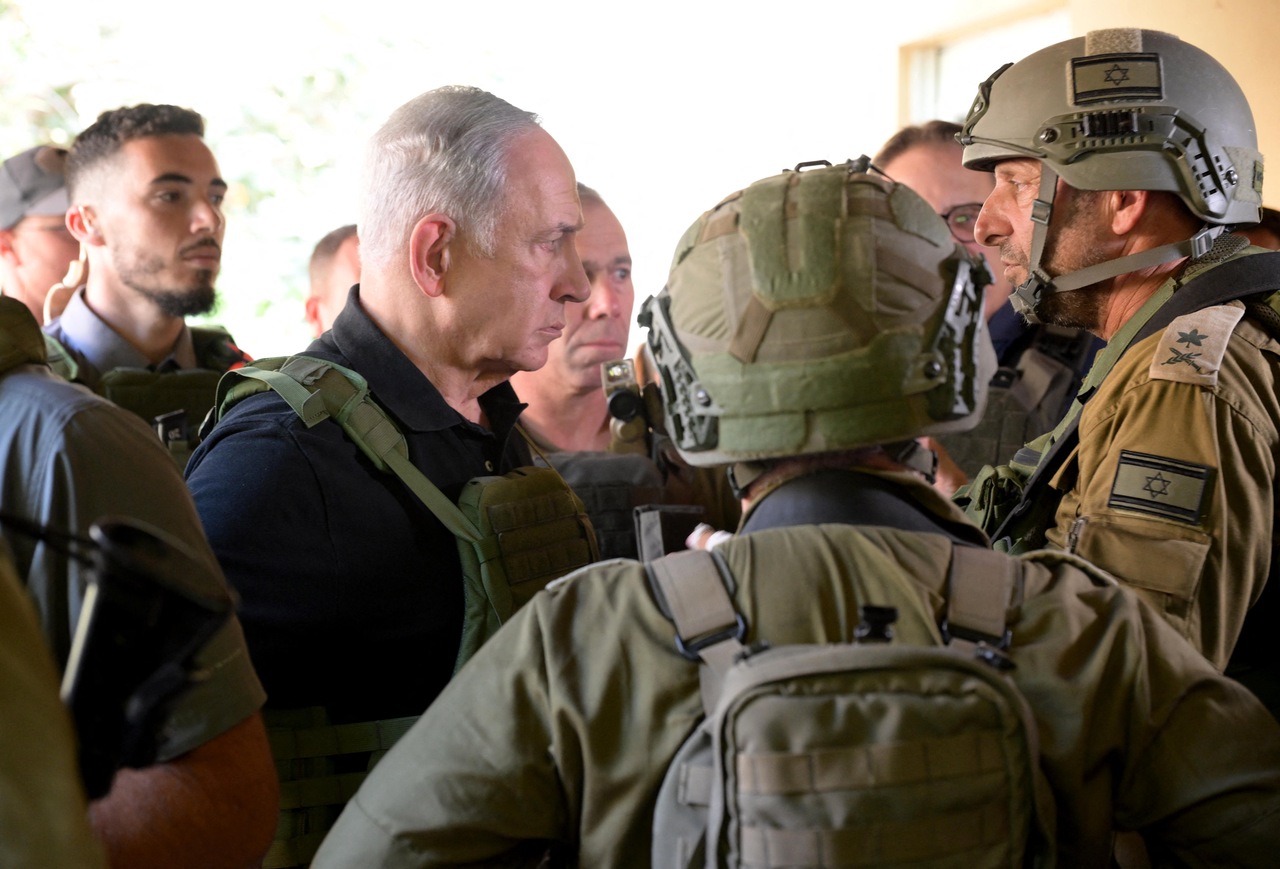
French policy has traditionally been characterised by strong engagement with both sides of the Israeli-Palestinian conflict[2] and consistent diplomatic support for a two-state solution (e.g., within the framework of the 2016-2017 Paris peace conferences). Since the beginning of Macron’s presidency, the French authorities have sought regular and frequent contact with the Israeli and Palestinian authorities, as demonstrated by meetings in Paris with Prime Minister Benjamin Netanyahu (2017, 2023), Palestinian Authority (PA) President Mahmoud Abbas (2017, 2022), and Macron’s visit to Israel and the PA in 2020. From Israel’s perspective, an essential factor affecting the frequency of contacts is France’s status as a party to the negotiations over Iran’s nuclear programme. Among Western countries involved in the region, French diplomacy is distinguished by its consistent criticism of Israel’s policies toward the Palestinians,[3] in particular the development of settlements in the West Bank and East Jerusalem. France’s involvement is also influenced by its custody of several Christian places of worship. A source of contention in bilateral relations is the situation of the Jewish diaspora in France, of which about 40,000 have emigrated to Israel in the past decade, primarily as a result of a rise in anti–Semitic violence. The Israeli authorities actively supported this process, while the incentives they used provoked protests from the French side. Another subject of tension has been mutual accusations of interference in internal political processes, for example, the support of ministers in Netanyahu’s government for the far-right National Rally (Rassemblement national, RN) during the 2024 French parliamentary elections, or President Macron’s contacts with the Israeli opposition.
Lebanon
Lebanon continues to be a key focus of France’s engagement in the Middle East. Through its ties with the country, France seeks to bolster its regional influence and shape EU policy towards the region. Successive French authorities have worked for the stabilisation and reconstruction of Lebanon, using, among other things, its status as an informal initiator of peace solutions (penholder) at the UN Security Council (UNSC) on issues affecting the country. One of France’s goals has been to restore influence in the only former colony in the region without strong resentment of the French. The weakening of France’s role in Lebanon was due to several factors. First, it was the result of losing its dominant position to the Christian population it supported after the signing of the Taif Agreement in 1989, which ended the civil war. Some French influence was then replaced by that of the U.S. and Saudi Arabia. The latter took advantage of the Lebanese diaspora (mainly of Sunni faith) to consolidate its role in Lebanon. Second, given the military strength of Hezbollah and support of a significant part of the Lebanese, France attempted to hold a dialogue with the organisation, which conflicted with U.S. actions to isolate Hezbollah. The dialogue also limited the effectiveness of the two countries’ joint initiatives to weaken Hezbollah, including through UNSC Resolutions 1559 and 1701 and the October 2024 proposal for a 21-day ceasefire between Israel and Hezbollah. The effectiveness of French efforts to mobilise international financial aid for Lebanon, conditional on political and economic reforms (such as at the 2018 CEDRE conference in Paris),[4] was further limited by corruption, the impunity of the authorities, and the weakness of institutions in Lebanon.
From France’s perspective, continued international support to prevent Lebanon’s total collapse is essential to its business ties with the country. These include gas production by TotalEnergies or concessions to manage terminals at the ports of Beirut and Tripoli for the transportation and logistics company CMA CGM.
Syria
Since the beginning of Syria’s civil war in 2011, France has unequivocally rejected cooperation with the regime of Bashar al-Assad. The then President Nicolas Sarkozy was the first Western leader to openly call for Assad to step down. More presidents subsequently supported the imposition of sanctions, backed the Syrian opposition and, after Assad’s use of chemical weapons in Eastern Ghouta in 2013, also favoured the initiative to intervene militarily (which did not happen due to opposition from the U.S. and the UK). After Russian military action on the side of the Syrian regime in 2015, which gradually allowed Assad to regain control of most of the country’s territory, France focused on fighting the so-called Islamic State (IS), as exemplified by Operation Chammal in Iraq and Syria. Since then, the main element of French policy in Syria has remained humanitarian aid directed to the areas outside regime control and for Syrian refugees. At the same time, France’s attitude toward the progressive normalisation of relations between Middle Eastern and some European countries with Assad since 2018 has been consistently critical,[5] which has had a key impact on the continued isolation of the regime by the EU. French courts, invoking universal jurisdiction provisions, have also tried and convicted members of the Syrian regime, and in 2023 and 2025 issued arrest warrants for Bashar al-Assad himself.
Internal Context
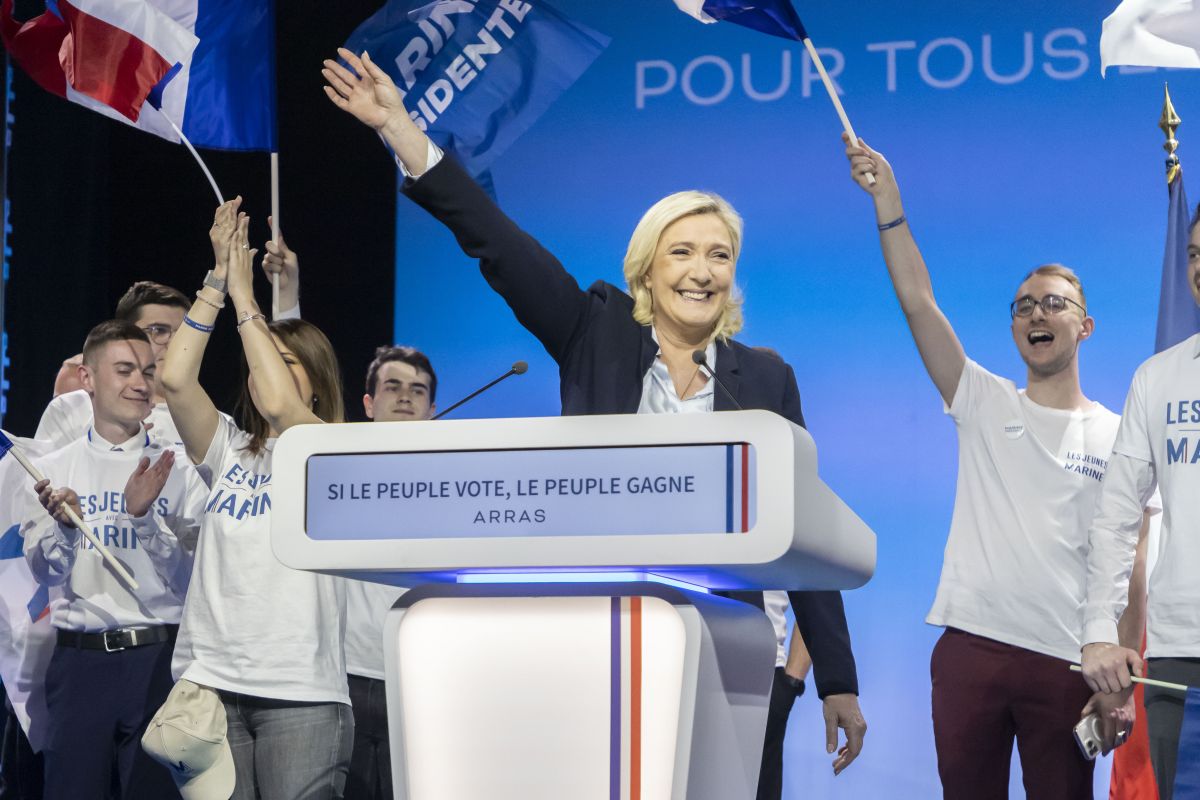
Domestic policy influences France’s positioning vis-à-vis the conflicts in the Middle East. France is home to Europe’s largest Arab and Jewish communities. The actions of the parties to the conflict have increased the risk of polarisation in the country around the issue of support for Israeli policies and have threatened to bring the Israeli-Arab conflict to French territory in the form of attacks targeting either minority. The current domestic debate around the nature of France’s involvement in the region was particularly influenced by the fact that the Hamas attack in October 2023 left dozens of French citizens dead and several taken hostage. The deepening polarisation has been fostered by the activities and attitudes of two extreme political groups—the left-wing France Unbowed (La France Insoumise, LFI) and the far-right RN. LFI leader Jean-Luc Mélenchon avoided condemning Hamas’ military actions and blamed the Israeli occupation of Palestinian territory for the attack, linking it to issues of anti-imperialism and anti-colonialism. The RN, on the other hand, has consistently supported Israel. The group’s leader, Marine Le Pen, has supported retaliatory military action and took part in the Paris march against anti-Semitism. The RN is thus trying to break with its anti-Semitic image and strengthen the process of deradicalisation.[6] This strategy received a positive reception from the current Israeli government, which has been implementing a policy of normalisation with selected European far-right parties, including the NR, in recent years. The topic of the Israeli-Palestinian conflict was also a vital element of the French campaign in the 2024 European Parliament elections.
In the first months after the Hamas attack, both anti-Semitic acts (such as physical and verbal violence and attacks on Jewish facilities) and anti-Muslim actions (particularly the destruction of mosques) increased in France. Pro-Palestinian marches calling for a ceasefire in Gaza were organised throughout France, but demonstrations in support of Israel were also held. Solidarity with Palestinians was not expressed just by the Arab minority; participation in the demonstrations was motivated by a broader sense of injustice and compassion towards them. Fearing radicalisation of mutual prejudices, the interior minister issued a decree banning pro-Palestinian demonstrations on 12 October 2023. Support for Israel, in turn, is linked to the prevailing belief among the French that Israel’s stated goal of eliminating Hamas is a manifestation of the fight against terrorism and is legitimate (according to the fourth wave of the 24 June 2024, IFOP barometer, this view was shared by 56% of respondents). At the same time, only 30% of the French express sympathy for Israel.[7] According to opinion polls conducted a year after the 7 October attacks, French society has not become very polarised—the majority of the French do not take sides and have as much sympathy for the people of Israel as for the civilian victims in Gaza.[8]
Some of Macron’s actions were met with disapproval among his close entourage and representatives of French diplomacy. The criticism was expressed in a letter from more than a dozen French ambassadors in the Middle East and North African countries addressed to the Foreign Ministry in November 2023, in which they pointed to the adverse effects of the president’s initial strong pro-Israel stance in the Hamas-Israel conflict. They highlighted a lack of understanding of his stance among France’s partners in the Middle East, a contradiction with the traditionally balanced French approach to Arab states and even a loss of credibility and French influence in the region.
Macron’s recent increase in involvement in Middle East diplomacy has been fostered by two additional factors. In the context of domestic politics, it demonstrates the limited capacity of the president’s party, weakened by last year’s early parliamentary elections, to reform the country.[9] The lack of capacity to initiate structural internal change has led to Macron’s activism in the international arena. In addition, until recently France has been more focused on strengthening relations with North African countries, but the deepening crisis with Algeria is a constraint on its policy towards the region and favours greater activity in the Middle East.[10]
France Facing New Dynamics in the Region
Israel’s war against Hamas
The outbreak of war between Israel and Hamas and the situation in the Palestinian territories after 7 October 2023, forced an adaptation of previous French policy. The authorities wanted to emphasise support for the fight against terrorism and France’s role as a state with shared responsibility for security in the Middle East. Hence, in the first phase, France, like most EU countries, gave unequivocal support to the Israeli government. President Macron was one of the first leaders to visit Israel in solidarity a few weeks after the Hamas attack. France continued its direct involvement in the security dimension while using its military presence in the region, including in Jordan. The French air force supported Israel in repelling an Iranian missile attack in April 2024, while its naval forces took part in the EU’s Aspides naval mission, protecting shipping in the Red Sea and Gulf of Aden against Houthi attacks.[11]
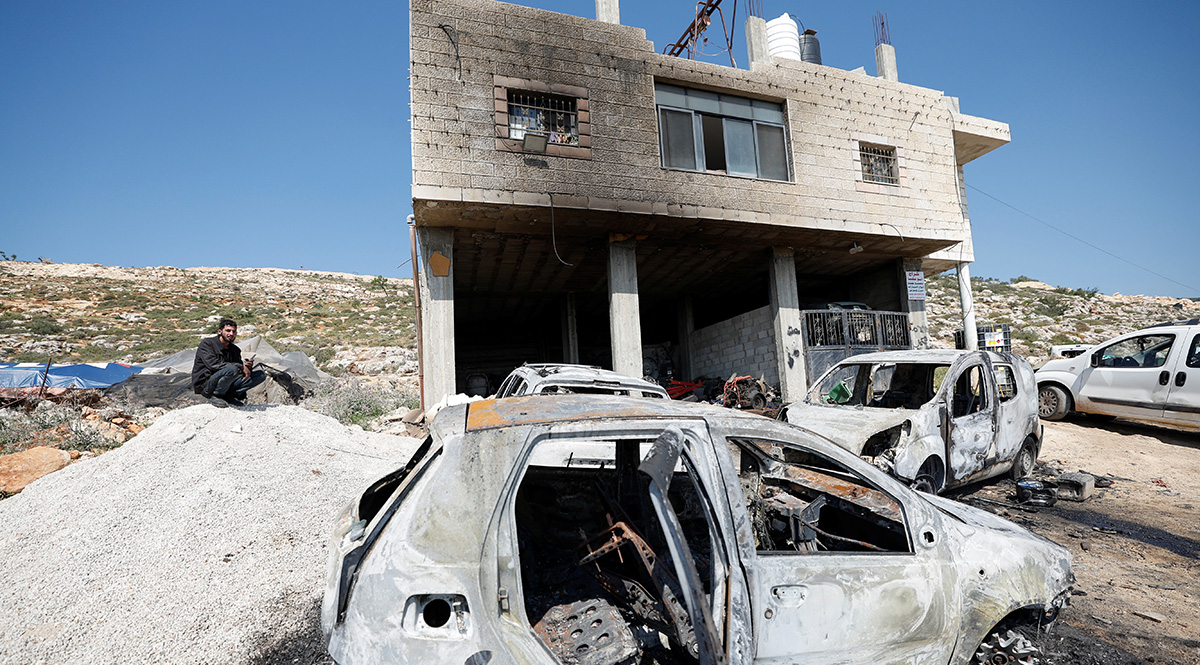
However, French criticism of the Netanyahu government’s actions grew as the Israeli ground operation in Gaza began, while the scale of the destruction and casualties there and violence in the West Bank only increased in the following months. In addition to rhetorical condemnation, the French authorities decided in February 2024 to introduce sanctions against extreme Israeli right-wing organisations and representatives of the settler community.[12] A symbolic step was the refusal to allow Israeli arms companies to participate in the defence fair held in France in June and September 2024 (subsequently annulled by the court), and support for the September 2024 UNGA Resolution calling on Israel to end its occupation of Gaza and the West Bank. In October, President Macron called for a halt to arms shipments to Israel, a move that drew sharp criticism from Israeli authorities. At the same time, during the war, France has consistently emphasised the need for greater protection of civilians, holding a humanitarian conference in Paris in November 2023, airdropping aid to Gaza, and supporting the evacuation of some of the wounded from the Strip in cooperation with Arab states.
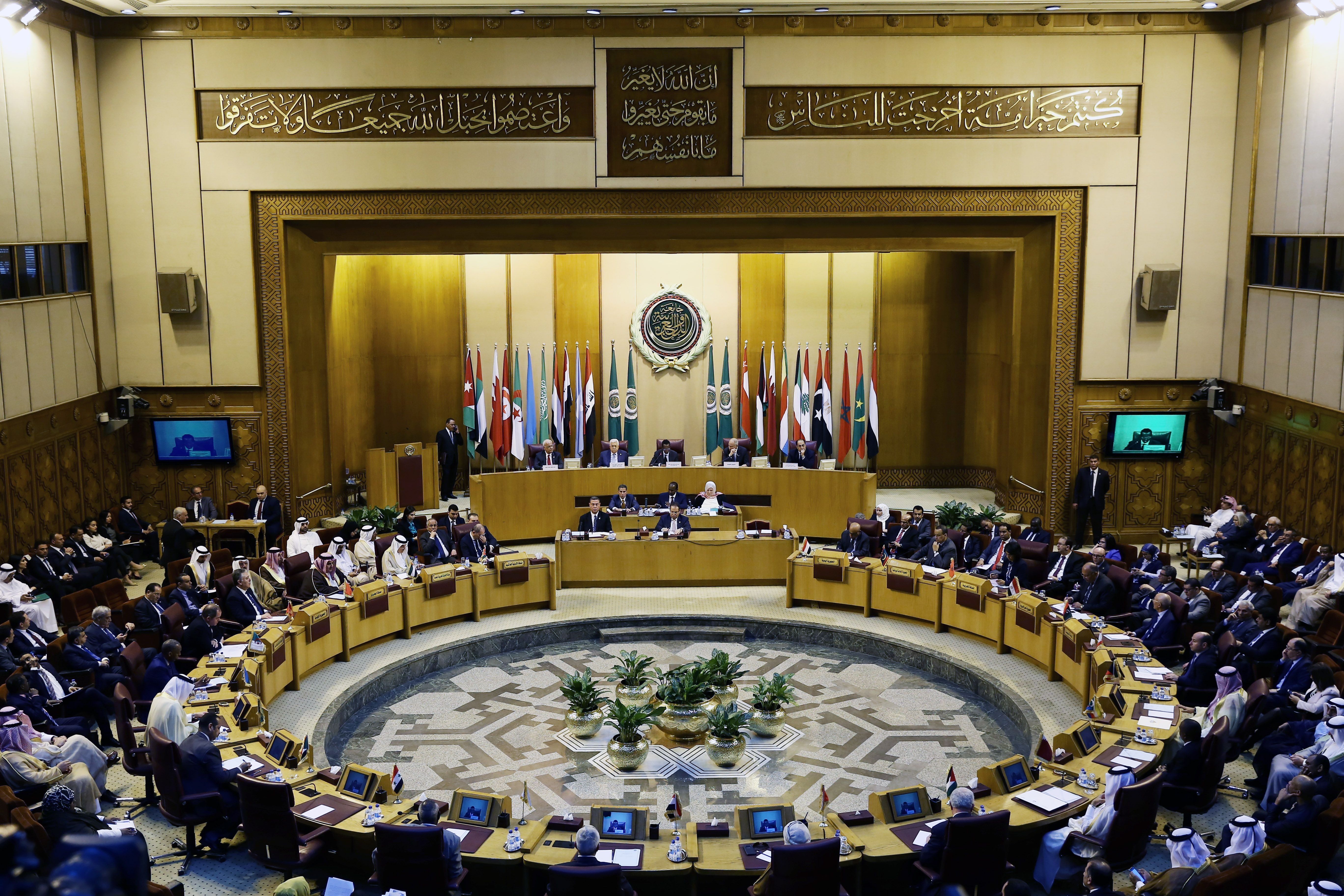
At the end of 2024, the need to address the shift in American politics following Donald Trump’s victory in the U.S. presidential election became apparent in French actions. France partially retreated from its earlier support for actions by the International Criminal Court, pointing out that Prime Minister Netanyahu has immunity from the ICC arrest warrant issued for him in November.[13] At the same time, France firmly rejected Trump’s assertion during the short truce between Israel and Hamas that the conflict should lead to the displacement of the Palestinian population from the Gaza Strip. Together with the EU, Germany, Italy, and the UK, France supported the Arab League’s plan for reconstruction of the Gaza Strip, presented in March as a counterproposal to Trump’s statements. In April 2025, President Macron hinted at the possibility of French recognition of Palestinian independence, something the French authorities have so far distanced themselves from. France supported a review of the EU-Israel Association Agreement, and in a joint statement with the UK and Canadian authorities, Macron threatened new action if the blockade of humanitarian supplies and pace of settlement development in the West Bank continued.
Situation in Lebanon
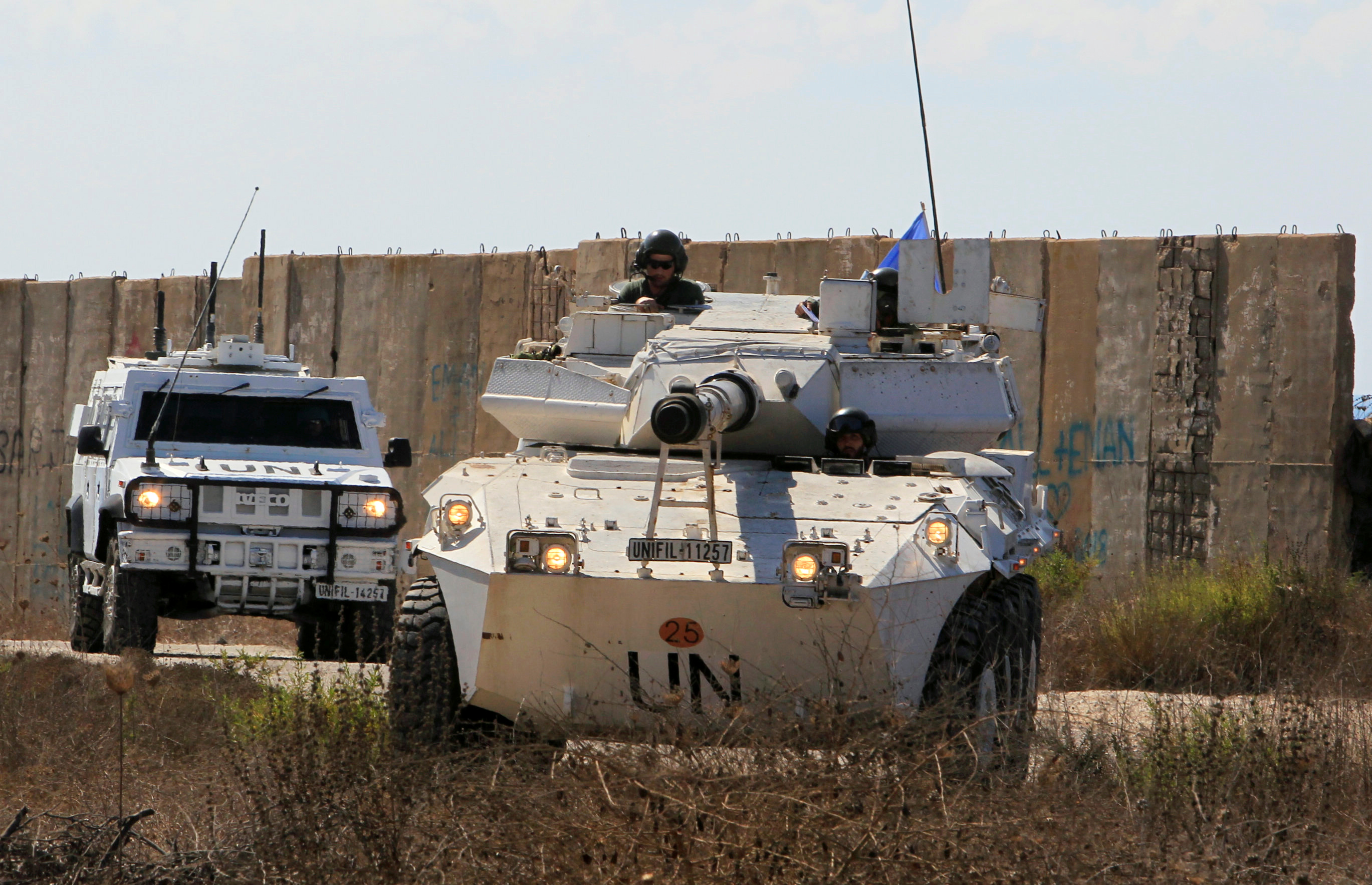
After Hezbollah launched attacks against Israel in October 2023, France stepped up its activities in Lebanon in two areas. First, it engaged in attempts to mediate between Hezbollah and Israel, stressing the need for full implementation of the 2006 UNSC Resolution 1701, which calls for Hezbollah’s withdrawal from southern Lebanon.[14] Second, it referred to the need to protect Lebanon’s sovereignty in the context of Israel’s threats to invade the country. In March 2024, on a French initiative, the EU adopted a position stressing the need to avoid escalation in Lebanon. Several high-level French delegations also visited Lebanon. In April 2024, the then Foreign Minister Stephane Sejourné presented the authorities in Lebanon and Israel with a proposed plan to support the implementation of Resolution 1701. However, this did not prevent further escalation and an Israeli invasion of southern Lebanon in October 2024. After it began, President Macron held an international conference in Paris on mobilising aid for Lebanon. Funds totalling $1 billion were raised (including $100 million from France). Of this money, $200 million will be used to train and equip the Lebanese army to facilitate its deployment along the border with Israel and prevent Hezbollah from operating in the territory. At the same time, with the escalation between Israel and Hezbollah, the French authorities stepped up their criticism of Israel. They referred in particular to attacks by the Israeli army on soldiers and facilities of the UNIFIL peacekeeping mission (700 French and 230 Polish soldiers, among others, are taking part in it) and the growing number of civilian casualties in the area.[15]
The participation of France proved crucial in the negotiation of a ceasefire between Hezbollah and Israel on 7 November 2024. This was because of open communication channels between French representatives and Hezbollah leaders, which was impossible for the American side. Thanks to this, and taking into account consideration of the declaration to provide immunity to Netanyahu during a potential visit to France, it became a party to the agreement and a member of the committee monitoring the implementation of the ceasefire (along with the U.S., Israel, Lebanon, and UNIFIL). In the latter role, France is distinguished from the U.S. by its emphasis on protecting Lebanon’s territorial integrity, to be achieved through the complete withdrawal of Israeli troops from the country. From France’s perspective, their presence in five villages in Lebanon threatens the restoration of the legitimacy of the state and the Lebanese army and increases the risk of Hezbollah activity. For this reason, France proposed deploying its troops to these areas in Lebanon instead of the Israeli military, but the Netanyahu government rejected this idea.
France’s second area of engagement in Lebanon was its efforts to end the presidential crisis there, which had been ongoing since 2022. The absence of a head of state and the temporary nature of the government at the time limited the possibility of reform. In turn, the election of a president was prevented by disputes between parties customarily representing the interests of the various religious groups. The central axis of disagreement remained the role of Hezbollah in Lebanese politics. So far, the organisation has blocked the election of politicians who did not favour its interests. On the other hand, France supported the Hezbollah candidate (who later resigned from running for office), hoping to gain a favourable position from the organisation toward its preferred candidate for prime minister, the reformist Nawaf Salam. The move to compromise with Hezbollah drew criticism from Lebanon’s political elite and others. Therefore, with Hezbollah weakened after the Israeli attacks and the signing of the ceasefire, France, along with the U.S., Saudi Arabia, Egypt, and Qatar, intensified efforts to support the candidacy of Joseph Aoun (former commander of the Lebanese Armed Forces), which contributed to his eventual election by the Lebanese parliament on 9 January. This allowed French-Lebanese political contacts to intensify and renewed France’s commitment to Lebanon’s reconstruction. On 17 January, Macron visited Beirut to emphasise France’s support for the new authorities. In March, Aoun met with Macron’s special envoy for Lebanon, Jean-Yves Le Drian, to discuss administrative and banking system reforms in Lebanon. A few days later, the Lebanese president travelled to Paris, his first visit to a Western country since taking office. In addition to talks on ceasefire implementation and reforms, Macron and Aoun participated in a videoconference with Syria’s interim President Ahmed Al-Sharaa, followed by leaders of other Eastern Mediterranean countries. The trilateral conversation with Al-Sharaa on the tense situation on the Lebanese-Syrian border underscored France’s support for Lebanon’s security and the process of rebuilding relations between Lebanon and Syria under the new authorities.
The Fall of the Regime in Syria
The end of Bashar al-Assad’s regime in Syria represents an opportunity for a new opening in French policy towards the country. The initially ambivalent attitude of the new administration in the U.S., which seeks to limit its commitment to maintaining security in the region, is conducive to increasing French influence on the political transition in Syria. Political will in this regard is illustrated by France’s proactive stance towards Syria after the Assad regime’s overthrow and effective coordination with European partners. Shortly after the fall of Assad, Macron and then German Chancellor Olaf Scholz agreed by phone to open up cooperation with the groups that have taken power in Syria, even though they originated from designated terrorist organisations. The foreign ministers of France and Germany were the first representatives of European countries to pay a joint visit to Damascus and meet with the rebel leader (later president) Al-Sharaa in February this year. France, in turn, organised an international conference on the future of Syria. President Macron invited President Al-Sharaa to visit Paris, which took place on 7 May, although it sparked controversy in France, mainly among right-wing circles. He also pledged €50 million in humanitarian aid and for the stabilisation of the country. In addition, he called on the international community to support Syria’s transition, including in the economic and judicial spheres. Macron championed the swift lifting of some European sanctions, which influenced the EU’s decision in February to suspend sanctions in the energy, transportation, and banking sectors.
France is keen to stabilise the situation in Syria under the new authorities as soon as possible, including by allowing economic cooperation and investment. French companies can benefit from this. In addition, the reconstruction of a state ruled by groups originating from the former opposition offers a chance to limit the destabilising influence of Russia and Iran in the region, which allied with Assad.[16] The weakening of Iran favours not only the transition process in Syria but also the stabilisation of Lebanon, where through Syria Iranian weapons were supplied to Hezbollah. Moreover, cells of the so-called Islamic State remain active in Syria. The fight against IS has been dominated by U.S.-backed Kurdish forces, which also control the prisons and camps where the terrorists and their families are held. With the new U.S. administration signalling several times its willingness to withdraw from Syria, the threat of increased IS activity is growing. For this reason, France has, on the one hand, announced its support for the new Syrian authorities’ potential cooperation with the Global Coalition to Combat IS. On the other hand, it became diplomatically involved in negotiating an agreement between the Syrian authorities and Mazloum Abdi, commander of the Syrian Democratic Forces, a Kurdish-dominated organisation operating in areas of the Autonomous Administration of Northern and Eastern Syria. The agreement was signed in Damascus on 10 March this year, but relations between the parties remain volatile. The Kurdish side’s (as well as other representatives of minorities and parts of civil society) extremely critical stance toward the constitutional declaration published in March this year, which guaranteed the president’s overwhelming influence over the country’s transition is a manifestation of these tensions.
Regional Support for French Initiatives
With an active policy towards Arab states, backed by a strong economic component, France could count on support for its actions regarding Israel’s war with Hamas. Representatives of Qatar, Jordan, Saudi Arabia, and the United Arab Emirates attended a ministerial meeting in Paris in May 2024 on the subject of ending the war and creating a plan for the reconstruction and management of the Gaza Strip. Saudi Arabia is working particularly closely with France. During Macron’s visit in December 2024, the two countries announced their intention to co-organise a conference on establishing a Palestinian state, which took place in July this year. At the same time, Arab countries criticised inconsistencies in France’s domestic policies, such as the October 2023 ban on pro-Palestinian demonstrations. In contrast, the restoration of financial support for the UNRWA agency in early 2025 was well-received.
France has been finding it more and more challenging to get unequivocal support from countries in the region for its commitment to stabilise the situation in Lebanon and bring about an agreement between the political parties on the election of a president. The main format for coordinating these efforts is the so-called Quintet, which also involves Qatar, Saudi Arabia, Egypt and the U.S. The Quintet’s effectiveness, however, is undermined by the partners’ diverging assessments of Hezbollah’s political wing. The French approach was not shared by Saudi Arabia, Egypt, or the U.S. From the Lebanese authorities’ perspective, France’s continued engagement provides a counterweight to the extreme pro-Israel stance of the U.S. (especially at the UNSC) and support in potential disputes with Syria. The challenge for French and Lebanese diplomacy is to convince foreign partners towards broader support, as they are discouraged from investing in Lebanon by the ongoing economic crisis in the country and instability in the neighbourhood since 2019.
French initiatives towards Syria may gain additional support, as they fit in with the Trump administration’s announcement to lift U.S. sanctions against the country and Arab governments’ support for the new Syrian authorities. France calls on Israel to halt attacks on Syrian territory and other actions that strike at the stability of the new authorities (such as supporting separatist groups). France’s involvement is viewed critically by Turkey, and this is especially true of the proposal for a French military presence along the Syrian-Turkish border, which is linked to France’s long-standing support for Kurdish groups considered by Turkey to be a threat to its interests.
To promote its initiatives and garner more support, French diplomacy has also consistently used EU initiatives, such as the two-state solution—the Peace Day Effort and the Global Coalition for the Implementation of the Two-State Solution. It could also use the presence of its diplomats in the Union’s structures to shape EU policy towards the region. On 20 May, French diplomat Christophe Bigot (former ambassador of France to Israel) was appointed EU Special Representative for the Middle East Peace Process. With the prolongation of the war in Gaza and the growing conflict with the Israeli authorities, France has become an increasingly active advocate for the use of EU leverage, including as an initiator of the review of the Association Agreement with Israel. French MEPs also have been the most active in raising Middle East issues in the EU parliament.
Conclusions and Perspectives
France is trying to take advantage of the changes in the region to increase its influence on the political situation in the Middle East, which is in line with its superpower ambitions. France’s involvement in stabilisation processes can allow Europe to build lasting ties with the region. It also demonstrates France’s independence from the U.S. and enhances its dexterity in shaping EU policy towards the southern neighbourhood in line with its interests. President Macron’s personal involvement in diplomacy plays a large role in this, which is intended to demonstrate his ability to lead Europe in the context of the U.S. withdrawal and is linked to the approaching end of his presidency. On the one hand, this strengthens France’s position vis-à-vis the other parties involved, while on the other hand, it ties individual decisions more firmly to the current domestic context (primarily the presidential camp’s political rivalry with the RN), which may influence their sustainability. French actions in the Middle East will also be more heavily used in policy towards the U.S. and European partners.
France’s involvement in the region, which sets it apart from other EU countries, has compelled Israel to reassess its stance. However, this dynamic has shifted since Trump’s rise to power. Israeli-French relations are likely to face growing tensions due to ongoing hostilities in Gaza and Israel’s destabilising military operations in Lebanon and Syria. France may consider strengthening its policy stance, potentially by recognising Palestinian independence. The most promising avenues for French influence lie in cooperation with broader coalitions, including European and Arab states.
The situation in Lebanon, bolstered by Hezbollah’s weakened state and its ceasefire with Israel, opens significant opportunities for French engagement. It enables France to emphasise its commitment to Lebanese statehood and sovereignty, distinguishing itself from other Western nations, particularly the U.S. France’s successful backing of Aoun’s candidacy resolved inconsistencies in its prior policy, which balanced engagement with Hezbollah. This shift facilitates deeper cooperation with Lebanon and enhances the international legitimacy of France’s future initiatives there. France is also well-positioned to lead Lebanon’s economic recovery, estimated by the World Bank at $11 billion, by rallying contributions from partners, especially Gulf states. However, challenges persist due to perceptions among some Lebanese elites that France may prioritise its own interests and influence over Lebanon’s internal politics, potentially at the expense of the country’s welfare.
France aims to leverage the divergence between its regional approach and that of the U.S., particularly in Syria, where French authorities, in cooperation with Germany, significantly shape European policy towards the new Syrian leadership. French declarations of support have helped end their isolation, aiding efforts to consolidate control over unstable territories. The lifting of EU and U.S. sanctions enables France to engage more actively and directly in supporting Syria’s new authorities.
To enhance its regional influence and visibility amid the planned U.S. withdrawal from Syria, Poland could align with other EU nations in supporting French initiatives to deepen cooperation with Syrian authorities in combating IS. This strategic alignment would bolster Poland’s role in regional stability efforts and strengthen its position within European foreign policy frameworks.
Poland can strengthen its regional standing by aligning with France, as both nations share views on the Gaza conflict and engage in frameworks like UNIFIL.[17] The Weimar Triangle provides a platform for proposing joint initiatives. It is in the mutual interest of Poland and France to counter Russian and Iranian influence in the region. In this context, it will be necessary for the EU to support security sector reforms in Syria and to continue lifting sanctions. These measures are critical to limiting Russia’s leverage over Syrian authorities in key areas.
[1] S. Nowacka, A. Spancerska, M. Wojnarowicz, “Landscape of Change: Syria and the Middle East after the Assad Regime’s Fall,” PISM Bulletin, No. 191 (2499), 19 December 2024, www.pism.pl.
[2] S. Nowacka, M. Wojnarowicz, S. Zaręba, “Israeli-Palestinian Conflict 2020: The Year of the Bad Breakthrough,” PISM Report, June 2020, www.pism.pl
[3] M. Wojnarowicz, “War with Hamas Carries Many Political Implications for Israel,” PISM Bulletin, No. 153 (2272), 27 October 2023, www.pism.pl.
[4] S. Nowacka, “Lebanon after the Elections,” PISM Bulletin, No. 92 (2009), 7 June 2022, www.pism.pl.
[5] S. Nowacka, “Syria: The End of Isolation? Arab States Seek to Normalise Relations,” PISM Bulletin, No. 83 (1779), 16 April 2021, www.pism.pl.
[6] A. Dziubińska, “Le Pen’s Vision of Foreign Policy,” PISM Bulletin, No. 71 (1988), 22 April 2022, www.pism.pl.
[7] “Le regard des Français sur le conflit israélo–palestinien et ses conséquences sur la France – Vague 4,” Ifop, 24 June 2024, www.ifop.com.
[8] “7 octobre, un an après : 73 % des Français sont préoccupés par l’antisémitisme et 61 % par l’islamophobie, selon un sondage,” Public Sénat, 7 October 2024, www.publicsenat.fr.
[9] A. Dziubińska, T. Zając, “Barnier Government Proposes to Continue Previous Political Course with a Right–Wing Correction,” PISM Bulletin, No. 170 (2458), 15 November 2024, www.pism.pl.
[10] A. Dziubińska, “French Politics Take a Pro–Moroccan Turn,” PISM Bulletin, No. 180 (2990), 29 November 2024, www.pism.pl.
[11] M. A. Piotrowski, “New Coalition to Protect the Shipping Route via the Red Sea,” PISM Spotlight, No. 56/2023, 22 December 2023, www.pism.pl.
[12] M. Wojnarowicz, “U.S., EU Sanction Israel’s Far-Right,” PISM Bulletin, No. 73 (2381), 14 May 2024, www.pism.pl.
[13] M. Wojnarowicz, S. Zaręba, “International Criminal Court Seeks to Prosecute Israeli and Hamas Leaders,” PISM Bulletin, No. 183 (2491), 4 December 2024, www.pism.pl.
[14] S. Nowacka, “Gaza War Burdens Vulnerable Situation in Lebanon,” PISM Bulletin, No. 12 (2320), 29 January 2024, www.pism.pl.
[15] S. Nowacka, S. Zaręba, “UN Peacekeeping Agendas and Operations Threatened by Middle East Escalation,” PISM Bulletin, No. 161 (2469), 4 November 2024, www.pism.pl.
[16] F. Bryjka, “Assad Regime’s Rapid Fall Rattles Russia’s Middle East Strategy,” PISM Bulletin, No. 1 (2502), 2 January 2025, www.pism.pl.
[17] S. Nowacka, “The Role of Poland’s Return to UNIFIL in its Policy Towards the Middle East,” PISM Strategic File, No. 8 (116), July 2022, www.pism.pl.



(2).png)
.png)
.png)
.png)