US Publishes New National Defense Strategy
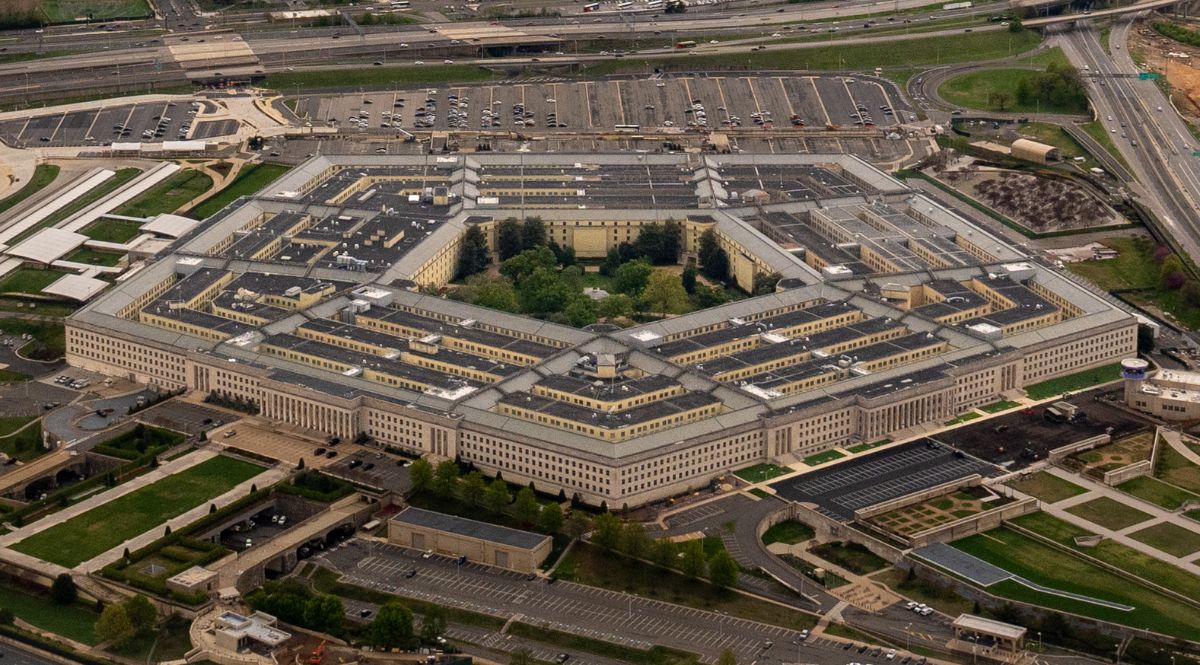
Published on January 23 by the Department of War, the public version of the new US National Defense Strategy (NDS) calls on European NATO members to take primary responsibility for their own conventional defence. The US plans to provide them with more limited support, prioritising those countries that invest the most in their own and regional security. For Poland, this means the possibility of maintaining substantial military ties with the US, but also the need to further enhance its own defence capabilities and strengthen cooperation with its European allies.
 Jen Golbeck / Zuma Press / Forum
What are the priorities of the NDS, and how does it rank Europe?
The authors of the NDS have identified the protection of US territory and interests in the Western Hemisphere as a priority, followed by deterring China in the Indo-Pacific. They point out that Europe is important, but downgraded its position in the hierarchy of areas of interest to the US armed forces from second to third place. This marks a change from the Pentagon's 2018 and 2022 strategies, which prioritised competition with China, followed by Russia. The new NDS justifies considering the Western Hemisphere as the priority on the grounds that it is precisely from there that direct challenges and threats to the US originate, in the form of mass migration, drug trafficking, and the growing influence of “adversaries” (Trump mentioned China and Russia in this context). This influence is said to threaten US access to “key terrain” such as Greenland, the Gulf of America, and the Panama Canal. In addition, the new NDS is even clearer than previous documents in prioritising deterrence of China over Russia. It considers Russia to be a “persistent but manageable” threat to NATO's eastern members, but at the same time too weak to achieve hegemony in Europe (whereas the 2022 document described Russia as an “acute” threat to US interests). The Pentagon describes Europe as a declining global economic power, while noting that Indo-Pacific is the world's largest market and is still growing. The strategy aims to prevent China from dominating this region.
How does the NDS approach cooperation with NATO allies?
The Pentagon's new strategy calls, even more emphatically than before, on allies to enhance their own military capability. At the same time, it remains unclear about the level of US commitment to supporting them. While it emphasises the importance of alliances in maintaining regional “balances of power” in Eurasia that are favourable to the US, it accuses allies of significant neglect of their armed forces and states that they have become more dependencies than partners. It emphasises that European NATO members have much greater economic power than Russia. It calls on them—as well as partners in the Middle East, Africa, and South Korea—to take primary responsibility for their own defence with “critical but more limited US support.” This indicates the Pentagon's interest in reducing its military presence in Europe, which is to be “calibrated.” The US vows to support the strengthening of allied capabilities, including through cooperation in defence planning and arms production (which the US itself wants to increase rapidly). At the same time, the Pentagon announced that it will cooperate most closely with “model allies” who invest appropriately in their capabilities and take the lead in countering threats in their regions (the NDS cites Israel as an example). Assistance to this group is to include priority treatment in arms sales, intelligence sharing, and other activities. However, the new defence strategy does not specify what operational support European allies can expect from the US military, except that—as indicated by the emphasis on European leadership in “conventional defence”—the US will continue to play the leading role in nuclear deterrence on the continent.
How does the new document fit into the foreign policy of Trump and his administration?
The NDS develops the assumptions regarding the armed forces from the National Security Strategy (NSS) published in December 2025, based on the ideas of the prioritisation of narrowly defined American interests (“America First”) and “peace through strength.” The NDS and NSS attempt to put more substance behind the slogans used by President Trump, which are general and at times contradictory. This may explain the imprecision of some of the wording or certain differences between the two documents, especially since the NSS was not drafted solely by the Pentagon. For example, the NDS does not call for the pursuit of “strategic stability” with Russia, nor does it ideologically criticise European countries. Nevertheless, both documents outline a vision of US military engagement around the world being more selective and conditional. However, the implementation of the NDS will ultimately depend on President Trump. It is possible that it was his decisions in the first year of his second term that meant there have been no major reductions in US troops in Europe or elsewhere, despite the interest in such cuts signalled in the NDS by the Pentagon's civilian leadership. Using military support as a means of influencing allies, Trump may have abstained from deeper troop cuts in Europe after allies agreed to his demands for significant increases in defence spending and trade concessions to the US At the same time, this means that the issue of troop reductions in Europe may resurface if transatlantic tensions intensify (e.g., in case of disputes over Greenland escalating). In turn, the risk of troop cuts may be lowered by the substantial increase in US defence spending that Trump is calling for.
What does the new US defence strategy mean for Poland?
The assumptions included in the NDS provide for the possibility of the US maintaining close military cooperation with Poland as an ally that is substantially investing in its own defence capabilities. However, changes in US strategy also point to the need for Poland to further strengthen its own potential and responsibility for regional security. This is not only due to US expectations, but also–above all–to the fact that in the future, the US may be less willing or able to provide additional operational support. It is in Poland's interest to clarify what future support might entail. An already significant US combat presence will still be of exceptional importance for deterrence, substantially increasing the risk of escalation for Russia if it attacks Poland. However, even if there is no withdrawal of major US forces from Europe, the US's ability to provide additional support to Poland could be drastically reduced if US-based forces are engaged in another crisis or conflict, especially in the Indo-Pacific. In addition to maintaining close cooperation with the US, Poland should therefore also strengthen its ties with its European allies. It should be noted that the conventional US capabilities that will be most difficult for Poland and Europe to replace would also be most needed by the US in a potential conflict with China (intelligence, surveillance and reconnaissance aircraft and satellites, deep strike missiles). Moreover, given the transatlantic tensions and the US announcement that it will reduce its role in European security, Russia is very likely to continue testing NATO's cohesion, both transatlantic and within Europe itself.