
U.S. and Ukraine Agree Revised Minerals Deal
For Ukraine, the signing of the minerals agreement with the United States is primarily political because it improves relations between them and strengthens its negotiating position with Russia. The overall economic consequences and effects on reconstruction are difficult to estimate, as they depend on future U.S. political and business decisions related to, among other things, the unclear situation regarding access to Ukrainian raw materials. Despite this, the agreement guarantees the U.S. a privileged position relative to other countries and entities in Ukraine’s energy, mining, and infrastructure sectors, which significant for President Donald Trump’s domestic policy.
 AA/ABACA / Abaca Press / Forum
After months of negotiations, on 30 April in Washington, D.C., U.S. Treasury Secretary Scott Bessent and Deputy Prime Minister and Minister of Economy of Ukraine Yulia Svyrydenko signed an agreement to establish the U.S.-Ukraine Investment Fund for Reconstruction (IFR), also known as a Commodity Agreement. The agreement became effective from its ratification by the Verkhovna Rada on 8 May. The concept came from President Volodymyr Zelensky in October 2024 and was intended to gain Trump’s favour. Initially, the terms set by the U.S. were unacceptable to the Ukrainian authorities and that dispute deepened tensions and conflicts in mutual relations, resulting in, among others, the breakdown of the meeting between Trump and Zelensky this past February in Washington.
The Agreement’s Provisions
The IFR establishes a framework for economic cooperation and the reconstruction of Ukraine in the raw materials, energy, and infrastructure sectors. It provides the U.S. a privileged position and the possibility of drawing significant benefits from the exploitation of selected Ukrainian natural resources. The agreement applies to 57 critical raw materials (for example, titanium, lithium, graphite, uranium, rare earth metals) and energy (oil, gas), with significant exceptions (iron, potassium salts, or coal, the use of which is of great importance for the Ukrainian economy).
Furthermore, it guarantees the IFR, including entities authorized by it (for example, U.S. companies), priority in obtaining new mining or processing licenses (gas, oil, critical minerals, among others) and the purchase of raw materials on the most favourable terms. The agreement takes precedence over Ukrainian law. In the event of a conflict with other international obligations, including those resulting from Ukraine’s integration into the EU, the parties are to negotiate its amendment. This gives the U.S. space to pressure Ukraine.
The IFR will be managed by the U.S. International Development Finance Corporation (DFC) and the Ukrainian Agency for Public-Private Partnership. It will operate under separately concluded U.S. and general partnership agreements defining the rights, obligations, shares, and management of the IFR. Neither document has yet been made public.
The IFR will be financed from half of the new license fees for raw material extraction and processing that flow into the Ukrainian budget. According to estimates, their value over the last five years has amounted to about $70 million. The U.S. side is to include granted military aid towards the contributions, although it is unclear who will pay the funds into the IFR, and any voluntary financial contributions. The income is to be invested in Ukraine, and the first payments to the U.S., according to the authorities, may take place no sooner than after 10 years. All IFR income is exempt from taxation in Ukraine and, as a rule, also in the U.S. Ukraine guarantees free exchange of the hryvnia for dollars and freedom in the flow of funds abroad.
The agreement is more beneficial for Ukraine than previous proposals. It confirms Ukraine’s sovereignty over the natural resources throughout its territory and leaves open the possibility of unrestricted claims for compensation and damages from Russia related to illegal extraction. It also excludes states and entities acting to the detriment of Ukraine from reconstruction benefits after achieving lasting peace, which could potentially harm the interests of Russia’s partners (for example, China and Iran). Despite Ukrainian diplomatic efforts, the document does not contain security guarantees, rather these are indirectly tied to the American business presence and the provision of the U.S. possibly supplying weapons, technology, and training.
Ukrainian Raw Material Resources
Ukraine has some of the world’s largest natural resources, potentially worth several trillion dollars. These include extensive deposits of energy resources, including the second-largest reserves of natural gas in Europe (after Norway) and metals—for example, it has the largest deposits of iron ore in Europe (not covered by the agreement), as well as uranium, titanium, rare earth metals, including lanthanum, cerium, neodymium, erbium, and yttrium. Ukraine also has significant reserves of critical raw materials necessary for arms production or the energy and digital transformations. Of the 34 raw materials recognised by the EU as critical, 22 are located in Ukraine, including lithium, manganese, and graphite.
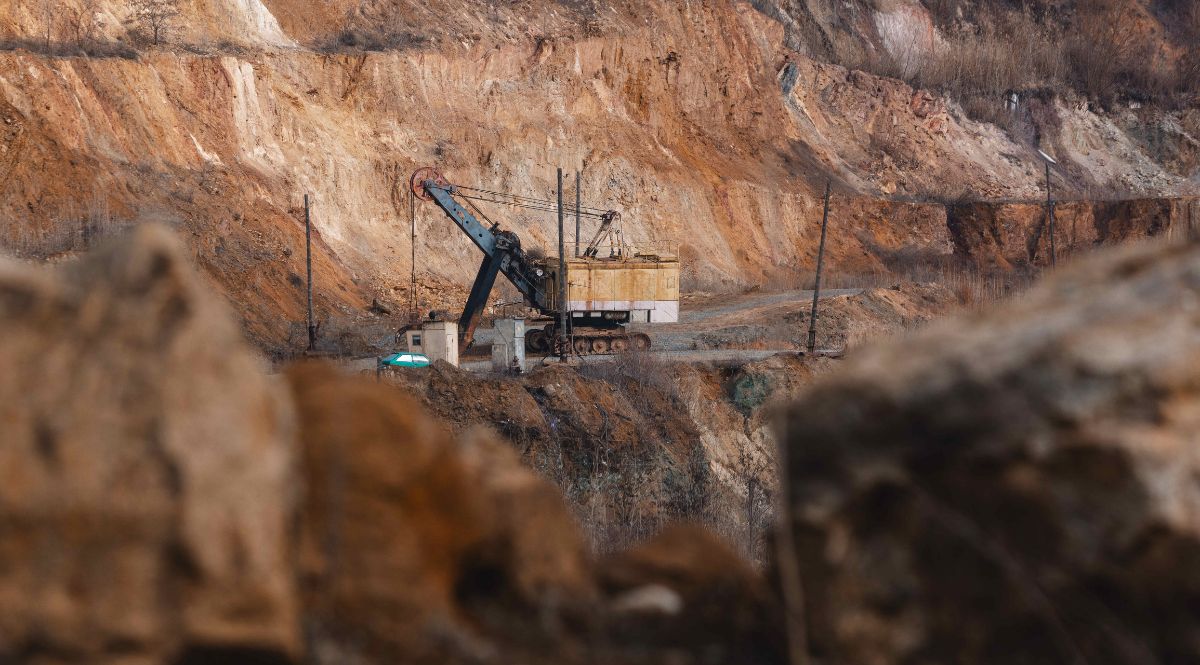
Detailed data on resources are classified. The information available has not been updated since the Soviet era and is of low credibility. A significant part of the deposits are located in the territories currently occupied by Russia or in the frontline zone, which prevents their extraction. The rest have thus far been largely unexploited as Ukraine has neither the means nor the technology for this and it would require significant financial outlays for developing extraction and processing infrastructure. Most of the investments will take many years and the extraction and processing of raw materials (for example, lithium) is energy-intensive, complex, and environmentally burdensome. It may also require additional geological research and provoke public opposition.
Trump’s Motivations
The signing of the agreement is intended to strengthen Trump’s image at home and convince the Republican Party’s electoral base, including the large MAGA fraction, of the president’s effectiveness in protecting American interests in relations with partners. While it is not formally intended to be compensation for U.S. military support to Ukraine, the president and his administration will treat future gains as such. In public opinion polls conducted before last year’s presidential election, as much as 60% of Republican voters indicated that after the war Ukraine should reimburse the U.S. for the costs of aid it provided. Some Republican politicians (for example, Senators Roger Wicker and Joni Ernst) assess the agreement positively. They said that it will not only satisfy voter expectations but will also mitigate the existing split in the party on Ukraine and help persuade the administration to increase support for it. However, some Republicans associated with the MAGA fraction (for example, Marjorie Taylor Greene) criticised Trump’s decision, viewing it as a greater obligation to Ukraine than those during the Biden administration.
The agreement will provide U.S. companies with access to Ukraine’s resources, which are key to the development of major industries, especially in the energy, defence, and modern technology sectors. This is related to the second Trump administration’s economic, energy, and trade policies, which aim, among others, to strengthen the manufacturing base in the U.S. The president wants to reduce dependence on the purchase of extracted and processed critical raw materials from China, which is the world leader in both areas. Strengthening cooperation with countries and territories with extensive raw material resources, for example, the Democratic Republic of Congo, Canada, Ukraine, and Greenland is meant to block China from access to these sources. The extraction and processing of minerals outside the U.S. is an attractive option since it is usually associated with lower labour or energy costs and in legal and geological terms easier to obtain environmental permits and transfer of costs and risks related to public opposition.
Conclusions and Perspectives
The agreement creates conditions for better cooperation between the Trump and Zelensky administrations, reduces tensions in bilateral relations, and can be presented by both sides as a success. Its conclusion increases the pressure on negotiations with Russia and improves Ukraine’s position. It is also a signal to other counties that the Trump administration is more strongly including raw material and energy issues in its foreign policy.
The document creates favourable conditions for the U.S. to engage in reconstruction investments, due to the privileged position of American entities. In the long term, it can support the modernisation of Ukraine’s mining and energy sectors. However, the level of business involvement of U.S. entities is uncertain due to the risk of further conflict escalation, corruption, institutional weakness, and uncertainty about the availability and profitability of natural resource extraction.
The agreement may aggravate Ukraine’s relations with the EU or other countries due to the preferential treatment of the U.S. This may be an obstacle to EU accession talks (despite political declarations to the contrary) because, among other things, it creates unequal conditions for the development of competition and is contrary to EU raw material policy, while the procedure for its adaptation to EU law will require U.S. consent. However, a full assessment of its effects is not possible without access to the content of the classified agreements related to it and the still uncertain prospect of a ceasefire.


.png)

.png)
.png)
.png)