TISZA wins constitutional majority in Hungarian parliamentary elections
Péter Magyar’s centre-right Respect and Freedom Party (TISZA) was victorious in the parliamentary elections held in Hungary on 12 April 2026. With a record turnout of 79.5% (according to preliminary results), it defeated the Fidesz-KDNP Party Alliance, which had been in power since 2010. Its leader, Prime Minister Viktor Orbán, conceded defeat.
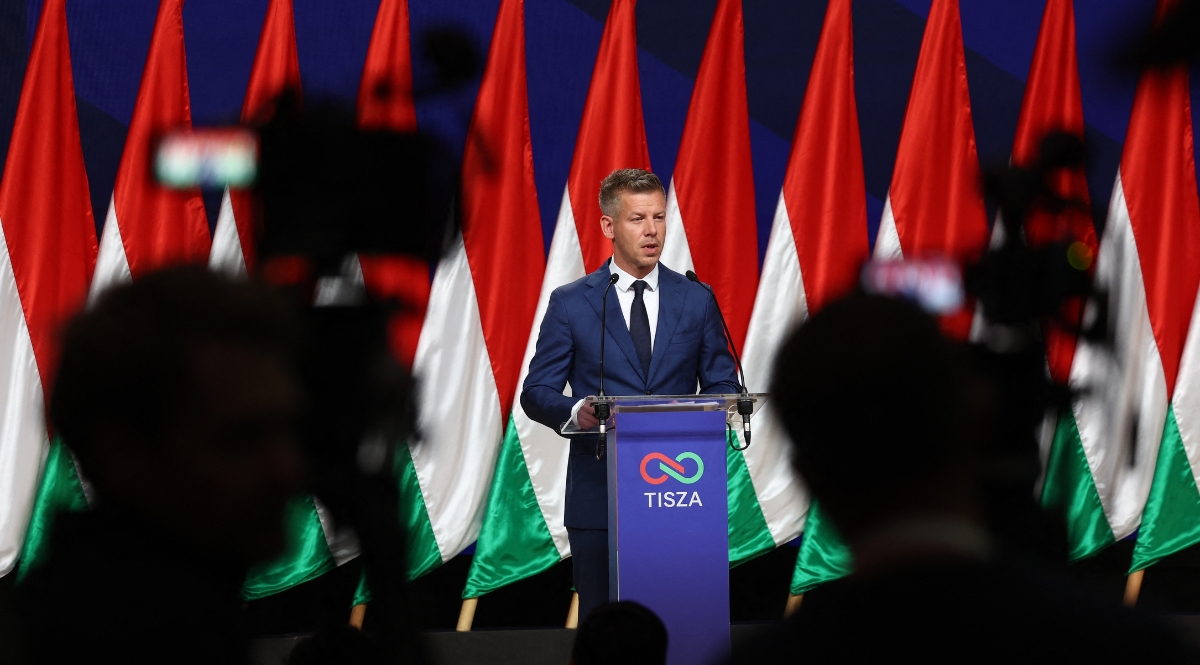 AA/ABACA / Abaca Press / Forum
How will the composition of the National Assembly change?
TISZA, contesting the National Assembly elections for the first time, achieved the best result, winning 53% of the vote, which, within the mixed electoral system, will provide 138 MPs. In the 199-seat National Assembly, this will secure it the constitutional majority—at least 133 MPs—necessary to amend the constitution, as well as around 60 constitutional bills which regulate the functioning and composition of key state institutions. Fidesz secured 38.4% of the vote and 55 seats—80 fewer than before. With 6% of the vote, the far-right nationalist Our Homeland Movement (Mi Hazánk) retained its six MPs. The opposition centre-left Democratic Coalition, which previously held 15 seats, did not clear the electoral threshold, nor did the satirical Hungarian Two-Tailed Dog Party.
What was the focus of the election campaign?
TISZA focused on the need to restore national unity and remove Fidesz from power. It accused this party of capturing the state through creating an oligarchic and corrupt system, resulting in a crisis in public services, economic stagnation, and rising prices. TISZA promised to release European Union funds blocked under the conditionality mechanism due to the Fidesz government’s violation of the rule of law. Unable to credibly compete by highlighting the socio-economic achievements of his government, Orbán presented himself as the personal guarantor of Hungary’s freedom and security. He stoked voters’ fears regarding the alleged efforts of the liberal-left EU elites to curtail the country’s sovereignty. Together with the Ukrainian authorities—led by President Volodymyr Zelenskyy, who was demonised by the Fidesz campaign—they were claimed to want to drag Hungary into a war with Russia and to shift the costs of the conflict onto the country, for example, by cutting off supplies of cheap Russian energy resources.
How were other states involved in the Hungarian campaign?
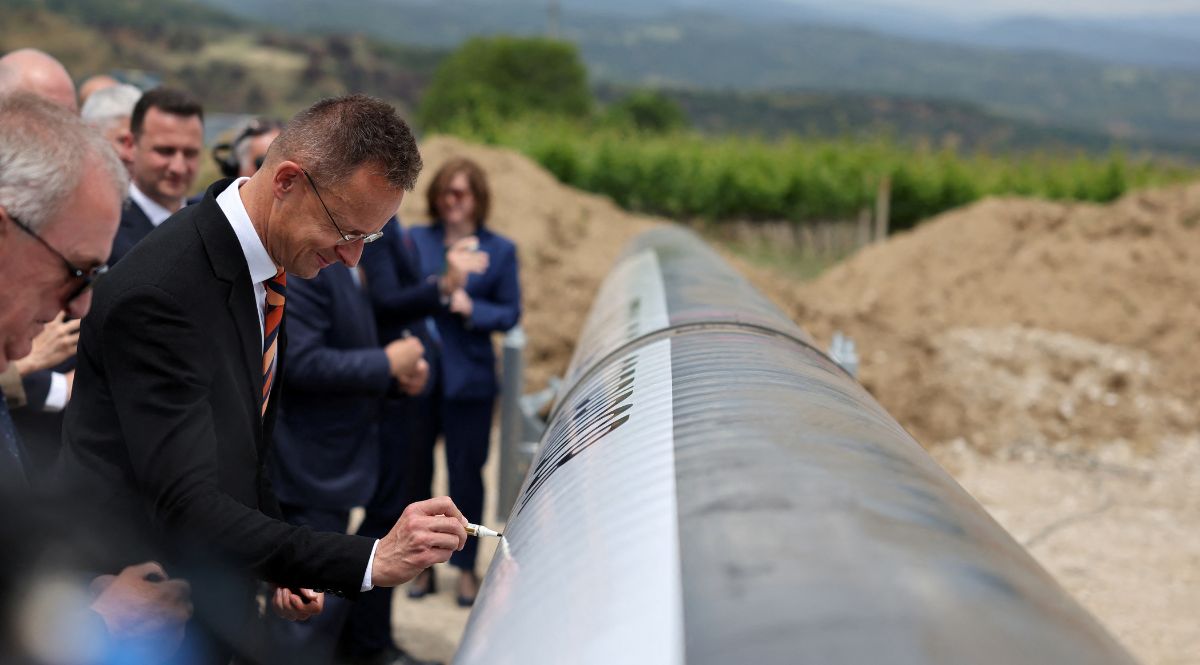
To avoid Fidesz’s accusations of betraying Hungary’s national interests, TISZA avoided asking for support from leaders of other countries and EU institutions in its campaign. It remained cautious on international issues, declaring a willingness to cooperate with the US, NATO and the EU, whilst keeping its distance from Ukraine. By presenting himself as Donald Trump’s most devoted ally, Orbán received support from the US President and from his Vice-President J.D. Vance, who travelled to Budapest to attend a rally organised by Fidesz. The alleged bomb attack on the TurkStream gas pipeline supplying Russian gas to Hungary was probably a provocation likely designed to intimidate undecided voters and orchestrated in collusion with Orbán’s ally, Serbian President Aleksandar Vučić. The Russian authorities also declared their support for Orbán—according to “The Washington Post,” Russian security services allegedly even offered to stage a fake assassination attempt on Orbán to mobilise voters, Ultimately, limited use was made of their campaign support, likely due to fears of Fidesz being compromised following revelations by an investigative journalist—whom the authorities accused of spying for Ukraine—that Hungarian diplomats had passed on confidential reports from EU meetings to Russia.
What will be the main challenges for Hungary’s new government?
Magyar is likely to become the new prime minister. His cabinet will operate under immense pressure, fearing that it will fail to meet the public’s high hopes for a rapid improvement of the country’s economic situation and for holding Orbán’s government accountable for its abuses. Meanwhile, the challenge for TISZA, which consists mainly of activists with little political experience, will be eliminating Orbán’s influence from state institutions, including the judiciary, law enforcement agencies, supervisory offices and the public media. Fidesz, exploiting the constitutional majority it held during its time in government, carried out a series of amendments to constitutional laws, effectively subordinating state institutions to its own interests. Following the elections, Magyar has called for President Tamás Sulyok—whose term ends in 2029—to step down from his post. He also demanded the resignation of all Fidesz-linked judges on the Constitutional Court, the head of the Supreme Court, the Prosecutor General, and the heads of the State Audit Office and the Competition Authority, threatening them with the initiation of removal proceedings.
How will the election results affect Hungary’s international alignment?
During the campaign, TISZA adopted a cautious stance on international issues, declaring a willingness to cooperate with the US, NATO and the EU, whilst distancing itself from Ukraine. However, the party coming to power is likely to bring about a shift in Hungary’s international orientation. Magyar has specifically announced the abandonment of Orbán’s anti-EU policies and steps to restore the country’s credibility within the EU and NATO. He has promised reforms to restore the rule of law, which should allow Hungary to access up to €10 billion in frozen EU funds. He would likely soften Hungary’s unambiguously hostile policy towards Ukraine, lifting the country’s veto on the EU loan for Ukraine and the payment of compensation to countries supporting it under the European Peace Facility (including about €0.5 billion for Poland), and allowing Ukraine to begin accession negotiations. However, he is unlikely to be willing to provide military support to Ukraine. As prime minister, he would continue to appeal to the Hungarian diaspora left outside the borders established by the 1920 Treaty of Trianon. Unlike Orbán, however, he would do so in a less ostentatious manner, which could reduce friction with Hungary’s neighbours over this issue. During the campaign, Magyar spoke cautiously about curtailing Hungary’s political and economic ties with Russia. Anita Orbán, who is set to become Foreign Minister in the TISZA government, has announced the gradual phasing out of these ties, whilst noting that a swift withdrawal from Russian fuel supplies is not possible. Magyar has identified Warsaw as the destination for his first foreign visit. This move is likely intended to revive the Visegrád Group, as the group had effectively stalled in the face of Hungary’s pro-Russian policy following the 2022 invasion of Ukraine. Subsequent diplomatic visits to Vienna and Brussels are also planned.