Czechia, Slovakia and Hungary in the Face of Changing US Trade Policy
The EU-US Trade and Investment Partnership Agreement stabilises transatlantic relations in the economic dimension, while highlighting the discord among the Visegrad Group (V4) countries. Despite differences, including in the assessment of the European Commission, which Hungary accuses of negotiating an unfavourable agreement, these countries are taking steps to minimise the negative effects of the change in customs duties. The V4 countries are adapting to US trade policy, seeking to combine the agreement's provision for increased purchases of military equipment and energy resources from the US with the prospect of closer relations with Donald Trump's administration.
 DAVID W CERNY / Reuters / Forum
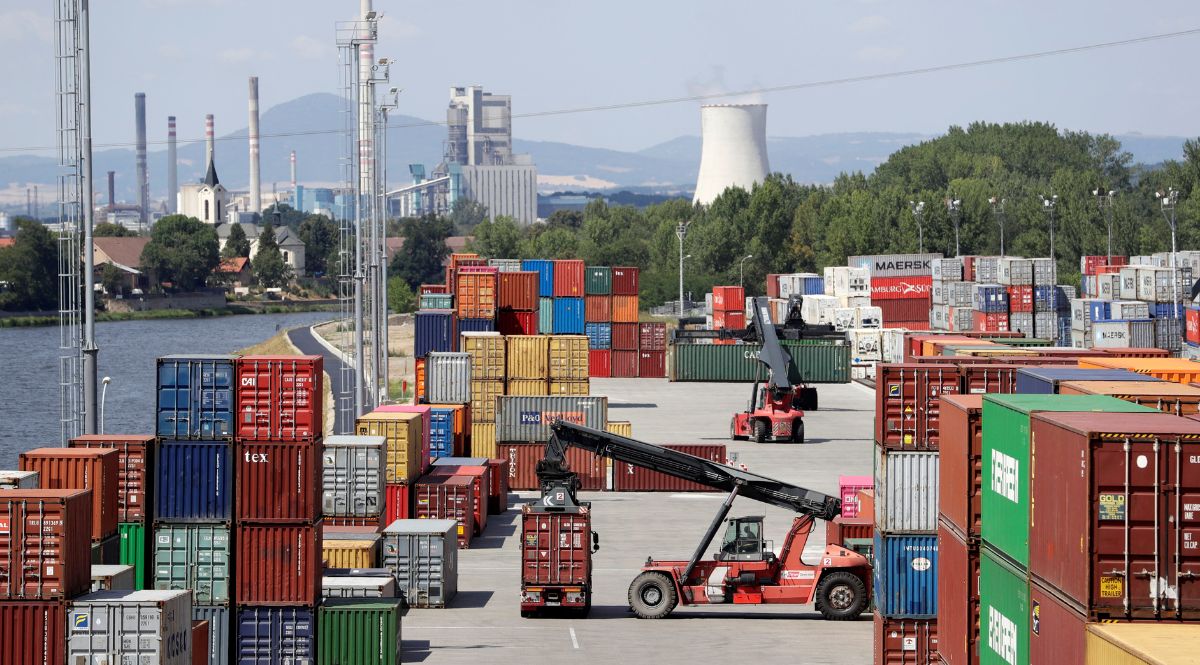
According to the framework trade deal of 27 July this year, most goods exported from the EU to the US are subject to a 15% duty. This has been reduced from President Trump's announcement in April this year, according to which the base rate was to be 20%. The 15% rate also applies to cars and car parts, which were subject to 27.5% tariffs in April this year, the maintenance of which would be particularly painful for the automotive sector developed in the V4 countries. The agreement also stipulates that by 2028, EU countries will purchase approximately $750 billion worth of energy resources from the US, invest approximately $600 billion there, and increase their purchases of American military equipment.
Czechia’s Conservative Position. Czechia expects indirect negative consequences from US trade policy. The government estimates losses at 0.2% of GDP, which results from the limited links between Czech exports and the US. The country accounts for only about 2.6% of the value of Czech foreign sales of goods and is their 10th largest export market (about $6.8 billion last year). Machinery and transport equipment dominate the exported products. Car exports from Czechia are less oriented towards the US than is the case for Hungary and Slovakia, but they are strongly linked to Germany, which is the largest EU exporter to the United States. Therefore, due to the potentially lower demand for Czech automotive components, the export support agency CzechTrade estimated in May this year that Czech GDP would fall slightly more than the government had predicted, by 0.3-0.5% of GDP. Czechia is also receiving supplies of American fuel for its domestic nuclear power plants (the delivery in the spring of this year was the first in 15 years), which corresponds to the American expectations set out in the framework agreement.
In order to compensate for the predicted losses, the outgoing government of Petr Fiala is calling for a boost in trade with other partners. On one side, it wants to remove barriers in the EU internal market (e.g. by eliminating bureaucratic obstacles and reducing administrative costs), and on the other side, it wants greater openness to agreements between the EU and Mercosur, India and the Philippines. In addition, in connection with the EU investments in the US anticipated in the framework agreement, Czechia has activated CzechTrade, whose American offices are located in Chicago, Austin, New York and San Francisco. It offers an ‘export incubator’ programme aimed at helping companies enter the US market, including legal advice and mediation in contacts with partners.
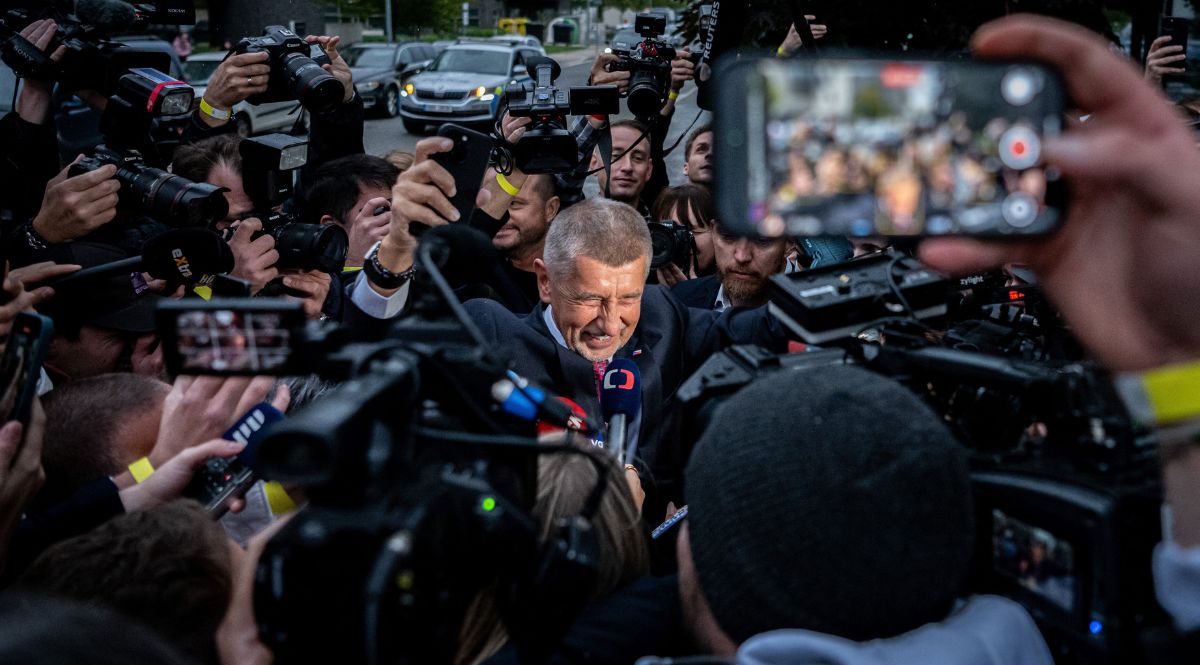
The winner of the October parliamentary elections and likely future prime minister, Andrej Babiš, despite his Trump-style political marketing, is critical of US customs policy. In its programme proposal from early November, the future government coalition announced plans to strengthen strategic relations – including economic relations – with the United States, while also emphasising the need to diversify exports and ‘minimise the risk of excessive dependence on individual markets’.
Slovakia's Hopes. For Slovakia, where the US is the ninth largest market (worth approximately $4.8 billion, 4.2% of total exports), when compared to the original US tariff proposals, the trade agreement reduces costs to a greater extent than for the other V4 countries. Although, according to Société Générale, Slovakia's GDP growth this year will be up to 0.87% lower as a result of the agreement, Robert Fico's government is satisfied with the protection it has provided for Slovakia's automotive sector, which is the world leader in car production per capita. Cars dominate Slovak exports to the US (USD 3.47 billion last year). In addition to US customs policy, the Fico government also sees a threat to the industry in the potential effects of the ban on the registration of new combustion engine cars in the EU from 2035.
Anticipating an increase in tariffs by the Trump administration, Prime Minister Fico attempted to influence developments. In February this year, he spoke to Elon Musk, then head of the Department of Government Efficiency (DOGE), about the harmfulness of a possible trade war for both the EU and the United States. At the same time, despite his critical stance towards the EU, Fico expressed his support for the actions of Maroš Šefčovič, the EU Commissioner for Trade and Economic Security, Interinstitutional Relations and Transparency, who was responsible for negotiating the agreement with the US, and is his long-time political ally and the Smer-SD party candidate in the 2019 presidential election.
As part of its “four corners of the world’ policy”, Fico's government is intensifying economic cooperation in areas alternative to the West, including the US, by entering into strategic partnerships with Azerbaijan, Brazil and China, among others. In the first seven months of this year, Slovakia managed to increase its exports to non-EU markets by 7.1% compared to the same period last year (compared to a 3.9% increase in total Slovak exports). This result is influenced, among other things, by business missions involving the government and the development of a network of honorary consulates.
Hungary's Euroscepticism. For Viktor Orbán's government, which is facing the prospect of parliamentary elections in spring 2026, it is important to minimise the negative impact of US tariffs on the Hungarian economy (last year, the US was Hungary's eighth largest export market – 7.08%, worth approximately $7 billion). Meanwhile, the tariffs have resulted in a downward revision of the government's GDP growth forecast for 2025 from 2.5% to just 1%, partly due to the particular sensitivity to tariffs of car and pharmaceutical production, which account for around 40% of Hungary's exports to the US. To demonstrate a proactive stance, Orbán has announced plans to protect jobs and manufacturing plants.
Orbán's government expressed understanding of the US imposing tariffs on Hungary as part of the EU. This stems from Orbán’s enthusiastic attitude towards President Trump, who is supporting the Hungarian prime minister ahead of the upcoming elections. At the same time, Orbán has attempted to influence US economic decisions, including by trying to reach a bilateral economic agreement even before the EU-US agreement was concluded.
Orbán's visit to the White House in November this year contributed to improving the prospects for trade cooperation. Hungary announced the purchase of approximately $600 million worth of American LNG over the next five years, as well as $700 million worth of weapons. It also signed an agreement to purchase American nuclear fuel.
Hungary's actions regarding US customs policy came at the expense of EU cohesion. In April, Hungary was the only EU member state to oppose the imposition of retaliatory tariffs, thereby weakening the EC's negotiating position against the Trump administration. In turn, when concluding the agreement with the US, Orbán's government criticised the EU's actions, among other things, for their ‘lack of transparency and potential threats to their national interests’.
Conclusions and Outlook. The EU-US trade agreement has stabilised the situation of the export-dependent economies of the V4 countries, particularly in the automotive sector, which plays an important role in these countries. However, a quick return to the pre-April tariff rates is unlikely, and the Trump administration's protectionist approach may have a long-term negative impact on transatlantic trade. This would be particularly true if tariffs on EU goods prove to be higher than those imposed by the Trump administration on other US partners.
Deeper cooperation on energy and armaments, as provided for in the framework agreement, may contribute to increased trade between the V4 countries and the US. Sanctions against the Russian energy sector – announced by the US in October this year and criticised by Hungary and Slovakia, which are dependent on Russian gas and oil supplies – favour the import of American hydrocarbons to the V4 countries as well. In turn, purchases of American military equipment, combined with the increase in defence spending envisaged in the conclusions of the June NATO summit in The Hague, may intensify the modernisation of their armed forces (Czechia, Slovakia and Hungary spend only about 2% of GDP on defence).
In the face of this crisis, the V4 countries did not coordinate their approach to the EU talks on US trade policy, and the Hungarian government’s stance weakened the Union's negotiating position. However, Czechia, Slovakia and Hungary did agree to intensify their search for alternative export markets to the US, as evidenced, among other things, by their support for the ratification of the EU-Mercosur agreement (in contrast to Poland, which opposes it).
V4 exports to the US in 2024 and their share of total foreign sales value
|
Poland |
$ 12.6 billion |
3,3% |
|
Czechia |
$ 6,8 billion |
2,6% |
|
Slovakia |
$ 4,8 billion |
4,2% |
|
Hungary |
$ 6,9 billion |
4,1% |


.png)
.png)