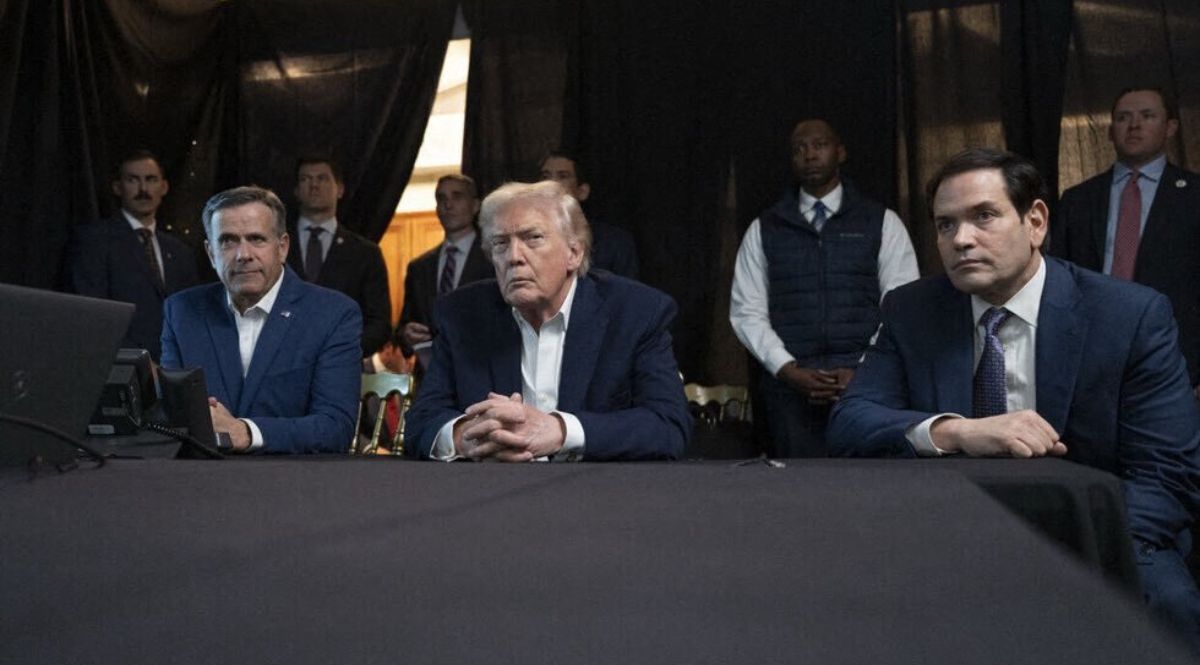
The United States Hosts the "Shield of the Americas" Summit
On 7 March in Doral, Florida, President Donald Trump hosted leaders from 12 Latin American and Caribbean countries. Cooperation in the fight against crime was the main topic, but the event also aimed to support the administration’s efforts to rebuild the US sphere of influence in the Western Hemisphere.
.png) Kevin Lamarque / Reuters / Forum
Kevin Lamarque / Reuters / Forum
What is known about the nature and results of the meeting?
This was the first multilateral event during Trump’s second term in which he held such a large meeting with leaders from Latin America and the Caribbean. He invited presidents (including two presidents-elect) from Argentina, Bolivia, Chile, Costa Rica, the Dominican Republic, Ecuador, Honduras, Panama and El Salvador. From the Caribbean, he hosted the president of Guyana and the prime minister of Trinidad and Tobago. The guest list reflected ideological affinity with Trump, support for his administration’s policies, or close cooperation with the US. Declarations by representatives of the Trump administration about their involvement in security and their readiness to support regional partners in these efforts were a significant part of the event. There is no information about a joint final document. Trump, surrounded by his guests, only publicly signed a unilateral proclamation about the US commitment to fight cartels, coordinate these activities with regional partners and train their armed forces. The point in the text about combating external threats in the region primarily concerns China, although it is not explicitly mentioned by name. The document also mentions the Americas Counter Cartel Coalition—an initiative launched two days earlier by Defence Secretary Pete Hegseth and representatives of 16 countries in the region (mainly defence ministries).
What were the Trump administration’s goals behind the event?
Forming a military coalition that will cooperate to combat gangs in the region is the primary goal of “Shield of the Americas,” as per Trump’s declarations. That goal comes from the assumption that the region’s priority should be to increase security, including combating criminal groups and irregular migration, as these are the main obstacles to the economic development of the Western Hemisphere. The summit in Doral, however, was largely part of the US’s efforts to bring together a group of partners who would support the country’s security interests and its concept of rebuilding its sphere of influence in the region. From the US perspective, this cooperation should consist of strengthening border protection, combating gangs and smuggling, and protecting strategic infrastructure (including seaports). The Trump administration argues that cartels can only be defeated by military force and that the US is the best and most indispensable partner in this regard. It points to successes in sealing its borders, deterring maritime smugglers (by attacking their alleged boats), and capturing Nicolás Maduro in Venezuela, to reinforce that. The TV show-like format of the summit, with Trump’s central role, was also likely intended to serve internal purposes. Primarily, it sought to strengthen his image by demonstrating the success of his election promises, including combating threats to US security.
What did the Latin American and Caribbean leaders seek?
Among the reasons explaining the presence of individual leaders were closer cooperation with the US in the areas of security, business opportunities, and strengthening their own political positions. For the presidents of Argentina, Javier Milei, and El Salvador, Nayib Bukele, the event was an opportunity to demonstrate their special personal relationships with the US leader. The former owes Trump for his support for shock therapy economic policies and his success in last year’s important midterm parliamentary elections. The latter won Trump’s significant backing for El Salvador’s security model based on draconian measures, but also on the consolidation of power through the erosion of the democratic order. Many of the leaders present at the summit have been struggling with an increase in gang violence in their countries. They have supported or tried to introduce radical methods, based on El Salvador’s experiences, among others, but they are also counting on US assistance. For example, shortly before the summit, news emerged of success in the fight against crime in Ecuador in cooperation with the US Southern Command. In turn, in early March, the Paraguayan Senate approved an agreement with the US, paving the way for the establishment of a US military presence. Trinidad and Tobago stands out among Caribbean countries for its unequivocal support for US military engagement in the region. The new president of Bolivia, Rodrigo Paz, explained his presence at the summit as part of the country’s opening up after two decades of anti-Western policies by left-wing governments, which were voted out of power in last year’s elections.
How could the summit impact the Inter-American cooperation?
Not only does the “Shield of the Americas” fail to address the root causes of security erosion in the region and mass migration: social, economic and institutional weaknesses of states. It also lacks declarations on how cooperation will be financed. Brazil, Colombia and Mexico—the key countries in the region when it comes to fighting crime—have not been invited. They are ruled by politicians who are ideologically distant from the US president. During the summit, Trump called Mexico “the epicentre of cartel violence” and criticised the country’s president, Claudia Sheinbaum, for rejecting his offer of assistance. Sheinbaum responded that she maintained her opposition to the presence of US forces on Mexican territory for anti-cartel operations. She stressed that the US should fight more effectively against arms smuggling into Mexico, as this is the main source of the cartels’ arsenal, and do more to reduce drug consumption at home. Colombian President Gustavo Petro said that the coalition includes countries with little experience and that supra-regional police and intelligence cooperation is key. On the one hand, the Doral summit reflects a trend over the last few years: the growing number of countries in the region ruled by either conservative politicians, ideologically close to Trump, or generally pro-American politicians. On the other hand, it highlights the broadening political divisions among the American countries, including their attitudes towards US policy. These differences have manifested, among other things, in the failure to convene the Summit of the Americas, planned for December last year in the Dominican Republic. The “Shield of the Americas” will deepen that rift.

.png)
.png)