Security - the main priority of the Belarusian authorities' policy for the next five years
On 18-19 December, during the All-Belarusian People’s Assembly (ABPA) meeting in Minsk, a programme for the socio-economic development of Belarus until 2030 was adopted, and Alexander Lukashenka delivered an address. Much attention during the meeting was devoted to security issues and preparations for times of crisis, and the Belarusian authorities announced the continuation of the existing alliance with Russia.
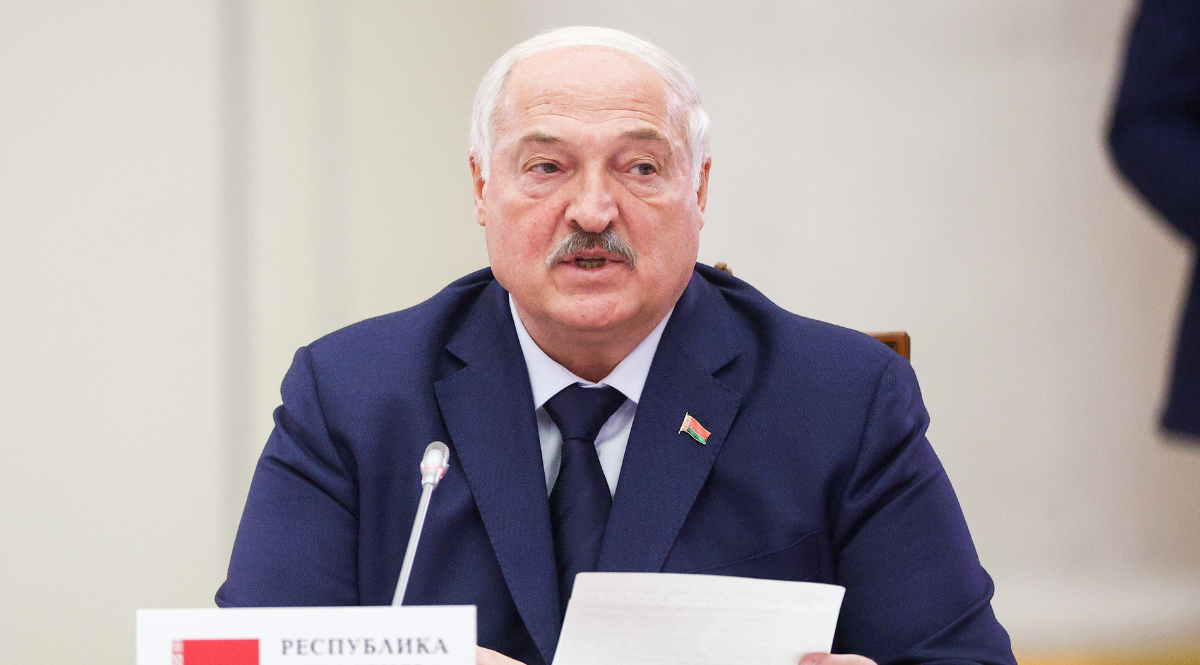 Sergei Bulkin / Zuma Press / Forum
What will Belarusian security policy look like?
In his address delivered during the ABPA on 18 December, Lukashenka devoted significant attention to security issues. He emphasised that the main source of threats to Belarus is NATO, especially its European members. For this reason, Belarus will deepen its military alliance with Russia in the coming years. As an example of the joint efforts of both countries in deterrence and defence, Lukashenka pointed to the fact that on 17 December, Russian Oreshnik medium-range ballistic missile systems had begun to operate in Belarus. He also emphasised that, if necessary, Russian units belonging to the Regional Forces Group would automatically be deployed on Belarusian territory to support the Belarusian forces. Lukashenka also announced that conscription would be maintained and that lessons learned from the military operations in Ukraine would be implemented. The authors of the 5-year state development plan also assumed that further development of operational-tactical missiles (with a range of up to 3,000 km), the production of air defence systems and unmanned aerial vehicles, as well as investments in communications and radio-electronic warfare, would all be necessary for defence. The Belarusian authorities also plan to create innovation centres and laboratories to develop the newest types of weapons and military equipment. All this is intended to prepare the Belarusian state for functioning in wartime.
What will be Belarus’ economic priorities?
Following the example of the Soviet era, the Belarusian authorities continue to periodically prepare five-year economic development plans, and the most important task for the nearly 1,200 delegates of the ABPA (including the President of Belarus, representatives of the executive and judicial branches, local councils and civil society institutions) was to adopt such a programme for the period until 2030. Its priorities were presented by Prime Minister Alexander Turchyn, who identified seven main areas: national demographic security; human potential development; a friendly living environment; competitiveness, technology and digitalisation; strong regions; strengthening defence capabilities and exploiting tourism potential. Key indicators have been developed for most of these aims, such as average GDP growth of 3% per annum, an increase in the number of births, the construction of sports facilities (72) and healthcare facilities (83), schools (27) and kindergartens (20), and scientific development is to translate into a 7.5% share of the digital economy in GDP. Efforts will also focus on expanding the transport infrastructure and industrial base, especially in the regions. The arms industry is also expected to play an important role in the country’s development. The main goal of the authorities is to improve quality of life and enhance the multidimensional security of the state.
What will be the most important goals of Belarus’ foreign policy?
From Lukashenka’s address and the course of the ABPA meeting, it can be concluded that the main goal of the Belarusian authorities in foreign policy will be, while maintaining a close alliance with Russia, to restore relations with the US and have it lift sanctions. The Belarusian authorities hope that improved relations with the United States will also force a change in EU policy and bring concessions from its member states. At the same time, this does not mean that they plan to revise their current policy, especially towards neighbouring countries such as Poland and Lithuania. Thus, we can expect hostile hybrid activities against NATO members to continue and, as in the case of security, actions consistent with Russia's objectives to be pursued. The announcements also clearly indicate that Belarus will continue to be actively involved in integration projects in the former USSR (Eurasian Economic Union, Collective Security Treaty Organisation). It will also aim to develop contacts with countries in Africa and the Middle East, primarily to secure additional markets for Belarusian goods, which have not yet been particularly successful in these countries.