Parliamentary elections in Nepal bring it closer to India and the West
The landslide victory of the Rastriya Swatantra Party (RSP) in the snap parliamentary elections held on 5 March marks a complete overhaul of Nepal’s political landscape, including a generational shift. The challenges facing the new government will include maintaining party unity, fighting corruption, bringing justice to those responsible for the fatalities during last September’s revolution, and improving the economic situation. In foreign policy, Nepal is likely to halt its drift towards China and Russia, improve relations with India, and strengthen ties with the US. The EU, including Poland, could be an important partner in strengthening the country’s institutions and improving its economic situation.
 Adnan Abidi / Reuters / Forum
Causes and outcomes of the snap elections
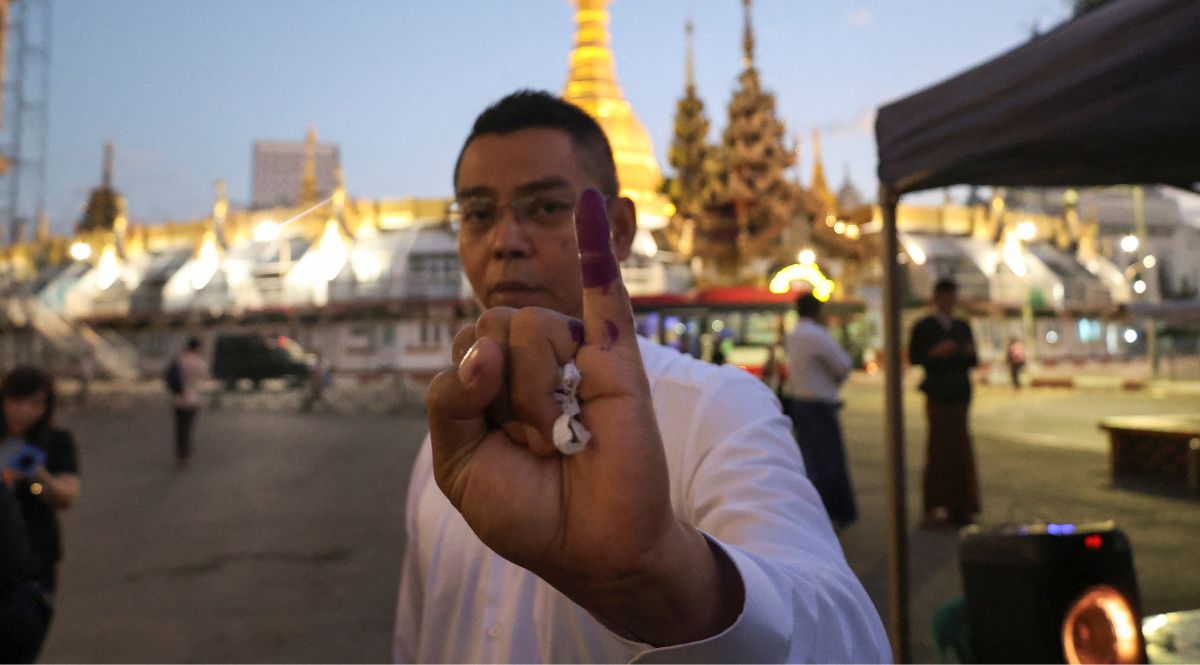
The early vote took place in the wake of yet another social revolution led by young people in the region (following those in Sri Lanka in 2022 and Bangladesh in 2024), which toppled the previous government of KP Sharma Oli in September 2025. The task of the interim government appointed at that time, led by former Chief Justice Sushila Karki, was to prepare for elections to the 275-seat lower house of parliament (the 59-seat upper house elects one-third of its members every two years through provincial authorities). All of Nepal’s traditional parties took part in the contest, as well as the RSP, a party formed only in 2022 and comprising mostly young people. The vote proceeded peacefully, and turnout stood at 58% (of 19 million eligible voters).
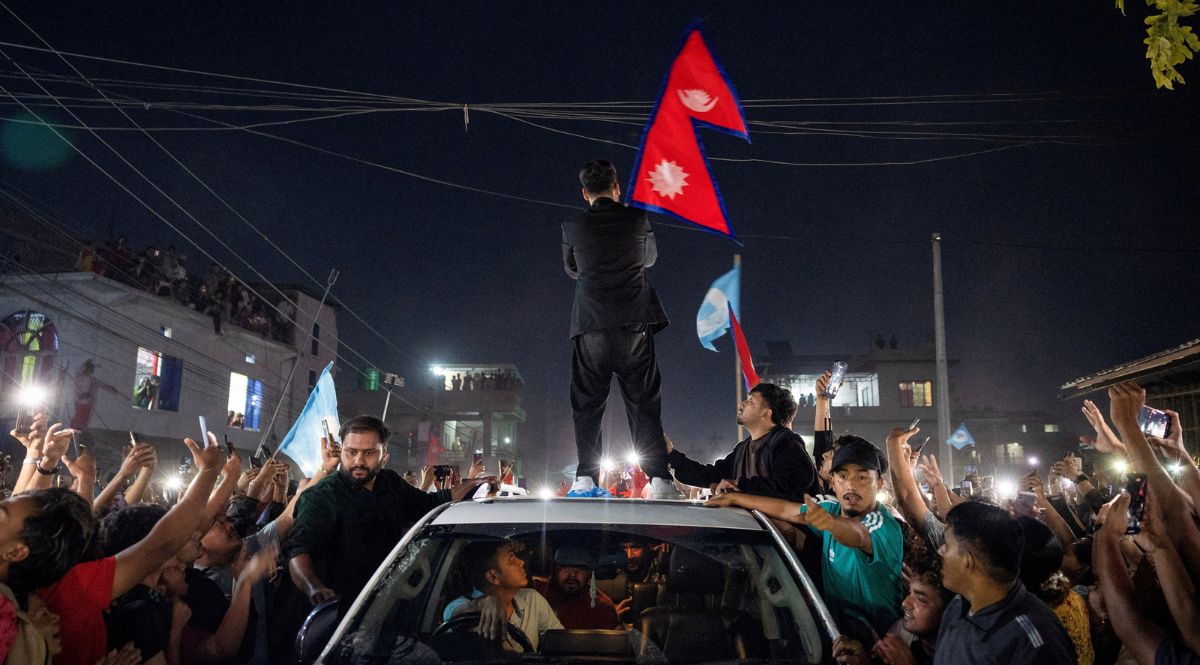
The centre-right RSP secured a decisive and surprising victory (the polls had not indicated a clear winner), winning 182 seats (2 short of 2/3 majority). This gives it an absolute majority in the lower house of parliament and the ability to govern alone. However, it cannot amend the constitution as this would require the support of the upper house of parliament, where the RSP has no members. Since the overthrow of the monarchy and the introduction of democracy in 2008, the political scene has been dominated by three main parties. Their very poor results signal a political shift: the Nepali Congress won 38 seats, the Communist Party of Nepal–United Marxist-Leninists (CPN-UML) 25, and the CPN–Maoist 17. The election results also reflect a generational shift in a young society of nearly 30 million people, where the average age is 26. In the new lower house, 37% of MPs are under 40, whereas in the previous one they accounted for only 11%.
The result was influenced by public frustration with the corrupt and ineffective governments of the traditional parties, which had been forming unstable coalition governments since 2008. It is also an expression of the aspirations of young people, for whom unemployment stands at 20.5%, and emigration seemed the only way to improve their lot. The RSP’s success was also influenced by the popularity of Belendra Shah, a former rapper and mayor of Kathmandu (2022–2026), who joined the RSP in December 2025 as a candidate for prime minister. Aged 35, he will now become the youngest head of government in the country’s history.
Internal challenges
A strong mandate offers the RSP government the chance to become the first in history to serve a full five-year term. However, internal rivalry within the party and divisions between two ambitious leaders—Prime Minister Shah and the RSP’s founder and chairman, Rabi Lamichhane—could stand in the way. The unprecedented dominance of a single party may also give rise to the risk of abuse of power and the emergence of authoritarian tendencies. A style of strong-handed governance and polarisation characterised Shah’s approach as mayor of the capital. Another challenge is the new team’s lack of political experience and its representatives’ lack of involvement in government. Most MPs will be sitting in parliament for the first time, and only Lamichhane has modest experience in government (as Deputy Prime Minister from December 2022 to January 2023 and from March to July 2024).
The first test for the new government will be to hold to account those responsible for the deaths of 77 people during last September’s revolution, based on the report by the investigative commission prepared by Prime Minister Karki. They will also need to assign responsibility for the corruption and incompetence of previous governments. Attempts to bring high-ranking politicians to trial may provoke strong resistance from their supporters and deepen the polarisation of a society, parts of which still support traditional parties. Economically, Nepal needs reforms to strengthen institutions, curb corruption, accelerate economic growth and create new, attractive jobs. Although the economy has grown fairly rapidly in recent years (GDP rose by 4.3% in 2025), Nepal remains one of the poorest countries in Asia, with a GDP per capita of just $1,400. It is also dependent on remittances from migrants (which account for around 25% of GDP), income from tourism and agriculture. Changing the structure of the economy will require, among other things, investment in infrastructure, education and modern technologies.
International dimension
International issues did not play a significant role in the campaign, and the RSP said little about foreign policy. There are, however, indications that Nepal’s approach to its neighbours—India and China—may change. Shah studied in India and comes from the Madheshi ethnic group, which inhabits the southern lowlands of Nepal and has the strongest ties with India. Although he has made provocative gestures towards its southern neighbour in the past (e.g. the publication of a map of Nepal with borders extending far beyond the current ones), he may opt to rebuild good relations with India, with which Nepal shares deep historical, economic (60% of Nepal’s foreign trade), cultural, religious and population ties. It will also be easier for him to defuse the border dispute in the north-western part of the country (around Kalapani, Susta and Limpiyadhura), which has been fuelled by the KPN-UML, as well as the issue of the recruitment of Nepalese into the Indian army.
An RSP victory could, in turn, halt China’s strengthening economic and political influence in Nepal. The defeat of the Communist Party of Nepal means that the PRC has lost its main ally within the Nepalese political class. The RSP’s election manifesto made no mention of the Nepal-China Industrial Park in Damak, a key infrastructure project under the Belt and Road Initiative, which Nepal joined in 2017, suggesting a review of Chinese investments. RSP members have also in the past expressed support for “free Tibet,” which is a particularly sensitive issue for China. A potential succession dispute following the death of the 14th Dalai Lama—who may be replaced by someone from the group of Tibetan refugees residing in Nepal—has the potential to trigger a serious crisis in bilateral relations and draw Nepal into religious and political disputes with China. Russia, which has recently also been attempting to engage in Nepal, stands to lose out if the PRC’s influence wanes. Although Nepal was one of the few countries in the region to condemn Russia’s aggression against Ukraine at the UN in 2022, Russia may have been counting on a shift in this stance, as evidenced by Prime Minister Oli’s meeting with Vladimir Putin in China in September 2025.
The US, meanwhile, stands to benefit from the election results, having maintained ties in recent years—including through the Youth Centre operating within the US Embassy in Kathmandu—with young leaders, some of whom have been elected to the RSP and may form part of the new government. In its first statement following the elections, the US announced its desire for closer political cooperation, as well as on security matters, which may suggest stronger competition with China in the region. The US’s position is strengthened by its economic offer, which serves as an alternative to Chinese infrastructure investments—this includes, for example, a $500 million loan from the US development organisation Millennium Challenge Corporation, which has been in place since 2022.
However, Nepal’s geographical location and the pragmatic approach of its young leaders suggest that the new government will seek to maintain a balance between its various partners, without taking sides in regional and international rivalries. It will pursue a foreign policy geared towards supporting economic development (“development diplomacy”), seeking to transform Nepal’s role from that of a “buffer state” into a bridge “connecting powerful neighbours.” This reinforces the potential role of the European Union as an important trading partner (the third-largest partner with a 3.4% share) and as a development and political partner—Nepal’s greater willingness to cooperate with the EU could serve as a means for its authorities to counterbalance attempts at pressure from regional powers and the US, which could also be in the interest of the EU itself and its policy towards the region.
Conclusions
The election results signify a rejection of the establishment parties and support for fundamental political and generational change in Nepal. This completes the revolution of September 2025 and marks the first political victory for Generation Z. It heralds a new chapter in Nepal’s political history. A stable RSP government offers an opportunity to bring about a fundamental change in the way the country is run, improve the quality of administration and introduce economic reforms that will unlock the potential of the Nepalese people. Its main challenge will be to maintain cohesion and manage heightened public expectations.
This change may limit China’s political influence and open up opportunities for greater engagement by India, the US and the EU. As Nepal is set to graduate from the group of least developed countries in November 2026—a status that granted it duty-free access to the EU market—the EU should support Nepal by maintaining trade preferences under the GSP+ scheme. This requires Nepal to respect human rights, labour standards, environmental protection and good governance. The EU could also increase financial support for infrastructure investment and human capital development. This also presents an opportunity to strengthen Poland’s cooperation with Nepal. It is worth considering, for example, the adoption of an agreement that could regulate the mobility of workers and students, as well as support for Nepalese public institutions in strengthening their capacity.