
Parliamentary elections in Bangladesh - democracy restored by revolution
The first democratic elections held in Bangladesh for 18 years, on 12 February this year, were won by the Bangladesh Nationalist Party (BNP) led by Tariq Zia Rahman. This marks the end of the transition period following the overthrow of Sheikh Hasina’s government in August 2024 and the rebirth of democracy. The biggest challenges for the new government will be to strengthen the rule of law, accelerate economic growth and improve relations with India. The EU, which supported the transition process, should become more involved in assisting the democratic government and economic cooperation.
 Mohammad Ponir Hossain / Reuters / Forum
Free and credible elections
These parliamentary elections in Bangladesh were the first free and democratic ones since 2008, when the Awami League (AL) party came to power and Sheikh Hasina became prime minister. After taking power, she manipulated the results of subsequent elections – in 2014, 2019 and 2024 – and her increasingly authoritarian rule, human rights violations, restrictions on freedoms and economic problems led to the outbreak of a social revolution in July 2024 and Hasina fleeing to India. Since August, power has been held by a transitional government led by Mohammad Yunus, winner of the Nobel Peace Prize. After Hasina’s departure, she was sentenced to death in absentia in November last year for the bloody suppression of protests (according to the UN, around 1,400 people were killed), and her party was effectively excluded from participating in the elections. Despite this, observers (including the EU observation mission) deemed this year’s elections to be ‘free’ and ‘credible,’ and the results were accepted by the losing parties. The turnout of 59% (compared to 40% in 2024 but 80% in 2008) signifies the social legitimacy of the elections, although it also indicates that some AL supporters boycotted them.
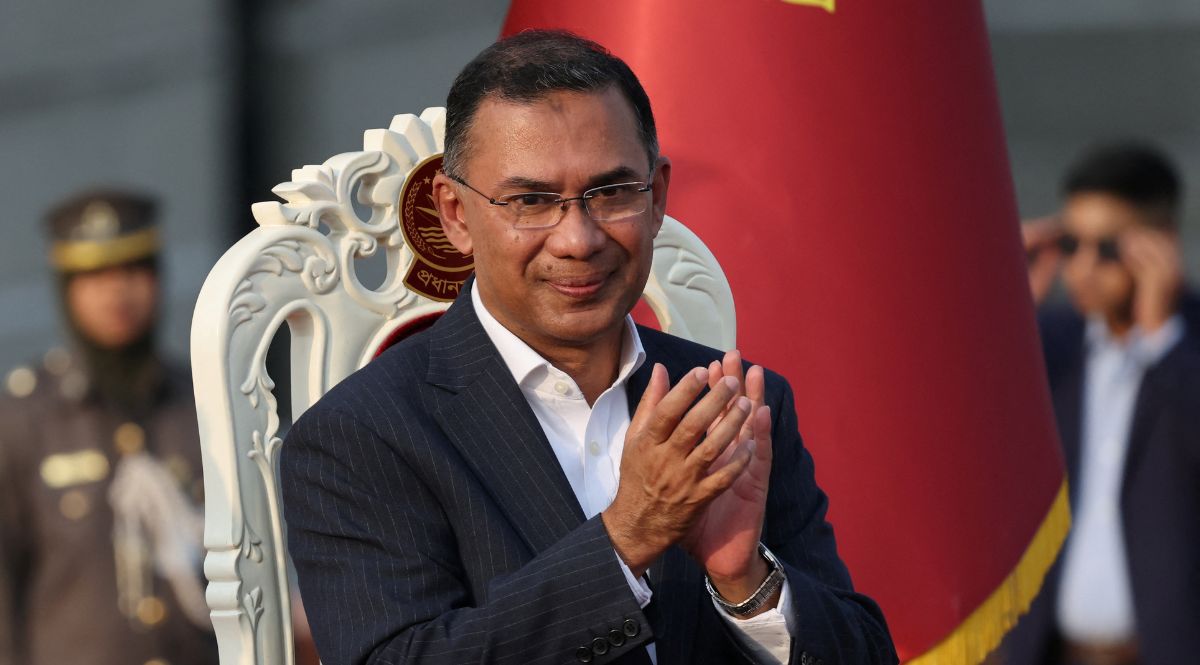
The winning BNP party was supported by 49% of voters (50 million), which translated into 209 of the 300 seats in parliament (an additional 50 seats for women are allocated proportionally). This gave it an absolute majority and the opportunity to form a stable government with a strong mandate to carry out profound reforms. The new Prime Minister, Tarique Rahman, is the son of the country’s sixth president and founder of the BNP, Ziaur Rahman, and Khaleda Zia, who served as prime minister twice, in 1991–1996 and 2001–2006. Tarique spent the last 17 years in exile in the United Kingdom, returning only in December 2025. His long stay in Europe allowed him to witness the importance of the rule of law and strong institutions in the development of states and influenced his technocratic and pro-reform approach. The BNP’s victory was determined by the long legacy of the political dynasty in Bangladesh’s history, its strongly developed local structures, the lack of a major opponent, and the sympathy for the party, which had been persecuted by Hasina’s government for years.
Second place in the elections with 30% of the votes cast (30 million) went to the religious Islamic party Jamaat-e-Islami (JeI), which, together with 10 coalition partners, won 77 seats. Although a weaker result than predicted, it is the greatest success in the history of Bangladesh for an Islamic party, which until now could count on a maximum of a dozen or so seats. JeI, which was banned during Hasina’s time and whose leaders were sentenced to death, has returned as the main opposition. The NCP (National Citizenship Party – six MPs) also entered parliament, representing mainly the youth who led the revolution, for whom the end of authoritarian rule is an achievement.
Internal challenges
The new government, sworn in on 17 February, faces serious socio-political and economic challenges. Its main tasks include restoring security and the rule of law, strengthening democracy and reconciling a divided society. Pursuing accountability for members of the previous regime may exacerbate internal political strife. The AL’s hard-core electoral support is estimated at 15-30% of the population, or several tens of millions of people, whose concerns and interests the government must take into account. Although this group was unable to disrupt the elections, it may become more active in the coming months, especially if the economic situation does not improve.
The economy had already suffered as a result of the 2024 revolution, when many AL-associated entrepreneurs fled the country. The global economic downturn has also reduced demand for Bangladeshi exports. The economy’s dependence on the garment sector, which accounts for 94% of exports to several large markets (EU – 47% of exports, US – 17%, UK – 10%), makes Bangladesh very sensitive to changes in international trade. The imposition by the US of 20% tariffs on the country in April 2025 and reduced demand in Europe worsened the situation in the sector and forced many factories to close. During Hasina’s rule, GDP growth averaged over 6% per annum, but it fell to 3.8% in 2025. Strengthening the resilience of the economy requires, among other things, diversifying markets, developing sectors other than textiles, and providing education to the youth population. Reducing corruption and the significant influence of business on politics will be a crucial task. Environmental pollution and climate change are also existential threats to this densely populated country, requiring urgent action.
International challenges
The main foreign policy challenge for the new government will be to rebuild tense relations with India. India’s long-standing support for the AL and sheltering the fugitive Hasina, as well as occasional attacks on the Hindu minority in Bangladesh, have led to the most serious crisis in years. India is accused of imperialism and of treating Bangladesh unequally, carrying out disinformation campaigns and implementing hostile economic policies (restrictions on cotton exports, suspension of visas). At the same time, India is Bangladesh’s largest neighbour, and its geographical location gives it a fundamental influence on regional security. In India, where there were fears of Islamists taking power, the BNP’s victory was greeted with relief, paving the way for a reset and gradual normalisation.
The BNP government will seek to strengthen cooperation with other partners in South Asia as part of its ‘Bangladesh First’ policy. The challenge for the BNP will be skilfully balancing relations with both India and China, as the latter has in recent years become Bangladesh’s second largest trading partner and a key source of investment. The new government will continue its close cooperation with the EU, which has supported the transition process and is Bangladesh’s most important export destination. The country needs EU help with implementing projects in the areas of environmental protection, infrastructure development and energy. An urgent task for the authorities will be to negotiate a favourable partnership agreement that would compensate for the loss of access to the EU market under EBA preferences, which Bangladesh will forfeit as it graduates from Least Developed Country (LDC) status. The new government will continue the rapprochement with the US initiated by the transitional authorities and seek a reduction in customs duties during the renegotiation of trade agreements.
Conclusions and recommendations
These elections, acknowledged as having been organised in a professional and transparent manner, were the final step for the 2024 revolution and the return of democracy to Bangladesh. This is a success for the Chief Advisor Muhammad Yunus, who led the country through the 18-month transition process. However, the main winner is the BNP, which, after 20 years, is returning to power with a large amount of public trust—though also with heightened expectations. It has the opportunity to establish a new kind of politics—a stable and strong democratic system, an efficient state, free from repression and corruption. This will require learning from the mistakes of its predecessors and taking voters seriously, as they have once again proven that unjust systems can be overthrown.
On the international stage, we can expect a continuation of existing foreign policy and the normalisation of relations with India. However, there will be no return to the close friendship of the Hasina era or the open hostility of the Yunus period. Instead, relations will be based on pragmatic cooperation in areas of converging interests (including the economy, energy and infrastructure). Bangladesh will pursue a policy focused on its own interests, carefully balancing its relationships with its main partners—India, China, the US and Europe. Attempts to resume regional cooperation within the SAARC association can be expected, as announced by the new prime minister after the elections and indicated by the invitation of the organisation’s leaders to his inauguration.
The return of democracy to Bangladesh opens up new opportunities for strengthening cooperation with the EU, including Poland. The EU, which was the main partner in the post-2024 transformation, will continue to provide political and economic support to the new government. This may include negotiating a new trade agreement to replace the preferences under the EBA system. Political change in Bangladesh should be an opportunity for Poland to revive bilateral relations. It is worth considering re-establishing a diplomatic presence in Dhaka (opening an embassy or consulate) and beginning preparations for exchanges of visits at the highest level. Bangladesh’s enormous needs and potential create opportunities for cooperation in many sectors, such as defence, environmental protection (sewage treatment plants, waste incineration plants, green energy), and building the skills and knowledge of the young population. The presence of Polish clothing companies in this country and the recent participation of Polish specialists from the Supreme Audit Office (NIK) in training their counterparts as part of an EU project show that Poland can be an attractive partner for Bangladesh.


.jpg)
(1).png)