M23 Mounts Major Offensive in the Democratic Republic of Congo
In January, the M23 rebel group occupied Goma, the largest city in the eastern Democratic Republic of Congo (DRC). The rebels are controlled by and are working for Rwanda, which is extracting valuable minerals in the region. The aim of Rwanda and M23 may be to overthrow the authorities in Kinshasa, and a number of countries, including South Africa, may become involved in the conflict. Pressure from foreign partners on Rwanda to end the intervention will be key to defusing the crisis.
.png) Victoire Mukenge / Reuters / Forum
Victoire Mukenge / Reuters / Forum
Origins of the Conflict
The Congolese state’s ability to assert its authority over its eastern part, which is geographically isolated and some 2,000 km from Kinshasa, is weak. The presence of significant mineral wealth in the area—coltan, cassiterite, gold, tin, tungsten, and others—makes this part of the DRC of interest to countries in the region, as well as local and international groups operating at the intersection of business and organised crime. Since the 1990s, informal spheres of influence, including access to the mines, have been maintained in this part of the DRC by Rwanda and Uganda. A significant proportion of the more than 100 local armed groups participate in the informal economy associated with resource exploitation, most often carried out by non-industrial methods.
Another important factor underpinning the conflict is the ethnic relations in the region because of the 1994 genocide in Rwanda. At that time, the Hutu militias, the perpetrators against the Tutsis, were defeated in Rwanda and fled to the DRC. Due to their presence, Rwanda-backed armed groups representing Congolese Tutsis emerged in eastern Congo to take up arms against the DRC army. The attacks on civilians they committed and their looting and exploitation of resources are influencing the radicalisation of the region’s population against Tutsis. In turn, rhetoric hostile to them from local Congolese officials and others, serve as justification for the guerrillas and Rwanda’s actions.
The most recent group to emerge, the Movement of 23 March (M23), under the command of Sultani Makenga, formed in 2012, taking its name from the date of what he called an “unenforced” 2009 agreement ending an earlier, analogous rebellion. In 2013, a UN intervention force drove M23 out of the DRC and the group withdrew to Rwanda and Uganda. It returned in 2021 at a time of growing frustration in Rwanda over the presence of Ugandan and Burundian troops in the DRC, with the consent of its authorities, while it itself had no such permission. This situation threatened the monopoly of Rwandan companies in certain sectors, such as the construction of roads in an area it considered its zone of influence in the DRC.
Since December 2023, the political representation of M23 has been the Congo River Alliance (AFC), led by Corneille Nangaa, the former head of the DRC’s central electoral commission. The purpose of setting up the AFC was to give credibility to M23 as a Congolese group rather than an externally controlled one. Nangaa is forging alliances with other rebel and opposition groups and forming the nucleus of an administration in the occupied territories.
Current Escalation
Since the beginning of this year, M23 has led an offensive against Congolese forces in the eastern part of the DRC, adjacent to the Rwandan border. They seized the towns of Masisi and Minova, among others, which paved the way for them to reach Goma, with a population of around 2 million. According to British intelligence, at the time Rwanda sent its soldiers across the border to support an M23 attack on the metropolis ahead of a scheduled 27 January UN Security Council meeting on the situation in the DRC. Two days earlier, at least 14 soldiers of the SAMIRDC mission of the Southern African Development Community (SADC) countries from South Africa and Malawi and from the UN MONUSCO mission from South Africa and Uruguay were killed in fighting on the outskirts of Goma. About 300,000 internally displaced persons from camps near Goma evacuated to the city. On 26 January, guerrillas entered Goma, disarming the Congolese forces present there. A total of several hundred people are believed to have been killed in fighting in the city. DRC Foreign Minister Thérèse Kayikwamba Wagner described the events as “outright aggression, a declaration of war” on the part of Rwanda. Although the Congolese side announced retaliation, so far this has not happened. Demonstrators in Kinshasa expressed their frustration at the defeat in Goma by attacking the foreign embassies of countries considered to be on Rwanda’s side or unwilling to stop its actions. In addition to the Rwandan one, diplomatic posts of France, Belgium, Uganda, Kenya, and the U.S., among others, were affected. On 16 February, M23 forces and the Rwandan army took control of the capital of South Kivu, Bukavu, the second most important city in eastern Congo. So far, about 700,000 people have fled their homes due to the current escalation.
M23 and Rwanda
According to reports by the UN Group of Experts on the DRC, Rwanda plays a leadership role in M23’s operations, supplying it with arms and equipment and training its fighters. It also interferes with GPS signals to counter drones (including Chinese-made drones) used by DRC troops against M23, but also impedes civilian flights in the region, such as those carrying humanitarian aid. Rwandan soldiers also interact with guerrillas in the DRC itself by, among other things, leading their various units or operating the most advanced equipment. While the UN estimated that before the current offensive there were around 4,000 Rwandan troops in the DRC, the current figure could be close to 10,000.
Rwanda directly benefits from resource exploitation by M23. In April 2024, the group occupied the mining area around the town of Rubaya, taking control of the export and sales network of the minerals mined there. Miners can only sell ore to selected Congolese and Rwandan traders. M23 has also monopolised the export of coltan. It is only routed towards Rwanda, and local people have been forced to work to widen roads to accommodate trucks going to Rwanda.
Participation of External Forces
Over the past three years, attempts to lower DRC-Rwanda tensions have been made by the U.S., including by Secretary of State Antony Blinken. Last year, Angolan mediation seemed close to reaching a deal, but despite agreeing on most technical issues, the DRC and Rwandan leaders were not willing to conclude an agreement. The actions of foreign military or paramilitary forces have also not led to a resolution of the crisis. French initiatives are met with distrust by the DRC, which sees France as favourable to Rwanda (the restoration of relations between the latter two is counted as one of the greatest successes of French diplomacy in Africa in recent years).
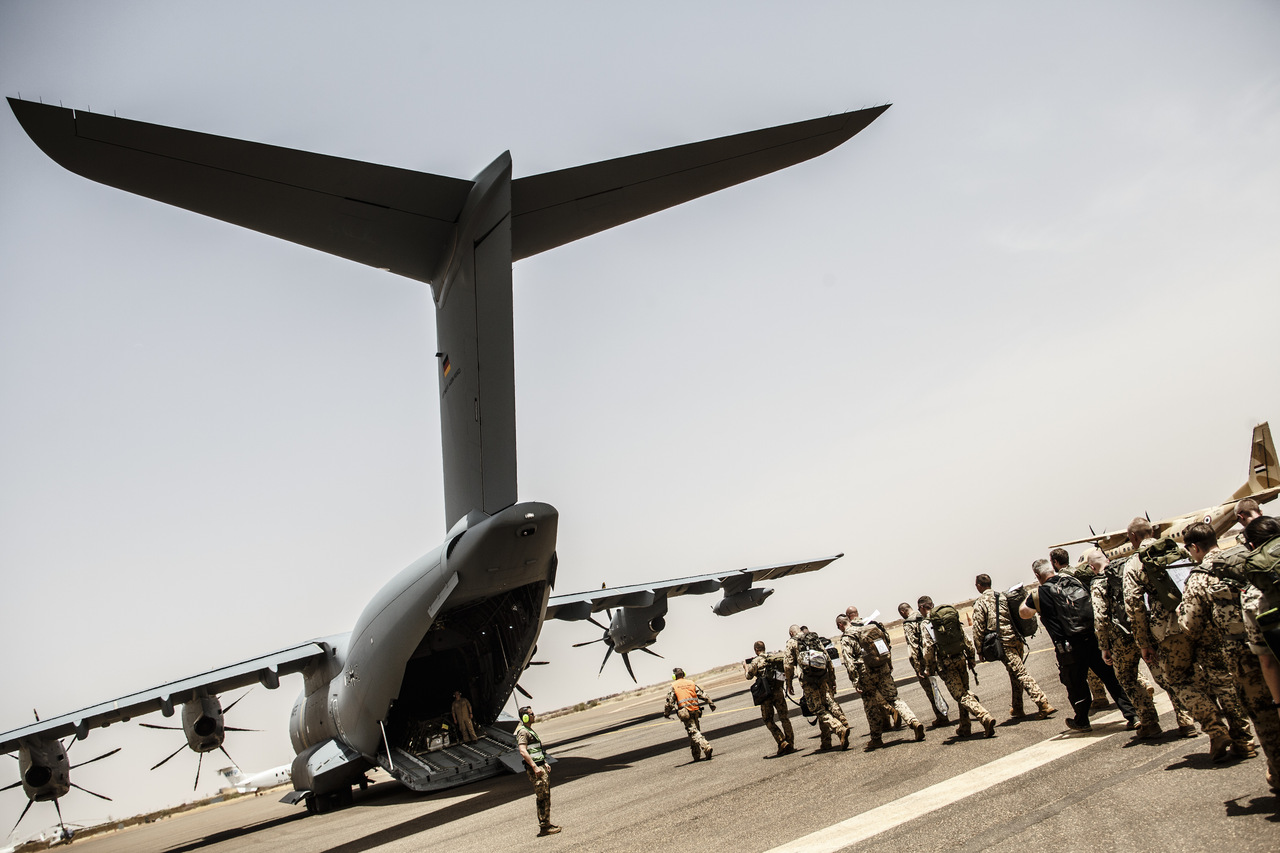
The M23 offensive was to be countered by the MONUSCO force of several thousand soldiers. However, by the end of 2023, their spokesman, Mathias Gillmann, admitted that they could not cope with the rebels, operating “like a professional army”. Consequently, the DRC authorities demanded an end to the UN mission. The renewed escalation has found it in a state of withdrawal. From November 2022 to December 2023, East African Community (EAC) forces were present in the DRC, but quickly lost the confidence of the Congolese authorities when they proved unready for combat operations and Kenya allowed the AFC alliance to form on its territory. They were replaced by SADC forces, who tried unsuccessfully to defend Goma. Similarly ineffective were the foreign mercenaries that the DRC authorities employed to strengthen their positions. Among them were about 1,000 Romanians, veterans of the French Foreign Legion from RALF company. The 300 of them present in Goma surrendered without a fight, after which they were transported to Rwanda and deported. Forces from Burundi, present in South Kivu, gave way and began withdrawing from the country before the fall of Bukavu. The security vacuum prompted Uganda to deploy forces in Bunia, the capital of the Congolese province of Ituri, adjacent to M23’s area of operations.
Outlook
The progress of the M23/AFC offensive, the weak Congolese response, and the ineffectiveness of mediation has emboldened the rebel group to go further. On 17 February, it officially announced that its aim was to overthrow the authorities in Kinshasa. Such a scenario would be a repeat of the events of the 1990s when Rwandan troops reached the DRC capital, installing a politician of their choice, Laurent Kabila, in power. At present, this does not seem likely. DRC President Felix Tshisekedi won the December 2023 elections with a strong mandate and the country remains a key partner of the U.S., which is keen to see the success of its largest investment in Africa, the so-called Lobito Corridor.
The international community will increase the financial pressure on Rwanda to get it to withdraw its forces from the DRC, which has proved successful in the past. The European Union announced on 24 February, among other things, a “review” of last year’s Critical Minerals Partnership Agreement with Rwanda ($900 million, part of the Global Gateway) suggesting it could be frozen in the absence of a withdrawal from Goma and Bukavu. In a similar conditional tone, the UK, among other things, announced a freeze on financial aid to the Rwandan government except for that going to the poorest. The Rwandan authorities will want to create the impression that they were, at least in part, prepared for this. Such an impression was given, for example, by the pre-emptive severance of development cooperation with Belgium.
Measures that undermine Rwanda’s prestige may be more effective, such as the possibility of withholding EU funding for Rwanda’s military mission in Mozambique, through which it is building an image as an effective partner against jihadists. The withdrawal of partnerships developed through Rwanda’s “sports diplomacy”, for example, could also be effective. The DRC is activating publicity targeting football clubs Arsenal, Bayern Munich, Paris Saint-Germain, the NBA Africa basketball league and Formula One on this issue.
However, in the short term, the focus of the major European countries on a potential ceasefire in Ukraine and the U.S.-Russia relationship, as well as the adoption of a wait-and-see position by China, will mean that Rwanda probably will not feel enough pressure to stop the aggression. The DRC will therefore seek ad hoc military support in the region, possibly from Chad. Further escalation and expansion of the conflict is therefore most likely in the coming weeks.