Liberia Marks Successful Transfer of Power
The presidential and parliamentary elections in Liberia were the first since the departure of the UN military mission (UNMIL), which until 2018 ensured security and supported rebuilding the state’s structures after the civil wars of 1989-2003. Despite internal tensions, a wave of military coups, and growing authoritarianism in West Africa, there was a peaceful transfer of power to Joseph Boakai. The example of Liberia gives hope for limiting the democratic regression in the region.
 CARIELLE DOE / Reuters / Forum
Liberia as a Country Emerging from the Conflict
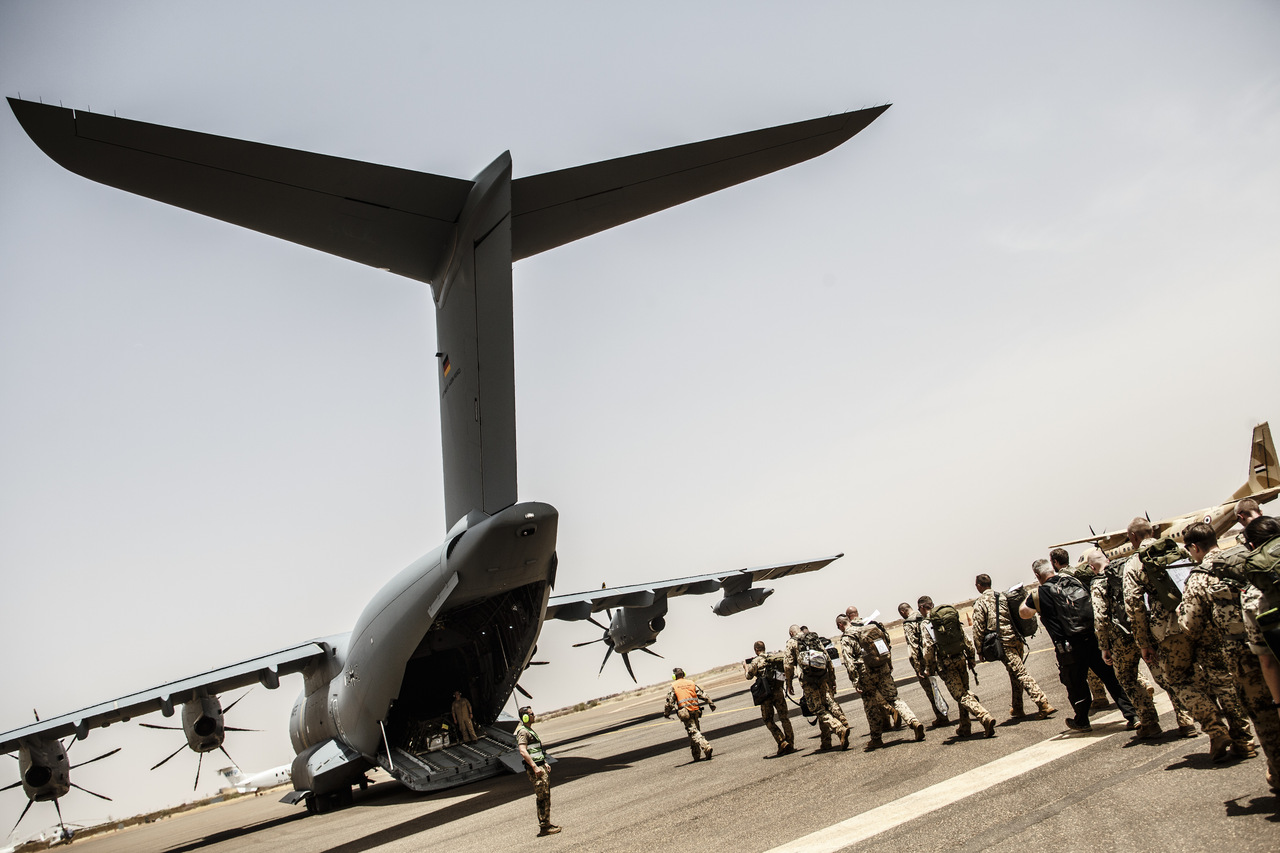
Liberia, located in West Africa, was founded in the early 19th century as an independent, internationally recognised republic for former black slaves from the U.S., with a power system modelled on the American one. The rule of the settler elite, in which the indigenous population (90%) did not have full civil rights, lasted until 1980. In 1989, a civil war broke out during which brutal warlords, the Libya-trained Charles Taylor and Prince Yormie Johnson, brought their armies to the capital, Monrovia. The state, growing economically until the 1970s, collapsed. The forces of the Economic Community of West African States (ECOWAS), a bloc of then 16 countries in the region, and led by Nigerian troops, intervened. In 1997, Taylor won the presidential election, but this did not end the chaos. The armed uprising against him turned into a new war involving many factions, fuelled by money from the diamond trade, which lasted until 2003. Then, after Taylor resigned, under UN Security Council Resolution 1509, the UNMIL peacekeeping force entered the country. It involved several thousand soldiers, police officers, and civilian advisors. They played a key role in disarming the population and rebuilding the state structures. The mission, in which Poles also participated, ended in 2018.
Conflicts in Liberia, in which about 300,000 people died, were among the heaviest and most brutal in the world at the turn of the 21st century. The state has not attempted to develop a coherent memory policy towards wars, and conflicting narratives drive growth of social—especially ethnic—divisions. The work of the truth and reconciliation commission established by the parliament in 2005 was unsuccessful—the perpetrators of the most serious crimes were not excluded from public life. As a result, they continue to play key roles in current politics. Taylor’s ex-wife served as vice president from 2018 to 2023. Prince Johnson, influential in Nimba County, one of the most populous in the country, has become a desirable ally for politicians wanting to win elections. None of the previous post-war administrations fought systemic corruption or managed to attract significant investments, especially since the Ebola epidemic of 2013-2016.
Democratic Backsliding in the Region
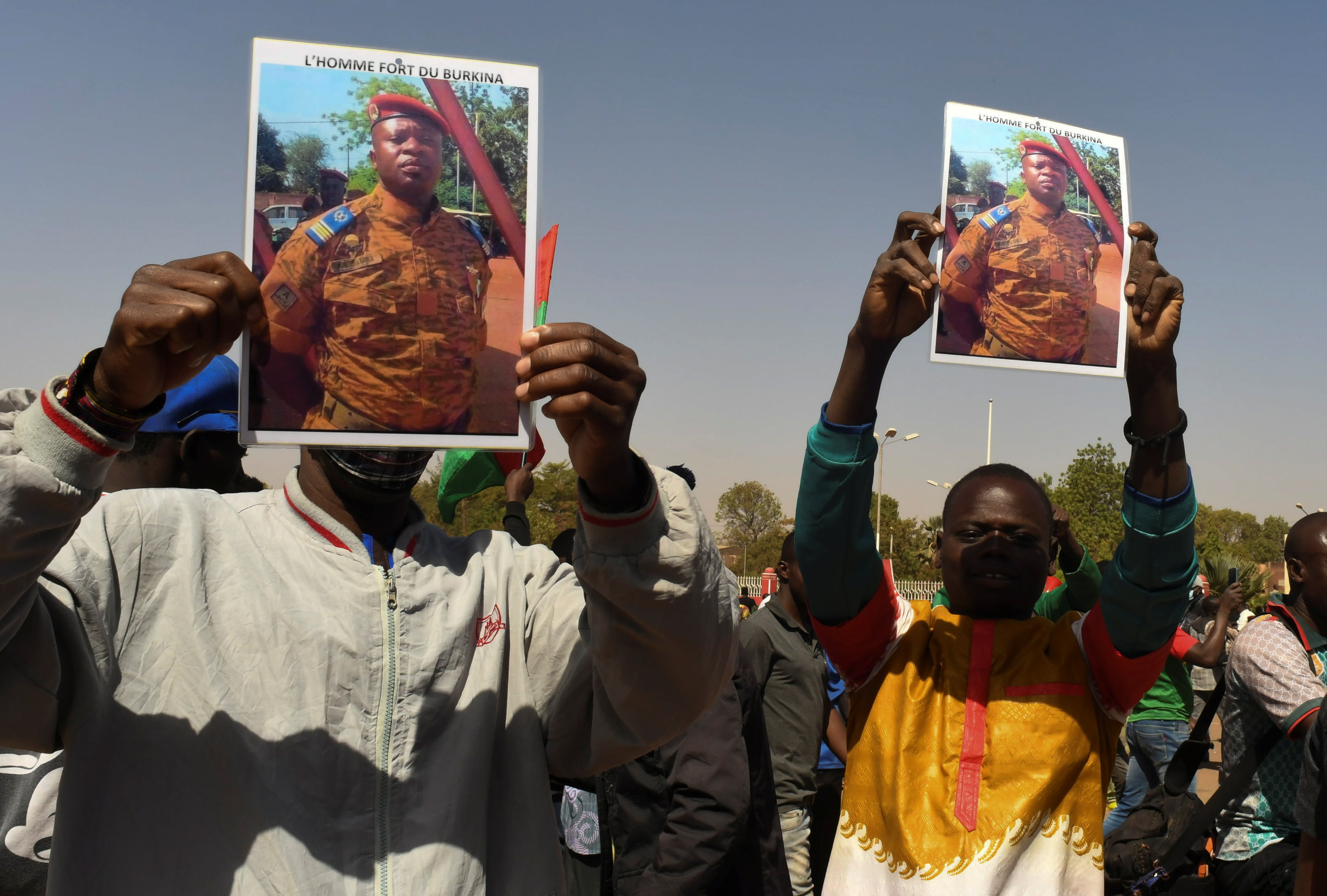
For several years, West Africa has been the area of the most visible democratic regression on the continent. Since 2020, the military has taken power in Mali, Guinea, Burkina Faso, and Niger. In the latter three countries, juntas gained support by promising to restore sovereignty (i.e., abandoning cooperation with the militarily and economically dominant France, and the UN). Their leaders, contrary to the practice used in Africa since the early 21st century, successfully resist the pressure for the return of civilian authorities. This is made easier by the prevailing social mood. The Malian public discourse is dominated by the idea of Mali kura (“new Mali”), which advocates quasi-monarchical rule and rejects Western models, and in Burkina Faso, the military derives its legitimacy from the cult of Capt. Thomas Sankara, an authoritarian reformer-revolutionary from the 1980s. In September this year, Mali, Burkina Faso, and Niger formalised cooperation by creating the Alliance of Sahel States, based on mutual military assistance as well as controlling the information space. ECOWAS, previously effective in restoring the constitutional orders of member states, was unable to stop the consolidation of authoritarian governments. This organisation is experiencing a credibility crisis related to accusations of succumbing to European influence and applying double standards. For example, the president of Senegal, one of the leading countries of the bloc, demanding the resignation of the juntas, is himself limiting political freedoms, including by not allowing their main opponents to participate in the elections. Where they take place, they are usually disappointing: this year, Nigeria and Liberia’s neighbour Sierra Leone experienced extensive electoral abuses, with incumbents using of state resources to secure victory. As a result, they obtained weak, contested mandates.
Conduct of the 2023 elections
This year’s elections in Liberia were the fourth since the end of the war. George Weah, a former successful footballer, ran for re-election on behalf of the Congress for Democratic Change (CDC). The largest opposition force, the Unity Party (UP, in power from 2006 to 2018), was represented by Joseph Boakai. Weah’s assurances that he would win in the first round despite the polls, his command over a militia-like party youth wing, and cases of overstaying in power from the region raised concerns that he would not want to give up power regardless of the vote result. In turn, the credibility of Boakai, who emphasised the importance of social harmony, was undermined by his alliance with Prince Johnson. The former warlord suggested that if he lost, he would mobilise his supporters for a new war. In this atmosphere, in the days preceding the first round of voting on 10 October, there was a growing sense of threat of violence: people began to buy food and opposition candidates were afraid to appear in public.
In this context, widespread trust in the professionalism and neutrality of the armed forces had an appeasing effect. Unlike neighbouring countries, they were not fragmented and subject to internal conflicts, and the officers trained by the UN did not display political ambitions. High turnout and compliance with procedures turned out to be crucial for the success of the elections. A record 79% of eligible voters voted in the first round and staff delegated by the National Electoral Commission (NEC) maintained the transparency of the voting and vote counting process. This did not confirm previous concerns about its bias. The sense of the historical significance of the elections, which transcended divisions, was also important—their success would confirm Liberia’s regained subjectivity and agency. The U.S. Department of State’s announcement not to issue visas to anyone who disrupts the voting process or manipulates the election results also had some significance. As a result, Weah, even before the announcement of the full results of the second round, admitted his own defeat despite the small difference in votes: ultimately, Boakai won 50.64% to 49.36%. This was an unconventional move—the rule in the region is for the losing party to take legal action to correct the unfavourable result and mobilise street protests. Boakai’s presidency will be difficult due to the rising cost of living, which made his predecessor lose popularity.
Conclusions
The course and outcome of the elections in Liberia, despite the country’s limited political and economic importance in the region, may play a large role in shaping attitudes towards democratic procedures in Africa. The example of Liberia will be a counterweight to pro-authoritarian attitudes and will support the consolidation of democratic forces in the region, for example, before next year’s elections in Ghana and Senegal.
According to Afrobarometer research, although the majority (53%) of Africans allow military intervention in the event of abuses of power, 67% reject military rule, and 66% consider democracy to be the most desirable political model. It is considered valuable when it ensures authentic citizen participation, control of power, and a development dividend. This is important given the prevailing perception of Western partners that democracy is rejected in Africa and should not be a criterion for political cooperation. The example of Liberia shows that even in weak states and in a difficult environment, democracy can help build trust in the state and, consequently, limit extremism. The EU could therefore treat Liberia’s economic support as also serving to stabilise the region. The course of the elections in Liberia also confirmed the effectiveness of the UN in rebuilding effective institutions of the country emerging from the conflict and the appropriateness of incurring expenditure for these purposes, also by Poland. It will also constitute an important point of reference in the debate on the future of the organisation’s military missions, which is influenced by, among others, the forced withdrawal of UN forces from Mali and the crisis of confidence in its structures in the Democratic Republic of the Congo.

.jpg)