
German Parties Agree Coalition Agreement
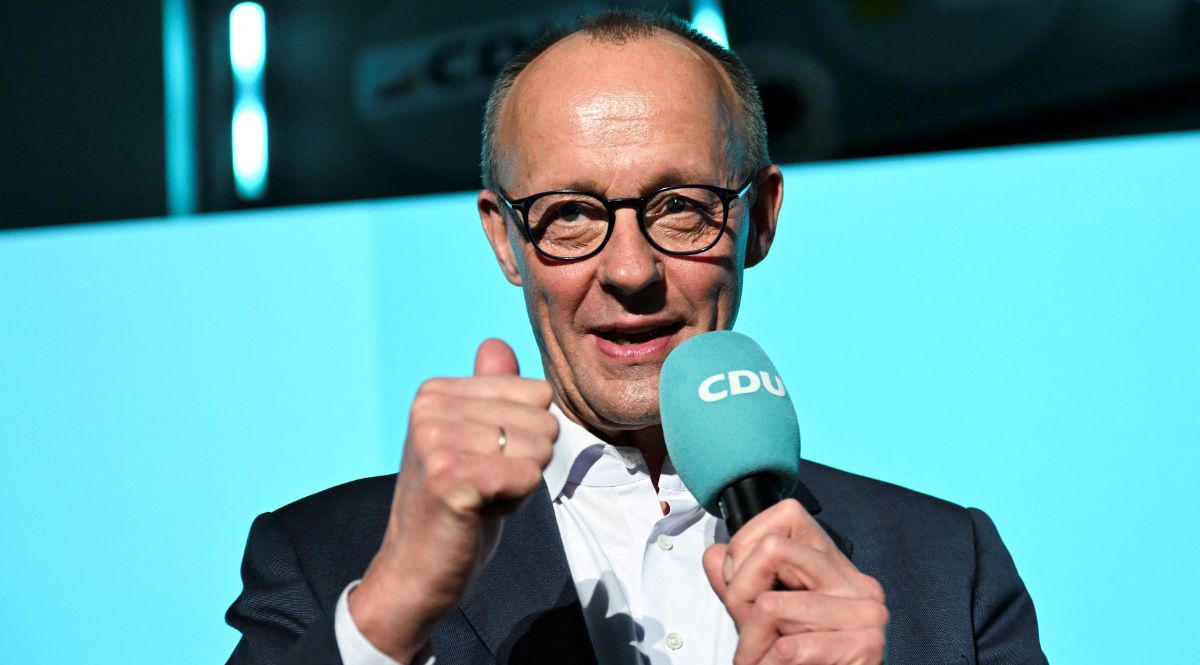
Negotiations on a coalition agreement between the Christian Democratic Union (CDU), its Bavarian counterpart the Christian Social Union (CSU), and the Social Democratic Party of Germany (SPD) ended on 9 April in the document titled, “Responsibility for Germany”. It lays out the priorities of the new government and the division of ministries between the coalition partners. The composition of the government is not yet known, but CDU Chairman Friedrich Merz will become the new Chancellor. The declaration of closer cooperation both bilaterally and in the Weimar Triangle format are beneficial to Poland, as is the new German government’s willingness to continue supporting Ukraine and strengthening the European pillar of NATO.
(2).png) Mike Schmidt / SZ-Photo / Forum
Mike Schmidt / SZ-Photo / Forum
What will be the new government’s economic policy lines?
The short-term goal will be to tackle the economic stagnation Germany has been facing since 2023. The long-term goal is to modernise and increase the competitiveness of the economy. In March, the CDU/CSU and SPD, with the support of the Greens, passed amendments in parliament to the Basic Law, liberalising the rules for incurring debt as part of a financial package. It stipulates that defence spending above 1% of GDP will not be included in the budget deficit, allowing for a significant increase. A special fund of €500 billion has also been created for investment in infrastructure and climate protection. The solution to finance new investments with increased debt is a success for the SPD. At the same time, important from the CDU’s point of view are the solutions adopted involving a series of budget savings. Cuts in public administration are planned, as well as reductions in social spending, especially for people not seeking work but claiming benefits. The CDU also succeeded in pushing through a tax cut for businesses, which, however, will be implemented gradually.
Will migration policy change?
The main theme of the election campaign, in addition to the difficult economic situation, was the issue of restricting migration to Germany. A decisive tightening was demanded by the CDU/CSU, which intended to weaken the AfD’s dominance on this issue. In the coalition agreement, the Christian Democrats managed to push through most of their demands, despite resistance from the SPD. A key point is the possibility of stopping and turning back irregular migrants at the border. The details of these measures are to be discussed with neighbouring countries, including Poland. The generality of these provisions indicates that in the absence of an agreement, there is a risk of Germany taking unilateral action, which could trigger potential tensions in bilateral relations with its neighbours. Also announced was an increase in the number of deportations of undocumented people on German territory and expanding the list of “safe countries” to which migrants can be deported. The changes mark a turnaround in Germany’s migration policy.
What might foreign and security policy look like?
In the security sphere, Germany’s priority is to maintain transatlantic ties, with the special task of further expanding the European pillar of NATO by implementing the concept of a European defence union. The coalition stresses that it wants Germany to become the central NATO country in Europe. The stated increase in defence spending is aimed at both strengthening the Bundeswehr and convincing the U.S. administration to continue its involvement in Europe and cooperation within NATO. The lack of details on the scale of the spending increase suggests that Germany is waiting for the June summit of the Alliance in The Hague to communicate its decisions there and address the expectations of the U.S. side. Projects related to strengthening NATO’s Eastern Flank will continue, most notably increasing the scale of German involvement in Lithuania to brigade level.
Unlike previous coalition agreements, Russia has been identified directly as the greatest threat to Germany and the EU, requiring the expansion of deterrence capabilities. The coalition agreement also announced long-term military, financial, and diplomatic support for Ukraine and the provision of post-conflict security guarantees to it, together with other countries.
What could be its view of European politics?
Germany declares its support for the European Commission’s actions and the transformation of the EU into an independent strategic actor. In the context of expanding the European defence industry, the new government will push for the creation of a European mechanism for the purchase of military equipment, which will benefit German industry. On the issue of EU institutional reforms and limiting the principle of unanimity in Council votes, the new government is inclined to take advantage of the “bridging clauses” contained in the Lisbon Treaty. Provisions in the coalition agreement suggest that Germany will be willing to use mechanisms for enhanced cooperation with selected European partners. Germany will also support rapprochement between the EU and the UK.
How might relations with Poland change?
The coalition agreement declared in general terms a desire to strengthen and deepen cooperation with Poland. Its main platform could be the Weimar Triangle, within which solutions to the most important challenges facing the EU are to be worked out. The “Weimar Plus” format, expanded to include other countries, such as the UK, is also to take a similar form. In bilateral relations, the government coalition declared its intent to expand transport infrastructure with Poland, which would have a positive impact on economic cooperation and social and military mobility. In the context of the World War II experience, the construction of a monument to Polish war victims and the establishment of a Polish-German House in Berlin were announced. These steps are in line with the results of last year’s intergovernmental consultations. The coalition agreement’s arrangements regarding attitudes toward Russia, Ukraine, and NATO are in line with Polish interests. The issue of German services turning back migrants at the border could become a potential area of tension.


(1).png)