G7 summit in France - support for Ukraine and stability in the Middle East
During the meeting in Evian on 15–17 June, G7 leaders announced military support for Ukraine and increased sanctions pressure on Russia, and also endorsed the preliminary agreement between the US and Iran to end hostilities in the Middle East. The summit helped ease tensions within the G7 and offered an opportunity to restore the group’s effectiveness.
 DOMINIQUE JACOVIDES / Reuters / Forum
Under what circumstances did the summit take place, and who attended?
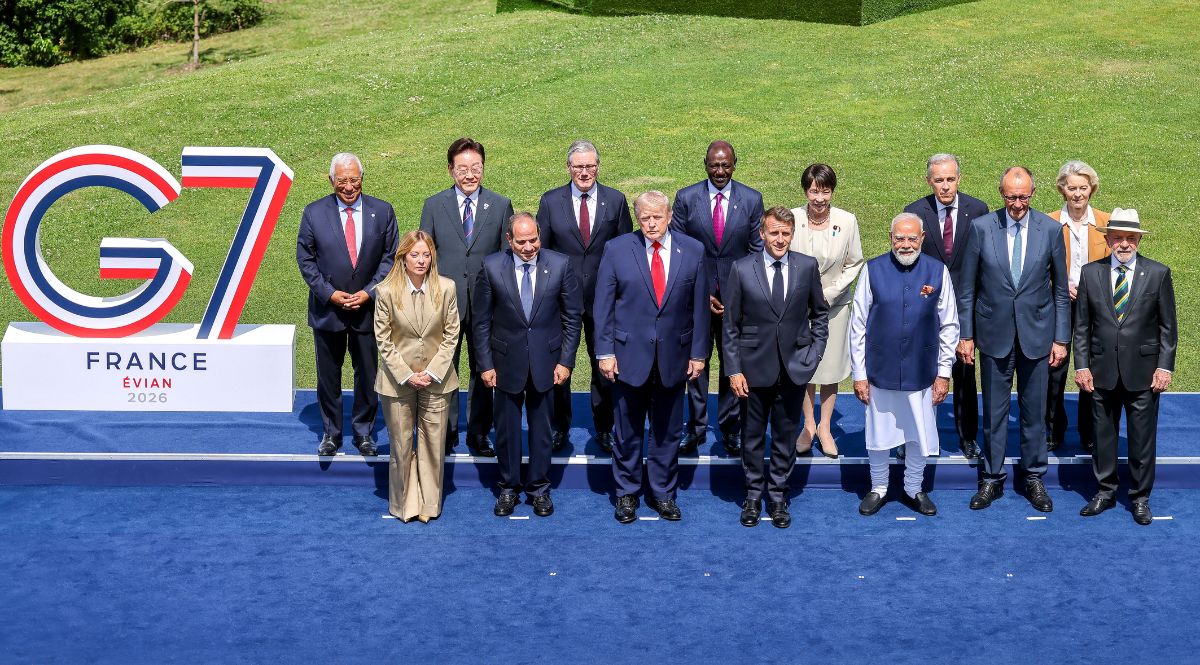
The meeting took place amid intensified Russian airstrikes on Ukraine, including Kyiv, where on 15 June, part of the Kyiv Pechersk Lavra complex—a UNESCO World Heritage Site—was damaged. At the same time, Ukrainian armed forces were stepping up their attacks on infrastructure in Russia, including oil facilities, directly impacting Russia’s economy. The day before the summit began, US President Donald Trump spoke by phone with the presidents of Ukraine and Russia. On the same day, the United States and Iran announced the conclusion of a preliminary agreement to end hostilities in the Middle East, which created a positive atmosphere at the summit (though the document was not made public during the summit). In the weeks leading up to the summit, tensions arose between the US and European members, partly due to their hesitant stance toward US actions in the Middle East and trade issues. In addition to the leaders of the G7 countries (Canada, France, Germany, Italy, Japan, the UK, and the US) and the EU, the summit was also attended by the leaders of Brazil, Egypt, India, Kenya, Qatar, South Korea, Ukraine, and the United Arab Emirates.
What did the leaders agree on?
The group announced support for Ukraine in the form of supplies, including air defence systems and long-range strike capabilities. The G7 members are also set to consider granting Ukraine licenses to manufacture weapons. This was also the subject of Trump’s behind-the-scenes meetings with Zelenskyy at the summit, which also involved licenses for anti-ballistic missiles. The agreement between Iran and the US was endorsed by the G7 members, as well as increased pressure on Russia, including through sanctions targeting energy resources—a move that could be facilitated by the planned opening of the Strait of Hormuz. Some European countries (primarily France and the UK) pointed to their willingness to be involved in operations within the Persian Gulf region, such as in the demining of the Strait of Hormuz. The G7 called for maintaining stability in the Indo-Pacific region, including in the Taiwan Strait and also announced the creation of the Critical Minerals Resilience and Production Alliance, which includes, among other things, the development of financial instruments. The global economic situation was discussed further, including existing imbalances, as well as opportunities for diversifying energy supplies and issues related to the development of artificial intelligence (the summit was attended by representatives of leading companies in this sector, including OpenAI and Anthropic). The G7 also expressed support for maintaining international development aid, provided that reforms are implemented and greater transparency is ensured regarding international debt. It also announced a coordinated response to the Ebola outbreak in the Democratic Republic of the Congo and Uganda.
How might the implementation of these agreements affect the international situation?
Implementing the Evian commitments to support Ukraine could strengthen its position in the war with Russia. Increased deliveries of military equipment would give the Ukrainian side the ability to more effectively protect civilians and infrastructure, as well as to strike targets in Russia. Obtaining licenses to produce weapons (not only from the US) could serve as a response to the depletion of US weapons stockpiles by the war with Iran and the limited production capacity of American companies. The group’s consensus on increasing pressure on Russia offers an opportunity to coordinate actions within the G7; however, it cannot be ruled out that the US will seek to take a leading role at a later stage of the talks, exerting greater pressure on both Russia and Ukraine. Any potential G7 member involvement in the Middle East will depend largely on developments in the region, including the implementation of the preliminary US–Iran agreement and progress in negotiations toward a final deal. Measures in the area of critical minerals may, in the long term, reduce dependence on China in this sector and thereby limit the use of this instrument to advance its political objectives. China is also the main target of calls for stability in the Indo-Pacific region, as well as for greater debt transparency. The proposed changes to global development aid architecture may stem from a shift in the G7 countries’ approach to such aid, including a reduction in financing and more focus on donor interests.
What does the Evian summit reveal about the state and future of the G7?
The programme and outcomes of the summit indicate an easing of tensions between the US and its G7 allies. The agreement to jointly increase pressure on Russia, combined with the European countries’ approach to the situation in the Middle East, offers an opportunity for constructive cooperation within the G7 and for greater cohesion within the group. However, these prospects may be negatively affected by unresolved disputes between the US and other members of the group, including those regarding Greenland’s status, and international trade (e.g., the future of the US–Canada–Mexico agreement). Some global issues, such as the effects of climate change, were also largely sidelined in the discussions, presumably to avoid antagonising the US. Although the group’s role has diminished in recent years—in part due to the growing relevance of the G20 and the countries of the Global South—it can still serve as an important platform for coordinating actions, such as imposing sanctions on Russian energy resources. Crucial to the group’s credibility will be the implementation of the commitments announced at the Evian summit, regarding support for Ukraine, critical minerals supplies, as well as actions addressing long-term challenges, such as the regulation of artificial intelligence development.

.png)