France's Need to Be Different: Macron Policy Includes "Balancing Power"
President Emmanuel Macron’s foreign policy, including in particular aid to Ukraine and the Indo-Pacific strategy, flows from an identical diagnosis with key NATO and EU allies of the international situation and threats. However, France’s actions are accompanied by the head of state’s rhetoric indicating the need to guard against unconditionally following U.S. policy and seeking a role for France and the EU as an independent actor and a “balancing power”. These statements, although partly conditioned by domestic policy needs, undermine France’s credibility and evoke associations with the concept of multipolarity and spheres of influence promoted by authoritarian powers.
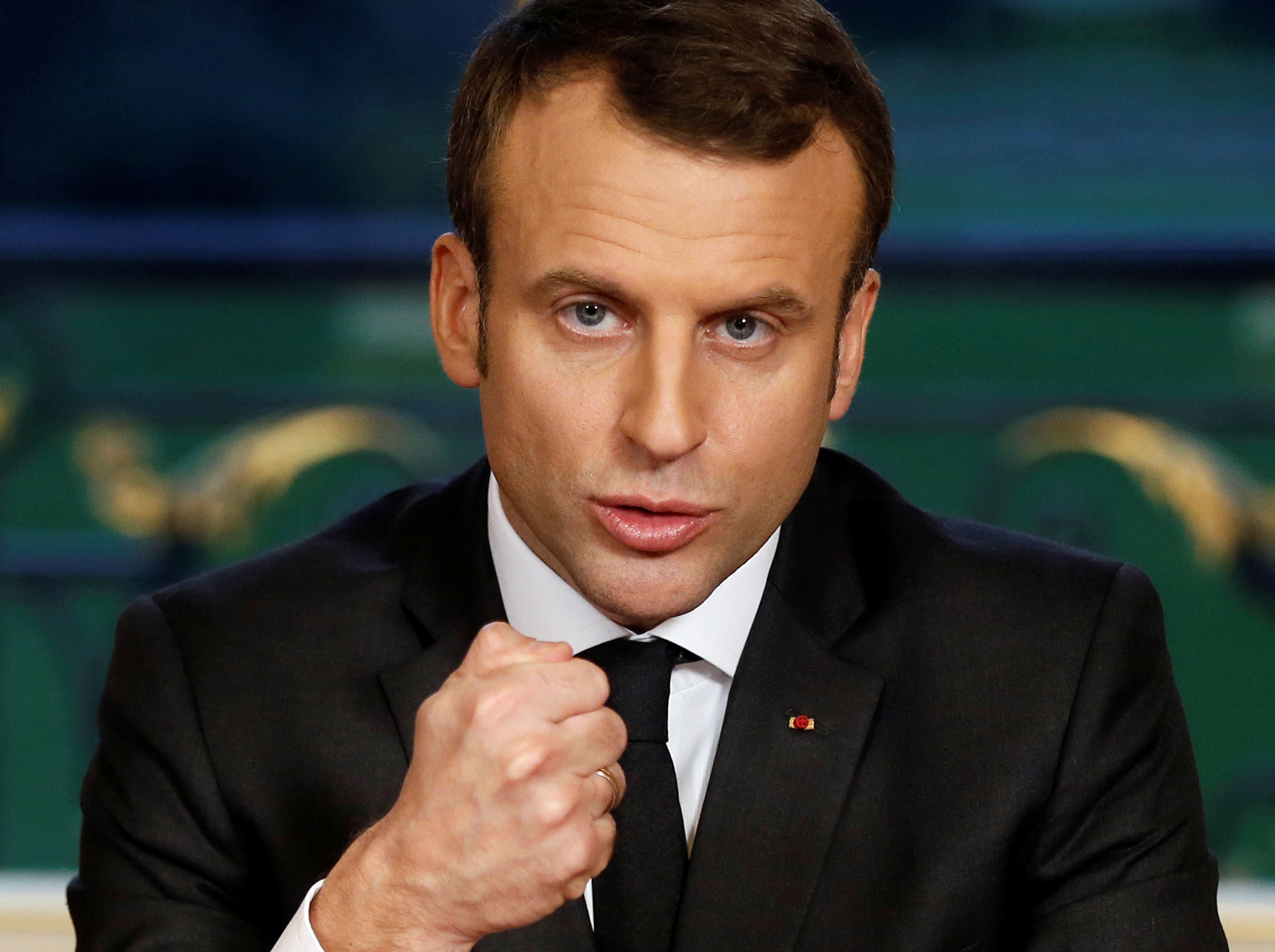
.jpg) WILLY KURNIAWAN / Reuters / Forum
WILLY KURNIAWAN / Reuters / Forum
The legacy of President Charles de Gaulle’s 1958-1969 presidency continues to be a point of reference in French international policy debates. A return to the “Gaullist” roots of France’s foreign policy was sought by François Fillon, a candidate for president of France in the 2017 elections, who advocated the role of the state as a “balancing power” (puissance d’équilibre), which would be manifested, among other things, in the lifting of sanctions imposed on Russia. Although Macron’s policy emphasises France’s solidarity with NATO and the EU, the president has adopted the “balancing power” concept and uses it to justify his policy towards the U.S., Russia, China, and the countries of the Global South. At the same time, Macron, unlike his political opponents who emphasise national sovereignty, also wants the EU to act as a “balancing power” in its external actions.
France as a “Balancing Power”, According to Macron
The French president conveyed his interpretation of this concept in two speeches to conferences of ambassadors: in August 2019 and September 2022. In the first one, he emphasised the need for French diplomacy to be “flexible”, “dynamic”, and “mobile” in order to sustain dialogue with all major powers without subordinating itself to any of them. Economic and political relations with Russia, for example, were to prevent Russia’s subordination to China. The “balancing power” concept was also meant to encourage the “deep state” (as the president calls his own diplomatic apparatus) to go beyond the usual patterns that dictate treating Russia as an enemy. Loyalty to alliances should not mean paying homage to the principle that “the enemy of our ally is necessarily our enemy”. During the second conference, already after the Russian invasion of Ukraine had begun, Macron used the term “power of balances” (puissance d’équilibres), also included in the 2022 National Strategic Review (RNS), emphasising France’s role as a loyal ally within NATO and the EU, but at the same time seeking to prevent the deepening of the rift between the rich North and the South, tempted by authoritarian powers, and countering the recreation of a bipolar division of the world.
The concept of France as a “balancing power” or “power of balances”, which primarily sets a limit on France’s willingness to synchronise its foreign policy with the U.S., seems to resonate with the French public. A September 2022 poll indicates that 49% of the French view the policies of the current U.S. authorities positively, while 41% hold the opposite view. According to a January 2022 survey, 53% of the French considered the U.S. an ally, but more than 40% said France should remain in dialogue with all countries, not just allies (20%). At the same time, as many as 61% recommended distrust of foreign countries.
Emphasising France’s diplomatic influence, linked to its role as a permanent member of the UN Security Council and one of the nuclear powers, helps conceal its declining importance in global economic exchange. Projections indicate that after 2030, France will cease to be ranked among the world’s 10 largest economies, while the concern is the ever-growing trade deficit (€164 billion in 2022), which hinges on high commodity prices. NATO and EU allies play a key role in France’s security, but they are also economic competitors. The use of the slogan of France as a “balancing power” is meant to encourage non-European countries to intensify relations with France and find common ground in their policies with it. Macron’s statements such as those questioning the need for a strong EU response in the event of a crisis in the Taiwan Strait were poorly received by France’s allies, but have elicited much greater understanding from its important strategic and economic partners, such as India.
The Political Cost of French Exceptionalism
The failure of the Macron-initiated strategic dialogue with Russia and China’s provocative policy toward France testify to the fact that neither power considers French policy to be significantly different from that of the U.S. and other NATO countries. However, they are able to use the “balancing power” concept and Macron’s statements for propaganda purposes and to amplify the divergence between democratic states. Representatives of the Russian government and their dependent media, for example, use something also popular in the French public debate—the demonisation of the policies of the “Anglo-Saxons” (i.e., the U.S. and the UK) as directed not only against Russia but also against the continental states of Western Europe. Ahead of Macron’s April 2023 visit to China, Chinese commentators praised Macron for promoting the concept of EU strategic autonomy as an opportunity to make relations between Europe and China independent of the Sino-U.S. conflict.
While demonstrating distance from U.S. policy does not hurt Macron in French domestic politics, it weakens France’s international position, for which transatlantic ties are vital. The U.S. remains a key logistical partner for France’s military presence in Africa and France’s criticism of U.S. policy in the Indo-Pacific in the name of the “balancing power” concept makes interaction with the United States and the United Kingdom more difficult, and this despite the converging goals of French policy in the area.
Equally significant are the losses in Franco-German relations. Both Macron and Chancellor Olaf Scholz advocate continuing selective and risk-mitigating economic cooperation with China, even when it raises questions for the U.S. However, criticizing U.S. policy in the Indo-Pacific at a time when the Americans are so strongly committed to defending Europe against Russian aggression has been seen in Germany as a political mistake. France’s role as a “balancing power”, focused on criticising U.S. policy, is also not met with enthusiasm by Poland or Italy, nor the Baltic and Nordic states. The gap between France’s actual policy, supporting Ukraine’s war effort, working to stabilise Africa and the Indo-Pacific, and Macron’s rhetoric obscures the community of interests between France and its key allies.
Conclusions
Macron will continue to refer to France as a “balancing power” or "power of balances" because this makes it easier for him to connect with the sovereigntist and Eurosceptic electorate at home. In international politics, on the other hand, the president wants to send a signal to the U.S. that France and the EU have alternatives to close cooperation with it, thus tying the concept of EU “strategic autonomy”, also promoted by France, to the idea of France as a “balancing power”. This rhetoric brings France’s policy closer to the strategies of India and other “non-aligned” countries, rendering it increasingly important to its diplomacy in the face of growing antagonism between the U.S. and China.
Tactical political gains hide the increasingly serious costs to France’s credibility of Macron’s statements. The gap between France’s ambitions and its resources is difficult to hide. The EU cannot be in this case a vehicle for increasing France’s power due to the lack of consensus toward the French-promoted vision of the EU as a “third pole” of world politics. A mitigating factor for the image damage is France’s actual policy, which on both Ukraine and the Indo-Pacific, dovetails with the strategy of its allies.
While the concept of France as a “balancing power” has attracted sympathy from some countries in the Global South, it has not produced positive results in policy toward Russia and China. The differences between France and its allies are exposed by both countries’ propaganda, but their leaders consider France a loyal ally of the US and are conducting increasingly active propaganda and hybrid activities against it. Instead, France’s communication mistakes are blurring the distinction between the idea of multilateralism, promoted by its diplomacy, and the concept of spheres of influence promoted by authoritarian powers.