An Atlanticist Against His Will: Macron's Foreign Policy if Re-elected
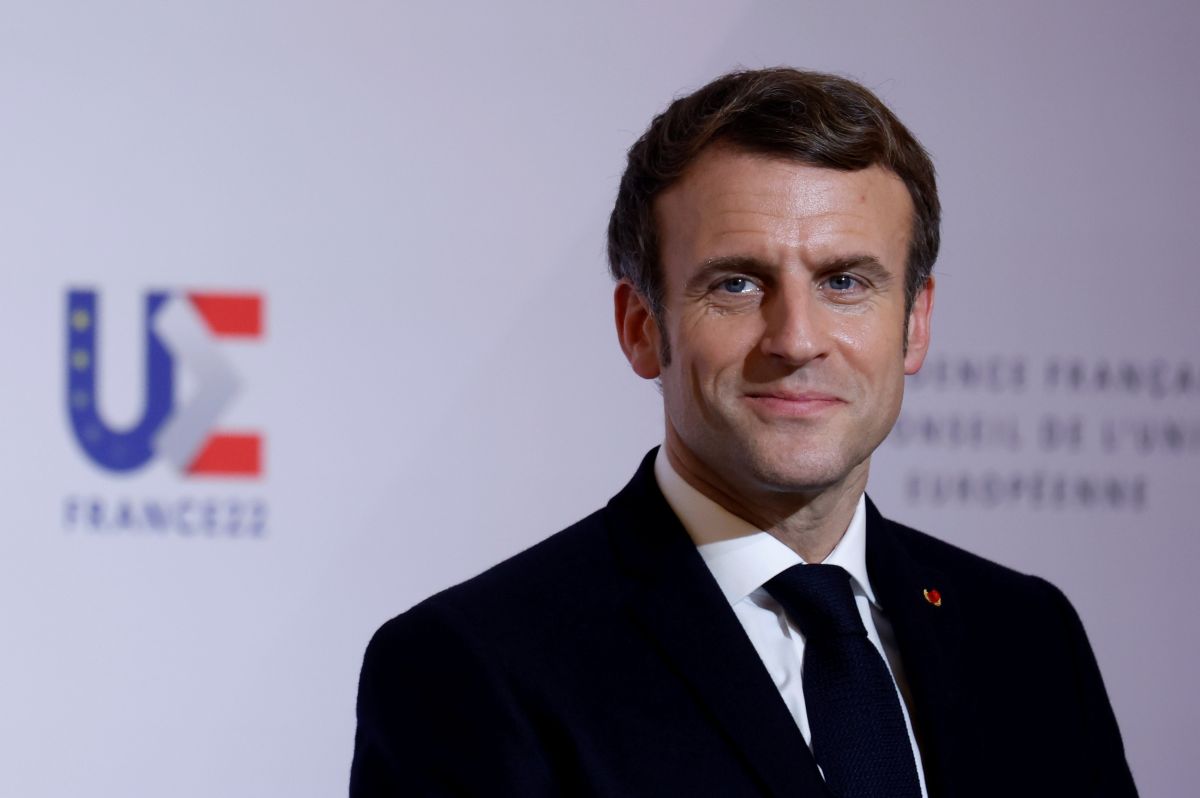
The growing antagonism between the United States, the EU, its partners on the one side and Russia and China on the other limits the space for independent foreign policy, which for President Emmanuel Macron was to be a way of increasing the role of France in the world. In the event of his re-election, Macron will continue to call for the construction of the EU as a “superpower” so that the Community can contribute to the shaping of a new model of multilateralism and avoid a return to the Cold War logic of a clash between two blocs. The limit of Macron’s ambitions will, however, be to maintain the unity of the EU, France’s membership of NATO, and its alliance with the United States.
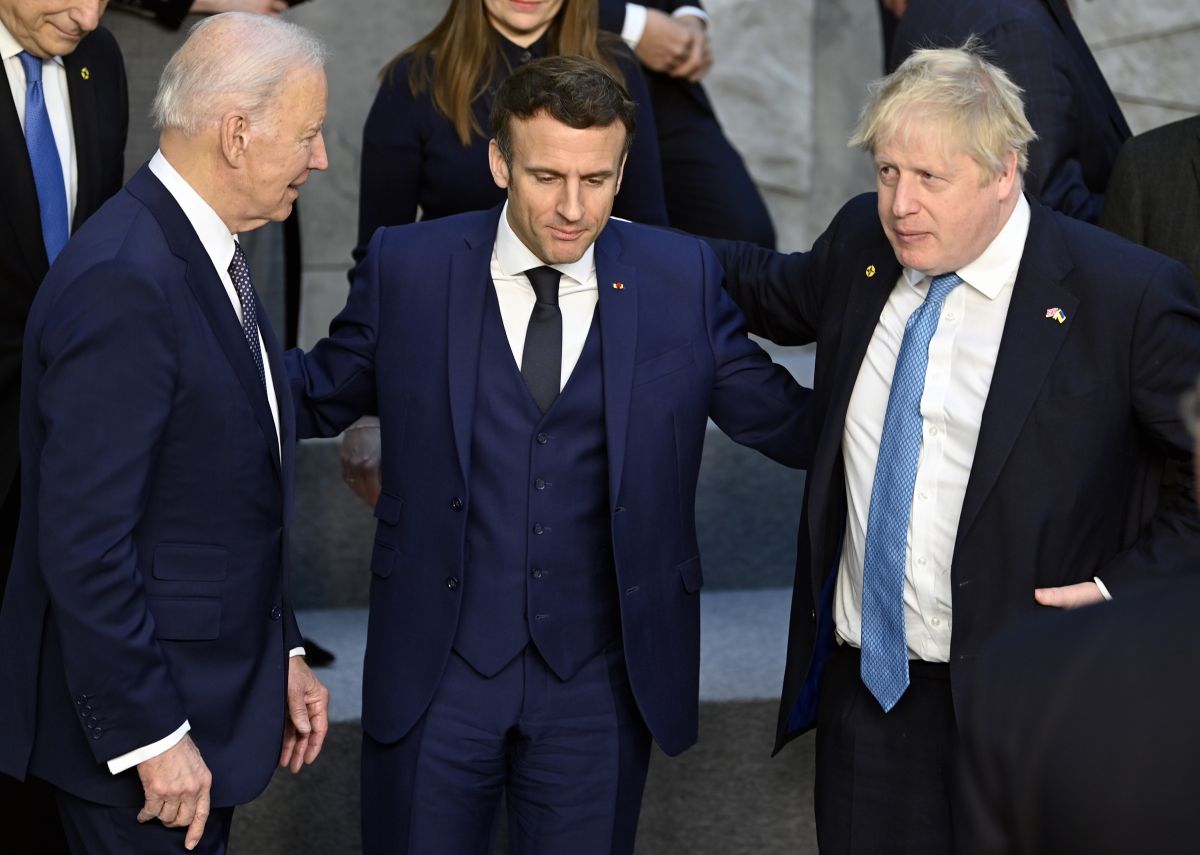 Eric Lalmand/Zuma Press/Forum
The ambition to reform and strengthen the EU has been a priority of Macron’s foreign policy. It assumed the tightening of integration by, among other things, creating a large Eurozone budget or deepening the common security and defence policy (EU intervention forces and a European Defence Fund). The slogan of “strategic autonomy”, promoted by French diplomacy, served to push the vision of the EU as a power capable of conducting global politics on an equal footing with the United States, China and Russia.
The “EU as a superpower” idea is to be a remedy for France’s insufficient strength to counter the threat defined by Macron as a return to the Cold War model of confrontation between two blocs (American and Chinese). The programme of building a uniform and independent EU equal in stature to the U.S. in foreign policy is also consistent with the interests of French business, interested in developing relations with China, Russia and their partners, and competing with, for example, American companies.
Domestic Premises
One of the reasons for the wide support of the French for candidates and parties sceptical towards the EU and NATO (in the first round of the presidential elections of 2022 they received a total of approximately 59% of votes) is the belief that France’s political allies (the U.S. and the largest EU countries) are at the same time economic competitors. In January 2022, only 27% of French people polled believed that EU membership had more advantages than disadvantages. Hence the criticism of the domination of the West and attempts to look for partners in other regions.
For Macron, the mood of the public is an impulse to strive to increase the role of France in NATO and the EU, without questioning France’s membership of these organisations. The strong impression made on the French by the Russian invasion of Ukraine may have an ambiguous political impact. As many as 65% of respondents in March 2022 were in favour of remaining in NATO, but this indicator contrasts with the high support for candidates who consider the Alliance mainly as a tool of U.S. influence in Europe (Marine Le Pen and Jean-Luc Mélenchon).
Macron and the War in Ukraine
The French president justified the need to develop EU defence in the face of the unpredictability of U.S. policy in the era of Donald Trump. At the same time, the French authorities avoided answering the question of how the EU could defend itself against possible aggression by Russia. Macron not only considered the scenario of a Russian assault unrealistic, but also stressed the necessity to build a “common security architecture” between the EU and Russia. The invasion of Ukraine made the French authorities aware of the scale of the threat posed by Russia, prompting them to strengthen their presence on the Eastern Flank and bolster nuclear deterrence. While in 2019 Macron regarded a NATO focused on collective defence against Russia as a Cold War anachronism, after the extraordinary summit in March 2022, he expressed satisfaction that the Alliance is finally returning to its primary mission of “defending the Euro-Atlantic area”.
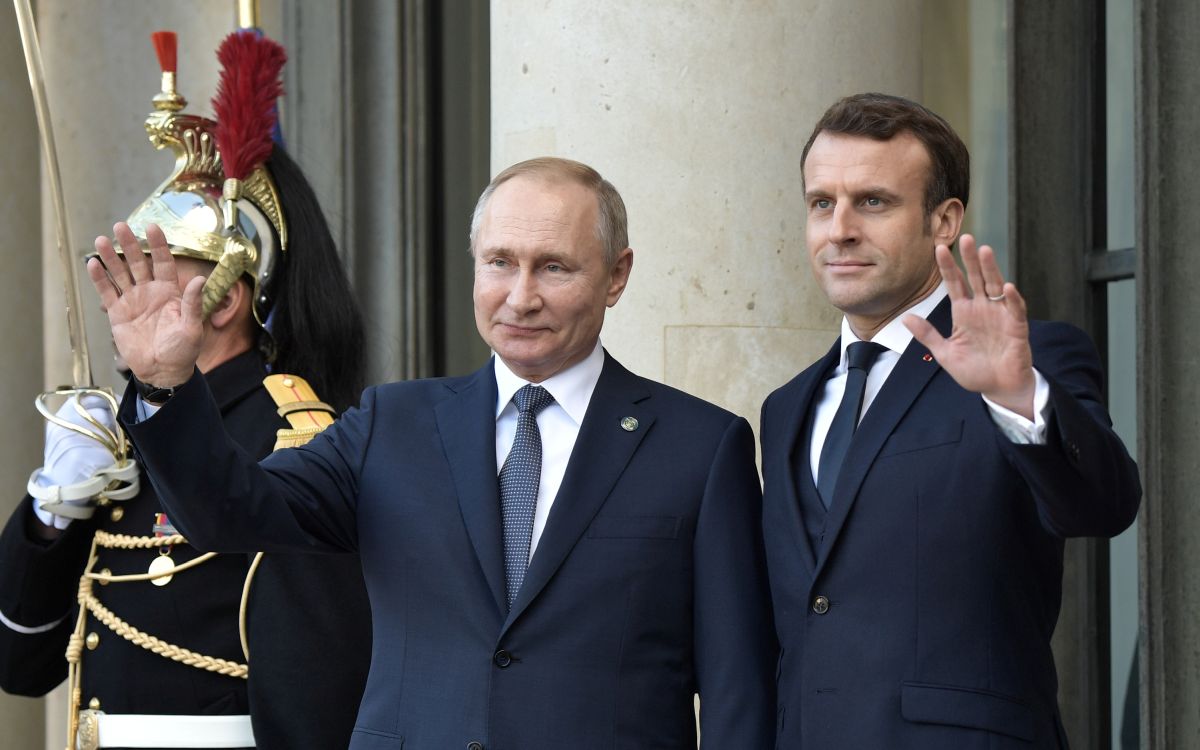
The further course of the war between Russia and Ukraine will be of key importance for Macron’s policy towards NATO and Russia in the event of re-election. Faced with the dilemma of whether NATO should support Ukraine in its efforts to oust the aggressor or seek a ceasefire as soon as possible, France takes a “wait and see” position. It expresses its support for the supply of weapons to Ukraine, but wants its own involvement in them to remain discreet. Although maintaining contacts with Vladimir Putin at the present stage raises criticism even among Macron’s supporters (especially in the context of rivalry with the pro-Russian Le Pen), the president wants to retain the possibility of further dialogue with Russia, partly with French economic interests in mind. In anticipation of a de-escalation, France avoids taking an unequivocal stance on transforming Allied readiness on NATO’s Eastern Flank into a permanent defensive presence.
If the war permanently changes Macron’s approach to NATO, one can expect a reduction in French ambitions in building the EU defence policy. In line with the spirit of the agreements concluded with the Biden administration in 2021, France will emphasise the complementarity of European defence policy with NATO’s goals. As the world’s third-largest arms exporter, France’s primary goal will be to strengthen the potential of the European defence industry and maximise the benefits of increased defence spending by European NATO members. The way to increase the role of European arms producers may be consolidation within the EU. The development of some independent EU military capabilities will be important for Macron mainly as a potential capable of replacing France in its stabilisation missions in Africa.
Another way to strengthen France’s voice on the international stage is for Macron to work closely with Germany. It seems that the new coalition will be more favourable to some of the French president’s postulates, such as, for example, closer integration within the Eurozone. The decision made just after the Russian invasion of Ukraine to increase German defence spending and to become independent from Russia for energy also corresponds to the French demands. Germany’s rejection of nuclear energy remains unfavourable for France.
Multilateralism at Risk
Emphasising the differences in view of global affairs between France and the U.S. allowed Macron to justify the need to build a world order not dominated by the U.S. and China. Russian aggression in Europe and China’s expansive tactics in the Indo-Pacific narrow the field of France’s independent policy. More and more countries are looking for security guarantees, as evidenced by the revitalisation of NATO and the creation of AUKUS. While the situation after the Russian aggression prevents Macron from opposing an increased U.S. presence in Europe, in the Indo-Pacific, Macron will question the need to build a NATO equivalent, although dialogue with China is as difficult for France as it is with Russia.
Another unfulfilled ambition of Macron is the reform of the United Nations. During Trump’s presidency, France opposed the U.S. policy of putting pressure on the organisation by boycotting the work of some of its agencies. At the same time, especially at the beginning of the pandemic, Macron noted the negative side of China’s pressure on WHO’s work. The aggressive war waged by a permanent member of the Security Council (UNSC) is another test of the French approach to multilateralism. France does not want to join the voices questioning the sense of the UN system. However, France demands its reform, such as the suspension of the veto rights in the UNSC if one of the permanent members is concerned that they are impossible to implement.
Conclusions and Prospects
Russia’s invasion of Ukraine made Macron aware of the importance of the U.S. military presence in Europe. It should therefore be expected that France will not block the further strengthening of NATO’s Eastern Flank, although it will not be too closely involved in this process. The announced expansion of the military potential of many European countries, including Germany, will encourage French policy to promote the interests of European defence companies more intensively. France may propose an EU initiative to finance defence capabilities in the EU, provided the funds are allocated to the purchase of European armaments.
Dialogue with Russia and China has not strengthened France’s role in the world. Macron failed not only to break the distrust of many allies, but also to convince Putin and Xi Jingping that France represented a position different from that of the U.S. and other NATO countries. The French vision of multilateralism, of which the proposed UN reform is part, clashes with the revisionist policy of Russia and China. The solution for France will be to strengthen relations with developing countries in Africa and Asia (especially with India).
From the point of view of Poland’s interests, Macron’s foreign policy is the least harmful variant of the need to strengthen national sovereignty, which is dominant in France. Macron will try to expand France’s room for manoeuvre within NATO and the EU without questioning French membership of these organisations (as Marine Le Pen does). The strengthening of NATO’s Eastern Flank by France at the beginning of the Russian invasion of Ukraine also proves the current president’s commitment to Allied guarantees.