
France Seeks to Strengthen Nuclear Deterrence in Europe
On 2 March, President Emmanuel Macron announced an increase in France's nuclear arsenal and a strengthening of military cooperation with selected allies, including Poland. This cooperation is to include allied participation in French nuclear forces exercises and the possibility of deploying these forces on allied territories in the event of a crisis. Such cooperation could strengthen deterrence in Europe by better complementing the US and NATO efforts.
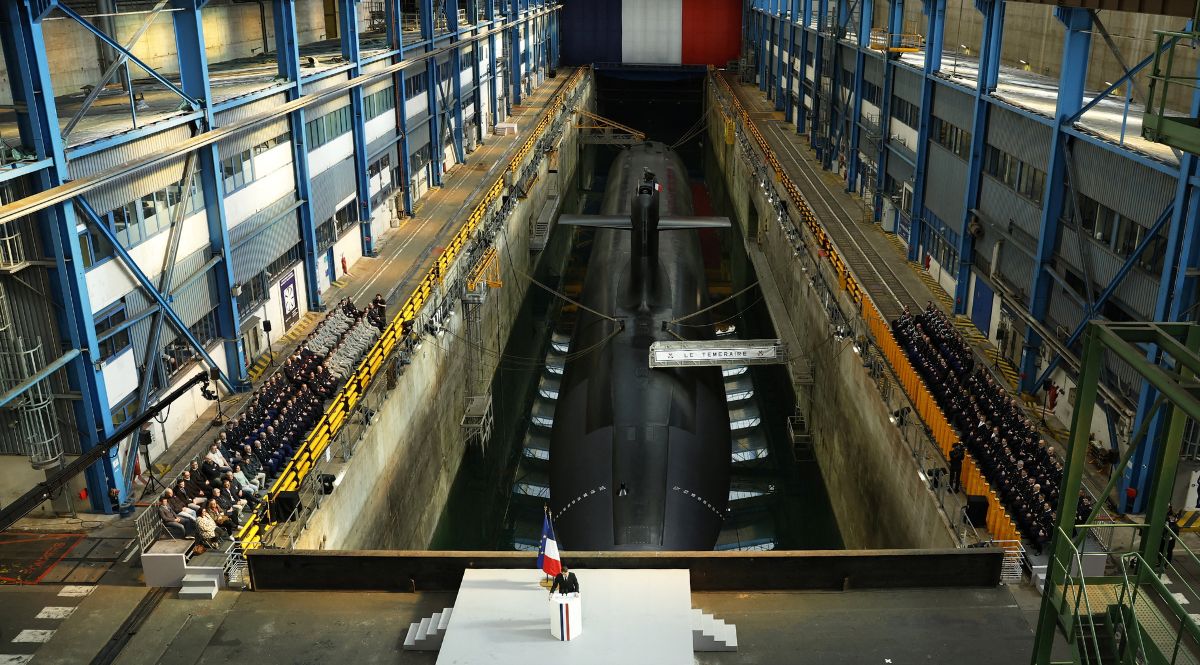 YOAN VALAT / Reuters / Forum
What is the strategic context of Macron’s speech?
Macron’s long-awaited speech is an important—albeit evolutionary rather than revolutionary—update of French nuclear doctrine and a strengthening of its ‘European dimension.’ Both Macron and his predecessors have long suggested that France could use nuclear weapons to respond to the most severe attacks against at least some of its allies. They noted that France’s ‘vital interests’ protected by nuclear deterrence do not concern only its own territory. Macron has been offering dialogue on this issue since 2020, but interest from European partners only began to grow significantly in 2024–2025. This was triggered by overlapping concerns about Russia’s increasingly aggressive policy and growing doubts about the credibility of the US as an ally and its future involvement in NATO, as Donald Trump returned to power. Macron stressed, however, that France does not want to replace but rather complement American nuclear deterrence in Europe, especially given the continent’s declining importance in US security policy. At the same time, France maintains strategic ambiguity as to when it might use nuclear weapons. As Macron pointed out, this is intended to strengthen deterrence by complicating enemy calculations. In line with the traditional French approach, it is also intended to emphasise France’s independence, which Macron has been repeatedly and wrongly accused of undermining. While support for strengthening the nuclear protection of allies has grown in France, it remains a sensitive issue. France acquired nuclear weapons in the 1960s, doubting the American commitment to nuclear protection of Europe and wanting to become politically independent from the US and lead the European part of NATO.
What may enhanced nuclear cooperation with allies entail?
France will still not guarantee its allies that it will use nuclear weapons in their defence, nor openly commit to it or share the right to decide on nuclear use. However, when deciding to launch a nuclear strike, France is to take the interests of its allies into account, and strengthen cooperation with a group of interested countries, initially the United Kingdom, Germany, Poland, the Netherlands, Belgium, Greece, Sweden and Denmark. Macron’s new concept of ‘forward deterrence’ envisages the gradual development of cooperation. In addition to the previously proposed observation of French nuclear forces’ exercises, it may also the participation of conventional allied forces, presumably in a supporting role (similar to NATO nuclear exercises, in which France does not participate). Macron also allowed for temporary deployments of French nuclear-capable aircraft on allied territories. These deployments would both send an additional deterrent signal and, in a crisis, make it more difficult for the enemy to destroy French aircraft carrying nuclear weapons, as they would be geographically dispersed to a greater extent. Macron ruled out the participation of allies in the planning of French nuclear operations and carrying French nuclear weapons (practices which take place under US nuclear sharing in NATO). Development of bilateral cooperation is to be advanced by the establishment of bilateral political bodies, such as the ‘steering groups’ already set up with the United Kingdom and Germany. At the same time, France seeks to increase its own and its allied capabilities to respond to non-nuclear escalation (such as conventional missile attacks) without the use of nuclear weapons. Macron emphasised the need to invest in early warning systems, air defence and long-range strike systems.
Why does France want to increase its nuclear forces?
Although Macron announced the first increase in France’s nuclear warheads in over 30 years, he did not change the basic concepts for their use. Instead, his speech pointed to the need to make nuclear forces more survivable amid the growing capabilities of potential adversaries, both offensive and in terms of air and missile defence systems. It is possible that Macron also wants to increase France’s ability to simultaneously retaliate against targets in more countries. He drew attention to Russia’s increasing cooperation with China and North Korea and the risk of other countries acquiring nuclear weapons. It is more likely that France’s arsenal will be increased by several dozen rather than several hundred warheads, especially given the recent problems with the French parliament’s adoption of this year’s budget. The maintenance and modernisation of France’s nuclear deterrent—approximately 300 warheads—already account for some 13 per cent of its annual defence expenditure. At the same time, French strategy continues to envisage the possibility of conducting an initial, non-repeatable, warning strike with a limited number of nuclear warheads. If such a strike does not deter the enemy from further escalation, France could then decide to launch a massive nuclear strike (presumably chiefly against enemy cities). Macron also reiterated that despite the increase in arms by Russia, China and other countries, France has no intention of engaging in an arms race. However, it will no longer publicly disclose the exact size of its arsenal.
What do the changes in French nuclear doctrine mean for Poland?
Cooperation with France could strengthen efforts to deter Russia from using nuclear weapons against Poland, complementing the actions of the US and NATO. From a military point of view, the greatest danger for Russia will continue to be the much larger American nuclear arsenal, as confirmed by the concerns expressed by the Russian authorities and military about the possibility of the US attempting to pre-emptively destroy Russian nuclear forces. However, deterrence can also gain from increasing the risk that escalation could be met by a French response as well. Russia could be increasingly inclined to test American deterrence if transatlantic disputes deepen or if most of the US’s attention and forces are engaged in areas outside Europe, especially in the event of a war with China. Although France cannot be expected to use nuclear weapons on a massive scale in defence of an ally, a limited counterstrike cannot be ruled out, especially if French forces were attacked. For Poland, it will be important for Macron’s announcements to be translated into practical cooperation and sending the clearest possible signals to Russia, including the organisation of exercises of nuclear forces in Polish airspace. In light of Macron’s speech and France’s efforts to strengthen non-nuclear capabilities, Poland’s ongoing and planned investments in advanced conventional forces make it an attractive partner. However, it is unclear to what extent France will approach cooperation in ‘forward deterrence’ in a transactional manner, and whether Macron’s successor after the April 2027 elections will be interested in implementing this concept. Potential candidates for this position from the National Rally, which is leading in the polls, quickly expressed scepticism about the idea of ‘forward deterrence.’ They also indicated that the price for such cooperation should be the purchase of French weapons by allies.

(1).png)
.jpg)
