Foreign policy challenges facing the new Lithuanian government
The government of Mindaugas Sinkevičius, formed in July this year, is the third in this term of the Lithuanian Seimas (which began at the end of 2024). Apart from the ongoing priority of ensuring security in the face of threats from Russia and others, its foreign policy objectives include improving relations with China and working to maintain the US military presence in Lithuania. It will also consider possible changes in relations with Belarus. Lithuania’s policy towards Poland will remain unchanged.
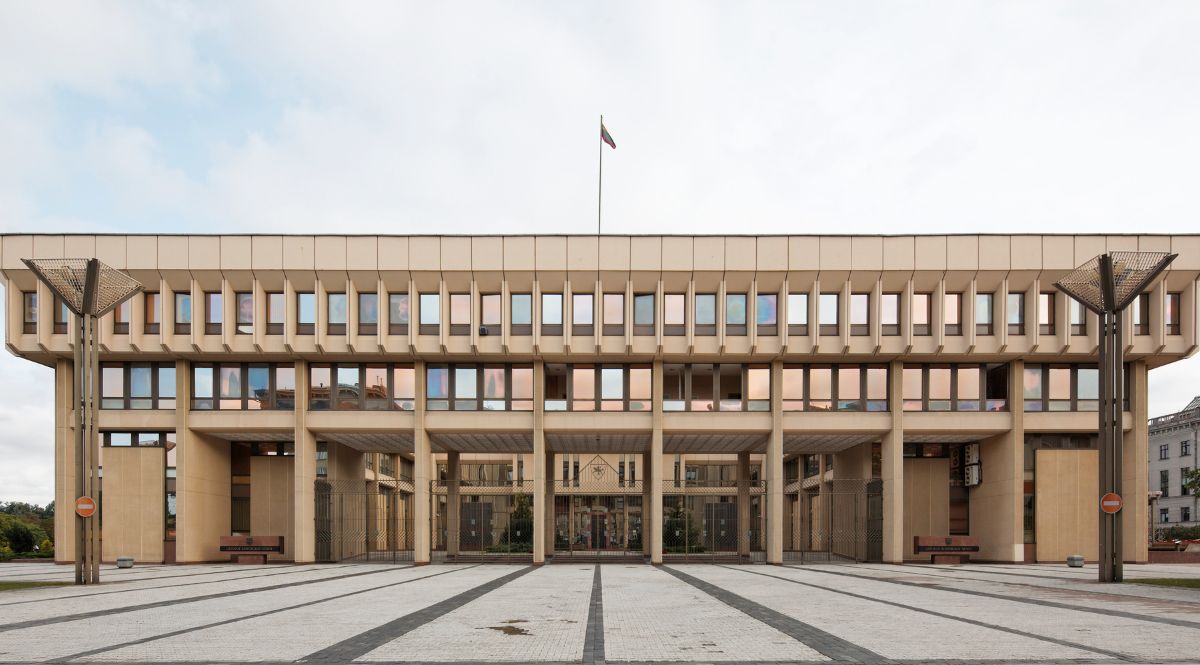 Bildarchiv Monheim / Jochen Helle / AKG Images / Forum
Changes in the ruling coalition
The reshuffling of the coalition halfway through the term of the Lithuanian Seimas (2024–2028) is the result of leadership changes in the largest of the coalition parties following the recent elections—the Lithuanian Social Democratic Party (LSDP, holding 52 seats in the 141-member Seimas). Since May this year, the party has been led by Sinkevičius, who announced a review of the coalition and the possible expulsion of the populist Dawn of Nemunas (Nemuno Aušra - NA). The formal reason for the break-up of the coalition was NA’s opposition to plans to build a new military training ground in Kopciowo (Lithuanian: Kapčiamiestis), near the border with Poland. The NA party’s leader, Remigijus Žemaitaitis, argued that the project would not significantly enhance Lithuania’s security and that the authorities were failing to take residents’ objections into account. Legal issues relating to anti-Semitic remarks by Žemaitaitis and an investigation into financial irregularities by NA leadership may also have influenced the decision to expel the party from the coalition.
In the new coalition, once again comprising the LSDP and the Lithuanian Farmers and Greens Union (LVŽS), the NA has been replaced with the centre-left Union of Democrats “For Lithuania” (DSVL). Consequently, the government can count on 75 votes, compared with the 78 of Inga Ruginienė’s previous cabinet. Six ministers have retained their posts, including Kęstutis Budrys, the Minister for Foreign Affairs, an LSDP nominee who remains outside the party. Although the LSDP has at times criticised his actions in the previous government, keeping him in office may help the Prime Minister maintain good relations with President Gitanas Nausėda, from whose inner circle the minister hails.
The change in the coalition is intended to increase the government’s cohesion and stability, as well as to improve cooperation with the President, who was opposed to NA’s presence in the coalition. The previous cabinet had struggled with image-related challenges, including the controversy caused by Žemaitaitis. Furthermore, the new government will be under greater LSDP control, as the largest party in the coalition now holds nine of the fourteen ministerial posts (compared to eight out of fifteen in the previous cabinet). The stability of the cabinet is also set to be bolstered by Sinkevičius’s stronger position within the party compared to his predecessors.
Key challenges in foreign policy
The new government has declared that its foreign policy priority is to resolve the crisis in relations with China. This was one of the LSDP’s key campaign pledges in the 2024 election and stemmed from the costs of Lithuania’s dispute with the PRC. The dispute began in 2021, when the Lithuanian authorities agreed to the opening of the Taiwan Representative Office in Vilnius. Its name provoked opposition from China due to the use of the word ‘Taiwan’ instead of ‘Taipei,’ which is used in most countries. As the dispute escalated, the PRC downgraded the rank of its representative in Vilnius to chargé d’affaires and curtailed economic relations with Lithuania, including by removing it from its customs tariff registry, which hampered exports to the country, and by imposing restrictions on European companies with operations on Lithuanian territory. In May 2021, Lithuania became the first country to withdraw from China’s 17+1 cooperation initiative with Central European countries, and six months later recalled the staff of its embassy in Beijing.
Intended to strengthen its ties with the US, the weakening of relations with China—in which Lithuania was supported by the United States—also hoped to involve Taiwan in the development of Lithuania’s technology sector. Even before the 2024 parliamentary elections, the LSDP and DSVL had accused Taiwan of failing to sufficiently develop this cooperation. Lithuania therefore plans to restore ambassadorial posts in Vilnius and Beijing and maintain relations at a level comparable to that of other EU countries. At the same time, it is making progress in normalisation conditional on maintaining good relations with the US—in August this year, members of the Taiwan Caucus in Congress called on the Lithuanian authorities to continue developing relations with Taiwan and not to yield to pressure from China.
In light of the ongoing review of US military engagement in Europe, a key challenge for Lithuania is maintaining a US military presence on its territory. This is closely linked to its engagement in Poland. The reinforced armoured battalion (over a thousand soldiers), deployed on a rotational basis in Lithuania, is a forward element of the Armoured Brigade Battle Group, whose command and most of its sub-units are stationed on Polish territory. The Lithuanians regard this rotational presence as an additional security guarantee alongside the multinational NATO battle group under German command.
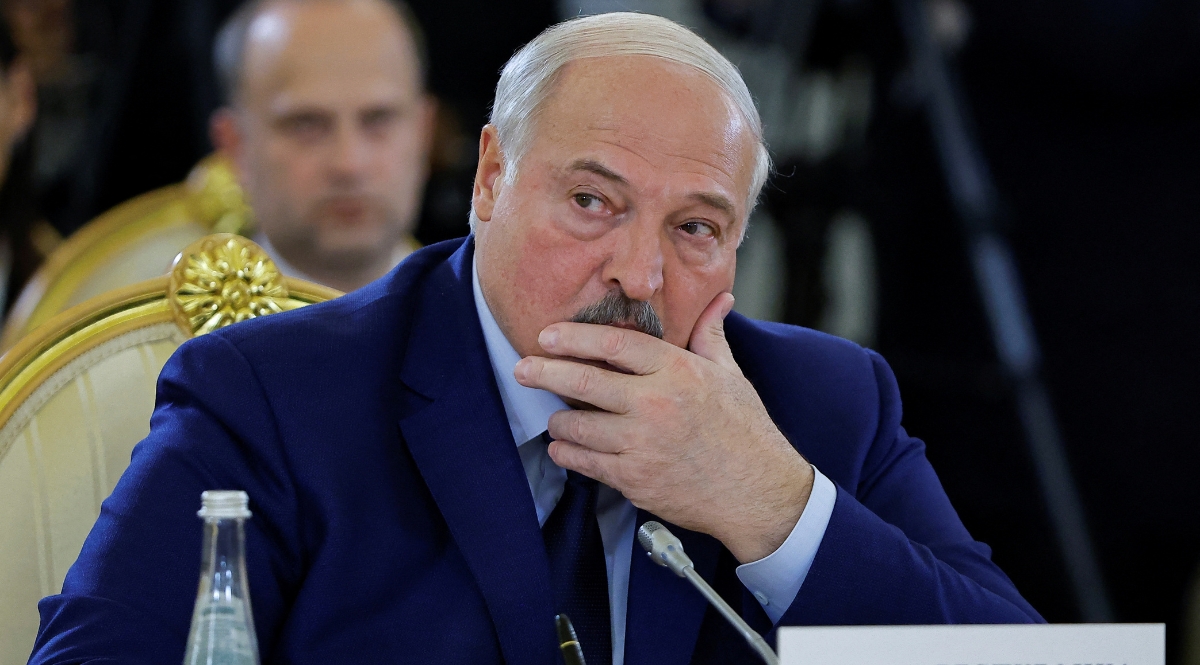
Maintaining good relations with the US is also linked to Lithuania’s policy towards the regime in Belarus. The new government continues to regard its eastern neighbour as a threat. At the same time, it has declared it will seek to isolate Belarus should the regime continue targeting the EU and NATO via hybrid activities, as well as its support for Russian aggression in Ukraine. This marks a shift in approach compared to the Ruginienė cabinet, which sought to fully isolate Belarus, at least in part due to its lack of internal reforms. In contrast, the Sinkevičius government’s programme does not emphasise the need to strive for free elections and other democratisation processes, but rather talks of a democratic Belarus as a long-term goal of Lithuanian foreign policy. This greater willingness to consider the possibility of improving relations with Belarus stems from US pressure on Lithuania to lift the embargo on Belarusian potash fertilisers. Furthermore, the US Special Representative for Belarus, John Coale, proposed organising a bilateral Belarusian-Lithuanian meeting at the level of deputy foreign ministers. Some figures in the Lithuanian political elite were open to meeting these expectations to preserve good relations with the US.
Lithuania’s activities within the European Union are focused on preparations for its six-month presidency of the Council of the EU, which commences in January 2027. Its main tasks will be coordinating negotiations on the multiannual financial framework for 2028–2034, including provision for continued support for Ukraine; working towards enhancing European security, including in the context of migration; advancing the Union’s enlargement—particularly towards the east; and combating disinformation.
Lithuania will continue to work with its European partners. In the field of security, the government regards the deployment of the German 45th Armoured Brigade on its territory to be a top priority, regarding it as the backbone of NATO’s presence. Partly for this reason, Lithuania is allocating over €1 billion to the construction of military and civilian infrastructure for German troops in Rudniki and Rukla, supporting plans for their permanent deployment there by 2027. Furthermore, the new government plans to strengthen relations with Poland, including on security matters within the framework of the Lublin Triangle, as well as to continue cooperation on infrastructure development and energy projects. In its relations with Ukraine, it will maintain its support for the country’s membership of the EU and NATO, as well as its commitment to securing a just peace and the liberation of Ukrainian territories occupied by Russia.
Conclusions and outlook
Greater stability for the new government may be produced by Sinkevičius’s stronger position within his party—and consequently as Prime Minister—compared to Ruginienė’s. This may help to ensure a more decisive implementation of foreign policy objectives; however, the new cabinet will have to work quickly, with only two years until the next parliamentary elections. The stability of the government will have a positive impact on Lithuania’s preparations for its presidency of the Council of the EU.
The lack of visible progress so far in relations with China suggests that normalising these ties may remain a serious challenge for Lithuania. If this situation persists, it could have domestic consequences in Lithuania. A lack of progress could provide grounds for further criticism of Minister Budrys by the LSDP and for the party to attempt to have him dismissed.
The review of US military engagement in Europe, potentially leading to a reduction in rotational troops or their complete withdrawal from Lithuania, requires the country to take steps to compensate for their prospective absence. Its hopes are pinned on confirmation that some of these troops will be deployed on its territory, in line with US announcements regarding the maintenance of forces in Poland. Therefore, Lithuania’s interest in Poland’s efforts to build a permanent US base in Poland may represent a further area for strengthening security cooperation between the two countries.
Although most Lithuanian politicians have declared they will maintain a hard line towards Belarus, the new government’s shift in rhetoric suggests a willingness to consider improving bilateral relations. The United States remains crucial in this regard, as it may renew pressure to unblock the transit of Belarusian potash fertilisers through the port of Klaipėda. This will be particularly important as work proceeds on extending the EU sanctions against Belarus. In the discussion on the development of Lithuania’s relations with the Belarusian regime, the coordination initiative with Poland—previously announced by Ruginienė—may also resurface and could enable the development of a common position towards Belarus.