Early Parliamentary Elections in Kosovo
The results of the early elections on 28 December are likely to end the legislative paralysis of the 120-seat Assembly of the Republic of Kosovo, which has lasted throughout 2025. It would also allow the formation of a cabinet led by Albin Kurti, of the nationalist-leftist Self-Determination Party (Vetëvendosje; LVV), who has been Prime Minister since 2021, after briefly holding power in early 2020. The cabinet could form a government on its own, relying only on the support of minority MPs other than Serbs.
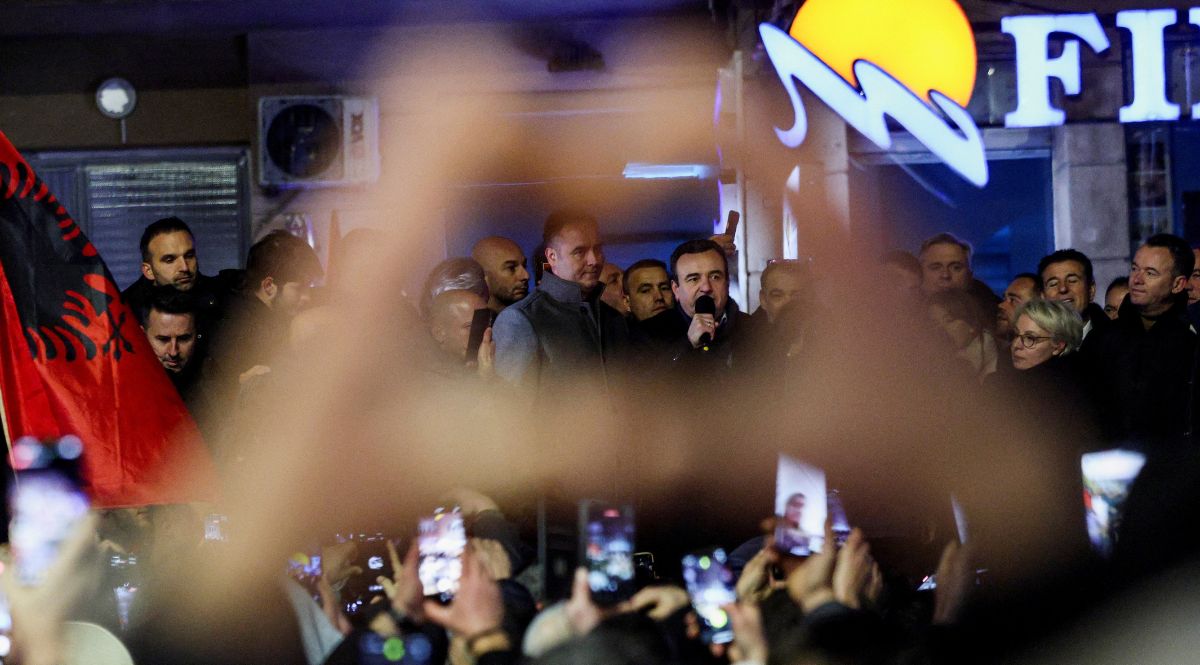 Florion Goga / Reuters / Forum
Why were early elections held?
In November 2025, President Vjosa Osmani – in accordance with the Kosovo constitution – dissolved the Assembly and called new parliamentary elections. This was the result of the political deadlock that had prevailed since the last elections held in February 2025. Self-Determination, although it was the largest faction in the Assembly, was unable to build a majority around successive candidates for the office of prime minister: first party leader and incumbent Prime Minister Kurti, and then former Speaker of the Assembly and Foreign Minister Glauk Konjufca. Earlier, from April to August, the Assembly was mired in an institutional deadlock, blocking legislative activity. It was only on the 58th attempt–despite a succession of deadlines set by the Constitutional Court and mediation by the president–that it managed to elect its speaker, which required a majority of 61 votes. However, it was then unable to elect a deputy speaker representing the Serbian minority until October.
How has the balance of power in parliament changed?
The LVV will remain the strongest party in the Assembly, having won 49% of the vote. According to preliminary results, they will have 56 seats – eight more than before. Opposition parties lost some of their support. The nationalist-conservative Democratic Party of Kosovo, which originated from the guerrilla Kosovo Liberation Army (UÇK), won 21% of the vote, which will give it 23 MPs (-1). The centre-right Democratic League of Kosovo, founded by Ibrahim Rugova, the leader of the civilian resistance movement who died in 2006, won 13.5% of the vote and 15 seats (-5). The right-wing Alliance for the Future of Kosovo, also originating from the UÇK, received 6% of the vote, which will give it 6 seats (-2; in the February elections, it ran in a coalition with the Social Democratic Initiative, which currently has not achieved the 5% electoral threshold). According to the constitution, 10 seats will go to the Serbian minority. Most likely, at least 9 of them will again go to the Serbian List, which is linked to the Serbian authorities. The constitution also guarantees seats for other minorities – 4 for the Roma, Ashkali and Balkan Egyptians, 3 for the Bosniaks, 2 for the Turks and 1 for the Gorani.
What ensured the LVV's electoral success?
LVV strengthened its support by effectively blaming the opposition for the political deadlock during the shortened term and discrediting its economic promises. Kurti presented himself as the only leader capable of ensuring Kosovo's development – he promised budget increases, further development of social policy, annual investments worth €1 billion and the establishment of a special prosecutor's office for organised crime. At the same time, the opposition failed to win voters over, despite promising wage increases and criticising Kurti for causing tensions with the EU and the Serbian minority living mainly in the north of the country. These allegations lost their significance in light of the European Commission's announcement in December that it would lift the sanctions imposed on Kosovo in 2023. LVV also benefited from the scheduling of the elections during the Christmas and New Year period. It resulted in a massive turnout among Kosovar emigrants returning to their family homes, among whom Kurti enjoys high support mainly due to his image as an opponent of corruption and the former elites originating from the UÇK and Rugova's movement.
How is Kurti's likely continued rule likely to affect Kosovo's international position?
Breaking the political deadlock would contribute to Kosovo's stabilisation. The urgent challenge for the new Assembly is to vote on the 2026 budget and ratify agreements with the EU and the World Bank, which will provide the country access to €1 billion in grants and preferential loans. Another challenge is to restore democratic standards. Although these have generally improved in Kosovo in recent years and in many respects stand out positively against the regional background, they have declined, especially in the last year, during the political deadlock. One visible manifestation of this was, among other things, a significant decline in press freedom: 52.73 points (99th place globally) in 2025 compared to 68.38 points (56th place) in 2023, according to the World Press Freedom Index of Reporters Without Borders. Kurti probably will not be inclined to make any real attempts to normalise relations with Serbia (given the lack of willingness on the part of the Serbian authorities), a stance supported by his voters. He will probably continue to develop the country's defence capabilities, despite Serbia's protests, based on cooperation with the U.S., Türkiye and Germany (for example, he has purchased Javelin and Panzerfaust 3 anti-tank missiles and Bayraktar drones). In December 2022, Kosovo applied for EU membership, but there is no willingness to consider its application due to the non-recognition of the country by five member states: Cyprus, Greece, Spain, Romania and Slovakia, which either fear separatism or have traditionally close relations with Serbia.


_sm.jpg)