COP31 in Antalya - the continued erosion of global climate negotiations
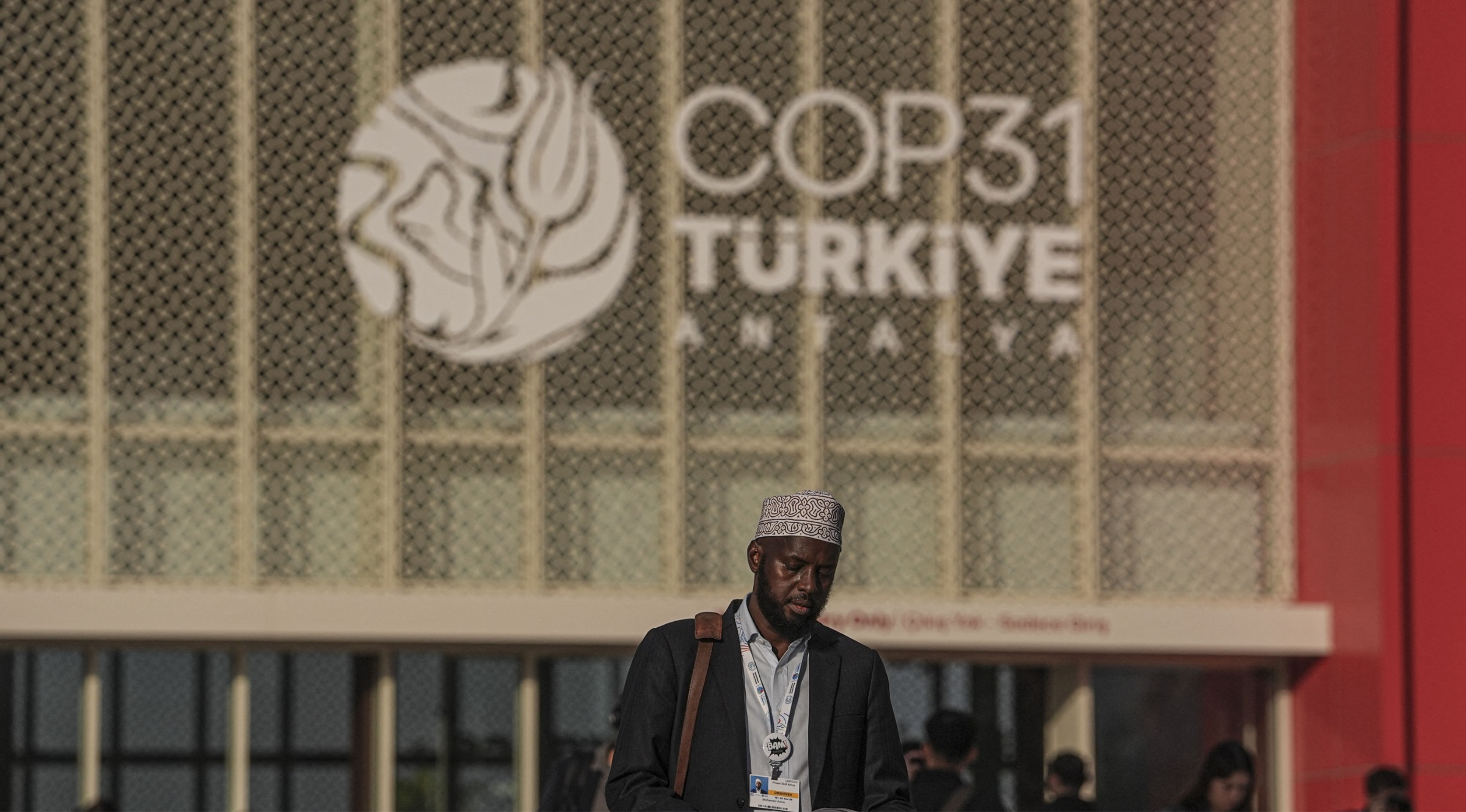
The 31st Conference of the Parties to the United Nations Framework Convention on Climate Change (UNFCCC)—COP31—took place in Antalya, Turkey, from 9 to 22 November 2026. The summit ended in the most serious negotiating deadlock in 17 years. The parties adopted several decisions on specific issues but failed to agree on a final declaration. Fossil fuel exporters opposed language on transitioning away from those energy sources, while the EU, UK, and its partners rejected a draft that omitted the issue. Differences over financing for climate adaptation also persisted, though more than 90 countries backed an electrification initiative. The breakdown in talks may accelerate a shift towards climate cooperation in smaller formats and through sectoral agreements.
 AA/ABACA / Abaca Press / Forum
Why did COP31 end without a final agreement?
A disagreement about transitioning away from fossil fuels prevented the adoption of a final declaration. Saudi Arabia—acting on behalf of 22 Arab countries—and Russia opposed provisions on the transition, with Russia citing national security concerns. The EU, the United Kingdom and several island states refused to back a draft that would have scaled back the ambition of the commitments made at COP28 in Dubai. The EU also objected to pressure from fossil fuel producers to give greater prominence to carbon capture, utilisation and storage (CCUS), which could be used to justify continued fossil fuel use. African countries questioned the lack of clarity over the terms of adaptation financing. The absence of an official US delegation also weakened the negotiations, while on the sidelines of the APEC summit in Shenzhen, the United States, China and Russia backed an increase in the production and supply of petroleum products.
What did COP31 achieve despite the breakdown in the main talks?
More than 90 countries backed the Turkish presidency’s initiative to raise electricity’s global final energy consumption share to 35% by 2035 (currently around 23% in the EU). However, this initiative was developed outside the formal negotiations, and will have an uncertain impact on emissions because it leaves countries free to choose the energy sources to supply additional electricity demand. COP31 also saw announcements of plans to expand power grids and energy storage and to electrify transport and industry. The United Kingdom pledged £400 million to a programme financing such investments in developing countries. Donors also announced $88 million for tropical forest protection, while the Global Fund for Coral Reefs announced more than $30 million in new investments and contributions to support action in 22 developing countries. Italy and the European Commission committed to contributing to the Fund for Responding to Loss and Damage—established in 2022—whose first call for proposals drew requests totalling $2.8 billion against an allocation of about $370 million.
How did Türkiye fare at COP31?
Türkiye hosted COP31 and held the presidency, while under a compromise reached at COP30, Australia led the negotiations. Following the NATO summit in Ankara, hosting the conference was intended to raise Türkiye’s international standing and establish it as a country capable of mediating between the Global North and the Global South. The tense final hours of the talks weakened Türkiye’s credibility in this role, as island states accused the presidency of favouring the Chinese, Saudi and Russian delegations. Türkiye nevertheless made progress towards its economic objectives, securing more than $5 billion in loans from financial institutions to support climate reforms and the development of a low-carbon economy. A preliminary agreement with China could prove a significant gain. It envisages an estimated $15 billion in investment, including 7 GW of new renewable power capacity and technology transfer to enable the production of wind turbine components in Türkiye.
How could the failure of COP31 change global climate policy?
The outcome of COP31 underscores the continued erosion of multilateral climate negotiations and the need for reform in this area. The withdrawal of the US administration from the process after 2024 and more limited engagement by some other countries, particularly China, have weakened the talks. The Paris Agreement will remain the basis for common emissions reporting and progress reviews, and the UN process will remain the main forum for negotiating adaptation finance.
Coalitions of countries, bilateral agreements and trade policy may play a greater role in implementing climate policy. One example is the Santa Marta process, launched in Colombia in April 2026, when 57 countries met to develop ways to reduce dependence on fossil fuels. Countries and regional blocs may also use access to their markets as an incentive to cut emissions, as the EU does through its Carbon Border Adjustment Mechanism (CBAM) and its Methane Regulation. The International Court of Justice’s 2025 advisory opinion may increase pressure on governments by strengthening the legal basis for pursuing climate reparations.