
COP30 - no hopes, no breakthroughs
The 30th Conference of the Parties to the United Nations Framework Convention on Climate Change (COP30) took place in Belém, Brazil, from 10 to 22 November 2025. Described as an implementation COP, this year's summit focused on financing the fight against climate change, transitioning away from fossil fuels, safeguarding tropical forests, and evaluating countries' efforts to meet their emission reduction targets. The poor outcome of the negotiations was influenced by the absence of the US delegation, China's focus on trade interests, and the EU's defensive stance.
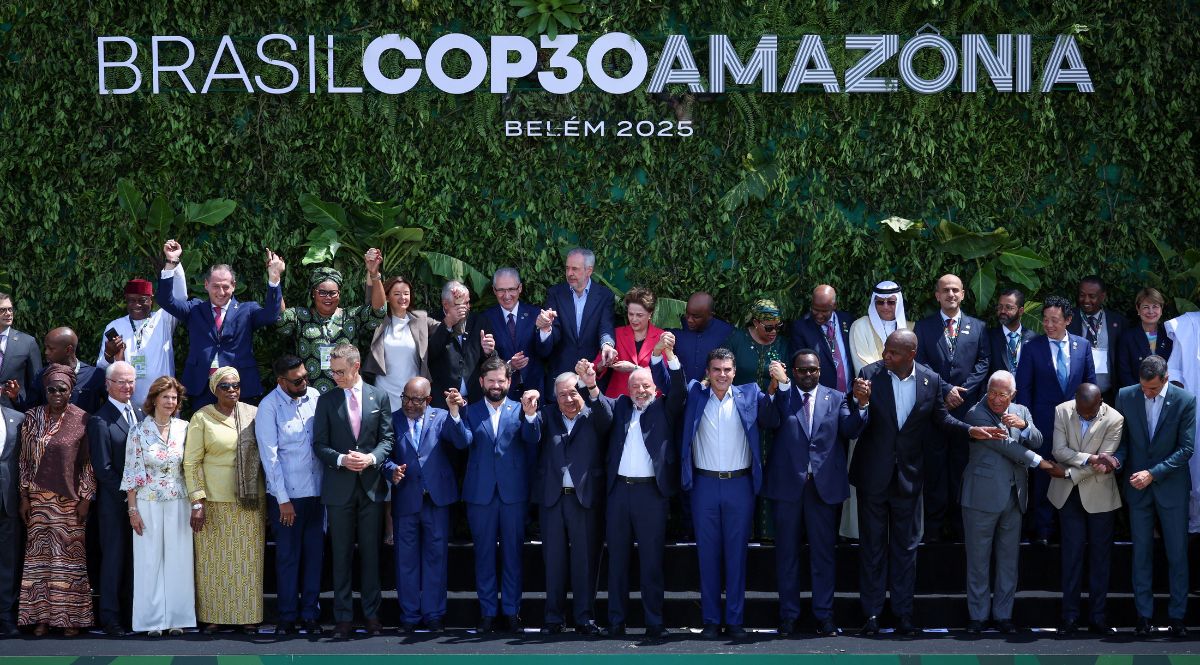 Adriano Machado / Reuters / Forum
What were the objectives of the negotiations and the most important agreements at COP30?
The priority was to collectively increase ambition regarding emission reductions in this year's nationally determined contributions (NDCs), with the aim of staying on track to limit global warming to 1.5°C. This was to be achieved by tripling the financial support commitments of Global South countries for more ambitious emissions reductions and climate change adaptation (known as the NCQG) to $1.3 trillion per year from 2035. However, agreement was not reached, partly due to disputes over financing (loans versus grants) and the broader involvement of wealthy Asian countries that are not formally committed to making contributions. This issue is set to be negotiated in the coming years. Consequently, only a few countries have made new commitments to phase out coal or reduce emissions more quickly, including the EU, Brazil, Colombia, South Korea and Australia. Furthermore, despite being supported by more than 80 countries, the final declaration omitted a commitment to move away from fossil fuels due to opposition from Saudi Arabia and others.
How did the US's absence affect the negotiations?
For the first time in the history of the UNFCCC, there was no formal US delegation present in Belém. The only American participants were state authority representatives, including California Governor Gavin Newsom and a Senate delegation. This is a consequence of Donald Trump's anti-climate presidency; he withdrew from the Paris Agreement in January this year, considering climate policy to be pro-Chinese and unfair. In previous years, the COP negotiations were jointly led by the EU and the US. However, the absence of US administration representatives, China's focus on trade issues and Saudi Arabia's reluctance to move away from fossil fuels prevented progress in the negotiations. This also limited the motivation of most countries to engage more broadly in the process, strengthening their attachment to their own demands. COP30 also highlighted the differences in approach to climate policy between the other main negotiators, China and the EU.
What did Brazil accomplish, and what aims did it fail to achieve?
The hosts succeeded in pushing through some of their own proposals and in maintaining the weakening multilateral commitment to mitigating climate change. Notably, they succeeded in launching the Tropical Forest Fund (TFF) and securing contributions totalling over $6 billion. While the final text confirmed the important role forests play in absorbing CO₂, it failed to include a commitment to halting the deforestation of rainforests. Unlike at previous conferences, civil society was more involved, although some groups were unable to attend due to the difficulty of reaching Belém, which is located in the Amazon rainforest. Brazil was unable to avoid controversy, including accusations of greenwashing relating to the relaxation of environmental regulations and increased oil production. For example, prior to COP30, the government had issued a concession for oil exploration in the Amazon basin.
What can we expect at the next climate talks?
The next climate conference will be held in Antalya, Türkiye. This was chosen after Australia's bid was rejected. In light of Australia's opposition to the rejection of its candidacy, it was agreed that Australia would conduct the negotiation process and chair the proceedings for COP31, while Türkiye would host. Türkiye's success is the result of more than three years of diplomatic efforts and changes in climate policy — for example, it adopted its first-ever climate law this year, introducing an emissions trading system. However, its main goal is to build a positive image for itself and gain stronger influence on the international stage. Türkiye also wants to play the role of a bridge between the Global North and South, such as in the dispute over climate finance. Australia, on the other hand, will seek to position itself as a leader in the Pacific region and among the countries vulnerable to climate change (it has an agreement with Tuvalu regarding the potential migration of its residents due to the threats posed by climate change). As was the case during COP30, the negotiations will be technical in nature due to the high likelihood of the absence of the US.

.png)

(1).png)