Xi Jinping's Visit to Russia Signals "Brotherhood of Arms" in Their Rivalry with the U.S.
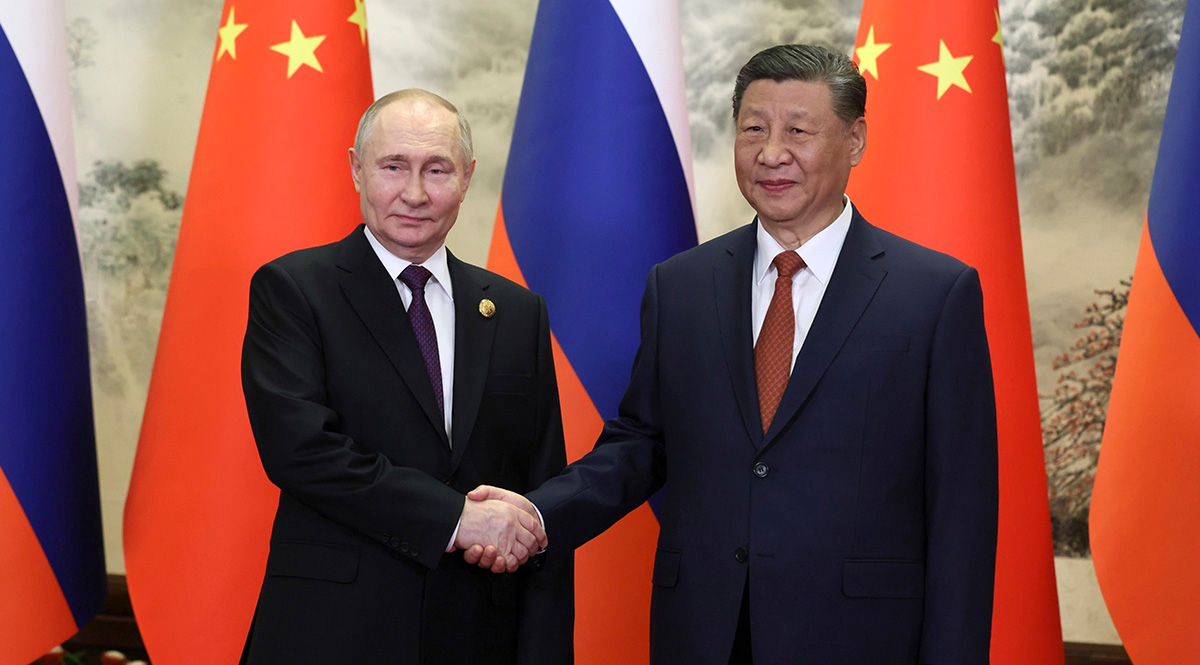
During a visit to Russia on 7-10 May to mark the 80th anniversary of the end of World War II, China’s Xi Jinping and Russia‘s Vladimir Putin presented the two countries’ shared perspective on the history of the conflict and the timeliness of the “struggle against Nazism”. They also reaffirmed their commitment to each other in the rivalry with the U.S., including China’s support for Russia’s actions in Ukraine, as well as Russia’s support for Chinese interests towards Taiwan.
.jpg) Mikhail Metzel / Zuma Press / Forum
Mikhail Metzel / Zuma Press / Forum
What were the goals of Xi Jinping’s visit to Russia?
It was crucial for China to signal the sustainability of strategic cooperation with Russia, including in the context of the start of U.S.-Russian talks on the war in Ukraine and the U.S. government’s declaration that it seeks to undermine Russian-Chinese cooperation. Xi’s presence in Moscow was meant to symbolically emphasise the two countries’ “brotherhood of arms”, both during World War II and today. The Chinese leader also wanted confirmation from Russia of its pledge of support (political and military) for China in the Asia-Pacific region, including regarding Taiwan and in reaction to the U.S. military cooperation with the Philippines, Australia, Japan, or South Korea. China’s goal was also to clearly declare it and Russia’s determination (within the BRICS platform, among others) to defend the global economy against what they consider destructive U.S. actions, including in trade.
What has been agreed in bilateral relations?
Xi and Putin stressed the “unbreakable friendship” of the two countries under their direct leadership (this was their eleventh meeting since Xi became China’s chairman in 2013). In addition to the traditional statement on cooperation in many fields (e.g., economy, culture), the two sides also signed two other documents, one on international law and another on global stability. Both focus on security issues, assessing U.S. policy as oriented to “contain China and Russia” and emphasising their military cooperation, including in the development of military technology. Compared to the 2022-2024 documents, the current statements use harsher language towards the U.S., in line with the needs of China in particular, and signal both countries’ readiness to respond more forcefully to the Donald Trump administration’s policies. In addition, the more frequent support for Chinese initiatives included in them indicates Russia’s growing dependence on China. The Russian side also emphasised growing trade (including trade settled directly in the rouble or yuan) and the continuation of previously announced energy projects. It also encouraged China to increase investment, but no concrete agreements were announced on this issue. However, another cooperation agreement was signed between state media institutions of China and Russia (the earlier one dates back to 2024).
How will the visit affect Russia and China’s cooperation vis-à-vis the EU?
The political declarations signed during the visit confirm China’s support for Russia’s imperial policies that threaten the EU, among others, and thus China’s low credibility as a mediator or international stabiliser. Xi’s references to a positive assessment of the Red Army during World War II, the brotherhood of arms, and the symbolism of that cooperation in the context of Russia’s actions in Ukraine are different both from other European countries’ assessments of history and the current international situation. At the same time, Xi’s rhetoric on the war in Ukraine constantly supports Russian interests, including in the context of potential negotiations. He emphasises as legitimate Russia’s concerns about NATO and the need to change the security architecture in Europe in line with Russian ideas. Hence, in statements issued during the visit, China and Russia point to “the development of military alliances by nuclear states in the neighbourhood of other nuclear states” as a strategic risk that needs to be “quickly eliminated”, which could refer to both AUKUS in the Asia-Pacific region and possible changes to NATO and the nuclear-sharing programme in Europe. A Sino-Russian media cooperation agreement also indicates China’s continued complicity in Russian foreign information manipulation and interference (FIMI, including disinformation) operations in the EU.
What will be the impact of the visit on China-U.S. relations?
The visit indicates China’s belief that the already difficult relations with the U.S. will increasingly coarsen, and thus expresses the need to show that cooperation with Russia is on the rise. As a result, it was necessary to reaffirm Russia’s support both for Chinese development security initiatives vis-à-vis countries in the Global South and Chinese interests in the Asia-Pacific. This shows the ineffectiveness of U.S. attempts to draw Russia away from China. At the same time, Russia’s economic problems mean that cooperation with Russia will be insufficient to counter the effects of U.S. tariffs hitting the Chinese economy. Despite Russian willingness to increase imports from China in selected sectors, Russia does not play a significant role as an export market for China. However, China wants to interact with Russia in the area of international trade. This is indicated by the signing in Moscow of an agreement on cooperation vis-à-vis the World Trade Organization and declarations of further use of the UN, Shanghai Cooperation Organization, or BRICS to strengthen relations with developing countries in opposition to U.S. policy.


.jpg)