The war in Iran: a test of the Gulf states' economic resilience
Forecasts of the long-term economic consequences of the war in Iran for the Gulf states are unequivocally negative. The scale of the losses depends on whether the strategies for building economic resilience implemented by these countries can withstand the shock caused by regional destabilisation. Faced with Iran taking control of the Strait of Hormuz, the EU’s top priority in the short term will be to ensure energy security, and in the long term to diversify its economic partnerships.
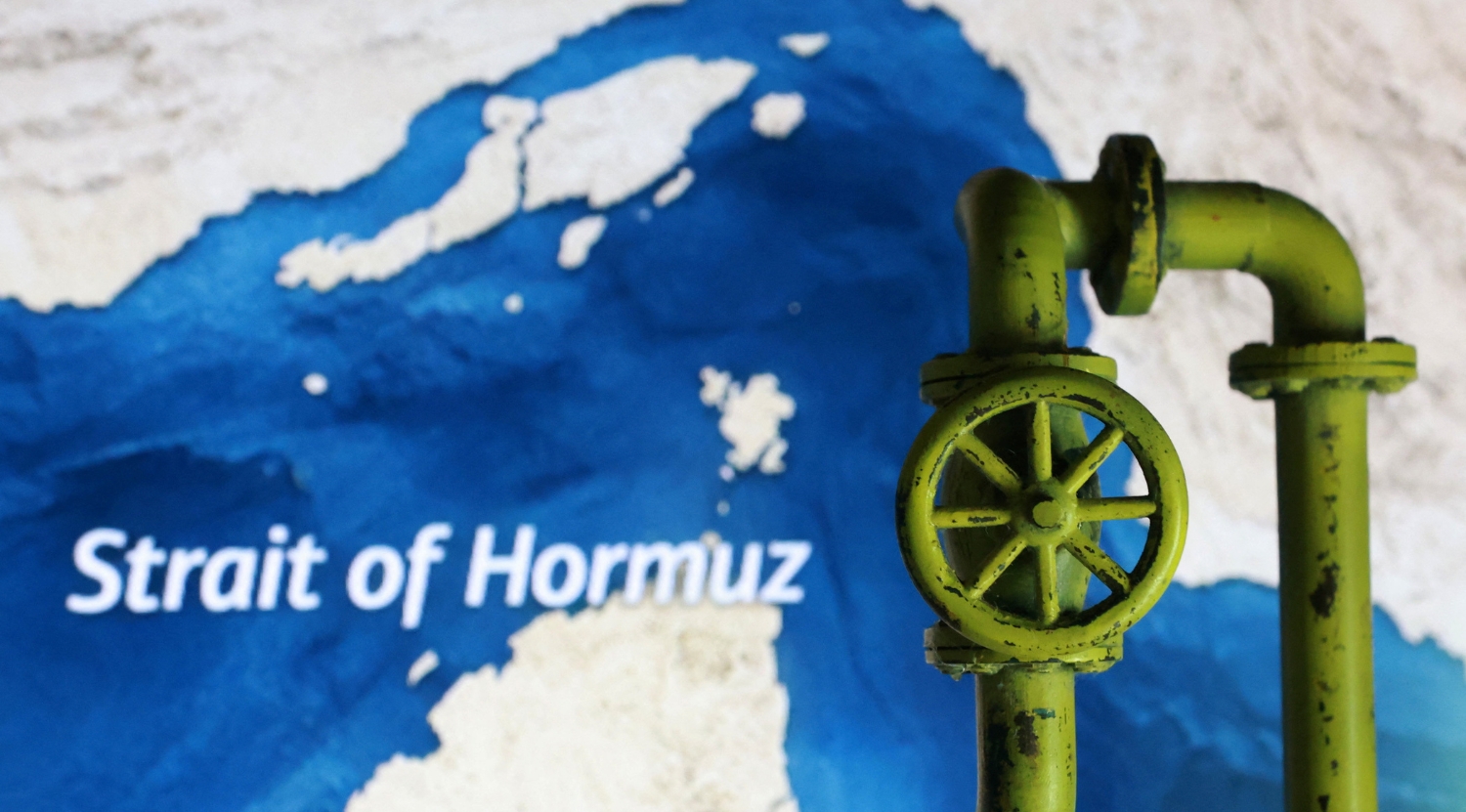 Dado Ruvic / Reuters / Forum
The GCC before and after the outbreak of war
The Gulf Cooperation Council (GCC) states – Saudi Arabia, Bahrain, Qatar, Kuwait, Oman and the United Arab Emirates – are among the world’s largest exporters of crude oil (around 28% of global exports) and liquefied natural gas (around 20%). They also produce a range of other chemicals from these resources, such as urea, used in agriculture; sulphur, essential in the extraction of metals such as copper; and liquefied helium, used in the medical sector and to produce semiconductors. The main recipients of these raw materials are Asia and the European Union. Machinery, chemicals, transport equipment and food are, in turn, imported from the EU. Most of the military equipment on the Peninsula is sourced from the United States and Europe.
The Israeli and US attack on Iran on 28 February 2026 prompted an almost immediate retaliation by Tehran against the GCC states. The threat of Iranian air strikes forced first a complete, and then a partial, closure of airspace to passenger and cargo traffic. Above all, Iran effectively halted shipping in the Strait of Hormuz, allowing only selected vessels to pass through. This resulted in a drastic drop in traffic, from around 100 ships per day to barely a dozen, and closed the maritime route for exports and imports to countries without ports outside the Gulf basin: Kuwait, Bahrain and Qatar.
Disruptions in regional markets
The attack has served as a stress test for the Gulf economies, which were described in the December 2025 reports of the International Monetary Fund and the World Bank as crisis-resilient—that is, capable of rapidly stabilising and returning to normal functioning following severe economic shocks, such as those caused by regional destabilisation. Oil production and increasing gas production, bolstered by growing export diversification, the development of industrial policies, and investment in service sectors such as tourism and logistics, mean that even in the event of a sudden economic slowdown, these economies should quickly recoup their losses. This was demonstrated during the crisis triggered by the Covid-19 pandemic—despite a sharp decline in the GCC’s aggregate GDP of over 4.5% in 2020, its nominal GDP then grew by nearly 25% per annum over the following two years. However, the halt in shipping through the Strait of Hormuz also had a negative impact on exports of products other than oil and gas, thereby negating the advantages highlighted by experts. The first economic scenario prepared after the outbreak of the war (by the consultancy firm Oxford Economics) forecasts a slowdown in real GDP growth in the GCC in 2026 from 4.4% to 2.6%, although a strong catch-up growth is expected as early as the following year. However, these forecasts depend largely on how long the conflict lasts – a potential US shift to ground operations could mean a war lasting many years.
The suspension of exports by sea has led to difficulties in storing unsold crude. The country outside the Peninsula that has suffered the greatest losses in this area is Iraq, which has seen an 80% drop in production, but Kuwait and Saudi Arabia are facing a similar problem. The situation is particularly difficult for Qatar, whose gas infrastructure in Ras Laffan has been severely damaged. Repairs to the damaged facilities could take between 3 and 5 years, and Qatar’s LNG export capacity has been reduced by 17%. Reports of mines in the Strait of Hormuz further increase the risks associated with maritime transport and could potentially prolong the time needed to reopen the route. Only the export of services remains unaffected by the situation in the Strait—particularly digital services such as IT consulting, internet marketing, communications, and financial services. However, it is not immune to Iran’s other military actions, which are disrupting the day-to-day operations of companies in the Gulf for security reasons and worsening the region’s overall economic situation.
Capital markets have also been shaken. In the first days of the war, stock exchanges in the Gulf recorded declines. The Saudi Tadawul All Shares Index fell by 2.2% on 1 March compared to the close before the weekend of 26 February; on 2 March, the fall was 4.3% in Qatar and 1.9% in Kuwait. The UAE decided to suspend trading until 4 March. After opening, the UAE stock markets recorded drops of 4.7% in Dubai and 1.9% in Abu Dhabi. The situation in the financial sector – hitherto a key element of the Gulf economies’ diversification – has been exacerbated by Iran’s threats against regional financial institutions in retaliation for the attack on an Iranian bank.
Regional consumers are also feeling the effects of the war. Repeated missile and drone alerts are forcing residents to stay at home and dissuading them from shopping, particularly for luxury goods. Should the conflict drag on, this could trigger a decline in household consumption, whilst import disruptions will lead to accelerating inflation.
Perspectives
The Gulf states are diverting exports, where possible, to alternative routes. Saudi Arabia and the UAE have pipelines capable of pumping around 8.5 million barrels of oil per day to ports outside the Strait – Yanbu (KSA) and Fujairah (UAE). However, this volume is insufficient to fully satisfy market demand, which previously saw around 20 million barrels a day passing through the Strait of Hormuz. In the case of the Saudi port of Yanbu, exports are constrained by its limited capacity; furthermore, this also entails a risk for eastbound shipments through the Bab al-Mandab Strait, potentially within range of the Houthis, who on Saturday, 28 March, announced their involvement in the conflict and fired missiles towards Israel.
Across the region, sovereign wealth funds can play a stabilising role by investing public money in strategic investments, including abroad. In doing so, they play a significant role in reducing the Gulf states’ economies’ dependence on oil and gas exports. Emirati funds manage assets totalling $2.9 trillion, placing the UAE fourth among sovereign wealth funds (behind the US, China and Japan). By the end of 2025, the Kuwaiti fund ranked sixth (over $1 trillion). The Saudi Public Investment Fund manages assets worth over $925 billion, invested in domestic companies and international corporations such as Uber and the Indian technology firm Jio Platforms. At the same time, a significant portion of the portfolio consists of investments in mega-projects such as Neom’s The Line. The scaling back of these projects over the past few months has been a move aimed at redistributing public funds to sectors in greater need. This demonstrates that sovereign wealth funds are a flexible tool – adjusting their current investment strategies to better absorb the shock caused by the war.
An additional factor strengthening resilience to the ongoing war is the stability to date of the Gulf states’ currencies, which are pegged to the US dollar, and their substantial foreign exchange and gold reserves (although the share of gold is significantly smaller).
Regardless of the duration of the conflict, however, the Gulf states can expect a severe economic slowdown. This will primarily stem from losses in the fossil fuels sector. The destabilisation of the region will also encourage an outflow of foreign investors, deterred by the security situation and the risk of further economic shocks. Avoiding this, however, will depend on more than just how the conflict develops. Key factors will be the internal incentives that governments can offer to foreign investors – maintaining a regulatory environment favourable to international firms may mean that, even in the context of a protracted war, they will be willing to endure periods of escalation from Iran lasting several weeks. This will, however, only be possible provided that the effectiveness—and economic efficiency—of air and missile defence is maintained. Already, the ability to intercept Iranian missiles and drones is cited as the most significant factor determining decisions to remain in the Gulf for companies and expatriates. This will also be a key issue for the tourism sector, which is currently in a very difficult situation. Its recovery will depend not only on the cessation of hostilities, but also on restoring tourists’ confidence and regaining the Gulf’s reputation as a safe destination.
From a European perspective, a war in Iran has a direct impact on energy security. The EU and Poland are aware of the global consequences of Iran taking control of the Strait of Hormuz. Consequently, in the short term, it will be essential to develop a coherent response to the economic effects of the war, primarily those linked to rising fuel prices and reduced availability of products such as fertilisers. The conflict in the Persian Gulf should also serve as an impetus for the development of bilateral economic partnerships to ensure economic security through diversification. However, in the long term, the Persian Gulf – even if currently undergoing an economic slowdown triggered by the war – may still be an attractive place for investment, particularly in sectors less dependent on transport through the Strait of Hormuz, which stand the best chance of survival in a destabilised region.