The Trump-Zelensky-Putin Triangle - No Progress in Peace Talks
On 17 October, Ukrainian President Volodymyr Zelensky met with U.S. President Donald Trump at the White House. The meeting did not lead to any changes in U.S.-Ukrainian relations, to military strengthening of Ukraine, or to any progress towards a ceasefire in the ongoing war. This represents a temporary success for Russia, which has managed to delay the introduction of new U.S. sanctions, persuade Washington not to reinforce Ukraine militarily, and most likely secure another personal meeting between Vladimir Putin and Trump.
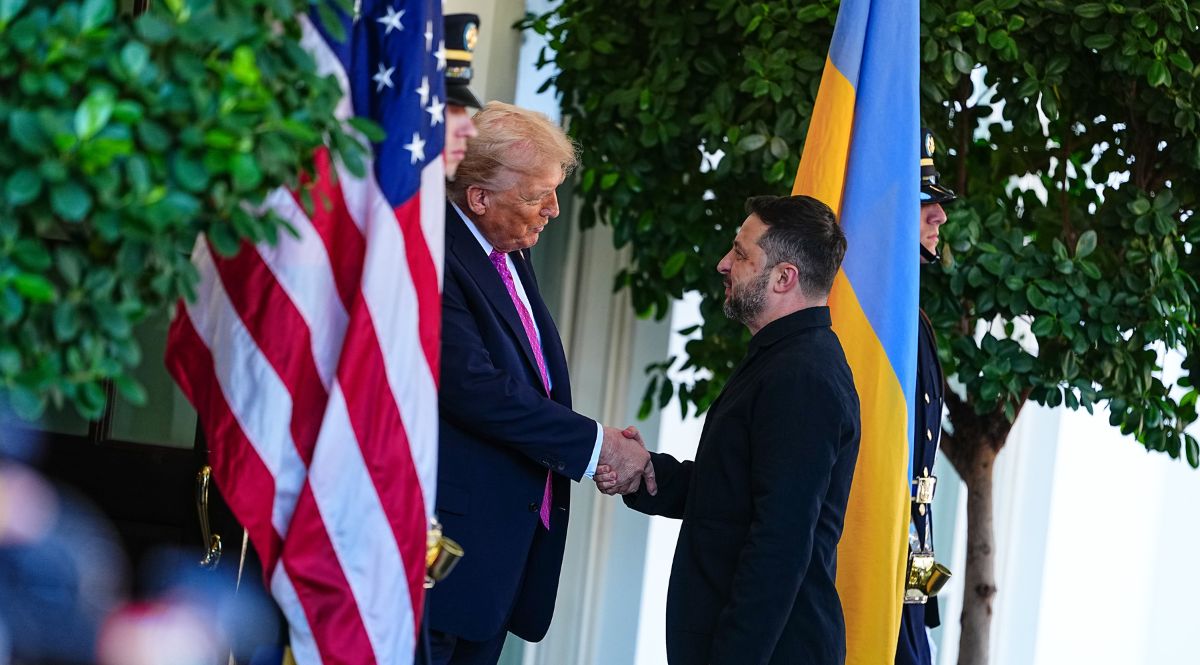 Aaron Schwartz - Pool via CNP / Zuma Press / Forum
What were the circumstances leading up to the meeting between Zelensky and Trump?
The meeting was held after efforts on the part of Ukraine following an intensification of Russian attacks on Ukraine's energy infrastructure, including a major strike on the night of 9-10 October which affected, among others, Kyiv. Earlier, signals had emerged from the U.S. about a possible delivery of Tomahawk missiles to Ukraine. However, this transfer would have had primarily symbolic significance, as the U.S. can only spare a small number, serving mainly as a strong political message to Russia and a reinforcement of Ukraine’s negotiating position. Nevertheless, the Ukrainian side expected positive results from the Trump-Zelensky talks. The New York Times reported earlier on a potential sale of several dozen U.S. Tomahawk cruise missiles to the Ukrainian army. Three days before the meeting, Trump stated that he was considering such an option. Meanwhile, U.S. Secretary of War Pete Hegseth, speaking at the Ukraine Defence Contact Group meeting in Brussels, emphasised the need to make Russia bear the costs of the war and to strengthen Ukraine’s defences.
What role did the phone conversation between Putin and Trump play?
In response to the planned U.S.-Ukrainian meeting and the positive signals regarding support for Ukraine, Putin initiated a phone call with Trump. During their 2.5-hour conversation, the Russian leader reportedly proposed an in-person meeting and suggested that Ukraine cede the part of Donbas currently under Ukrainian control in exchange for small territories in the southern Kherson and Zaporizhzhia regions occupied by Russia. Trump accepted Putin’s arguments and later announced that the two leaders would soon meet in Budapest, adding that the U.S. lacked a sufficient stock of Tomahawk missiles to sell to Ukraine.
How did the meeting between Zelensky and Trump go?
The meeting began with an open session held in a calm atmosphere. The Ukrainian delegation was well prepared, drawing lessons from the unsuccessful visit in February. Zelensky repeatedly expressed gratitude for U.S. assistance and presented potential economic benefits for the U.S., including a proposal for a €50 billion deal. In exchange for Tomahawk missiles, Ukraine would produce 10 million drones annually for the U.S. over a five-year period. According to an investigation by the Financial Times, the second, closed part of the meeting was far more tense. Trump reportedly pressured the Ukrainian president to accept Putin’s territorial claims, using the Russian leader’s own arguments. He also refused to sell Tomahawk missiles, and both sides agreed not to discuss this matter publicly. The failure of Zelensky’s mission—with the main goal to secure the purchase of the Tomahawks—constitutes, above all, a success for Putin. The Russian president once again convinced Trump of the Russian vision of ending the war, not strengthening Ukraine militarily, and not taking unfavourable measures against Russia.
What are the prospects for continued U.S. support for Ukraine and for peace talks?
After the meeting, Zelensky indicated that he did not expect the delivery of Tomahawk missiles to Ukraine in the near future but would not abandon the idea, perhaps hoping for another episode of Trump’s “impatience” with Putin. Russia’s demands—particularly Ukraine’s withdrawal from the heavily fortified parts of Donbas without a fight—are unacceptable to Kyiv, as they would pave the way for future Russian territorial gains. Although Zelensky has declared readiness for bilateral talks with Putin and trilateral discussions involving Russia and the U.S., there are no signs that such a meeting will take place soon. A potential Trump-Putin meeting in the Hungarian capital would not bring the war closer to an end but would instead serve as a propaganda victory for Russia. Hungary refuses to comply with the International Criminal Court’s arrest warrant for Putin, maintains friendly relations with Moscow, and obstructs the EU’s pro-Ukrainian policy. Therefore, Trump’s agreement to meet in Budapest is yet another signal of his dismissive attitude towards the European Union.