The European Union and Mexico relaunch their strategic partnership
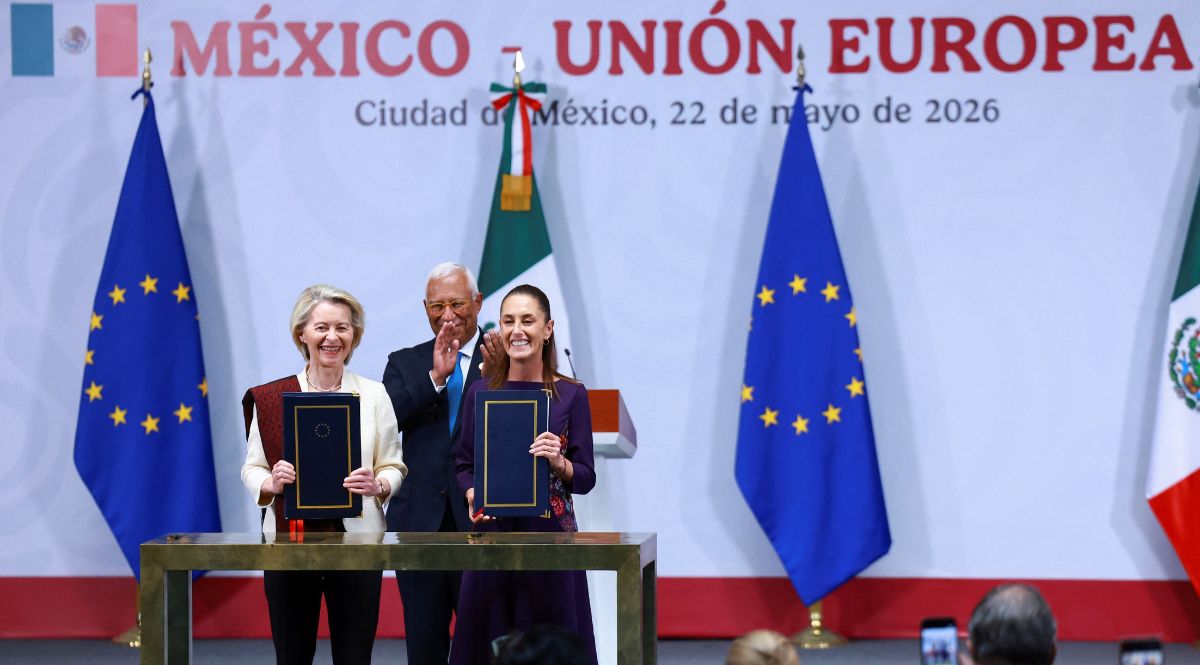
The 8th EU-Mexico Summit, held on 22 May in Mexico City—the first such meeting since 2015—aimed to renew the strategic partnership established in 2009. The main rationale was the signing of the Modernised Global Agreement (MGA). The accord will expand the mechanisms for political cooperation and broaden the scope of trade and investment liberalisation compared to the agreement in force since 2000. The policies of Donald Trump’s administration provided a significant boost for the revival of EU-Mexico relations.
 Raquel Cunha / Reuters / Forum
What is known about the context and the expectations?
Protracted negotiations over a new comprehensive agreement (talks began in 2016 but were not concluded until January 2025) were one of the reasons for the hiatus in EU-Mexico summits. Broader political differences in EU-Latin American relations, including on Venezuela and the Russia-Ukraine war, were another cause. The Trump administration’s protectionist and aggressive policies clearly spurred the revival of EU-Mexico cooperation. The summit was intended to demonstrate a model of relations based on partnership, a commitment to multilateral cooperation, and shared values, including a rules-based order, to contrast with the US approach. The comprehensive agenda for the summit included issues such as migration and the fight against organised crime, both of which are major challenges and sources of tension in Mexico’s relations with the US. The renewal of the EU-Mexico strategic partnership reflects both sides’ efforts to diversify their networks of political and economic partners and strengthen their international standing. The EU can now frame this agreement as another success in finalising trade negotiations, following the Mercosur agreement, and a further step in strengthening relations with key partners in other regions. For the Mexican government, the event was an opportunity to bolster the country’s regional position, and it may also want to use the MGA as a negotiating asset in preparations for the review of the USMCA treaty with the US and Canada, scheduled for next July. The event featured the highest level of diplomatic representation from both sides. Mexican President Claudia Scheinbaum was accompanied by numerous ministers of her government. European Commission President Ursula von der Leyen and European Council President Antonio Costa led the EU delegation.
What were the key outcomes of the summit?
The signing of the Modernised Global Agreement (MGA) and the Interim Trade Agreement (ITA) was the event’s principal achievement. The ITA replicates the MGA provisions that fall within the EU’s exclusive competence. This dual-instrument approach is intended to facilitate the swift entry into force of the renewed and extended trade and investment liberalisation rules, replacing those in effect since 2000 from the EU-Mexico Global Agreement (GA). During the summit, the parties announced cooperation through new or restored sectoral dialogues, covering such areas as public health, security and migration, energy, and human rights. Mexican Foreign Minister Roberto Velasco Álvarez and EU High Representative Kaja Kallas signed a letter of intent on conducting political and strategic dialogue on global issues, and the inaugural meeting of this format took place on 21 May. In a joint final declaration, the parties committed to convening further summits every two years, emphasising that the renewed partnership will offer a broad framework covering areas such as technological development and the fight against inequality.
What are the main provisions of the Modernised Global Agreement?
The MGA significantly broadens the scope of trade and investment liberalisation. Under the previous GA, free trade applies to categories such as industrial products and certain agri-food goods. In the new accord, mutual tariffs are abolished for nearly 99% of tariff lines, including medicines and transport equipment. Mexico has committed to removing restrictions on 95% of agricultural products that had not previously been liberalised. The agreed provisions also include the simplification of procedures and rules of origin, and the removal of both non-tariff barriers (including those affecting EU food products) and restrictions on trade in raw materials. The agreement also provides for more equal access to public procurement markets, including at the state level in Mexico, and expands access across the services sector, including transport, telecommunications, postal services and digital trade. Alongside strengthened investor protection mechanisms and an expanded list of protected regional products, the EU and Mexico have also agreed to simplify procedures for small and medium-sized enterprises and to include a review clause for certain goods. Finally, for the ITA to enter into force, it requires ratification in Mexico and a simple majority vote in the European Parliament, while the MGA must additionally be ratified by each EU Member State in accordance with national legislation.
How can Poland benefit from the revitalisation of the EU-Mexico partnership?
Mexico has long been Poland’s main export market in Latin America, and at some points was also the leading trading partner in the region. By removing non-tariff barriers and strengthening investor protection rules, the new comprehensive agreement expands opportunities for Polish businesses to engage further in Mexico. The elimination of Mexican restrictions on agri-food imports may incentivise Polish producers to target this sector, and liberalisation of car parts importation may benefit Polish automotive companies already investing in Mexico. The liberalisation of trade in services provides opportunities, for example, for companies in the digital commerce sector. The renewal of the strategic partnership between the EU and Mexico may favour more frequent high-level Polish-Mexican political contacts, and could provide impetus for efforts to implement the 2017 declaration by the Presidents of Mexico and Poland to strive for a bilateral strategic partnership.


.png)
.png)