Prime Minister Tusk's visit to India strengthens the strategic partnership with Poland
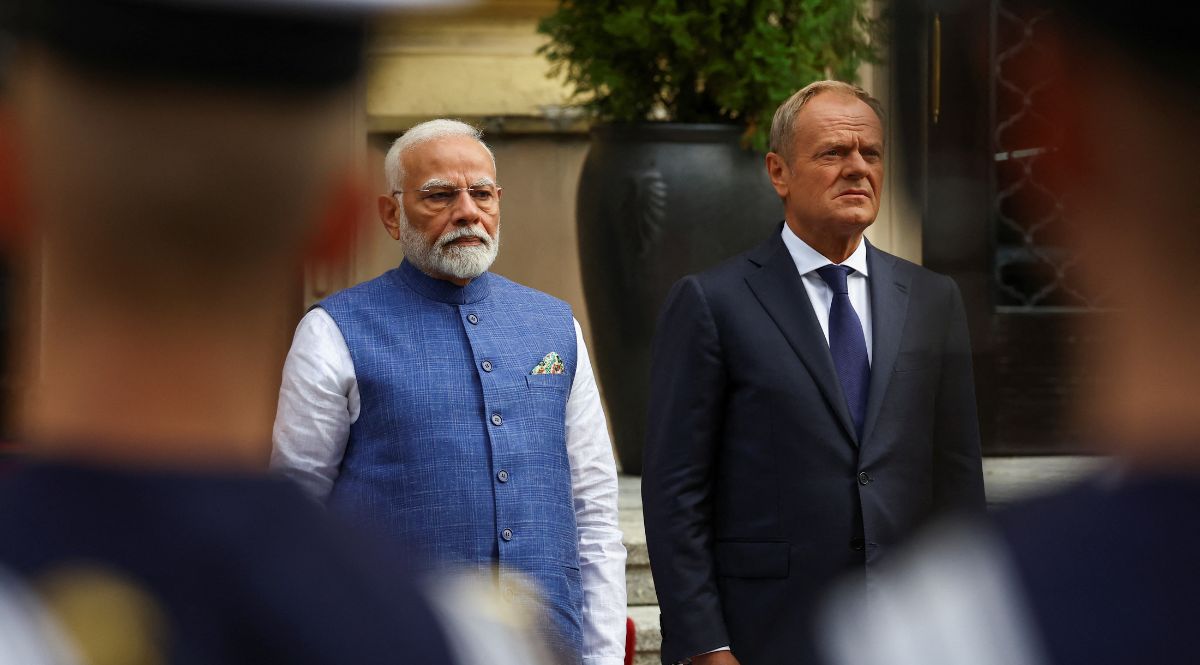
Polish Prime Minister Donald Tusk, accompanied by the Minister for Finance and the Economy Andrzej Domański and more than 80 business representatives, visited New Delhi and Bengaluru from 21 to 23 October. The visit opened up new opportunities for strategic and economic cooperation, but that will require more involvement from various state institutions and businesses to yield tangible benefits.
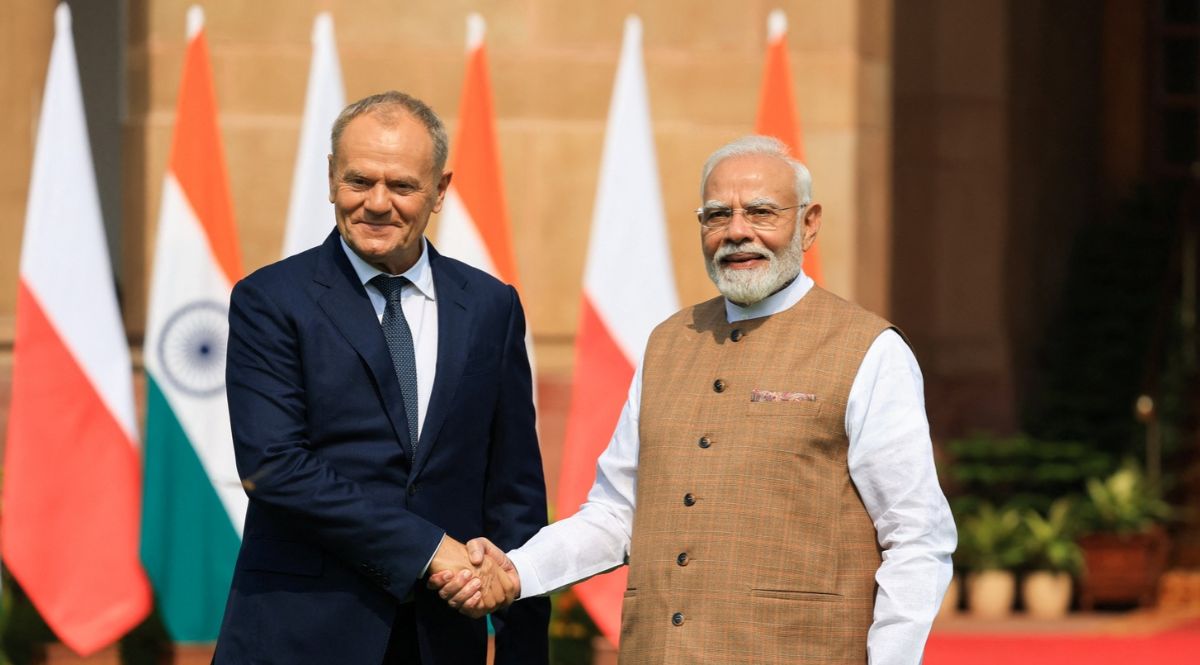 Adnan Abidi / Reuters / Forum
What are the key outcomes of the visit?
This was the first visit to India by the Polish Prime Minister in 16 years. Tusk held talks with Indian Prime Minister Narendra Modi and Foreign Minister S. Jaishankar, and took part in two business forums, one in New Delhi and the second in Bengaluru. In a joint statement, the leaders set out the goal of doubling the value of trade between the two countries by 2030 (in 2025, this stood at €6.3 billion). The leaders also announced the establishment of new dialogue mechanisms on defence industries and counter-terrorism. They expressed their support for “a comprehensive, lasting and just peace in Ukraine” and “an open, free, secure and prosperous Indo-Pacific”, and cooperation in the V4+India forum. For the first time, Poland officially endorsed India’s membership of an expanded UN Security Council. Meanwhile, at the business forum, Polish and Indian companies signed 13 cooperation agreements, including between PESA and Jupiter Wagons (to explore the production of locomotives and train cars based on Polish technology, the development of hybrid propulsion systems, and the co-production of components) and Scanway and Pixxel (to develop advanced optical instruments and joint projects in international markets). The leaders encouraged their private sectors to strengthen cooperation in the fields of space technology, artificial intelligence, minerals, critical materials, and defence, and in other areas.
What was the significance of the visit?
The aim for Poland was to strengthen its international standing and facilitate economic expansion in India. The main outcome is an improvement in mutual trust and fostering of a positive political atmosphere following years of mutual neglect and tensions surrounding the war in Ukraine. It is significant for Polish companies seeking to enter or expand on the markets of the Global South. Tusk’s visit also served to promote Poland in India, strengthening its position as one of the latter’s main partners in Central and Eastern Europe and across the EU, as well as a potential partner on global issues. This is evidenced by India’s declaration of its readiness to cooperate with Poland within the framework of the G20. At the same time, the visit promoted India in Poland, including as an attractive partner on economic matters. This may encourage more Polish companies and institutions to take an interest in India, which could become an important partner for Poland in diversifying exports, strengthening the resilience of supply chains, reducing dependence on China, and developing infrastructure links. The positive political atmosphere may also facilitate the coordination and development of joint initiatives on the global stage.
How was the conclusion of the EU-India free trade agreement negotiations important to the visit?
The visit took place at a crucial moment, a few months before the EU–India Free Trade Agreement (FTA) is due to come into force. This agreement, coupled with increased interest from Polish businesses, offers an opportunity to intensify economic cooperation and improve Poland’s trade balance, as the country imports three times more from India than it exports to that market. India is the world’s most populous country and the sixth-largest economy globally, with GDP growth this year projected by the IMF to reach 7.8%. However, it accounts for just 0.4% of Polish exports. This may change partly thanks to the FTA, which is due to be signed on 16 December this year. It will remove or reduce existing high tariffs on most goods imported into India. This will have the greatest impact on exporters of machinery and electrical equipment and processed food and fruits (e.g., apples). Exports from Poland of components and semi-finished products to other EU countries, which in turn may be exported more often to India, may also increase.
How can Poland make the most of new opportunities with India?
Key to capitalising on the outcomes of Prime Minister Tusk’s visit will be the implementation of the FTA, including the swift launch of announced mechanisms and the completion of negotiations on pending agreements. A Defence Industries Dialogue and a Dialogue on Counter-Terrorism are due to take place in the coming months. A prerequisite for facilitating cooperation in the security area is the completion of negotiations on an intergovernmental agreement on the exchange and protection of classified information. Intergovernmental agreements on cultural, scientific, and academic cooperation are awaiting swift signatures. There is a need to expand connectivity networks, including more direct flights to India by the Polish carrier LOT and the launch of a direct container shipping service. Poland should support the expansion of a network of multidimensional infrastructure links, as well as contacts between government, scientific, academic, and business institutions. It may consider establishing a government programme to support business expansion onto the Indian market and reinstate the operations of the Polish Investment and Trade Agency’s (PAIH) office in Mumbai.
What are the challenges?
Despite the positive atmosphere, the visit yielded more announcements than concrete benefits (contracts, agreements, initiatives), which highlights the need to move from declarations to regular consultations and for a long-term commitment on both sides. Even after the FTA comes into force, India will remain a challenging market, requiring businesses to have sufficient capital, perseverance, and state support. The issue of migration and visas for Indian citizens remains a contentious topic and an obstacle to the development of cooperation, one which was completely passed over during the visit. It is also possible that the entry into force of the FTA will create new points of contention, particularly from the perspective of the Polish textile, ceramics, and business services sectors, which may feel the impact of increased Indian competition on the Polish market most acutely. Poland’s diplomatic representation across South Asia, including in India (e.g., the opening of a new consulate in Bengaluru), and the allocation of more financial resources for activities in such a large country also require careful consideration. It should also be borne in mind that India has a different perspective from Poland on many global issues, including relations with Russia and stance on the war in Ukraine, which may return as a source of tension in bilateral relations.