Montenegro has closed most of the chapters in its EU accession negotiations
Montenegro, the most advanced candidate for European Union membership, has closed 18 out of 33 negotiation chapters, having finalised talks on 2 of them in July 2026. However, the pace of negotiations suggests that the government’s target of securing accession in 2028, following the planned conclusion of talks with the EU in 2026, could face delays. Apart from unresolved issues concerning the rule of law, the ratification of the accession treaty by Member States – particularly in France – may prove to be a challenge on Montenegro’s path to the Union. Another round of EU enlargement, more than a decade and a half after the previous one, would be beneficial for Poland, which supports this policy in both the Balkans and the East.
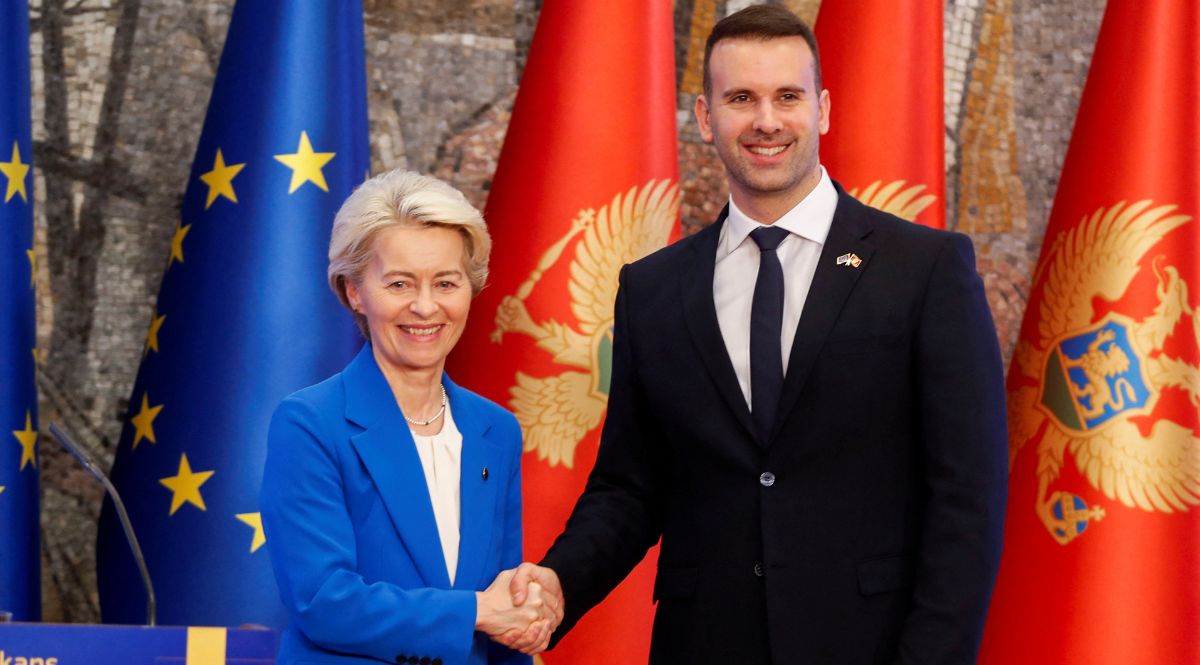 Stevo Vasiljevic / Reuters / Forum
The pace of accession negotiations
Montenegro has been negotiating EU membership for longer than any other country that has joined the Union to date. It was granted candidate status in mid-2010, four years after regaining independence, and began accession talks in mid-2012. By comparison, Croatia spent just under six years negotiating its membership and took a further two years for accession procedures—including ratification of the treaty by the Member States—before joining the EU in mid-2013.
The initial successes in the early years of Montenegrin negotiations, which proceeded at a pace similar to that of Croatia, contrasted with the European Commission’s (EC) subsequent assessments regarding the reforms needed to advance talks in specific areas. The most problematic issues were identified as insufficient rule of law (covered by chapters 23 and 24), in particular the inadequate fight against organised crime and corruption—which was also widespread at high political levels—and, over time, weak administrative capacities. Non-governmental organisations, in turn, attributed these shortcomings to the ossification of the Montenegrin political scene, where Milo Đukanović’s Democratic Party of Socialists (DPS) had ruled for decades and Đukanović himself served as president (2018–2023) and a multiple-term prime minister (2012–2016 and 2008–2010; from 1991 to 2006, he held the office of prime minister or president of Montenegro almost continuously, first within Yugoslavia and later within the State Union of Serbia and Montenegro).
The fundamental political shift following the 2020 parliamentary elections in Montenegro, when the DPS lost power, did not immediately lead to an acceleration of reforms. Moreover, political disputes, among other factors, paralysed key institutions (parliament, the Constitutional Court), undermining the stability of subsequent governments (the cabinets of Zdravko Krivokapić and Dritan Abazović each collapsed after around a year and a half) and deepening the political crisis. The formation of Milojko Spajić’s government following the snap elections in 2023 stabilised the political and institutional situation, and facilitated the implementation of reforms. The EC recognised progress in his government’s adoption of, among other documents, the Strategy for the Fight Against Corruption for 2024–2028 and the Judicial Reform Strategy for 2024–2027, as well as new legislation, including on the prevention of corruption, on the Judicial Council and judges, the State Prosecutor’s Office and the Special State Prosecutor’s Office.
The Commission’s positive interim assessment (IBAR) from mid-2024 regarding Montenegro’s efforts to improve the rule of law paved the way for the country to start finalising the negotiation chapters. Of the 18 out of 33 chapters that had been provisionally closed, it has finalised 6 in 2026, the same number as in 2025. These are mainly from the clusters that cover the internal market and competitiveness, but also some other, generally more difficult chapters on public procurement, financial control, fisheries and agriculture.
The reforms are bolstered by the support of the majority of Montenegrin citizens for EU accession. In recent years, the support level has remained at around 60–80%. According to the constitution, the accession treaty is to be ratified by parliament. No parliamentary political party has questioned the goal of EU membership or called for a referendum on the matter.
Key challenges
The greatest challenge for Montenegro on its path to the EU remains the further strengthening of the judiciary and fundamental rights, as well as justice, freedom and security, which the Union regards as fundamental conditions for accession—negotiations are opened in these areas first and are closed last. The EC’s annual report from late 2025—whilst generally noting significant progress compared with previous years—points to the continued excessive level of corruption and organised crime, as well as insufficient effectiveness in implementing reforms, including multi-year plans, to combat these phenomena. Ensuring the administrative capacity necessary in this regard remains the second major challenge for Montenegro.
On the EU’s side, ratification of the accession treaty in France may pose a particular challenge. Following Croatia’s accession, French constitutional reforms now apply for the first time, and require that approval must either be given by citizens in a referendum or by both houses of parliament with a three-fifths majority. Meanwhile, though Montenegro's accession is supported by the liberal President Emmanuel Macron, who is due to complete his second term in 2027 without a re-election option, he is unable to guarantee the ratification process’s success, as he indicated during his first official visit to Podgorica in June this year. This is because opposition to the admission of new members comes not only from the far-right National Rally—the largest party in the National Assembly, whose presidential candidate, Marine Le Pen, is leading in the polls—but also from certain other opposition groups (such as the left-wing France Unbowed, the third-largest force in parliament). Furthermore, parties may take an ambiguous or shifting stance based on the fact that France’s decision in 2020 to stop blocking enlargement—following the adoption of a new methodology for the process—did not lead to the promised reform to prepare the EU for the admission of new members. This argument was even put forward by the centre-right Republicans, who support the government. On the other hand, a referendum would have little chance of success, given that only 35% of the public supports enlargement (the lowest figure in the EU) whilst 54% oppose it.
Montenegro’s neighbourly dispute with Croatia may also hinder its accession. Since December 2024, Croatia has been blocking the closure of chapter 31, which covers the EU’s common foreign, security and defence policy, while setting out ten conditions that Montenegro must fulfil prior to accession. These include the delimitation of the maritime border, the resolution of minority rights issues, historical matters and the settlement of property left over from the break-up of Yugoslavia. Despite Montenegro’s expressed willingness to make concessions and ongoing consultations between the two countries, in July 2026, Croatia also blocked the closure of the technically ready chapter 14 (transport policy), citing economic concerns over competition from cheaper Montenegrin transport companies.
A new accession treaty
The EU plans to include safeguards in Montenegro’s accession treaty to prevent any backsliding in the rule of law following the grant of membership. Germany, France, the Netherlands, Belgium and Luxembourg are strong proponents of this measure, and such an approach is reflected in the working group set up in April this year to prepare Montenegro’s accession treaty. Drawing on previous experiences, including breaches of the rule of law in Hungary and the limited effectiveness of the monitoring mechanisms implemented for Romania and Bulgaria, the EU wishes to introduce measures that would suspend certain benefits of membership (e.g. access to funds, programmes or internal market rights) should a new Member State breach democratic standards following accession. Montenegro does not object to this change, but it does expect any breaches to be assessed according to established, objective criteria. The accession treaty with the country is intended to serve as a model for future enlargements.
Conclusions
Despite Montenegro’s recent progress in closing chapters, fundamental issues require further reforms, which may delay the government’s targets regarding the country’s accession to the EU. If the current targets are to be met, both an acceleration of reforms and their effective implementation will be required, particularly in the area of the rule of law. Montenegro’s strength, on the other hand, lies in the pro-EU consensus within the political class and society. This is likely to continue even if there is a change of government following the 2027 parliamentary elections.
On the EU side, the key to Montenegro’s accession will be the ratification of the treaty in the Member States, something that may pose a particular challenge in France. Any potential blocking of accession at the final stage would deepen the enlargement crisis. Some French political parties—and presumably a section of the public—might be persuaded to support this policy by the fulfilment of a promise to reform the EU, but it may be difficult to convince those whose support base is built on opposition to the Union.
Montenegro’s smooth accession would help the EU to overcome the long-standing enlargement crisis. This would send a clear signal to other countries in the region and to its eastern partners that membership remains an achievable goal. For Poland, which has consistently supported this policy, it would represent the fulfilment of the objective of expanding the area of security, stability and prosperity in Europe.