Iliana Yotova wins the presidential election in Bulgaria
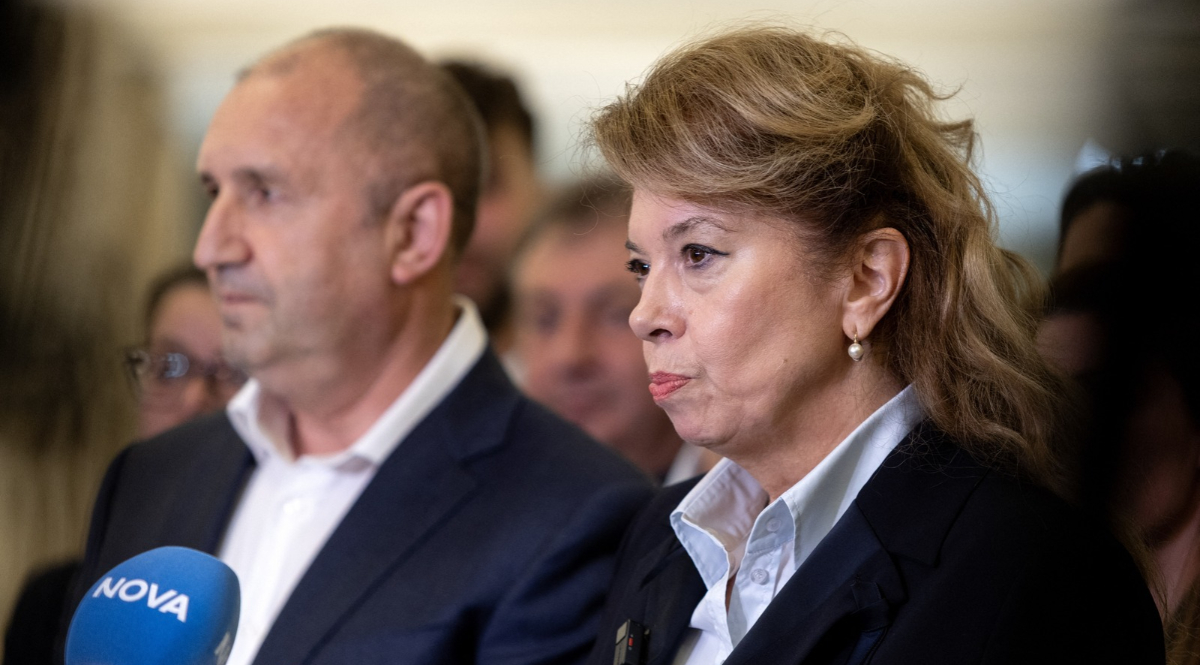
On 1 November 2026, Iliana Yotova won the second round of the presidential election in Bulgaria. She has been president since January, having previously served for almost two terms as vice-president under Rumen Radev, the current prime minister—until his resignation. Her election gives Radev’s cabinet the comfort to govern and facilitates a conciliatory policy towards Russia, thereby undermining the cohesion of the EU and NATO.
 AA/ABACA / Abaca Press / Forum
What are the election results and what determined them?
Yotova (running with Kiril Valchev as a candidate for vice-president)—supported by Radev’s Progressive Bulgaria party (PB) and her own extra-parliamentary Bulgarian Socialist Party—secured 57.6% of the vote. Andrey Gyurov, an independent candidate and pro-Euro-Atlantic former prime minister of a caretaker government, supported by the reformist parties We Continue the Change (PP) and Democratic Bulgaria (DB), received 39.5% of the vote. Nearly 3% of voters marked the “I do not support anyone” option. Yotova won in 22 out of 25 constituencies, whilst Gyurov secured a majority in only two (out of three) constituencies in Sofia and in the predominantly Turkish-populated Kardzhali. He also won in the constituency for voters residing outside Bulgaria. Turnout was very low at 28.6%, compared with 50.7% in the April 2026 parliamentary elections, which secured a clear majority for Radev’s party.
What secured Yotova’s victory?
After the first round, Yotova had a lead of just three percentage points over Gyurov. Her ultimate success was determined by the supporters of pro-Russian candidates who did not enter the second round—Kostadin Kostadinov of the Revival party (12.5% of the vote), Radostin Vasilev of the Morality, Unity, Honour (Sword party, 4.6%) and Ivelin Mihaylov of the Greatness party (3.8%). The breakdown of the coalition PP-DB, which formed separate parliamentary groups in the National Assembly following the April election, had a demoralising effect on potential Gyurov voters. Gyurov did not receive the support of the Euro-Atlantic parties—Citizens for the European Development of Bulgaria (GERB), led by long-serving Prime Minister Boyko Borisov, and the Movement for Rights and Freedoms, led by the oligarch Delyan Peevski and representing the Turkish minority—both of which are embroiled in corruption scandals and did not field their own candidates. The presidential election also served as a referendum on support for Radev’s cabinet—disillusioned with his rule, around two-thirds of PB supporters did not take part in the vote.
How will Yotova’s election affect Radev’s rule?
The election of Yotova, who has worked closely with Radev, ensures that his government retains its ease of action. Although the President of Bulgaria is largely a ceremonial role with limited powers, Radev, drawing on his own charisma, has strengthened the position, making it the central point for criticism of the GERB and PP-DB governments. Formally, the President performs mainly ceremonial functions; has no legislative initiative (apart from initiating constitutional amendments), and his veto can be overruled by the National Assembly (comprising 240 members) by a majority of 221 votes. The President may nominate a candidate for Prime Minister at his own discretion, but only after two consecutive candidates proposed by the strongest political groups of the National Assembly have failed to secure a majority. The 2023 constitutional reform restricted the President’s full freedom to appoint a technical Prime Minister, limiting his choice exclusively to a shortlist of designated state officials. The Vice-President has no inherent powers; the President may delegate the right of pardon, the granting of asylum, the conferral of citizenship and the appointment of certain officials.
How will Yotova’s election affect Bulgarian foreign policy?
The President participates in the creation of Bulgaria’s foreign and defence policy—representing the country abroad and chairing the Consultative Council for National Security. However, the government remains the main driving force in these areas, and the Prime Minister attends both NATO and European Council summits. Yotova’s election ensures full consistency in Bulgaria’s international actions, as her views on key issues are close to Radev’s position. Both emphasise Bulgaria’s membership of the EU and NATO, its alliance with the US, and the need to modernise the Bulgarian armed forces. They also refrain from unequivocally criticising Russia’s aggressive actions and refuse to identify it as the perpetrator of the October attacks on vessels in Bulgaria’s exclusive economic zone—citing the ongoing investigation. They advocate resuming political dialogue with Russia and remain reluctant to provide military support to Ukraine, seeing it as merely prolonging the war and resulting in further casualties. They have also criticised the EU’s sanctions policy towards Russia, questioned its effectiveness and proposed easing it in the context of peace negotiations—though Bulgaria is not prepared to veto the extension of sanctions on its own. Both are also in favour of maintaining the current policy towards North Macedonia, with Bulgaria successfully ensuring that the need for concessions on issues of identity and history was included in the text of North Macedonia’s accession negotiations with the European Union.