German-Turkish Cooperation Adjusts to Difficult Realities
German criticism of the state of democracy and respect for human rights in Türkiye have translated into cool bilateral relations between the two countries. However, as a result of a meeting between German President Frank-Walter Steinmeier and Turkish President Recep Tayyip Erdoğan in April, there may be progress in bilateral relations in economic, security, and local government diplomacy, among other areas. Cooperation in other fields will be hampered by the two countries' distancing positions on Israel’s war against Hamas.
 Jutta Prechtel / ddp images / Forum
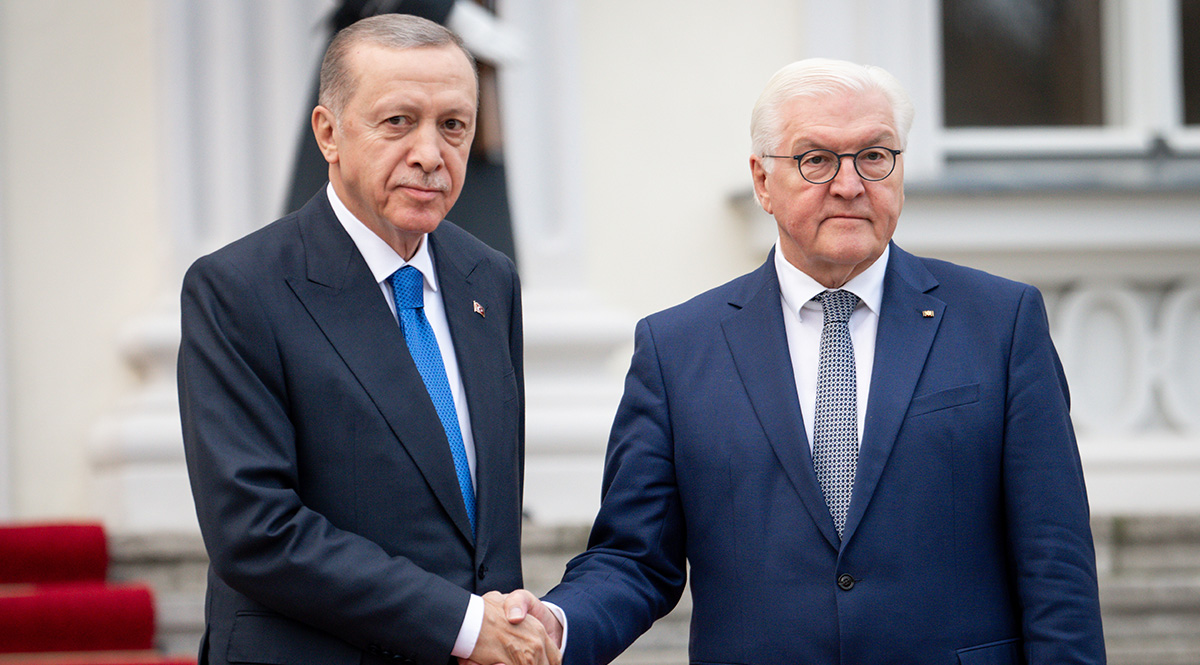
On 22-25 April, Steinmeier was on a three-day official visit to Türkiye to mark the 100th anniversary of the establishment of relations between the two countries. It was the German president’s first visit to Türkiye in 10 years. Erdoğan was last in Germany in November 2023 when he met with German Chancellor Olaf Scholz. The presidents’ meeting took place shortly after local elections in Türkiye, which resulted in a victory for the opposition. On the first day of his stay, Steinmeier was welcomed by Istanbul Mayor Ekrem İmamoğlu of the opposition Republican People’s Party (CHP). The agenda for the visit also included meetings with civil society representatives, and other CHP politicians—Ankara Mayor Mansur Yavaş and party chairman Özgür Özelem. Only at the end of his stay in Türkiye did Steinmeier meet with Erdoğan.
Difficult Bilateral Relations
The most important factor shaping bilateral relations is the presence in Germany of more than 3 million Turkish expatriates and their descendants, resulting in the transfer of internal conflicts in Türkiye to Germany. There are clashes involving members of the Turkish diaspora with representatives of the Kurdish community sympathetic to the Kurdistan Workers’ Party (PKK), considered a terrorist organisation by Türkiye, the EU, and the U.S., which has had a negative impact on Germany’s internal security. In turn, the Turkish expatriate community has complained of anti-Muslim and anti-Turkish threats and violence. This phenomenon particularly intensified after last year’s Hamas attack on Israel.
The support for Erdoğan among the Turkish diaspora in Germany is higher than among Turks living in Türkiye (during last year’s presidential election, Erdoğan won 67% of the diaspora vote in Germany in the second round). This raises concerns in Germany about the extent to which this group identifies with values such as democracy and human rights. Germany has a negative view of Erdoğan’s rule in terms of respect for civil rights and freedoms, and is critical of Türkiye’s failure to respect European Court of Human Rights rulings and its withdrawal from the Istanbul Convention for the Protection of Women and Children from Sexual and Domestic Violence.
Although Türkiye is more open to cooperation with Russia than Germany, both countries support Ukraine’s war efforts financially and with arms supplies. A factor exacerbating the disagreements between the countries is their differing positions on the Israeli military’s actions in Gaza. Germany considers Hamas a terrorist organisation and points out that Israel has the right to self-defence, while the Turkish president believes Israel is guilty of genocide in Gaza and describes Hamas as a national liberation organisation. During the visit, Steinmeier was protested by pro-Palestinian activists, who chanted slogans such as, “Germans are murderers, guilty of genocide”. Erdoğan in a press conference after the meeting refrained from criticising Germany for its support of Israel during his visit to Berlin last year.
The will to improve relations is in turn influenced by the importance of mutual trade relations for the economies of both countries. Last year, Germany was the first and most important destination for Turkish exports, with an advantage of $6.2 billion over second-place the United States.
According to the German Federal Statistical Office, the total value of trade between the two countries was €2,023.55 billion (compared to €51.6 billion in 2022). Türkiye ranks 14th on the list of Germany’s top trading partners, ahead of Sweden and Japan, among others. According to data from the German Chamber of Foreign Trade (AHK), German companies invested about €11.5 billion in Türkiye between 2002 and 2022.
European and Transatlantic Dimensions
Germany has played a key role in shaping relations with the EU since the 1990s. During Chancellor Angela Merkel’s tenure, Türkiye's accession process stalled, Turkish-EU relations took on a transactional character, and issues of democracy and respect for human rights played only a secondary role. Chancellor Scholz’s government is emphasising to a greater extent the need for Türkiye to return to respecting human rights, including women’s rights, as well as democratising the political system. However, due to the social ties between the two countries and Türkiye’s role as an ally in NATO and a state that restrains migration to Europe, the German authorities are not inclined to act more forcefully.
Although Germany takes a negative stance towards Türkiye’s EU membership due to the regression of democracy in the country, the degree of corruption, and the difficult economic situation, it supports Türkiye's continued dialogue with the Community. The best example of the pragmatic face of cooperation is the 2016 migration agreement, which the Turkish public is dissatisfied with because it views the agreement as degrading their country into a storage facility for refugees. In contrast, from the point of view of Germany, facing the largest influx of irregular migrants in a decade, Türkiye’s role in reducing migration pressure on Germany and the EU remains crucial.
Germany also supports cooperation with Türkiye in the field of hydrogen energy. As part of an EU project, the production of “green hydrogen” for Türkiye’s energy transition, as well as that of EU countries, is to be developed on the Marmara Sea coast. In October 2022, the governments of Germany and Türkiye signed a letter of intent to jointly develop the production and export of this fuel.
Turkish-EU relations are also affected by the issue of modernising the customs union and visa liberalisation, with the Turkish side arguing that visa restrictions for entrepreneurs make it difficult to develop business relations in Germany. The modernisation of the customs union through digitisation and simplification of procedures is also advocated by associations representing German business interests.
The Turkish government is demanding the lifting of restrictions on its defence sector. Turkish policymakers are seeking the withdrawal of a veto by Germany, which is a co-producer of Eurofighter Typhoon fighter jets, so that it can purchase 40 planes to diversify Türkiye’s air force, which mostly consists of U.S.-made F-16 fighters. In a positive sign of cooperation in the security sphere, Türkiye has been included in Germany’s Sky Shield Initiative (ESSI). The project was established after the Russian full-scale invasion of Ukraine and is an integrated air and missile defence system using platforms made in Europe, as well as America and Israel.
Germany has backed Greece in the Turkish-Greek territorial disputes in the Mediterranean, stressing the principle of border inviolability. At the same time, Chancellor Scholz’s government, wishing to avoid open conflict in the Mediterranean that could weaken NATO, has taken on the role of unofficial intermediary between Greece and Türkiye.
Conclusions and Outlook
Despite political divergences, representatives of the German side, realize the pragmatic dimension of bilateral relations and take into account that the EU and NATO need Türkiye due to its geographical location and military potential. Türkiye also plays an important role in stopping irregular migration to the EU, and this topic is a key one for German politicians.
Potential fields for German-Turkish cooperation, in addition to diaspora issues and cultural and youth exchange projects, remain trade relations, the development of “green hydrogen,” and security and defence cooperation. Turkey is part of ESSI, and the project could be part of the European Defence Initiative, which French President Emanuel Macron is actively advocating. Steinmeier’s visit and meetings with representatives of the Turkish opposition demonstrated Germany’s support for the democratisation process in Türkiye, which could translate into financial support for opposition local governments. With the opposition taking power in Türkiye, the new authorities will expect support from the German government in breaking the accession impasse in Türkiye’s relations with the EU, as well as economic assistance. However, such changes are likely to be possible only after the presidential elections in 2028. Until then, relations between the two countries will be mainly transactional.

.jpg)