GCC Countries, Seeking Food Security, Eye Agricultural Investments
The growing consumption of food in the Gulf states is leading to the acquisition of foreign farmlands. This practice increases the Gulf states’ influence in African countries and the European neighbourhood. The competitiveness of their agricultural sector is also growing in relation to the less innovative European agriculture thanks to the development of technologies responding to difficult climatic conditions.
 Jan Richard Heinicke/ Laif/ FORUM
Dynamic population growth, the effects of climate change, and the destabilisation of supply chains resulting from the COVID-19 pandemic and the Russian aggression against Ukraine have forced Gulf Cooperation Council (GCC) countries to increase their food security, especially in terms of resilience to external crises. In September, Saudi Arabia’s Minister of Environment, Water and Agriculture Abd al-Rahman al-Fadhli, announced that the kingdom would spend around $25 billion for the development of local food production. From 2017 to 2021, Qatar’s food production investments increased by 69%. The UAE, in turn, has been implementing its National Food Security Strategy since 2018, which assumes increasing the production of strategic food products by 100,000 tonnes by 2051. However, the unfavourable conditions—high temperatures, limited access to water, and poor soil quality—contributed to the search for solutions involving the acquisition of foreign arable lands and innovative agricultural technologies.
Element of Transformation
The GCC countries combine activities for greater food security with their economies’ diversification. According to their development strategies, the agricultural sector and the food industry are to increase the percentage of citizens employed in private enterprises and relieve the state sector, where most of them work.
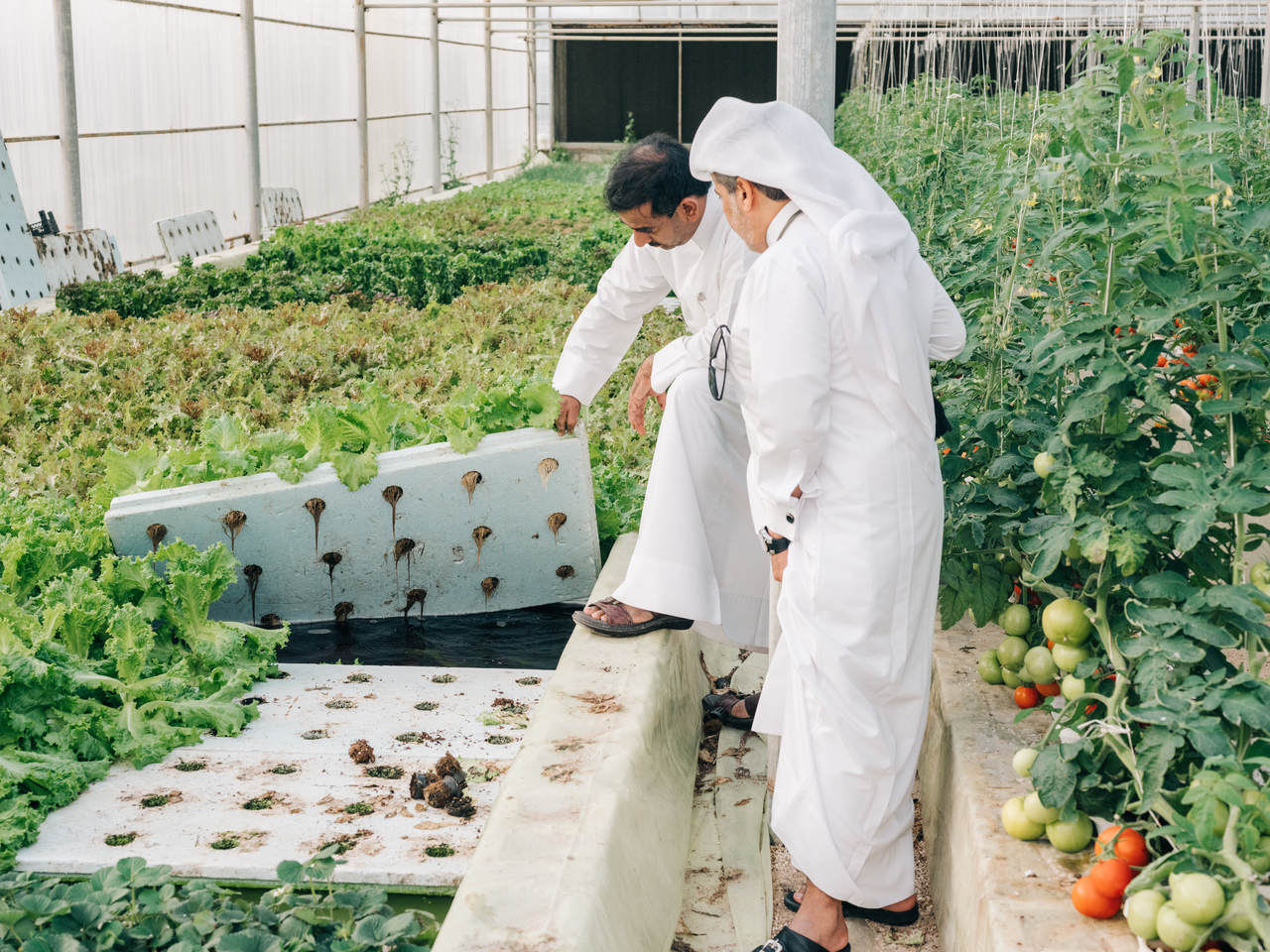
Growing demand and low resilience to crises, first revealed by the financial crisis in 2008, and then by the COVID-19 pandemic, influenced decisions to increase food self-sufficiency in GCC countries. Its key element is the development of cultivation techniques that allow the lowest possible use of land and water. In September 2020, the Abu Dhabi Investment Bureau, a governmental institution supporting entrepreneurs, invested $100 million in four startups in the agrotech industry. One of them, AeroFarms, this year opened in Abu Dhabi the largest vertical farm (which requires less land and water than traditional practices) in the world. In May last year, Food Tech Valley, which includes laboratories and an intelligent food logistics centre, was inaugurated in Dubai. In 2021, the Qatari Investment Office supported the Dutch startup Infarm, which deals with vertical farming, with $200 million. In the same year, the principality launched a national agricultural project focusing on aquaponics (a system that combines aquatic animal husbandry with plant cultivation). The value of the domestic greenhouse industry is expected to increase by 14.5% by 2027. Cooperation in the agrotechnical industry is also an important element in normalising the relations between Bahrain and the UAE with Israel and strengthening relations with India (i.e., within the I2U2 group).
The demand for agricultural products is also influenced by the development of the meat and processing industries—forecasts assume that the cumulative annual growth rate of the dairy market in the GCC countries will reach 6.7% between 2022 and 2027. This will allow the GCC countries to strengthen their position in the regional economy. For example, Saudi firm Al-Marai, which has one of the world’s largest herds of high-quality dairy cows, invests in the production of dairy products. The excess production in 2014-2019 in Saudi Arabia made it possible to increase exports directed mainly to other countries in the Middle East. Since the 2000s, the presence of the Gulf food industry in the Middle East and North Africa has also been growing. Brands such as the Saudi Savola or Americana originating from Kuwait, which in 2020 had 1,800 restaurants in 2020, are increasingly popular.
Foreign Arable Lands
For the development of the agricultural sector and the food industry of the GCC, it is necessary to purchase and lease foreign arable lands. These processes are also part of the efforts to increase the political and economic integration of the Horn of Africa countries with the Middle East.
The impetus for taking over foreign farmland was the sharp rise in food prices in the wake of the 2008 financial crisis and the depletion of groundwater resources in an attempt to create crops to cover internal needs. The abandonment of these plans, along with the development of dairy production companies, contributed to an increase in demand not only for food for residents but also for animal feed. This also increased the importance of the GCC countries as food importers—in 2017, the total value of their food imports was greater than that of all BRICS countries except China.
The land in the Nile basin (and to a lesser extent, in Eastern Europe, the U.S., and Australia) is particularly attractive to Arab investors. First due to their geographic and political proximity, and second, because African countries account for around 60% of the world’s uncultivated farmland and only use 2% of the renewable water resources (the world average is 5%). Only partial data on these investments are available, although the scale of the phenomenon is visible. According to the independent organisation Land Matrix, which monitors transactions related to land, UAE signed at least 42 contracts for the purchase and lease of land in other countries with a total area of 2.206 million ha; 31 agreements have been concluded with African countries, 30 of which concern food production. Land Matrix also published data on 35 contracts concluded by Saudi Arabia, 25 of which were with African countries, including 11 with Ethiopia and 8 with Sudan. Saudi Arabia also has at least 8 investments in Ukraine and the UAE has 2 in Romania and 3 in Serbia.
Contracts can be used to strengthen the political influence of the Gulf states, especially with the authorities of Nile basin states, for example, through ties between Saudi/Emirati companies taking over foreign land and local elites. Although GCC countries’ investments in agriculture create jobs—for example, between 2000 and 2017 around 300,000 work places were created in Ethiopia—many of the arable land contracts that have been concluded bear the hallmarks of criminal extortion. These transactions are concluded in a confidential manner and are often associated with corruption and the unlawful taking of land from its owners. According to data from 2012, out of 219 appropriations from 24 countries, 45 were carried out by companies from the GCC countries. Also controversial is that the lands taken over by Arab monarchies (but also by European and U.S. companies) are located in countries that face hunger and difficulties with access to water on their own. In 2016, this practice led to mass protests against the actions of the government and foreign investors in Sudan during which about 100 people were killed.
Conclusions
Investments in agriculture are part of the transformation of the GCC economies. Innovative solutions increase the share of food processing in the GDP of the Council countries, and at the same time create the potential for future exports of knowledge and technologies, which become necessary in the face of climate change. Cooperation in this area will be particularly important for relations with other countries of the Middle East and North Africa, which face similar difficulties with food production.
The actions of the GCC countries are aimed not only at increasing food security but also at strengthening their role in the global food trade. The high value of food imports makes them more important partners for such exporters of food products as African countries but also parts of Eastern Europe and the Balkans, where they locate their investments. These, in turn, enable the development of Arab food corporations as well as domestic animal processing and breeding, which allows for an increase in exports on a regional scale. These actions fit into the narrative of a multipolar world order promoted by the rulers of the GCC countries, especially in the context of the war in Ukraine and their avoiding taking sides.
It would be beneficial for the EU to intensify cooperation in the agricultural sector within its neighbourhood, discouraging the sale and lease of land to governments potentially interested in undermining the position of democracies in the world. To effectively compete with the expansionist policy of the GCC countries, the EU should more actively support the modernisation of agriculture in its neighbourhood and in the countries of the Global South, reducing its environmental costs. At the same time, counteracting land takeovers by GCC countries also will be beneficial for European exporters. European agricultural products account for a significant proportion of food imported to GCC countries (e.g., around 90% of the wheat imported to Saudi Arabia in 2020), and the use of foreign land may reduce the demand for it.



.jpg)