France's Reaction to Russia's Invasion of Ukraine
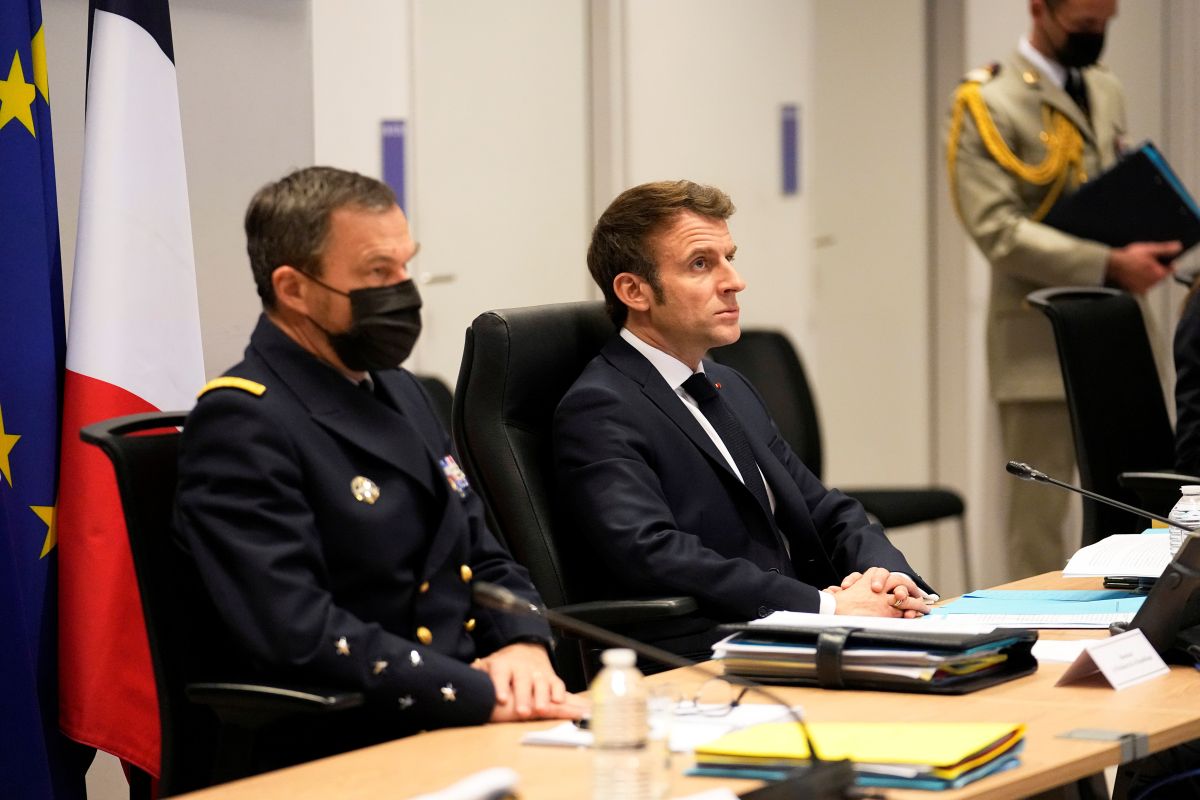
President Emmanuel Macron strongly condemned Russia’s aggression against Ukraine and called on Russian President Vladimir Putin to end the military operation immediately. Macron expressed solidarity with Ukraine and announced cooperation with partners and international allies to end the war. From the beginning of the invasion, France has consistently supported the expansion of the scope of sanctions imposed on Russia. If Macron is re-elected in April, he will strive even more to build a European superpower, although with the need to coordinate actions between the EU and NATO.
 Fot. POOL/Reuters/Forum
What were the first reactions of the French authorities to the invasion?
France holds the presidency of the EU Council and so played an important role in shaping the Community’s response to Russia’s invasion of Ukraine. As one of the first EU countries to do so, it supported, among others, the disconnection of Russian banks from the SWIFT system, personal sanctions and confiscation of oligarchs’ property, and even an embargo on Russian hydrocarbons. French Economy Minister Bruno Le Maire asked the Public Finance Department to identify all movable and immovable property of representatives of the Russian elite. The French authorities also accelerated the deployment of additional troops to NATO’s Eastern Flank in Romania and Estonia (a total of around 700 soldiers, 100 air force personnel, and 4 Mirage 2000-5 fighters). Additionally, the participation of the French army in anti-aircraft defence over Poland was extended. In response to strategic threats by Putin, French Foreign Minister Jean-Yves Le Drian emphasised that NATO is a nuclear alliance, which was then repeated by the Chief of the General Staff General Thierry Burkhard. This attitude contrasts with the previous attitude towards Russia and the French authorities’ reaction now may stem from the unsuccessful negotiations before the invasion, including Putin’s false declarations during the meeting with Macron in Moscow on 12 February about no further escalation.
What diplomatic steps did France take after 24 February?
From the very first day of Russia’s attack, Macron has maintained intensive contacts with the President of Ukraine Volodymyr Zelensky and with allies from the EU and NATO. He also had two talks with Putin, during which the Russian leader was called on to cease hostilities and attacks on civilian objects, among other demands. Macron also decided to talk to Alexander Lukashenka of Belarus in order to dissuade him from taking part in any further aggressive actions against Ukraine on Russia’s behalf. The French president is in constant contact with U.S. President Joe Biden, stressing the importance of transatlantic coordination in response to Russian aggression. The foreign ministers of the Weimar Triangle met on 1 March in Łódź. The head of French diplomacy, Jean-Yves Le Drian, said that it was necessary to impose new sanctions on Belarus and place Russia in complete isolation. It should be expected that in the near future France will reiterate its proposals for strengthening defence cooperation within the EU, both in terms of joint defence industry projects and in strengthening capabilities. It is possible, however, that, more than before the outbreak of the war, the French authorities will pay attention to the need to coordinate the EU’s defence activities with the U.S.
What was the reaction of the candidates in the French presidential election to Russia’s latest aggression against Ukraine?
Although all the main candidates in the presidential election condemned Russia’s actions, the armed conflict in Ukraine did not completely result in a change in the pro-Russia views of some of Macron’s competitors. Marine Le Pen, Éric Zemmour, Jean-Luc Mélenchon, and Fabien Roussel took unclear positions. On the one hand, they called for de-escalation, but on the other, they criticize the U.S. and NATO in Central Europe. Le Pen omits the topic of sanctions against Russia and warns of the consequences for the French economy. Zemmour expressed doubts as to the advisability of accepting refugees from Ukraine. He claims that Poland should rather be financially assisted in accepting them. According to Mélenchon, France should take the lead in the process of a peaceful and diplomatic solution to the situation, while Roussel does not support France’s involvement in the conflict, but backs the confiscation of Russian elites’ property. The centre-right candidate, Valérie Pécresse, socialist Anne Hidalgo, and leader of the Greens, Yannick Jadot, backed the introduction of severe economic sanctions on Putin’s regime and isolation of Russia from the international arena. They expressed their complete solidarity with the Ukrainian people and called on European leaders to act in concert and with determination at the EU level, in alliance with the U.S.
What economic consequences of the Russian aggression are there for France?
The war in Ukraine and the sanctions against Russia will have an impact on the French economy in the long run. More than 500 French companies are active in Russia, including Renault through its subsidiary Avtovaz, Société Générale through its subsidiary Rosbank, and the Safran group, a long-term partner of the Russian aviation industry. French fuel and energy concern TotalEnergies’ partial ownership of Novatek (19.4% of shares), the second-largest gas producer in Russia after Gazprom, and in its projects Yamal LNG (20%) and Arctic LNG 2 (10% direct share) are of great importance. The company announced on 1 March that it would not finance new investments in Russia, although it has not yet decided to withdraw from current projects. The Ministry of Economy seems to support the total withdrawal of TotalEnergies from operations in Russia and will be holding talks with the group’s management to this end.
The expected increase in commodity prices, such as oil and gas, could affect food prices and weaken purchasing power. France is dependent on gas for the production of nitrogen fertilisers. In the short term, France has accumulated enough stocks of these raw materials that the sanctions do not threaten the stability of the economy. Restrictions on the import of wheat and maize from Russia and Ukraine should not pose a direct threat to France’s food security, and domestic wheat production could even benefit from this and find new markets in Africa and the Middle East.
What is the attitude of French society to the conflict?
According to a public opinion poll conducted on 1 March for media outlets BFMTV, L’Express, and SFR, the largest group of respondents support sending military equipment and humanitarian aid to Ukraine (41%). Only 33% of respondents favour imposing economic sanctions on Russia, while 17% support no response on both levels. The majority of supporters of no action are in the electorates of the far-left and the far-right (32% of Zemmour voters, 24% of Le Pen supporters, and 22% of Mélenhon backers). According to the majority of respondents, the war will not affect their vote in the elections (61%). Half believe that Macron will cope with the crisis.
The French public also expressed its opposition to Russia’s aggression through street protests. Candidates of the moderate left in the presidential election—Hidalgo, Jadot and Taubira—took part in demonstrations in Paris. The mayors of many cities (including Paris, Lyon, and Lille) offered to accept refugees from Ukraine (a Harris Interactive poll conducted in the first days of the war shows that 79% of respondents support such efforts).