China Launches the International Organisation for Mediation
China is introducing the International Organisation for Mediation (IOMed), which became operational on 29 August, as a complement to the international dispute resolution system. In practice, it is another initiative to gather countries of the Global South around China and intended to be a counterweight to international institutions they consider to be dominated by Western countries.
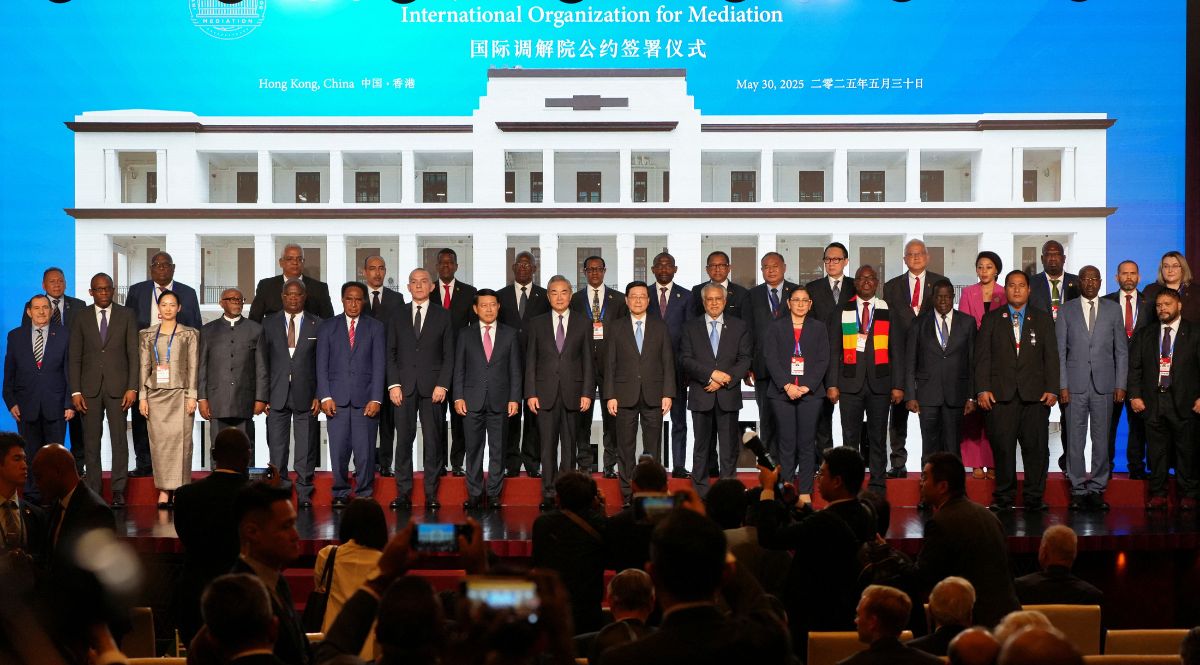 Bertha Wang / Reuters / Forum
The Creation of IOMed
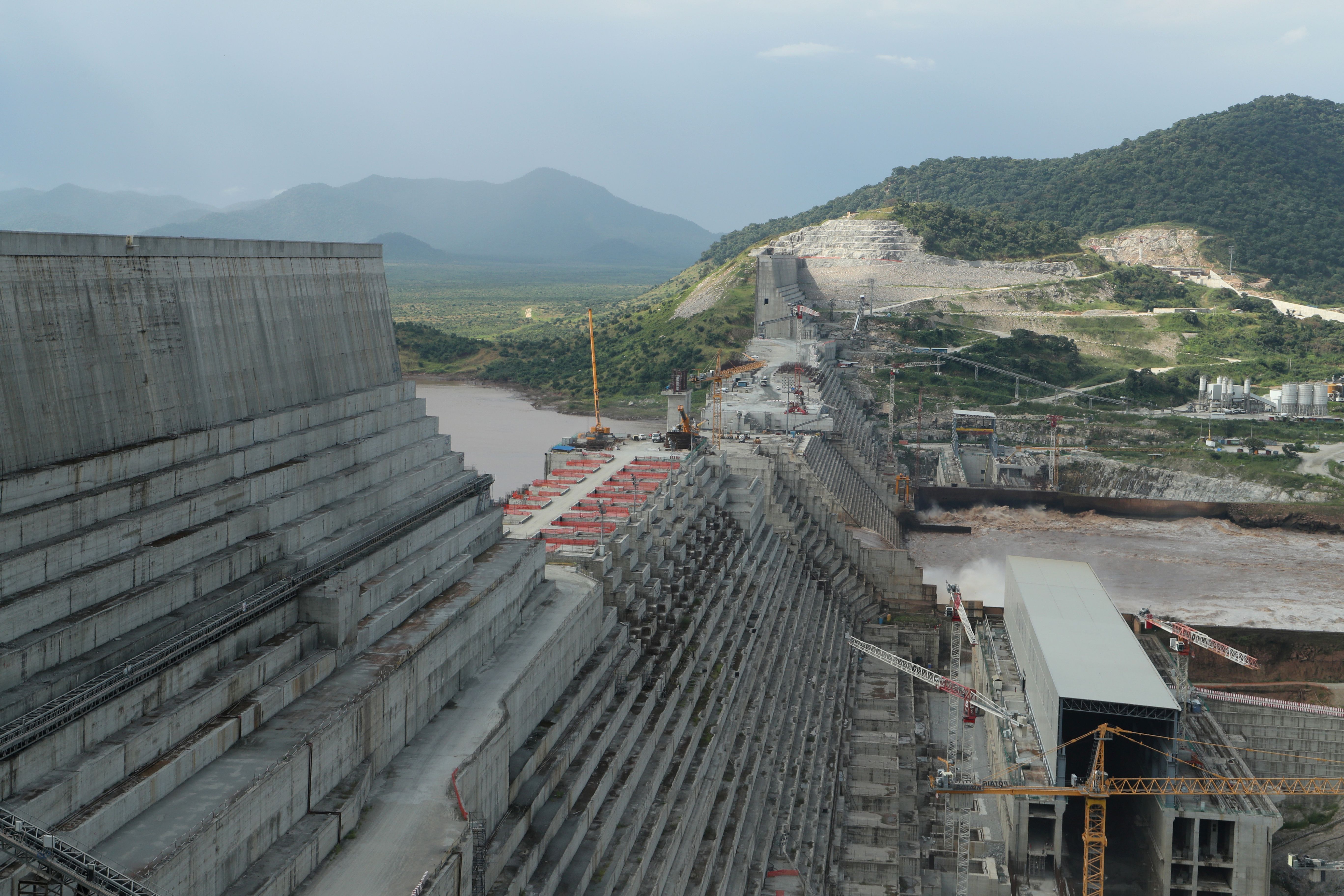
The organisation was inspired by the dispute between Ethiopia, Sudan and Egypt over the construction of the Great Renaissance Dam, which was resolved in 2021. China tried to be involved as one of the investors. The following year, in Sudan’s Khartoum, 19 countries signed a Joint Statement on the Future Establishment of the IOMed, and on 30 May this year in Hong Kong, 33 countries from Asia, Africa, and Latin America and European countries Belarus and Serbia signed the convention to establish IOMed. It is intended to be the first intergovernmental organisation focusing on the mediated resolution of disputes between states, states and/or international organisations and investors, and between private parties. It is to focus on economic and investment matters, currently settled mainly through arbitration. While mediation in armed conflicts is not explicitly excluded, it will not be a priority for it. Intra-state disputes will remain outside the scope of IOMed’s work and, given the numerous allegations of China’s violations of human rights standards and international law, it is unlikely that the organisation’s remit will be expanded to include it, especially since IOMed is based in Hong Kong. The organisation became operational at the end of August this year after three states ratified its statute (China, Nicaragua, Venezuela). To date, no international organisation has joined.
Functioning of IOMed
In the states-parties to the Convention, IOMed has a status analogous to other international organisations: it has legal personality and its property and officers are protected by immunity. There are to be two panels of mediators within IOMed, one for inter-state affairs, the second for others. A Governing Council composed of representatives from each IOMed state is to adopt mediation rules that analysts say will draw on existing approaches, including those offered by the International Centre for Settlement of Investment Disputes (ICSID) and the United Nations (UN) commission on international trade law UNCITRAL.
IOMed mediation is to operate on the principles of voluntary participation, impartiality, independence, good faith, efficiency, cost-effectiveness, and confidentiality. The organisation will only settle disputes jointly submitted to it by parties in conflict. While this is a standard solution, China emphasises the consent-based nature of IOMed jurisdiction, in reference to its experience and dissatisfaction with the ruling of the Permanent Court of Arbitration (PCA) in the South China Sea case, which was issued despite its objections to the tribunal’s jurisdiction. Also, the results of mediation in principle will not be binding, which differentiates it from arbitration. IOMed will not have tools to compel parties to enforce agreements reached in its forum, and its creators emphasise that they will be implemented voluntarily through the consent of the parties, rather than a solution imposed on them.
The creators of IOMed envisage extending its membership to other states and international organisations, mainly regional ones. They also allow mediation for states and organisations that are not parties to its conventions at their request. The use of IOMed is to be independent of other proceedings, for example, it will not be precluded from commencing arbitration.
Importance of IOMed for China
For China, IOMed’s primary significance is as a competing instrument with established institutions such as the PCA, the International Court of Justice (ICJ), and ICSID. The establishment of the organisation was described as “filling a long-standing institutional gap” by Chinese Foreign Minister Wang Yi at the IOMed establishment ceremony. It also fits in with a number of other Chinese initiatives such as the Global Governance Initiative recently promoted by Xi Jinping at the Shanghai Cooperation Organisation summit in Tianjin in September this year. All of them, although thematically different, are, like IOMed, geared towards grouping countries interested in cooperation, mainly from the Global South, around China. IOMed is thus intended to be an alternative for states that regard the ICJ, PCA, and ICSID as dominated by Western states and therefore biased. The voluntary nature of IOMed mediation and the non-binding nature of its decisions thus make it not so much a legal instrument but more of a political one for states that, image-wise, want to present an interest in peaceful dispute resolution (rather than escalation) but do not want to submit to ICJ or PCA decisions. This is indicated, among other things, by the composition of the founding members, led by China and including Belarus, Cambodia, Pakistan, Serbia, and Sudan, all states that do not meet democratic standards. In this context, the establishment of IOMed also has significance for China as a potential venue for the settlement of disputes between Russia and Ukraine, but also—although unlikely due to the requirement that both parties agree to IOMed dispute resolution—of Russian complaints about the possible seizure of funds frozen in the EU.
The establishment of IOMed does not mean that the China is giving up its participation in the ICJ or PCA. From the perspective of the Chinese authorities, the new initiative is a convenient instrument for undermining their credibility in situations of rulings incompatible with Chinese interests. The location of the IOMed in Hong Kong is intended image-wise to emphasise the region’s independence and its international and not just Chinese character, despite the real subordination of the region’s political institutions and justice apparatus to the Chinese Communist Party since 2019. Wang Yi, at the organisation’s establishment ceremony, explicitly stated that IOMed’s establishment in Hong Kong is proof of the success of the region’s integration after joining China, as well as the effectiveness of the “one country, two systems” model.
Conclusions and Outlook
It will only be possible to assess the impact of the creation of IOMed in the long term, but its establishment is an expression of China’s desire to create an instrument to facilitate the undermining of the international legal system by exploiting the discontent and vested interests of other states, especially those of the Global South. IOMed highlights their unwillingness to submit to Western standards, while at the same time it is difficult for Western states to criticise its creation outright because, at least in theory, it is intended to serve the peaceful resolution of disputes.
IOMed will not so much complement the international dispute resolution system as it will be a parallel mechanism for China to resolve disputes (once it becomes operational, it will probably be dominated by China and used by it to resolve disputes concerning its investors, such as those arising from the implementation of the Belt and Road Initiative). It will therefore be used when China cannot expect favourable outcomes from proceedings in existing legal institutions. The extension of IOMed membership to Western states and regional organisations is unlikely, as there are already established structures in their legal systems. From their perspective, the creation of a new organisation, duplicating, as it were, the existing ones, while having no mechanisms for the coercive implementation of the agreements concluded, is unnecessary. They will furthermore avoid the risk that existing institutions will be marginalised by IOMed. The creation of IOMed is unfavourable from the Western perspective as it favours the Chinese narrative of the need to change the existing international order, in particular its division into two blocs—one for Western countries and another for the Global South. Western states’ participation in IOMed would legitimise these actions, including China’s violations of international law in relation to Hong Kong, among others, and its disregard for the verdicts of the PCA and other institutions.
Furthermore, the launch of IOMed could prove problematic especially for Western businesses that invest or implement projects in countries of the Global South. They may face the risk of pressure from their partners for any disputes between them to be referred to IOMed and, in the event of refusal, Chinese entities may take their place. Although it at least nominally replicates many of the rules previously adopted by other organisations, it can be expected that Western investors will also be reluctant to use its services for fear of a less predictable interpretation of those rules.