Challenges to defence cooperation between the EU and the United Kingdom
With its well-developed defence industry, the UK appears to be a natural partner for the EU in its efforts to reduce dependency on the US. However, cooperation attempts to date have been met with mistrust from some Member States, including France. The pro-EU policy of the current British government, coupled with the unstable international situation, creates an opening to revise this stance. Thus, some breakthroughs in the defence cooperation are anticipated ahead of the forthcoming EU–UK summit this summer.
 Carl Court / Reuters / Forum
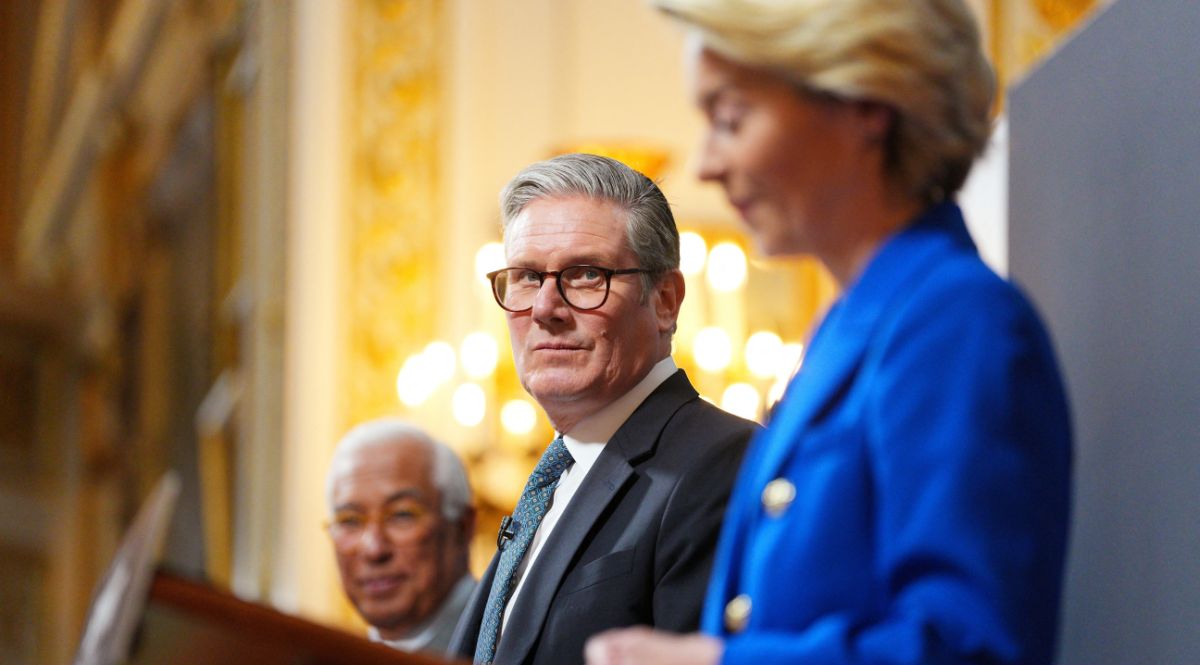
Since taking office in 2024, Prime Minister Keir Starmer has sought to improve relations with the EU. His efforts culminated in the first bilateral summit since Brexit, held in May 2025. During the meeting, he announced a so-called “reset” in relations, which manifested in signing a security and defence partnership. However, beyond sending a political signal, the agreement has so far yielded no tangible results. The UK is currently facing a government crisis following the Labour Party’s defeat in the local elections on 7 May this year, as well as problems in meeting the targets set out in last year’s Strategic Defence Review. The review highlighted the severe underfunding of the armed forces, a consequence of sluggish economic growth and years of austerity policy. In the face of the ongoing political crisis, the Labour Party needs concrete achievements in defence and from the “reset” with the EU. We can expect moves to deliver these ahead of the second bilateral summit with the EU, which the UK Minister for EU Relations, Nick Thomas-Symonds, has announced will take place in the summer of 2026.
The state of EU–UK defence cooperation
The EU regards the UK as a key partner in its response to the war in Ukraine, including aligning sanctions against Russia and measures targeting its “shadow fleet.” Both sides closely coordinate their support for Ukraine and their political actions towards the US and are also seeking to expand their defence industries and increase defence spending. However, cooperation between Member States and the UK is mainly based on minilateral formats such as E3 and E5, or bilateral agreements linked to specific projects. The British defence industry is the largest in Europe, and the UK is a member of several key European projects in this field (including the MBDA consortium, which produces missiles, and the Global Air Combat Programme, which aims to produce a sixth-generation fighter). With the EU’s growing role and aspirations in coordinating defence projects in Europe, cooperation with the UK in this area appears essential, but has yet to materialise.
By the end of 2025, negotiations on the terms of the UK’s participation in the EU’s €150 billion SAFE loan facility had become a test of the new EU-UK partnership. The talks concerned the rules under which member states participating in the programme could purchase British defence products using EU funds. During the negotiations, the European Commission, under pressure from France, imposed punitive conditions on the UK’s participation. Motivated by fears that British companies would dominate parts of the European sector, as well as a refusal to allow the UK to selectively reap the benefits of EU programmes after Brexit, the EC demanded a steep financial contribution of up to €6 billion to allow participation by the UK defence industry. The lack of progress in negotiations on other key elements of cooperation (including a common sanitary and phytosanitary area, fishing rights and a youth visa scheme) has also weakened the UK’s position. By contrast, after Canada signed a partnership with the EU, it secured more favourable financial terms to join the programme. Due to the small scale of the Canadian defence industry, it was not seen as competing with European companies,
In practice, defence cooperation between the UK and the EU is currently limited and mainly based on bilateral programmes. Through its partnership, the UK can participate in joint arms procurement with EU Member States involved in SAFE, enabling it to purchase weapons at more competitive prices. Over the past two years, the UK has signed security agreements with France (Lancaster House 2.0) and Germany (Kensington Treaty), as well as bilateral framework agreements on cooperation with Spain. On 27 May this year, a defence treaty was also signed with Poland. As a result of these agreements, the UK is working with European partners on specific defence industry projects. In the case of Poland, this will include the co-production of a new-generation medium-range anti-aircraft missile for air defence systems.
New opportunities
After the failure of the SAFE negotiations, a new opportunity to strengthen defence cooperation between the EU and the UK is presented by the €90 billion loan to Ukraine approved on 23 April this year. This loan includes €60 billion for defence expenditure in 2026–2027. Purchases from this fund will be overseen by the European Commission and subject to restrictions similar to those of SAFE: 65% of the product’s value must consist of components manufactured in a member state or a partner country participating in SAFE. The regulation also allows for an alternative option: procurement from a third country that has signed a security cooperation agreement with the EU and has provided Ukraine with significant military and financial support. The UK meets both conditions. Consequently, during the European Political Community (EPC) summit in Yerevan this year, Starmer announced that his country would seek to participate in the loan-financed procurement. However, participation requires Council approval, except for the purchase of individual, urgent items for Ukraine, which may be approved by the Commission by way of derogation.
The UK’s participation would set a precedent for future procurement programmes. Neither the European nor the British side has ruled out participation in potential future loan programmes intended to finance defence. In March this year, European Council President Antonio Costa announced that talks on the matter had resumed following the earlier failure of the SAFE negotiations. At present, however, these remain political dialogues intended to signal a shared intent to maintain cooperation. Any formal programme could launch at the earliest alongside the new EU budget for 2028–2034, the draft of which includes a significant increase in defence spending.
The UK could also benefit from participating in research projects or the European Defence Fund (EDF), where third countries are permitted to take part; however, due to restrictive conditions regarding control over technology and intellectual property, the participation rules are unfavourable to the UK.
Conclusions
Increased cooperation with the EU would not solve the UK’s problem of inadequate defence funding, but it would be seen as a political success for the ruling Labour Party. Even as Prime Minister Starmer’s premiership faces a severe crisis, the leading candidates to succeed him are pledging to maintain a pro-European course. As Nigel Farage’s anti-EU Reform Party surges in the polls, creating the prospect of significant changes at the next election, this is a crucial moment to strengthen ties between partners and demonstrate the positive effects of cooperation with the EU.
The EU should therefore capitalise on the current British government’s pro-European stance, using the upcoming summit to strengthen relations and deliver concrete results. Despite EU scepticism regarding selective and sectoral cooperation, ongoing negotiations over the common phytosanitary area and youth visa schemes should not be allowed to affect security issues.
There is also the potential for cooperation via increased participation in EU defence research and development projects. However, unfavourable conditions for third-country participation currently act as a barrier, leading member states to cooperate with the UK through other formats. Its participation in many projects crucial to European security (Eurofighter Typhoon, MBDA, Global Air Combat Programme) shows that dividing projects into “EU” and “non-EU” artificially excludes an important partner. It is in the EU’s interest to provide financial support for existing projects that help standardise defence systems across the continent and develop a European defence industry based on cooperation. In the context of the Polish-British defence treaty, this cooperation is important for Poland, as it would allow the development of joint technologies to be covered by EU funding in the future.