Carrot and Stick: China's Pressure on Taiwan Increases Short of Force
The Chinese authorities’ objective for Taiwan remains to annex it to the PRC. Without ruling out military action, they are focusing on political measures calculated to destabilise the situation in Taiwan. After the January elections in Taiwan, China is trying, among other things, to reinforce the divisions between the parliamentary majority and the head of state. At the same time, it emphasises the positive nature of China’s economic cooperation with Taiwan and people-to-people contacts. It is crucial for the EU to strengthen comprehensive contacts with Taiwan as part of deterring China and stabilising East Asia.
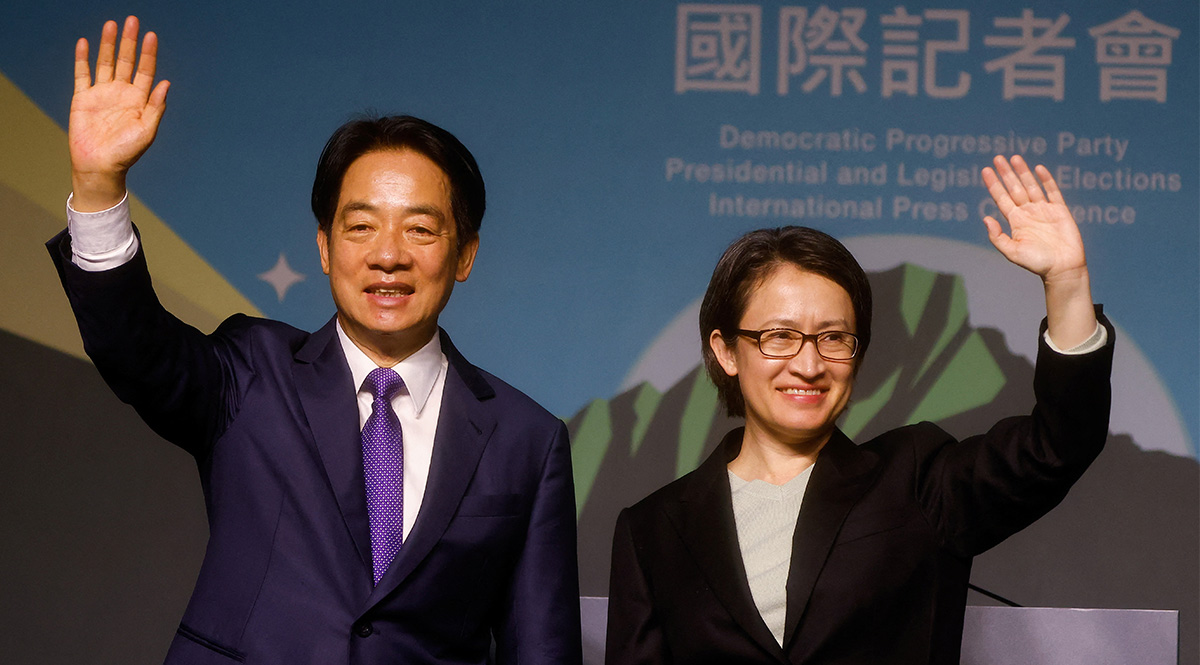
.png) Ann Wang / Reuters / Forum
Ann Wang / Reuters / Forum
Given Taiwan’s importance to China, the most important decisions on policy towards Taiwan are likely to be made personally by PRC Chairman Xi Jinping, consulting among his closest collaborators. These include the party’s Standing Committee (SC) member and Prime Minister Li Qiang, Minister of Foreign Affairs and Chairman of the Foreign Affairs Commission of the Central Committee Wang Yi, and Wang Huning, an SC member. The lineup is completed by Song Tao, head of the Taiwan Affairs Office, a former deputy foreign minister, and former head of the CC’s Department of International Cooperation. The authorities are aware of the difficulties associated with a forceful scenario of Taiwan’s annexation, including the inadequate capacity of China’s armed forces despite increasing spending in this area. For China, the use of political and economic instruments is crucial. These will test the willingness of the U.S. to support Taiwan and seek to destabilise the situation on the island, including by persuading the Taiwanese public of the inevitability of integration and its benefits.
Chinese Policies
The cross-strait policy framework was outlined by Xi Jinping during a meeting with former Taiwanese President Ma Ying-joue in April this year. He emphasised the unity of “compatriots from both sides of the Strait”, pointing out that differences in political systems do not deny the existence of “one China”.
The PRC’s directions, especially in the context of this year’s presidential and parliamentary elections on the island, were presented by Wang Huning in late 2023 and this year. Last December, he chaired a meeting of representatives from the Central Committee’s Propaganda Department, the Ministry of State Security (MSS), the Central Committee’s United Front Department, and the Taiwan Affairs Office on the Taiwan elections. Three lines of action were discussed there: strengthening PRC-beneficial cooperation with Taiwanese politicians, organising trips by Taiwanese working on the mainland for the elections, and promoting the narrative of the election as “a decision between peace and war”. In February this year, at the Central Committee Conference on Taiwan, Wang Huning emphasised accelerating “unification” processes (as a 2024 target), including through the development of cultural cooperation and people-to-people ties. He pointed out that China will want to maintain stability in the Taiwan Strait this year.
Part of the debate within the power apparatus is the acceleration of preparations for Taiwan’s annexation. This is signalled, for example, by an article published this year on the website of an institute dedicated to cross-strait relations at Xiamen University (a neighbouring province to Taiwan), but removed a short while later. According to the authors, the failure of the “one country, two systems” idea means that full unification with the PRC will be necessary in Taiwan. They suggest setting up preparatory institutions to gather knowledge on Taiwan’s specificities and train mainland officials. This would avoid the confusion created by the PRC’s takeover of Hong Kong, where the situation was only calmed by China’s political intervention in 2020.
Actions Taken
Through disinformation activities, military exercises around the island and threats to prosecute “independence supporters”, the Chinese authorities aim to reinforce the sense of unease among Taiwanese people resulting from the unstable political and security situation. In the Chinese narrative, this is said to stem from the “independence drive” of President Lai Ching-te, elected in January, and his Democratic Progressive Party (DPP). Even before the inauguration of the new head of state in May this year, the Chinese authorities banned five Taiwanese journalists from entering China, accusing them of damaging bilateral relations. The Taiwan Affairs Office assessed Lai’s inaugural speech as evidence of his commitment to the island’s independence. That same month, the authorities also issued guidelines for law enforcement agencies to punish “independence supporters”. This is the first time that the public promotion of such an idea has been criminalised in China, punishable even by the death penalty if committed with the support of “external forces”. In September this year, for the first time ever, a Taiwanese was sentenced to nine years in prison in China for “separatism”. In August this year, the MSS announced that it had uncovered more than a thousand cases of Taiwanese spying in the PRC.
Chinese military exercises also serve to increase the sense of insecurity. According to Taiwanese data, the PRC authorities spent around $15 billion on exercises in the eastern Pacific in 2023 alone. Their territorial scope and number of units are increasing. However, live ammunition is not used during the exercises and civilian air traffic is not disrupted. Nevertheless, there still were clashes between Chinese military and Taiwanese coast guard units (two Chinese were killed in February this year). China’s troops also carry out propaganda activities, such as dropping leaflets.
China also supports disinformation and manipulation operations on social media oriented towards, among other things, a decline in Taiwanese trust in the island’s government and U.S. support. It reinforces a narrative of the opposition coalition formed by the Kuomintang (KMT) and the People’s Party on controversial domestic issues, such as the May laws giving parliament, among other things, the ability to interrogate members of the government. The DPP considers them unconstitutional and a threat to Taiwan’s security through the possibility of revealing secret data to China. The Chinese authorities also regularly hold meetings in China with KMT politicians.
Economic Cooperation
The Chinese authorities are trying to combine selective economic restrictions in response to the “DPP policy” with moderate incentives for Taiwanese business to invest in the mainland. This is served, for example, by organised stays of Taiwanese entrepreneurs in the PRC, including in Xinjiang in August this year. For Taiwan, China is the most important export market (more than $150 billion in 2023) and also the largest source of imports (more than $80 billion).
The Chinese authorities also declare the development of tourism, such as the facilitation of entry into China introduced by Fujian province in January this year. By the end of July this year, more than 400,000 Taiwanese had taken advantage of such initiatives (an increase of more than 100% year-on-year). The Chinese authorities (despite positive announcements and Taiwan’s approval in August 2023) are cautious about Chinese travels to Taiwan, and since April this year it has only been possible from Fujian province to the Matsu archipelago.
Conclusions and Outlook
The current actions of the Chinese authorities are intended to weaken the resistance of the Taiwanese people to integrate with China, and annexation of the island by force is to be a last resort, hence a “carrot and stick” tactic adopted by China that combines announcements of economic benefits with repression for “pursuing independence” and portraying Taiwan’s rulers as likely to provoke cross-strait conflict. In the Communist Party of China’s optics, such actions are likely to influence the political choices of the Taiwanese people, slow down nation-building processes and, above all, hinder resistance to integration by the island’s rulers.
It is in the EU’s interest to develop a comprehensive relationship with Taiwan as an element of deterrence against China and to prevent a possible conflict in the region with negative consequences for the EU economy and others. A clear signal in this context would be for the new EC, as well as the countries holding the EU Council Presidency and the European Council, to support the development of economic and political relations with Taiwan, building on the EU’s 2021 Strategy for Cooperation in the Indo-Pacific . One element of this should be a refusal by the Union and its members to accept the “one-China principle” pushed by China, according to which Taiwan is part of the PRC. Union Member States may also consider suspending existing agreements with China on legal assistance or extradition allowing the prosecution of Taiwanese.
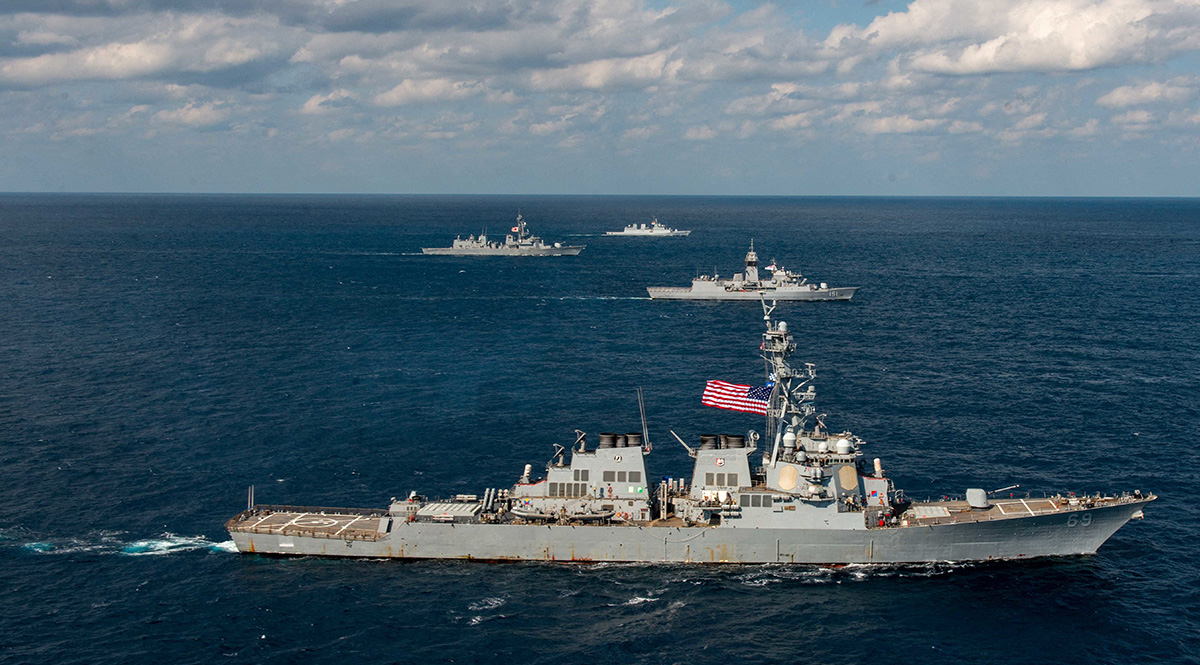
Cooperation between the EU and the U.S., including with other partners such as Japan, can contribute to Taiwan’s increased presence in international organisations (e.g., as an observer, as was the case with the WHO from 2009 to 2016), which would strengthen its position on the international stage. The Union and its Member States and Taiwan could also exchange experiences in combating hybrid activities, including disinformation, by China and Russia or in the sphere of cybersecurity. Taiwan’s independence would also be supported by cooperation in the development of military technologies by EU countries, as well as the participation of its Member States’ ships in freedom of navigation operations in the Taiwan Strait, following the example of the Dutch Navy in June this year.


.jpg)