Austrian Migration Policy and the Events in Afghanistan and Belarus
Contrary to the government’s rhetoric about restrictive migration policy, Austria remains open to the settlement of people from outside the EU. The takeover of power by the Taliban in Afghanistan in the summer of 2021 and the intensifying crisis on the border between EU countries and Belarus stimulated the Austrian government in international forums in the field of migration. The prospects for cooperation with the V4 countries in this regard were heightened after interior minister Karl Nehammer was elevated to Chancellor.
 Fot. Reuters/ LISI NIESNER/ FORUM
Perception of Migration from outside the EU
Migration and asylum policy are important areas of activity of the Austrian government and are widely reported in media. The primary reason is the high dynamics of migration from non-EU countries despite the COVID-19 pandemic. In 2020, Austria recorded 36,800 such migrants, 27% of all immigrants arriving in Austria. The number of asylum applications amounted to about 14,800 (of which, around 8,000 were evaluated positively), about 15% higher than in the previous year. This placed Austria in seventh place in the EU by population size. Meanwhile, in the EU overall, the number of applications fell by around 32% during this period.
The Austrian People’s Party (ÖVP), which has been co-ruling since 1987, regularly uses the rhetoric of restricting migration. Its representatives cite the 2015 refugee crisis as a scenario to be avoided. The position of the Christian Democrats differs from that of the Greens, which has co-created the government since January 2020. The discrepancy in the coalition was visible in September last year during a debate on the admission of refugees from the Moria camp in Greece and in the summer of last year when the then-Chancellor Sebastian Kurz demanded the deportation of Afghans who had stayed in Austria illegally.
Response to the Situation in Afghanistan
The Austrian government sees the Taliban takeover as a catalyst for crises related to migration, human rights, and security. While the prospect of mass migration from Afghanistan to Europe is limited, Austria is a popular destination for Afghans. Among asylum seekers in 2020, Afghans were the second-largest group (2,755 people), after Syrians (4,910). In July 2021, 4,805 Afghans were awaiting processing of applications by Austrian offices, and only in three EU countries were there more of them. Noting that it has the second-largest number of Afghan asylum seekers in the EU after Germany (which has more than 40,000), the Austrian government declared that it will no longer accept new ones.
Austria is seeking to reduce the external factors influencing the migration of Afghans. It sees aid to third countries as an instrument to reduce uncontrolled migration. In the last four years, it has provided more than €11 million to humanitarian aid and development projects in Afghanistan and to Afghan refugees in Pakistan. Additionally, after the Taliban took power, Kurz’s cabinet accepted an €18-million emergency aid package for the region. However, this does not rank Austria among the most significant donors for this country. On the other hand, at the EU forum, the government called for the return of Afghans who had been refused asylum, which was expressed in a letter from six Member states to the European Commission in August last year. In the letter, they also proposed the creation of deportation centres around Afghanistan, which, however, was not approved by the Union.
Reaction to the Situation in Belarus
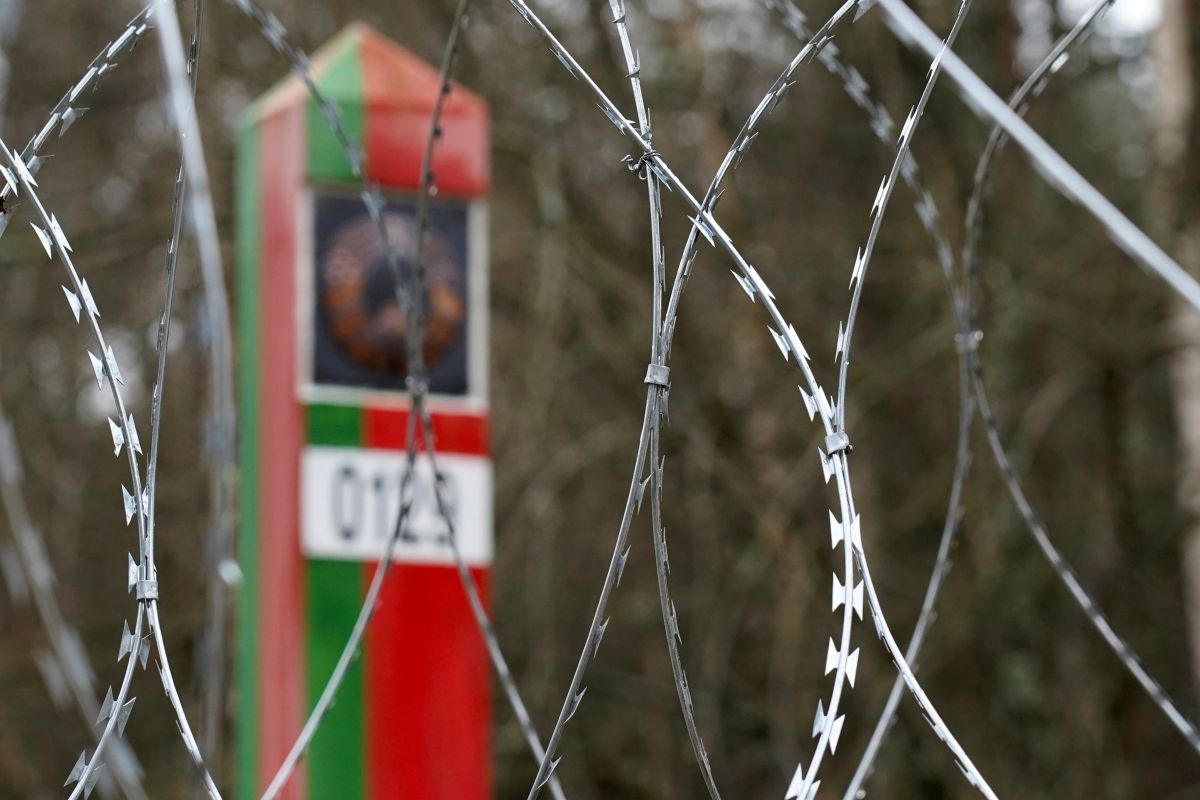
Austria stresses the importance of protecting the EU’s external borders. It strengthens this postulate by expressing solidarity with Poland, Lithuania, and Latvia in relation to the situation on their border with Belarus and by ensuring that support is ready. It was expressed when it sent a specialised police unit to Lithuania in August last year. In a joint statement in November, the then-chancellor Alexander Schallenberg and the prime minister of Slovakia, Eduard Heger, condemned the use of migrants by the Belarusian regime as an instrument of pressure on the EU. Schallenberg confirmed this position at a conference in Vienna devoted to the situation in Belarus, in which the Commissioner for Neighbourhood and Enlargement Olivér Várhelyi and the leader of the Belarusian opposition, Sviatlana Tsikhanouskaya, participated.
Austria underlines its commitment to humanitarian aid. It encourages others to give aid as well, as evidenced in the letter buy the then-Minister of the Interior Nehammer and his counterparts from Poland, Lithuania, Latvia, and Estonia from November 2021 to international non-governmental organisations. They appealed for humanitarian aid to refugees residing in Belarus. This corresponded with the later decision of the European Commission to allocate €200,000 for this purpose and secure an additional €500,000, though rather symbolic aid.
The crisis on the Polish-Belarusian border also made Austria perceive EU sanctions against Belarus, among other options, as a tool to counteract irregular migration. The Austrian government supported the imposition of further restrictions on this country on 15 November and 2 December. However, in June, it was the only EU member to temporarily block the imposition of sanctions on the local banking sector in Belarus out of concern for Austrian banks in that country.
Activity in International Forums
Austria sees cooperation within the EU as a practical instrument for controlling the movement of people. Therefore it has supported—in contrast to the V4—the transformation of the European Asylum Support Office (EASO) and giving it more powers. It also reacted positively to the new Pact on Migration and Asylum, seeing in it the implementation of its postulates, including the fight against people smugglers and cooperation with third countries.
Despite the active co-creation of EU migration mechanisms, Austria is also their major critic. As interior minister, Nehammer accused the Commission of insufficient support of Member States in protecting the EU’s external borders. Earlier, the government criticised the concept of mandatory asylum quotas. Austria favours the admission of qualified people from outside the EU, and last year issued 223 “blue” cards (EU residence and work permit for highly qualified third-country holders). However, in October last year, Austria abstained from voting on an EU reform that would facilitate the employment of such people. It did so alongside Czechia and Slovakia. The rest of the Member States, including Poland, backed the changes (except for Hungary, which alone voted against them).
The Austrian authorities’ ambition remains to influence the international debate on migration. This is evidenced by the organisation of and international conference on the situation in Belarus and expressing readiness to convene a similar meeting on Afghanistan. The topic of migration was also heard during its presidency of the EU Council under the slogan a “Europe that protects” in the second half of 2018. At that time, a special European Council summit in Salzburg was devoted to this topic. Such actions are in line with the Austrian tradition as a neutral state that cultivates its image as an impartial moderator of international discussions.
Prospects and Conclusions
The events in Afghanistan and Belarus have been used by the Austrian government to emphasise its current postulates: limiting extra-EU immigration, protecting the EU’s borders, and providing humanitarian aid, including “on-the-spot assistance”. International mechanisms, including EU ones, are used to inform about them and implement them, despite criticism of the effectiveness and pace of EU actions on migration. Austria has and will continue with its current assumptions and activity in this field despite changes in the Austrian government in October and December 2021, including the positions of Chancellor and interior minister. At the same time, differences in the assessment of the situation in Afghanistan deepen the divergences within the government coalition. Due to the change in the positions of Chancellor and interior minister to ÖVP, the influence of the Greens in this area remains limited.
Austria, unlike the V4 countries, is a popular destination for asylum seekers in the EU. However, these countries largely share their views on migration policy, including scepticism towards the mandatory quotas of asylum seekers. Nehammer’s move to Chancellor, considering, for example, the joint letter with his counterparts from Poland and the Baltic states, is a sign of the continuation of cooperation with regional partners. An opportunity for further tighter relations will be the Polish presidencies of the OSCE (in 2022), of which Austria remains an active member, and Vienna is its seat, and of the Salzburg Forum (first half of 2022). As part of this informal platform for cooperation between Central European countries in internal affairs, Poland wants, among others, to combat the instrumentalisation of migration. This postulate has already been recognised in Austria in the context of the crisis on the EU-Belarusian border.