Australia-Japan Defence Agreement
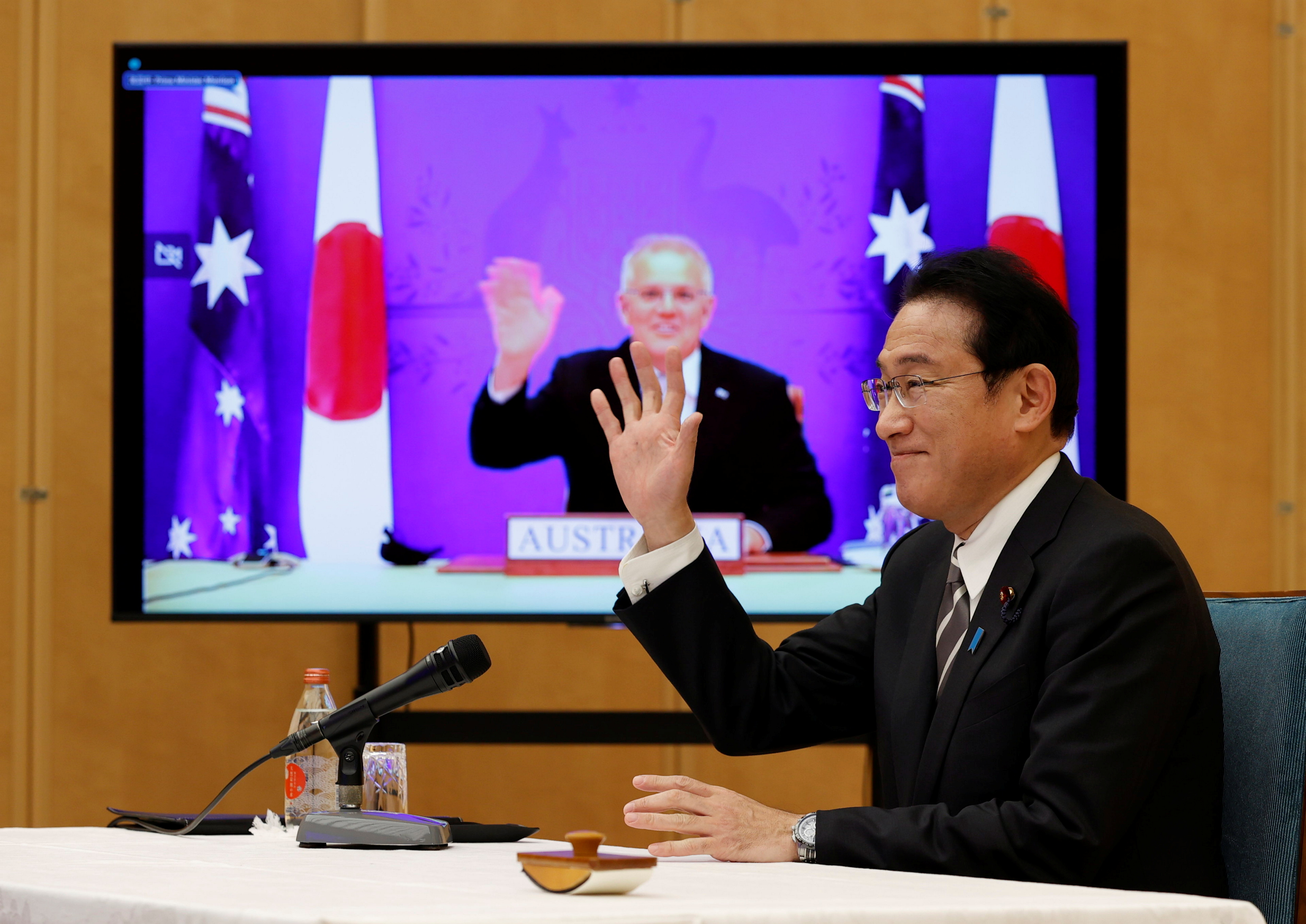
The governments of Japan and Australia have concluded an agreement on military cooperation. This is another element of the deepening military relations between the states that make up the QUAD and is intended to be a response to China’s strengthening military potential in the region. The agreement may speed up negotiations of similar agreements between Japan and European countries.
 Fot. Reuters/ ISSEI KATO/ FORUM
What is the scope of the agreement?
The Reciprocal Access Agreement, signed on 6 January 2022 by the prime ministers of Japan, Kishida Fumio, and Australia, Scott Morrison, set the conditions for the presence of one country’s forces in the territory of the other. The agreement does not contain a direct reference to the provision of military assistance in the event of an attack on one of the parties and cannot be considered an alliance, but it creates the legal conditions necessary for such defence to be deployed, stipulating among others, the rules for the presence of the foreign troops, the costs of stationing, and the regulation of jurisdiction in cases of violation of the law of the host country. Under the agreement, a joint committee will be established to coordinate activities between the parties and negotiate the various interpretations of the treaty provisions. The agreement is the conclusion of a process of deepening security cooperation between the two states that has been ongoing since 2007. Agreements of a similar nature were concluded in 2020 between Australia and India, as well as between Japan and India.
What is the purpose of the agreement?
The agreement is another element of the deepening political and military cooperation between the states that make up the QUAD (Australia, India, Japan, and the U.S.) and strengthens this format as a permanent element of the regional security architecture. Neither the Australian nor Japanese government indicated it directly, but the overriding aim of the agreement is to respond to China’s strengthening military potential. Thanks to the agreement, the states gain the ability to conduct military exercises in areas so far inaccessible to them, which should improve the interoperability of their armed forces. This is key to the ability of these countries—Japan in particular—to signal defence readiness to China. For Australia, obtaining the possibility to conduct manoeuvres in Japanese territorial waters is also dictated by the desire to maximise the use of the nuclear submarines it will obtain in cooperation with the U.S. and the UK in future.
What is the significance of the agreement for the development of U.S. policy towards China in the region?
Building a counterbalance to China’s political, economic, and military potential in the Indo-Pacific area is President Joe Biden’s main foreign policy objective. By striving to implement it, the administration not only tries to strengthen the defence capabilities of its individual allies in the region but also promotes closer military cooperation between them. Biden partially continues Trump-era policy as he has worked to revive the QUAD format and established a new agreement with Australia, the UK, and the U.S. (AUKUS). With these actions, the U.S. is signalling to its Indo-Pacific allies that American military engagement will increase in parallel with the increased activity and capabilities of its security partners. It should be expected that the U.S. will encourage both countries to implement the concluded agreement by engaging in intensification of joint military exercises.
What does the agreement mean for Europe?
Since 2021, Japan has been negotiating similar agreements with the UK and France, countries which since 2013 have been linked to Japan by a strategic partnership, described by the governments as “exceptional”. The agreement with Australia may speed up the talks with the British and French, especially since Japan’s counterparts hope to increase trade and promote exports of their military technologies. The increased participation of European countries in strengthening security in the Indo-Pacific responds to the goals of U.S. policy, which is to build the broadest possible coalition of states ready to support U.S. efforts to contain China, especially in the event of possible Chinese aggression against Taiwan. By implementing the Indo-Pacific strategy adopted in 2021, the EU can focus its efforts on the security dimensions where the potential for U.S. cooperation with other QUAD members is greatest: cybersecurity, freedom of navigation, and securing supply chains.