AfD's success in the Saxony-Anhalt elections
In the September 6 elections for the state parliament of Saxony-Anhalt, Alternative for Germany (AfD) won with 43.8% of the vote. While this will not enable it to form a majority state government on its own, for the first time it has a chance to form a minority government with ad hoc support from deputies of other parties. The election results will influence politics at the federal level, as they weaken Chancellor Friedrich Merz’s position and undermine the effectiveness of the other parties’ strategy of isolating the AfD.
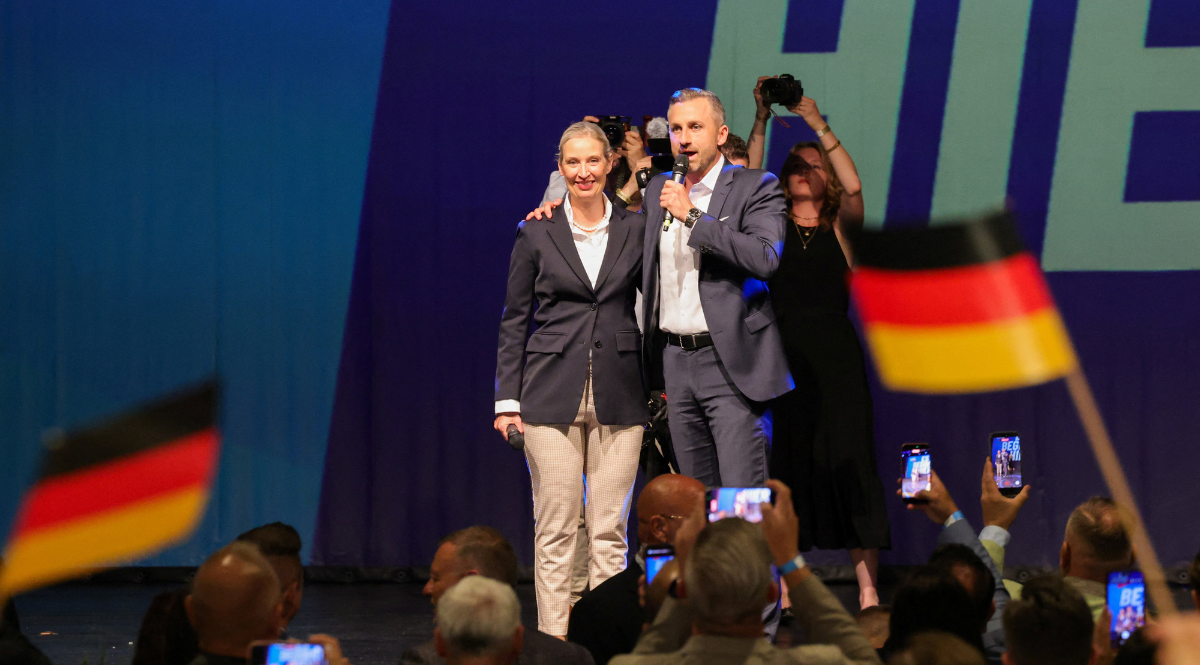 Fabrizio Bensch / Reuters / Forum
What does the AfD’s election platform entail?
The election platform calls for the mass deportation of migrants who entered the country illegally, the establishment of refugee centres, and the abolition of the right to asylum. It also proposes authorising the creation of “citizen patrols” as an additional law enforcement force to relieve the burden on state police. The party also advocates a break with the policy of inclusivity, including a ban on the use of gender-neutral language in public institutions. In history education, the current model—which focuses on the experiences of the Nazi dictatorship and German war crimes during World War II—would be replaced by the promotion of “healthy patriotism” based on pride in German history. The AfD also promises to expand social benefits, especially for families with children. It pledges to work toward lifting sanctions against Russia and commissioning the Nord Stream 1 and 2 gas pipelines, as well as promoting the teaching of Russian in schools. Some elements of the AfD’s platform are radical, contrary to the German Basic Law and international law (e.g., the abolition of the right to asylum), or fall outside the jurisdiction of state authorities (German-Russian relations).
How did the far-right party run its election campaign?
The AfD combined a radical platform—aimed at mobilising its own voter base—with a campaign based on a moderate and optimistic message directed at the undecided voters. Ulrich Siegmund played a key role as the party’s candidate for state prime minister, invoking the slogan “everything is possible,” championing the interests of ordinary citizens, and emphasising pride in local identity. Another important element of the campaign was appealing to a segment of the electorate’s nostalgia for the former GDR, expressed through the organisation of mass rides by AfD supporters on Simson mopeds, which are regarded as part of the material heritage in eastern Germany. Siegmund also leveraged his social media reach (including over 680,000 followers on Instagram) to reinforce his image as a modern, moderate politician.
What are the causes of the CDU’s defeat, and how will it affect the position of the chancellor and the government?
The centre-right Christian Democratic Union (CDU)’s defeat—it won 17.2% of the vote, a drop of more than 19 percentage points from 2021—stems from both local factors and federal-level politics. Saxony-Anhalt faces serious demographic and economic problems—since 1990, its population has declined from 3 million to 2 million, and the unemployment rate (8%) remains higher than the German average. This is accompanied by disappointment with the federal government’s policies, driven by economic stagnation and socially unpopular reforms that have cut certain social benefits, as well as a sense that the elites ignore central and eastern Germany—according to an Infratest survey, 50% of Saxony-Anhalt residents believed that the government in Berlin represents only the interests of the western states. The scale of the CDU’s defeat weakens Chancellor Merz’s position—75% of respondents held him responsible (including 47% of CDU supporters). This may spark a debate about his future as party leader and head of government, and the need to address criticism within the CDU as well as pressure from the AfD will keep the chancellor occupied, resulting in reduced involvement in international affairs. Furthermore, the AfD’s success may also lead other parties, including the CDU, to gradually move away from the strategy of isolating the AfD, in favour of cooperation on specific issues, especially at the local level.
What are the political scenarios for Saxony-Anhalt?
The stance of Sahra Wagenknecht’s left-wing populist Alliance (BSW), which received 5.3% of the vote and 5 seats, will be crucial for the formation of a new government. Despite its victory, claiming 39 seats in the 83-seat Saxony-Anhalt parliament, the AfD failed to secure an absolute majority, which was its main goal. The BSW leader is willing to cooperate with the AfD on certain issues, such as tightening immigration policy. Both parties are also united by their aversion to political elites and their willingness to restore Germany’s cooperation with Russia. An AfD minority government backed by the BSW is therefore possible, though the BSW has ruled out forming a formal coalition. Siegmund may also attempt to persuade the most conservative CDU MPs, frustrated by the party’s electoral defeat, to support her government, even though the CDU has formally rejected cooperation with the AfD. At the same time, forming a coalition to keep the AfD in opposition is highly unlikely. It would require an alliance between five divergent political parties (the CDU, SPD, Greens, Die Linke, and BSW) that would not guarantee the government’s stability, and the centre-right has already ruled out cooperation with Die Linke. A potential political stalemate could lead to new elections, in which the AfD would be the overwhelming favourite.
What do the AfD’s successes imply for Polish-German relations?
The far-right’s victory in the Saxony-Anhalt state election brings risks for Poland. During the election campaign, it was pointed out that if the AfD were to take power at the state level, its politicians would gain access to classified information (including information on critical infrastructure) on a larger scale than before. Other parties have presented this as a threat due to the AfD’s pro-Russian stance and the ties some of its activists have with Russia. Given the party’s aversion to NATO—and especially to the presence of allied troops in Germany—its assumption of power in Saxony-Anhalt carries risks in the area of military mobility. The state government could terminate the agreement with the local Bundeswehr command, which sets forth the rules for the passage of military convoys; this would hinder, for example, joint exercises on the Alliance’s eastern flank and could force changes to logistical plans. From Poland’s perspective, it is dangerous that this party downplays the experiences of World War II and that some of its politicians hold revisionist views. This will make it more difficult to conduct Polish-German dialogue on issues such as the return of works of art looted by the Third Reich, the commemoration of Polish war victims, and joint educational and scientific projects. The AfD’s growing role in Saxony-Anhalt and at the federal level, combined with Chancellor Merz’s weakening position, could lead to political instability that will undermine bilateral Polish-German cooperation, as well affecting other formats, such as the Weimar Triangle.