A Georgia Led by Georgian Dream Looks to the East
Georgia’s international isolation has deepened since last year’s parliamentary elections in the country. European countries and the United States are introducing sanctions against the Georgian authorities for their ongoing repression of anti-government demonstrations and crackdown on NGOs, free media, and the opposition. With the retreat from cooperation with the U.S. and the EU, Georgia is increasingly more dependent on Russia and China.
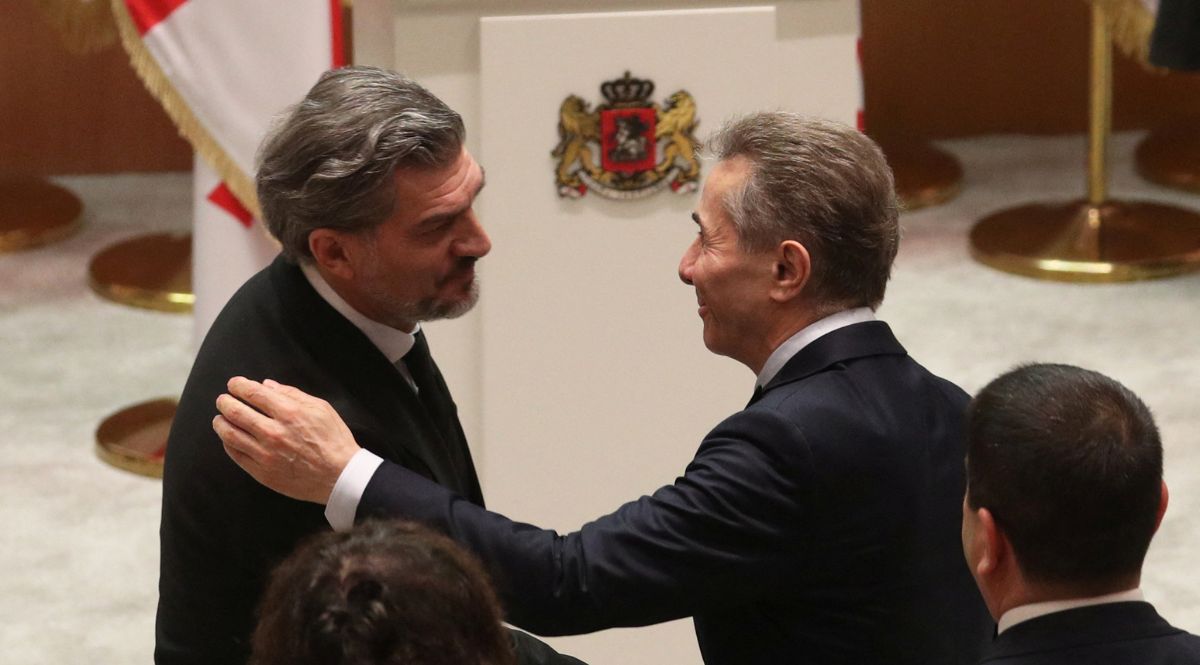
.png) credit: Mikhail Yegikov / Zuma Press / Forum
credit: Mikhail Yegikov / Zuma Press / Forum
Since Russia’s full-scale invasion of Ukraine in February 2022, an anti-Western turn in Georgia’s foreign policy has been clearly observable. The state under the Georgian Dream (GD) government has not joined Western sanctions on Russia and has escalated relations with Ukraine. It failed to implement the reforms required for EU candidate status and subsequently suspended EU accession negotiations until 2028. Instead, the Georgian authorities enacted laws (including on so-called foreign agents and limiting LGBTQ+ rights) distancing Georgia from European standards. A further stage of tension in Georgia’s relations with the West was triggered by last year’s parliamentary elections, which the opposition considered to be rigged and the U.S. and the EU had a number of questions about its fairness. The government’s attitude appears to be dictated by its desire to retain unlimited power in the country. Integration with the EU and a tighter alliance with the U.S. would entail raising democratic standards, reforms and fair elections, which the ruling party sees as losing power.
A Breakdown in Relations with the EU and the U.S.
The political crisis in Georgia has resulted in a significant deterioration of its relations with the EU and the U.S. The EU withheld aid to the government (€121 million) and suspended high-level meetings with it. The only European leader to visit Georgia after last year’s parliamentary elections was Hungarian Prime Minister Viktor Orbán. In addition, the EU introduced entry restrictions for diplomatic passport holders. Wider sanctions, however, were blocked by Hungary, so some countries, including the Baltic states, Czechia, Germany, Poland, and, from outside the EU, Ukraine and the UK, introduced them on their own. The EU also financially supported the Georgian NGO sector. In contrast, the U.S. while still at the end of Joe Biden’s presidency suspended its strategic partnership with Georgia and introduced the first financial sanctions against its authorities.
GD politicians explain away the criticism and restrictions by the EU and the U.S. to its citizens as the actions of a “global war party” and international elites (the so-called deep state), who allegedly want to draw Georgia into a conflict with Russia. If the war in Ukraine ends, Georgia’s relations with the EU and the U.S. would supposedly normalise. The Georgian leadership had hoped that with Donald Trump coming to power, the U.S. would lift sanctions and restore the strategic partnership. Meanwhile, the U.S. Congress passed the MEGOBARI Act, which imposes new financial sanctions and a travel ban on Georgian authorities and their families (the law still has to be approved by the Senate and signed by the president).
Relations with China and Russia
In the absence of EU and U.S. acceptance of its authoritarian actions, the Georgian government is looking for alternative foreign policy directions. China has played a key role in recent years, signing a strategic partnership agreement with Georgia in 2023, as well as free trade and visa-free agreements. For Georgia, China is emerging as a key partner to offset the lack of existing Western aid and investment as it does not require adherence to democratic standards. The growing Chinese influence in Georgia is evidenced by the establishment of direct air links, the introduction of the possibility of teaching Chinese as a second foreign language or the award of a contract to Chinese state-owned companies for the construction of Georgia’s largest port in Anaklia. However, for China, Georgia is only important as a transit state forming part of the so-called Middle Corridor and its influence there is part of strengthening China’s position in the South Caucasus.
The retreat from close relations with the West also entails gradual rapprochement with Russia. The Georgian and Russian governments use similar rhetoric, accusing NATO of instigating the war in Ukraine and the West of trying to spark a revolution in Georgia, or blaming former Georgian President Mikheil Saakashvili for the outbreak of war with Russia in 2008. In recent months, Russian leaders have regularly praised Georgia’s “sovereign stance” and offered it the restoration of diplomatic relations (severed by Georgia in 2008). They also offer an invitation to join the “3+3” regional format (Russia, Turkey, Iran plus Azerbaijan, Armenia and Georgia) to regulate all relevant issues in the South Caucasus region without EU and U.S. involvement. For the time being, these offers remain unanswered by Georgia. In the perception of the Georgian authorities, an obstacle to the resumption of diplomatic relations with Russia is still its refusal to back down from recognising the independence of the Georgian breakaway republics of Abkhazia and South Ossetia. Russia is expanding its influence there, including by building a seaport in Ochamchire and resuming air links between Sukhumi and Moscow. The Georgian government cannot accept the independence of the two pseudo-republics, as this would provoke public opposition, including in the electorate of the ruling party.
Further Diversification of Foreign Policy
After the parliamentary elections, the GD government gave greater importance to the expansion of regional cooperation in the South Caucasus. Prime Minister Irakli Kobakhidze and new Georgian President Mikheil Kavelashvili made their first foreign trip to Azerbaijan, followed by Armenia. Keen to show diplomatic initiative, Georgia in April this year proposed a trilateral format for cooperation between the South Caucasus states, aimed at stabilising the region. Shortly afterwards, the Georgian prime minister also met with Turkish President Recep Tayyip Erdoğan to discuss a strategic partnership.
The Georgian authorities are also prioritising the development of contacts with Central Asian and Gulf countries. In recent months, the Georgian prime minister has made official visits to Uzbekistan, Kazakhstan, and Turkmenistan to discuss the development of the Middle Corridor, from which Georgia would derive tangible benefits in the form of increased trade. Meanwhile, in January this year, he signed an agreement with a property development company from the United Arab Emirates on the largest investment in Georgia’s history (including a dry port in Tbilisi), worth $6 billion.
Conclusions and Perspectives
The Georgian authorities, by consolidating the authoritarian system in the country, are exposing it to marginalisation by Western countries, which is forcing the government to change its foreign policy direction. The sustainability of this approach will depend on whether the GD manages to remain in power despite continued popular resistance and pressure from the West, as well as on how the war in Ukraine ends. Continuation of the current course will have the effect of reinforcing Georgia’s isolation in the West and losing the chance for EU integration. A Georgia mired in authoritarianism will be increasingly influenced by Russia, which will threaten its sovereignty. Nevertheless, from the point of view of the Georgian authorities, what they have done so far is a success, as they have succeeded in replacing financial aid and investments from the U.S. and the EU with funds from Russia, China, and the Gulf States, thus proving that Georgia is not condemned to economic cooperation with the West alone.
The search for new directions in foreign policy is intended to convince Georgians that their country is not isolated in the international arena. For this reason, further consolidation of Chinese and Russian influence in Georgia and the development of relations with the Caucasian states, Turkey, and Central Asia are expected in the coming months. However, the change in Georgia’s foreign policy is not accepted by the majority of Georgian society. Some 80% of Georgians still favour their country’s future membership of the EU, and three-quarters see Russia as the greatest political threat to the state. The Georgian government ignores this sentiment, hoping that over time, as a result of state propaganda, public support for integration with the West will erode.
By continuing with its current policy, Georgia cannot expect to improve its relations with the EU. The EU, including Poland, should continue to support the pro-European and pro-democratic aspirations of Georgian society while intensifying pressure on the Georgian authorities to stop their anti-democratic and anti-European actions. Should the authoritarian rule in Georgia continue to consolidate, the EU may consider revoking its status as a candidate for EU membership, as well as suspending its existing free trade agreement and visa-free regime.

(3).png)